














1 / 20 Questions
0 Points

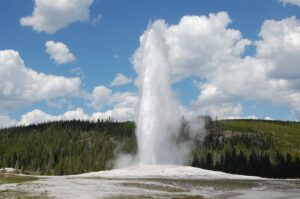
What is the average height at which jet streams occur?

50,000 feet

70,000 feet

10,000 feet

30,000 feet

Points won
0
Correct score
0%

More Questions

More Articles

Did You Know? 15 Surprising Facts About Streaming Services

Did You Know? 15 Surprising Facts About Streaming Services

⏱️ 6 min read

The way we consume entertainment has undergone a dramatic transformation over the past two decades. Streaming services have revolutionized how millions of people watch movies, TV shows, and listen to music. While most of us use these platforms daily, there are numerous fascinating facts about the streaming industry that remain largely unknown to the average subscriber. From their surprising origins to their environmental impact and hidden features, these insights reveal the complex world behind the content we enjoy at the click of a button.

The Hidden World Behind Your Favorite Streaming Platforms

1. Netflix's DVD Business Still Generates Revenue

Despite being synonymous with streaming, Netflix continues to operate its original DVD-by-mail service under the brand name DVD.com. While the streaming side dominates the company's revenue, thousands of subscribers still prefer physical discs, particularly for accessing older or harder-to-find titles that aren't available on streaming platforms. This legacy business demonstrates how different consumer preferences coexist in the modern entertainment landscape.

2. Streaming Accounts for Over 60% of Global Internet Traffic

Video streaming services consume an enormous amount of bandwidth, accounting for more than 60% of all downstream internet traffic worldwide. Netflix alone has been responsible for up to 15% of global internet bandwidth at peak times. This massive data consumption has forced internet service providers to continuously upgrade their infrastructure to handle the unprecedented demand.

3. The "Skip Intro" Button Was Based on Extensive User Research

Netflix's popular "Skip Intro" feature resulted from analyzing billions of hours of viewing data. The company discovered that subscribers frequently fast-forwarded through opening credits, especially during binge-watching sessions. This simple button has saved viewers countless hours and has become so popular that other streaming platforms quickly adopted similar features.

4. Streaming Services Spend More on Content Than Traditional Studios

Major streaming platforms now outspend traditional Hollywood studios on content production. Netflix alone has invested over $17 billion annually in original content, surpassing the budgets of major film studios. This spending war has fundamentally changed the entertainment industry, creating more opportunities for creators but also raising questions about sustainability.

5. Password Sharing Affects Nearly Half of All Accounts

Research indicates that approximately 40-50% of streaming service users share their passwords with people outside their household. This practice costs the industry billions of dollars annually in lost revenue. While companies have traditionally tolerated this behavior as a form of marketing, many platforms are now implementing measures to restrict password sharing and convert shared users into paying subscribers.

6. The Streaming Quality Adjusts Hundreds of Times Per Session

Modern streaming services use adaptive bitrate streaming technology that can adjust video quality hundreds or even thousands of times during a single viewing session. This technology monitors your internet connection in real-time and automatically switches between different quality levels to prevent buffering, ensuring smooth playback even when bandwidth fluctuates.

7. Streaming Services Use Psychological Tactics to Keep You Watching

Platforms employ various psychological techniques to maximize viewing time, including autoplay features, personalized thumbnails, and strategically timed content releases. The "post-play" feature that automatically starts the next episode after a brief countdown has been particularly effective at encouraging binge-watching behavior, fundamentally changing how audiences consume serialized content.

8. Regional Content Libraries Vary Dramatically

The content available on streaming platforms varies significantly by country due to licensing agreements and regional restrictions. A Netflix subscription in the United States provides access to a completely different library than the same subscription in Japan or Brazil. Some countries have access to thousands more titles than others, leading to the popularity of VPN services for accessing geographically restricted content.

9. Streaming Has a Significant Environmental Impact

Watching 30 minutes of streaming content generates approximately 1.6 kilograms of carbon dioxide emissions, equivalent to driving nearly four miles in a car. The environmental cost comes from the energy required to power data centers, transmission networks, and end-user devices. As streaming consumption increases globally, the industry faces growing pressure to adopt more sustainable practices and renewable energy sources.

10. Recommendation Algorithms Drive 80% of Viewing Choices

Approximately 80% of content watched on platforms like Netflix comes from the recommendation algorithm rather than user searches. These sophisticated systems analyze viewing history, ratings, browsing behavior, and even the time of day to suggest content. The accuracy of these recommendations has become a competitive advantage, with companies investing heavily in artificial intelligence and machine learning to improve their algorithms.

11. The First Streaming Service Predates Netflix

While Netflix popularized streaming, it wasn't the first. RealNetworks launched RealPlayer in 1997, offering streaming audio and video over the internet years before Netflix's streaming service debuted in 2007. However, limited bandwidth and technology constraints prevented early streaming from achieving mainstream success until broadband internet became widely available.

12. Thumbnail Images Are Personalized for Individual Users

Streaming services don't show the same thumbnail images to all users. Platforms test multiple images for each title and use algorithms to determine which thumbnail is most likely to appeal to individual subscribers based on their viewing history. A romantic comedy might display different artwork to different users depending on whether they typically watch romance films or comedies.

13. Streaming Services Create Content Based on Data Analytics

Original programming decisions are increasingly driven by data rather than traditional creative intuition. Platforms analyze viewing patterns, completion rates, and audience demographics to determine which projects to greenlight. Netflix's decision to produce "House of Cards" was famously influenced by data showing that subscribers who enjoyed the British version also liked films directed by David Fincher and starring Kevin Spacey.

14. The Average Subscriber Uses Only Three Streaming Services

Despite the proliferation of streaming platforms, research shows that the average household subscribes to approximately three services simultaneously. This has created intense competition among platforms to be among those chosen services, leading to the content wars and exclusive programming strategies that define the current streaming landscape.

15. Streaming Audio Quality Often Exceeds CD Quality

High-fidelity music streaming services now offer audio quality that surpasses traditional CDs. Platforms like Tidal and Amazon Music HD provide lossless audio formats and even hi-res streams with higher sampling rates than standard CD quality. This technological advancement has made audiophile-grade sound accessible to mainstream listeners, though most subscribers continue using standard quality settings to conserve bandwidth.

The Ever-Evolving Streaming Landscape

These fifteen surprising facts illustrate how streaming services have become far more sophisticated and influential than most users realize. From their environmental impact and data-driven decision-making to their psychological design features and technical capabilities, streaming platforms represent a complex intersection of technology, entertainment, and business strategy. As the industry continues to evolve with new competitors, technologies, and consumption patterns, understanding these hidden aspects helps us appreciate the remarkable infrastructure supporting our daily entertainment habits. Whether you're a casual viewer or a dedicated binge-watcher, these insights reveal that there's much more happening behind the scenes than simply pressing play on your favorite show.

Did You Know? 12 Amazing Desert Facts

Did You Know? 12 Amazing Desert Facts

⏱️ 7 min read

Deserts cover approximately one-third of Earth's land surface, yet they remain among the most misunderstood and fascinating ecosystems on our planet. These arid landscapes are far more than barren wastelands—they're dynamic environments teeming with unique adaptations, surprising climate patterns, and geological wonders. From the world's largest hot desert to frozen expanses that receive almost no precipitation, deserts challenge our conventional understanding of life and survival. The following remarkable facts reveal the extraordinary nature of these seemingly inhospitable regions.

Fascinating Desert Characteristics and Records

Antarctica Qualifies as the World's Largest Desert

When most people think of deserts, they imagine scorching sand dunes and blazing sun. However, the world's largest desert is actually Antarctica, spanning approximately 5.5 million square miles. Deserts are technically defined by their lack of precipitation rather than temperature, and Antarctica receives less than two inches of precipitation annually in its interior regions. This frozen desert experiences extreme aridity due to its cold temperatures, which prevent moisture from remaining in the atmosphere. The classification of Antarctica as a desert demonstrates that these ecosystems exist across a far broader range of climates than commonly assumed.

The Sahara Desert Wasn't Always Arid

The Sahara Desert, spanning 3.6 million square miles across North Africa, underwent dramatic transformations throughout history. Between 11,000 and 5,000 years ago, this region was significantly greener, supporting diverse wildlife including hippos, giraffes, and crocodiles. This period, known as the African Humid Period or "Green Sahara," featured extensive vegetation, lakes, and rivers. The transformation from lush savanna to arid desert occurred due to gradual shifts in Earth's orbital patterns, which altered the African monsoon system. Rock art and archaeological evidence throughout the Sahara still depicts this bygone era of abundance.

Desert Temperatures Can Fluctuate Dramatically Within 24 Hours

Desert environments experience some of the most extreme temperature variations on Earth. A single location can reach 100°F (38°C) during the day and plummet to near freezing at night. This dramatic fluctuation occurs because deserts lack moisture and cloud cover, which normally regulate temperature by trapping heat. The dry air and sparse vegetation mean that solar radiation heats the ground intensely during daylight hours, while the absence of insulating humidity allows heat to escape rapidly after sunset. These extreme swings present significant challenges for desert-dwelling organisms.

Only 20 Percent of Deserts Are Covered in Sand

Contrary to popular imagery, vast sand dunes comprise only about 20 percent of the world's desert landscapes. The remaining 80 percent consists of mountains, rocky plateaus, gravel plains, dry valleys, and salt flats. These varied terrains, known collectively as "reg" (stony desert) or "hamada" (rocky plateau), are often more common than sandy regions called "ergs." The misconception about endless sand dunes largely stems from media representations and the iconic status of deserts like the Arabian Desert and portions of the Sahara where sand seas are prominent.

Desert Life and Adaptations

Cacti Store Enough Water to Survive for Years

The iconic saguaro cactus of the Sonoran Desert can absorb and store up to 200 gallons of water during rare rainfall events. These remarkable plants feature accordion-like pleats that expand to accommodate water storage, with their internal tissue acting as a reservoir. The stored water allows cacti to survive extended drought periods lasting multiple years. Additionally, their thick, waxy coating minimizes water loss through evaporation, while their spines provide shade, reduce air flow around the plant's surface, and deter thirsty animals from tapping into their precious water supplies.

The Atacama Desert Has Locations with No Recorded Rainfall

Chile's Atacama Desert holds the distinction of being the driest non-polar desert on Earth, with some weather stations never having recorded rainfall. The average annual precipitation in the driest areas is approximately 0.04 inches, though some regions have gone decades without measurable rain. This extreme aridity results from the desert's position between the Andes Mountains and the Chilean Coast Range, which block moisture from both the Amazon Basin and the Pacific Ocean. Despite these harsh conditions, specialized microorganisms thrive in the soil, and certain plant species have adapted to survive on coastal fog alone.

Desert Animals Have Extraordinary Water Conservation Methods

Desert fauna have evolved remarkable physiological adaptations to minimize water loss and maximize efficiency. The kangaroo rat, native to North American deserts, never needs to drink water throughout its entire life, obtaining all necessary moisture from metabolizing seeds. Camels can drink up to 30 gallons of water in just 13 minutes and store fat (not water) in their humps, which provides energy and metabolic water during long periods without food or drink. Desert tortoises can store up to 40 percent of their body weight in water within their bladder and reabsorb it during drought, while their ability to concentrate urine minimizes water loss.

Deserts Support Surprising Biodiversity

Despite harsh conditions, deserts harbor unexpected biological diversity. The Sonoran Desert alone supports more than 2,000 plant species, 550 vertebrate species, and countless invertebrates. Desert ecosystems have become evolutionary laboratories where species develop unique survival strategies. Many desert animals are crepuscular or nocturnal, avoiding daytime heat entirely. Plants employ various strategies including deep root systems that tap underground water sources, shallow widespread roots that quickly absorb surface moisture, and dormancy periods that allow them to "wait out" unfavorable conditions while remaining alive.

Desert Geography and Climate Patterns

Deserts Exist on Every Continent

Every continent on Earth contains desert regions, including Australia's vast interior deserts covering 70 percent of the continent, Asia's Gobi Desert spanning Mongolia and China, and North America's Great Basin Desert. Even Europe contains semi-arid regions in Spain, though they're smaller and less extreme than deserts on other continents. This global distribution results from various factors including subtropical high-pressure systems, rain shadows created by mountain ranges, cold ocean currents that limit moisture availability, and continental interiors far from oceanic moisture sources. The diversity of desert-forming mechanisms creates dramatically different desert types worldwide.

Desert Soil Can Remain Undisturbed for Millennia

Many desert surfaces feature "desert pavement"—a natural mosaic of closely packed stones that forms over thousands of years. Once established, these surfaces can remain remarkably stable for millennia due to minimal erosion and vegetation growth. Biological soil crusts, composed of cyanobacteria, lichens, mosses, and fungi, colonize desert surfaces and play crucial roles in preventing erosion, fixing nitrogen, and facilitating water infiltration. These fragile crusts can take decades to centuries to develop but can be destroyed by a single footstep or vehicle track, making desert ecosystems particularly vulnerable to human disturbance despite their ancient stability.

Some Deserts Are Expanding While Others Fluctuate

Desertification—the process by which fertile land becomes desert—currently affects vast regions worldwide, with the Sahara Desert expanding southward into the Sahel region at concerning rates. Climate change, overgrazing, deforestation, and poor agricultural practices accelerate this expansion, threatening food security and displacing populations. However, desert boundaries naturally fluctuate over geological timescales due to orbital variations and climate cycles. Understanding both natural variability and human-induced changes is essential for managing vulnerable drylands and supporting communities in transitional zones between deserts and more productive ecosystems.

Desert Varnish Creates Ancient Natural Art

Desert rocks often display mysterious dark coatings called desert varnish or rock varnish, which forms over thousands of years through complex processes involving manganese and iron oxides. Microorganisms, dust, and chemical weathering all contribute to these thin layers that can be only microns thick yet remarkably durable. Ancient peoples recognized desert varnish's stability and created petroglyphs by removing the dark coating to reveal lighter rock beneath, producing artworks that have survived for thousands of years. Scientists also use varnish layers to date rock surfaces and understand climate history, as the varnish accumulation rate varies with environmental conditions.

Conclusion

These twelve remarkable facts barely scratch the surface of desert complexity and wonder. From Antarctica's frozen expanses to the Atacama's extreme aridity, from the Sahara's verdant past to the sophisticated adaptations of desert life, these environments continually challenge our assumptions and reveal nature's extraordinary resilience and creativity. Deserts are not lifeless wastelands but dynamic ecosystems that have shaped human cultures, influenced global climate patterns, and preserved geological and archaeological records spanning millions of years. Understanding and protecting these vulnerable landscapes becomes increasingly important as climate change and human activities alter desert boundaries and threaten the remarkable biodiversity that has evolved to thrive in Earth's most challenging terrestrial environments.