








⏱️ 6 min read
Time travel has captivated human imagination for centuries, inspiring countless science fiction stories, blockbuster movies, and serious scientific debates. While we haven't yet figured out how to build a functioning time machine, physicists and theorists have proposed fascinating concepts that suggest time travel might not be as impossible as it once seemed. From Einstein's groundbreaking theories to mind-bending paradoxes, the science and philosophy of time travel reveal surprising insights about the nature of our universe.
Exploring the Science Behind Temporal Journeys
Einstein Proved Time Travel Into the Future Is Possible
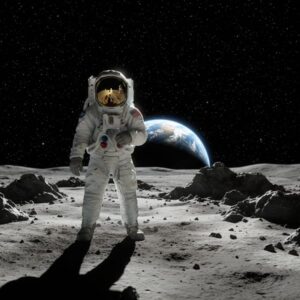
Albert Einstein's theory of special relativity, published in 1905, demonstrated that time is not absolute but relative to the observer's speed. According to this theory, time moves slower for objects traveling at speeds approaching the speed of light. This phenomenon, called time dilation, has been proven through experiments with atomic clocks on high-speed aircraft and observations of subatomic particles. Astronauts on the International Space Station actually age slightly slower than people on Earth—though only by milliseconds. In theory, a person traveling in a spacecraft at near-light speed could journey years into the future while experiencing only days or months of personal time.
Wormholes Could Be Nature's Time Machines
Wormholes, also known as Einstein-Rosen bridges, are theoretical tunnels through spacetime that could connect distant points in the universe—or even different times. First predicted by Einstein's general relativity equations, these cosmic shortcuts might allow instantaneous travel across vast distances or through time itself. While no wormhole has ever been observed, physicists like Kip Thorne have explored how an advanced civilization might manipulate a wormhole to create a time machine. The catch? Keeping a wormhole open would require exotic matter with negative energy, something we've never definitively found in nature.
The Grandfather Paradox Challenges Time Travel Logic
One of the most famous problems in time travel theory is the grandfather paradox. This thought experiment asks: What would happen if you traveled back in time and prevented your grandfather from meeting your grandmother? You would never be born, which means you couldn't have traveled back in time to prevent their meeting in the first place. This logical contradiction has led physicists to propose various solutions, including the possibility that time travelers cannot change the past, or that any attempt to alter history would create a new parallel universe branching off from the original timeline.
Rotating Black Holes Might Enable Backwards Time Travel
In 1963, mathematician Roy Kerr discovered that rotating black holes could theoretically allow time travel to the past. These spinning cosmic objects, called Kerr black holes, create a region where spacetime is dragged along with the rotation. Within this region, called the ergosphere, closed timelike curves might exist—paths through spacetime that loop back on themselves, potentially allowing an object to return to its own past. However, the extreme gravitational forces near black holes and the unknown physics inside their event horizons make this a highly speculative possibility requiring technology far beyond our current capabilities.
Time Moves Differently at Various Altitudes on Earth
Gravitational time dilation means that time passes more slowly in stronger gravitational fields. On Earth, this means that time moves slightly faster at higher altitudes than at sea level. The difference is minuscule—about 90 billionths of a second per day for every kilometer of altitude—but it's measurable and real. GPS satellites must account for this effect because they orbit far above Earth's surface where time runs faster. Without correcting for both gravitational and velocity-based time dilation, GPS systems would accumulate errors of about 10 kilometers per day, rendering them useless for navigation.
The Novikov Self-Consistency Principle Resolves Paradoxes
Russian physicist Igor Novikov proposed a solution to time travel paradoxes in the 1980s. His self-consistency principle suggests that if time travel is possible, the timeline must remain consistent. According to this principle, events are constrained in such a way that paradoxes cannot occur. Any attempt to create a paradox would fail through some combination of circumstances. For example, if you tried to kill your grandfather, your gun would jam, you'd miss, or some other event would intervene. This principle implies that time travelers might be able to influence the past, but only in ways that don't create contradictions with known history.
Cosmic Strings Could Warp Time Itself
Cosmic strings are hypothetical one-dimensional defects in spacetime that might have formed during the early universe. These incredibly dense, thin structures would warp spacetime around them in extreme ways. Physicist J. Richard Gott proposed that two cosmic strings passing by each other at high speed could create closed timelike curves, potentially enabling time travel. While cosmic strings remain theoretical and have never been observed, their potential existence is consistent with various cosmological models. If they exist and could be manipulated, they might offer another pathway to temporal displacement.
Quantum Mechanics Allows Particles to Travel Backward in Time
In the quantum realm, particles sometimes appear to behave as if they're moving backward in time. Physicist Richard Feynman suggested that an antiparticle could be understood as a regular particle moving backward through time. Additionally, quantum experiments have demonstrated seemingly retrocausal effects, where measurements in the present appear to influence past events. While these phenomena don't allow macroscopic time travel or communication with the past, they reveal that time at the quantum level is far stranger than our everyday experience suggests.
Time Crystals Represent a New Phase of Matter That Repeats in Time
Discovered in recent years, time crystals are a bizarre phase of matter that exhibits periodic structure in time rather than space. First proposed by Nobel laureate Frank Wilczek in 2012 and experimentally confirmed in 2016, these quantum systems return to their initial state in regular intervals without expending energy, seemingly violating conventional understanding of thermodynamics. While time crystals don't enable time travel in the science fiction sense, they demonstrate that time can have properties we never imagined, potentially opening new avenues for understanding temporal mechanics and quantum computing applications.
Faster-Than-Light Travel Implies Time Travel to the Past
Einstein's special relativity creates an intriguing connection between speed and time direction. According to the theory, if anything could travel faster than light, it would effectively be moving backward in time from certain reference frames. This is one reason physicists believe faster-than-light travel is impossible—it would create causality violations where effects could precede their causes. Hypothetical concepts like the Alcubierre drive attempt to circumvent this limitation by warping spacetime itself rather than moving through it, though such technology would require exotic physics and enormous amounts of energy.
The Future of Time Travel Research
While time travel remains firmly in the realm of theoretical physics, these ten fascinating facts demonstrate that it's not simply science fiction fantasy. From the experimentally verified time dilation effects to the mind-bending possibilities of wormholes and cosmic strings, our understanding of time continues to evolve. Whether humanity will ever achieve practical time travel remains uncertain, but exploring these theories pushes the boundaries of physics and challenges our fundamental assumptions about the universe. As technology advances and our understanding deepens, we may discover that time is even stranger and more malleable than these current theories suggest.
