









1 / 10 Questions
0 Points

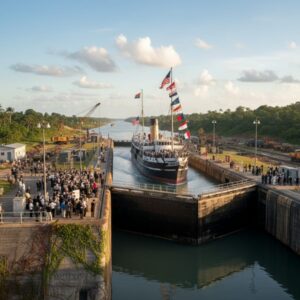
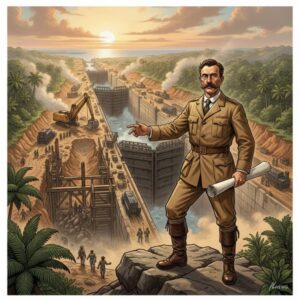
Which country tried—and failed—to build the Panama Canal before the United States succeeded?

Spain

France

Colombia

Great Britain

Points won
0
Correct score
0%

More Questions

More Articles

Top 10 Fun Facts About Time Zones

Top 10 Fun Facts About Time Zones

⏱️ 7 min read

Time zones are one of humanity's most ingenious solutions to organizing our global society, yet they're far more complex and fascinating than most people realize. While we interact with them daily when scheduling meetings, traveling, or calling friends abroad, the history, quirks, and peculiarities of how the world divides its hours contain some truly remarkable surprises. These geographical divisions of time shape international commerce, affect our bodies, and sometimes create bizarre situations that defy logical expectations.

The Historical Origins and Modern Marvels of Time Zones

1. China Uses Only One Time Zone Despite Its Massive Width

Despite spanning five geographical time zones—roughly the same width as the continental United States—China operates entirely on a single time zone: China Standard Time (UTC+8). This political decision means that in western regions like Xinjiang, the sun might not rise until 10 a.m. in winter, while residents in eastern cities experience more conventional daylight hours. This unusual arrangement was implemented in 1949 to promote national unity, though some Uyghur communities in the west informally use their own "Xinjiang Time" (UTC+6) for daily activities. The result is a country where breakfast time varies dramatically depending on whether you're measuring by the clock or the sun.

2. France Claims the Record for Most Time Zones

While Russia might seem like an obvious candidate for having the most time zones, France actually holds this distinction with an impressive 12 different time zones. This remarkable spread isn't due to the size of metropolitan France, but rather the country's numerous overseas territories scattered across the globe, from French Polynesia in the Pacific to French Guiana in South America, and Réunion in the Indian Ocean. These far-flung territories, remnants of France's colonial history, mean that somewhere under French administration, it's always a vastly different time of day. Russia, by comparison, operates across 11 time zones after consolidating from its previous 9 zones in 2014.

3. Railroads Created the Need for Standardized Time

Before the 1880s, time was an entirely local affair, with cities and towns setting their clocks based on when the sun reached its highest point in their specific location. This system worked fine until railroads began connecting distant cities, creating scheduling nightmares when each station operated on its own time. The solution came in 1884 when the International Meridian Conference in Washington, D.C., established Greenwich, England, as the Prime Meridian and divided the world into 24 time zones. Railroad companies were among the first to adopt this system enthusiastically, as it transformed their ability to create reliable timetables and prevent accidents caused by temporal confusion.

4. Nepal's Quarter-Hour Time Zone Breaks the Mold

While most time zones are offset from Coordinated Universal Time (UTC) by whole hours, Nepal operates on UTC+5:45, making it one of the few places using a 45-minute offset. This unusual choice puts Nepal 15 minutes ahead of India and reflects the country's desire to maintain a distinct identity from its much larger neighbor. Similarly, the Chatham Islands of New Zealand use UTC+12:45, and several other locations use 30-minute offsets. These non-standard time zones can create confusion for international travelers and businesses but serve important political and cultural purposes for the regions that adopt them.

5. The International Date Line Creates Time Travel Opportunities

The International Date Line, running roughly along the 180° meridian in the Pacific Ocean, is where each new calendar day begins. Cross this line heading west, and you jump forward 24 hours; cross it heading east, and you go back a day. However, the line isn't straight—it zigzags around territorial boundaries to avoid splitting countries. The Republic of Kiribati actually lies on both sides of the line but chose to put its entire nation on the same day, creating one of the world's earliest time zones at UTC+14. This means Kiribati can be up to 26 hours ahead of Baker Island, an American territory just 1,700 miles away, creating the largest time difference anywhere on Earth.

6. Some Remote Islands Live in Permanent Daylight Saving Time

Several territories have essentially chosen to operate in what amounts to permanent daylight saving time, positioning themselves an hour or more ahead of where they would naturally fall based on their longitude. Lord Howe Island in Australia takes this even further with a unique 30-minute daylight saving time shift, the only place in the world to do so. Meanwhile, Morocco's time zone situation becomes particularly complex during Ramadan, when the country temporarily abandons daylight saving time for the holy month, then switches back afterward. These arrangements demonstrate how time zones are often shaped more by practical, economic, or cultural considerations than purely geographical logic.

7. Antarctica Has All Time Zones and None at Once

Due to its position at the South Pole, Antarctica technically contains all 24 time zones, as all lines of longitude converge there. However, since the continent has no permanent indigenous population and only research stations, there's no single "Antarctica time." Instead, each research station typically uses the time zone of its home country or the nearest supply port. The Amundsen-Scott South Pole Station, situated directly at the pole, uses New Zealand time because that's where flights to the station originate. This creates the peculiar situation where you could theoretically walk around the pole and pass through every time zone on Earth in just a few minutes.

8. Spain Is Technically in the Wrong Time Zone

Based purely on its geographical position, Spain should be in the same time zone as the United Kingdom, Portugal, and Morocco—using Greenwich Mean Time or UTC+0. Instead, Spain uses Central European Time (UTC+1), the same as Germany and France. This change occurred in 1940 when dictator Francisco Franco moved Spain's clocks forward one hour to align with Nazi Germany during World War II. The country never changed back, and today, this misalignment contributes to Spain's famously late daily schedule, with dinner often served at 10 p.m. or later. Some Spanish politicians have proposed returning to GMT, arguing it would improve work-life balance and align better with natural daylight patterns.

9. Tiny Island Nations Can Span Multiple Time Zones

The Federated States of Micronesia, despite having a population of just over 100,000 people, spans two time zones due to its scattered islands across a vast stretch of the Pacific Ocean. Similarly, the Marshall Islands, Kiribati, and other Pacific island nations cover enormous oceanic distances while maintaining tiny total land areas. This creates unique challenges for these nations, where government offices might need to coordinate across different days or operate at unusual hours to accommodate all citizens. The contrast between their small populations and large temporal spread illustrates how geography, rather than demographics, ultimately determines time zone necessity.

10. Digital Technology Is Complicating Time Zone Management

In our interconnected digital age, time zones have become simultaneously more important and more problematic. Software developers must constantly update systems to account for daylight saving time changes, which occur at different times (or not at all) in different countries. The Unix timestamp, which counts seconds since January 1, 1970, was created partly to avoid time zone complications, yet programmers still regularly encounter bugs related to temporal conversion. Meanwhile, cryptocurrency markets and global businesses increasingly operate on a 24/7 basis that transcends traditional time zones, leading some to advocate for a universal global time system. However, attempts to implement such systems face resistance from those who value the connection between local time and solar position.

Understanding Our Temporal Geography

These ten fascinating aspects of time zones reveal how this seemingly simple system for organizing our days is actually a complex tapestry woven from history, politics, geography, and human practicality. From China's single-zone policy to France's far-flung territories, from Nepal's quarter-hour offset to Antarctica's temporal confusion, time zones reflect humanity's ongoing negotiation between natural solar time and the demands of modern global society. They demonstrate how arbitrary decisions made over a century ago continue to shape our daily lives, and how even today, nations adjust their temporal boundaries for reasons ranging from national identity to economic advantage. As our world becomes increasingly interconnected, understanding these quirks of temporal geography becomes ever more valuable for navigating our global community.

Did You Know? 12 Predictions About the Future That Came True

Did You Know? 12 Predictions About the Future That Came True

⏱️ 6 min read

Throughout history, visionaries, scientists, and writers have gazed into the future and made bold predictions about what was to come. While many forecasts have fallen flat, some individuals possessed an uncanny ability to foresee technological advances and societal changes decades or even centuries before they became reality. These remarkable predictions demonstrate humanity's capacity for imagination and logical extrapolation, showing us that the future is often more predictable than we might think.

Remarkable Predictions That Became Reality

1. Jules Verne's Submarine Warfare

In his 1870 novel "Twenty Thousand Leagues Under the Sea," French author Jules Verne described electric submarines capable of extended underwater travel. At the time, submarine technology was primitive at best, yet Verne accurately predicted vessels that could remain submerged for long periods, use electric power, and even engage in underwater combat. The USS Nautilus, the world's first nuclear-powered submarine launched in 1954, bore the same name as Verne's fictional vessel, paying homage to his visionary prediction made nearly a century earlier.

2. H.G. Wells and the Atomic Bomb

In his 1914 novel "The World Set Free," science fiction pioneer H.G. Wells described weapons he called "atomic bombs" that derived their destructive power from nuclear fission. Writing three decades before the Manhattan Project, Wells predicted not only the existence of such weapons but also their devastating impact on cities and their role in future warfare. His prediction became chillingly accurate when atomic bombs were dropped on Hiroshima and Nagasaki in 1945.

3. Mark Twain's Prediction of the Internet

In an 1898 short story, Mark Twain described a "telectroscope" that would connect people around the world, allowing them to see and hear events happening in distant locations instantly. This "worldwide system of communication" he envisioned bears a striking resemblance to the internet and video calling technology that emerged a century later. Twain understood that future technology would make the world feel smaller and more connected.

4. Robert Boyle's Vision of Modern Medicine

The 17th-century chemist Robert Boyle created a list of predictions in the 1660s that included "the prolongation of life," "the art of flying," and "the cure of diseases at a distance." These predictions remarkably anticipated organ transplants, aviation, and telemedicine—all of which became realities in the 20th and 21st centuries. His scientific approach to forecasting proved that rigorous thinking about current trends could reveal future possibilities.

5. Nikola Tesla's Wireless Communication

In 1926, inventor Nikola Tesla predicted that wireless technology would enable people to communicate instantly across vast distances using pocket-sized devices. He described a future where "we shall be able to communicate with one another instantly, irrespective of distance" through wireless instruments "no bigger than a watch." This prediction perfectly describes modern smartphones and wireless communication networks that billions of people use daily.

6. Arthur C. Clarke and Satellite Communications

In a 1945 article, science fiction author and futurist Arthur C. Clarke proposed the idea of communications satellites in geostationary orbit, positioned 22,000 miles above Earth. He detailed how three such satellites could provide global communications coverage. This was years before the first artificial satellite was launched. Today, geostationary communications satellites operate exactly as Clarke described, and the orbital position he identified is now called the "Clarke Belt" in his honor.

7. John Elfreth Watkins Jr.'s 1900 Predictions

In a Ladies' Home Journal article titled "What May Happen in the Next Hundred Years," civil engineer Watkins made numerous accurate predictions including mobile phones, television, air conditioning, and prepared meals. He predicted that photographs could be transmitted over wires and that Americans would become taller due to better nutrition and healthcare. His success rate was remarkably high, with many predictions coming true by the year 2000.

8. Edward Bellamy's Credit Card System

In his 1888 utopian novel "Looking Backward," Edward Bellamy described a cashless society where citizens used "credit cards" to make purchases. This was more than 60 years before the first credit card was introduced. Bellamy envisioned a system where these cards would be used universally for transactions, accurately predicting the decline of cash and the rise of electronic payment systems that dominate modern commerce.

9. Marshall McLuhan's Global Village

Canadian philosopher Marshall McLuhan coined the term "global village" in the 1960s, predicting that electronic media would connect the world so thoroughly that distance would become irrelevant. He foresaw that information technology would create a interconnected global society where events in one part of the world would instantly affect people everywhere. The internet and social media have realized this vision, creating the exact type of global interconnectedness McLuhan described.

10. Isaac Asimov's Robotics and Automation

Science fiction writer Isaac Asimov not only predicted the rise of robotics but also established the ethical framework for human-robot interaction through his famous "Three Laws of Robotics" in the 1940s. He foresaw a future where robots would perform dangerous tasks, assist in manufacturing, and eventually become integrated into daily life. Today's industrial robots, automated systems, and emerging artificial intelligence are making his predictions reality, and his ethical considerations remain relevant in modern robotics discussions.

11. Ray Kurzweil's Technology Timeline

Futurist Ray Kurzweil has maintained an impressive track record of predictions since the 1980s. He accurately predicted that a computer would defeat a world chess champion by 1998 (Deep Blue defeated Garry Kasparov in 1997), that wireless internet would become widespread, and that technology would become increasingly miniaturized. His systematic approach to predicting technological advancement based on exponential growth patterns has proven remarkably accurate.

12. Leonardo da Vinci's Flying Machines and Engineering Marvels

In the late 15th and early 16th centuries, Leonardo da Vinci sketched designs for flying machines, parachutes, helicopters, and even tanks. While the technology of his era couldn't bring these visions to life, his conceptual understanding of aerodynamics and mechanical engineering was centuries ahead of his time. Modern helicopters operate on principles similar to those in his aerial screw design, and his parachute design was successfully tested in 2000, proving its functionality.

The Science of Prediction

These successful predictions weren't merely lucky guesses. Most came from individuals who deeply understood the scientific principles and social trends of their time. They extrapolated current knowledge into future possibilities, demonstrating that careful observation combined with imaginative thinking can pierce the veil of time. Scientists, engineers, and thoughtful observers identified fundamental principles that would inevitably lead to specific technological developments.

Lessons from Accurate Forecasting

What these twelve predictions teach us is that the future often follows logical progressions from present capabilities and needs. The predictors who succeeded combined technical knowledge with an understanding of human desires and social dynamics. They recognized that certain problems would demand solutions and that technology would evolve to meet those demands. Their success reminds us that while we cannot predict everything about the future, careful analysis of current trends and technological trajectories can reveal what's coming next. As we face our own uncertain future, these historical examples inspire confidence that human ingenuity and foresight can help us prepare for and shape the world of tomorrow.