



















⏱️ 6 min read
The discovery of America represents one of the most significant turning points in human history, forever altering the course of civilizations across multiple continents. While the narrative often centers on Christopher Columbus's famous 1492 voyage, the true story encompasses a far more complex tapestry of exploration, cultural encounters, and historical developments that span centuries. Understanding the nuances of this pivotal era reveals surprising truths that challenge conventional wisdom and illuminate the interconnected nature of human exploration.
The Historical Context of American Discovery
Before delving into specific revelations about America's discovery, it's essential to recognize that this event wasn't a singular moment but rather a series of encounters between the Old World and the New. These interactions involved various peoples, motivations, and consequences that continue to shape our world today.
1. Vikings Reached North America Five Centuries Before Columbus
Archaeological evidence conclusively demonstrates that Norse explorers, led by Leif Erikson, established settlements in North America around 1000 CE, approximately 500 years before Columbus's voyage. The settlement at L'Anse aux Meadows in Newfoundland, Canada, provides physical proof of this earlier European contact. These Vikings called the land "Vinland" and maintained their presence for several years before abandoning the settlements, likely due to conflicts with indigenous peoples and the challenges of maintaining supply lines across the Atlantic.
2. Columbus Never Actually Set Foot on Mainland North America
Contrary to popular belief, Christopher Columbus never landed on the continental United States or mainland North America during any of his four voyages. His expeditions between 1492 and 1504 brought him to various Caribbean islands, including the Bahamas, Cuba, and Hispaniola, as well as parts of Central and South America. The explorer died in 1506 still believing he had reached Asia, never realizing he had encountered continents previously unknown to Europeans.
3. Indigenous Peoples Had Inhabited America for Over 15,000 Years
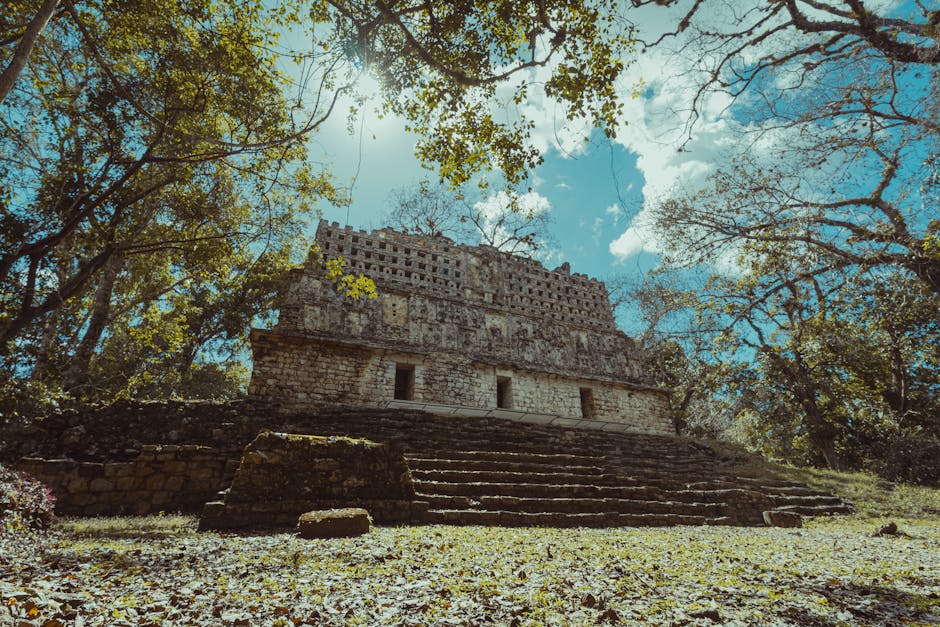
When European explorers arrived, they encountered continents already populated by diverse and sophisticated civilizations. Current archaeological evidence suggests that humans first migrated to the Americas at least 15,000 to 20,000 years ago, possibly even earlier. These populations had developed complex societies, including the Aztec, Maya, and Inca empires, with advanced knowledge of agriculture, astronomy, architecture, and mathematics. The term "discovery" itself is therefore misleading, as these lands were never lost—only unknown to Europeans.
4. The Voyage Was Financed After Multiple Rejections
Columbus's expedition nearly never happened due to repeated funding rejections. Portuguese King John II initially rejected his proposal, as did the Spanish monarchs Ferdinand and Isabella on their first consideration. Columbus spent years petitioning various European courts before finally securing sponsorship from Spain in 1492, after the Spanish monarchy had completed the Reconquista. The monarchs agreed partly because Columbus's demands had become more modest and partly because they feared Portugal might sponsor a competing expedition.
5. The Columbian Exchange Transformed Global Ecosystems
The contact between the Old and New Worlds initiated an unprecedented biological exchange that permanently altered ecosystems, agriculture, and diets worldwide. From the Americas, crops such as potatoes, tomatoes, corn, chocolate, and tobacco spread globally, revolutionizing cuisines and economies. Conversely, Europeans introduced wheat, rice, coffee, horses, cattle, and pigs to the Americas. This exchange also tragically included pathogens, with diseases like smallpox, measles, and influenza devastating indigenous populations who lacked immunity.
6. Amerigo Vespucci Gave America Its Name
The continents were named not after Columbus but after Italian explorer Amerigo Vespucci, who voyaged to South America in the early 1500s. Vespucci was among the first to propose that these lands constituted a "New World" distinct from Asia. In 1507, German cartographer Martin Waldseemüller produced a world map labeling the new continent "America" in Vespucci's honor. By the time the naming error was recognized, the designation had become too widespread to change.
7. Columbus's Crew Nearly Mutinied Before Reaching Land
As the 1492 voyage stretched beyond expectations, Columbus faced near-mutiny from his increasingly desperate crew. After more than a month at sea without sighting land, sailors aboard the three ships—the Niña, Pinta, and Santa María—threatened to turn back. Columbus negotiated an agreement: if land wasn't spotted within three days, they would return to Spain. Fortunately for Columbus, lookout Rodrigo de Triana spotted land on October 12, 1492, just within the deadline, though Columbus himself claimed the sighting reward.
8. The Spanish Conquistadors Were Outnumbered But Technologically Superior
The rapid Spanish conquest of vast American empires resulted not from numerical superiority but from significant technological advantages. Steel weapons, armor, firearms, and especially horses—animals unknown in the Americas—provided decisive military advantages. However, the conquistadors' greatest, albeit unintentional, weapon was disease. Smallpox and other European diseases killed an estimated 90% of the indigenous population within a century of contact, catastrophically weakening organized resistance to European colonization.
9. Multiple European Nations Quickly Joined the Exploration Race
Columbus's voyage sparked intense competition among European powers to explore and claim American territories. England sponsored John Cabot's 1497 expedition to North America, while Portugal claimed Brazil in 1500 under Pedro Álvares Cabral. France sent Jacques Cartier to explore Canada in the 1530s. The 1494 Treaty of Tordesillas divided the New World between Spain and Portugal, though other European nations largely ignored this agreement, setting the stage for centuries of colonial rivalry.
10. The Discovery Initiated the First Era of Globalization
The European discovery of America marked the beginning of true global interconnection, establishing permanent contact between previously isolated hemispheres. This contact initiated the first wave of globalization, creating trade networks that spanned the world and led to the development of the first truly global economy. Silver from American mines flowed to Europe and Asia, while goods, people, ideas, and technologies moved across oceans in unprecedented volumes, fundamentally reshaping human civilization.
Lasting Historical Significance
The discovery of America represents far more than a simple geographical revelation. It stands as a watershed moment that transformed human history, triggering demographic shifts, cultural exchanges, economic revolutions, and ecological changes whose effects continue to resonate today. Understanding these ten facts provides essential context for comprehending how the modern world took shape, revealing the complexity behind simplified historical narratives. While celebrations of discovery must acknowledge the tremendous costs borne by indigenous populations, recognizing the full scope of these events enables a more complete and honest understanding of our shared human history.