⏱️ 7 min read
The intersection of technology and creativity has given birth to revolutionary forms of artistic expression that are reshaping how we create, appreciate, and interact with art. Digital and AI art have emerged as powerful movements that challenge traditional notions of authorship, creativity, and aesthetics. From algorithms that generate masterpieces to neural networks that learn artistic styles, these innovations are opening unprecedented possibilities for artists and audiences alike. Here are fifteen fascinating facts that illuminate the remarkable world of digital and AI art.
The Evolution and Impact of Digital and AI Art
1. The First Computer-Generated Art Emerged in the 1960s
Long before artificial intelligence became a household term, pioneering artists and scientists were already exploring computer-generated art. In 1965, Georg Nees, a mathematician and artist, created some of the first computer-generated graphics using a plotter and algorithmic instructions. Similarly, Frieder Nake and Michael Noll were producing algorithmic art during the same period, establishing the foundation for all digital art that followed. These early experiments proved that machines could be creative tools, not just calculating devices.
2. AI Art Sold for $432,500 at Christie's Auction House
In October 2018, the art world was shocked when "Portrait of Edmond de Belamy," created by the Paris-based collective Obvious using a Generative Adversarial Network (GAN), sold at Christie's for $432,500—nearly 45 times its estimated value. This sale marked a watershed moment, legitimizing AI-generated art in the traditional art market and sparking intense debates about creativity, authorship, and the value of algorithmically produced works.
3. Generative Adversarial Networks Power Most AI Art
GANs, invented by Ian Goodfellow in 2014, consist of two neural networks working in opposition: a generator that creates images and a discriminator that evaluates them. Through this adversarial process, the system learns to produce increasingly sophisticated and realistic images. This technology powers popular AI art tools like DALL-E, Midjourney, and Stable Diffusion, enabling users to generate complex artworks from simple text descriptions.
4. Digital Art Has Its Own Permanent Museum
The Museum of Digital Art (MODA) operates as the world's first dedicated institution for digital and new media art. While it began as a physical space in Zurich, it has evolved into a hybrid model combining virtual exhibitions with occasional physical installations. This reflects the inherently borderless nature of digital art, which exists comfortably in both physical and virtual spaces, challenging traditional museum models.
5. NFTs Revolutionized Digital Art Ownership
Non-Fungible Tokens (NFTs) solved a critical problem that plagued digital artists for decades: proving ownership and scarcity of digital works. Using blockchain technology, NFTs provide verifiable certificates of authenticity and ownership for digital artworks. In March 2021, digital artist Beeple sold an NFT artwork titled "Everydays: The First 5000 Days" for $69 million at Christie's, making him one of the most valuable living artists.
6. AI Can Learn and Replicate Any Artistic Style
Neural style transfer algorithms can analyze the style of any artwork and apply it to new images. This technology, popularized by apps like Prisma and DeepArt, uses convolutional neural networks to separate and recombine the content and style of different images. Artists can now create works "in the style of" Van Gogh, Picasso, or any other artist, raising complex questions about originality and artistic influence in the digital age.
7. Digital Art Software Has Democratized Artistic Creation
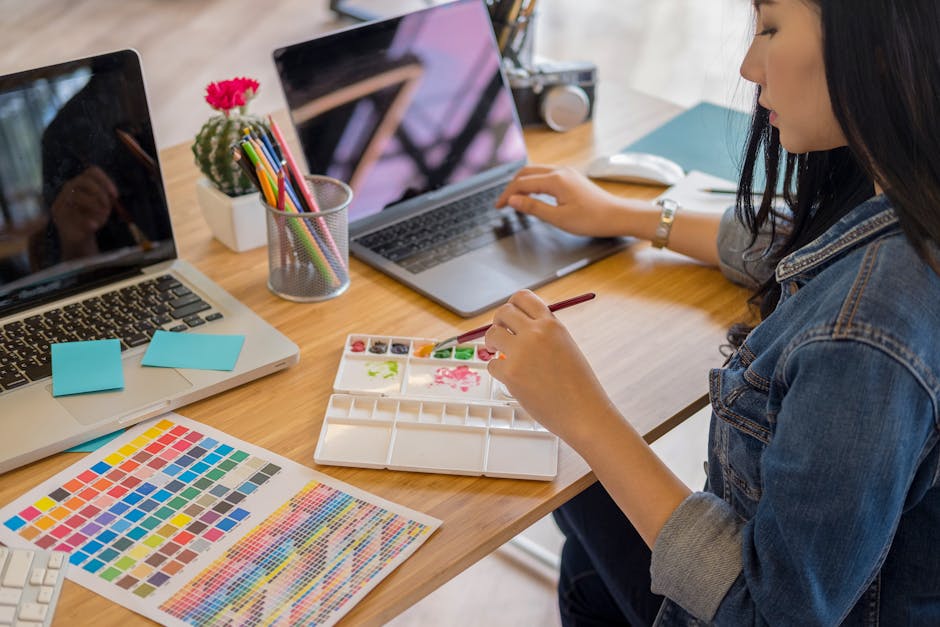
Professional-grade digital art tools like Adobe Photoshop, Procreate, and Blender have made sophisticated artistic techniques accessible to millions. Unlike traditional media that require expensive supplies and studio space, digital tools allow artists to experiment endlessly without material costs. This democratization has led to an explosion of diverse artistic voices and styles, particularly from creators who might have been excluded from traditional art education.
8. AI Art Generators Process Billions of Images for Training
Modern AI art systems are trained on massive datasets containing billions of images scraped from across the internet. LAION-5B, one of the largest publicly available datasets, contains 5.85 billion image-text pairs. This enormous training corpus allows AI systems to understand visual concepts, artistic styles, composition principles, and the relationships between textual descriptions and visual representations, though it has also raised significant copyright concerns.
9. Digital Artists Use Pressure-Sensitive Tablets That Mimic Traditional Tools
Modern drawing tablets feature thousands of pressure sensitivity levels and tilt recognition, allowing digital artists to achieve effects remarkably similar to traditional media. Devices like the Wacom Cintiq and iPad Pro with Apple Pencil can detect subtle variations in pressure and angle, enabling natural brush strokes, shading, and line variation. This technology bridges the gap between digital and traditional art-making processes.
10. AI Has Created Original Musical Compositions and Poetry
While often discussed in visual contexts, AI creativity extends to all artistic domains. Systems like OpenAI's MuseNet compose original music in various styles, while GPT-based models generate poetry and creative writing. Google's Magenta project specifically focuses on using machine learning to create compelling art and music, demonstrating that algorithmic creativity transcends visual boundaries and encompasses multiple artistic disciplines.
11. Digital Art Can Be Interactive and Responsive
Unlike static traditional artworks, digital art can respond to viewer interaction, environmental conditions, or data inputs. Interactive installations use sensors, cameras, and code to create immersive experiences that change based on audience participation. Artists like Rafael Lozano-Hemmer and teamLab create large-scale digital installations where the artwork transforms in real-time, making each viewing experience unique and participatory.
12. Blockchain Technology Enables Decentralized Art Platforms
Decentralized platforms built on blockchain technology allow artists to sell work directly to collectors without traditional gallery intermediaries. Platforms like SuperRare, Foundation, and OpenSea enable artists to set their own prices, earn royalties on secondary sales, and maintain relationships with collectors. This disintermediation challenges the traditional gallery system and gives artists unprecedented control over their careers and income.
13. AI Art Raises Profound Questions About Copyright and Authorship
The legal status of AI-generated art remains ambiguous in most jurisdictions. Key questions include: Who owns AI-generated art—the programmer, the user, or no one? Can AI systems be trained on copyrighted works without permission? In 2022, the U.S. Copyright Office ruled that AI-generated works cannot be copyrighted because they lack human authorship, creating complex implications for artists using AI tools. These debates will shape creative industries for decades.
14. Digital Restoration Preserves and Reconstructs Damaged Artworks
AI and digital technologies play crucial roles in art conservation and restoration. Machine learning algorithms can analyze damaged paintings and predict missing portions based on the artist's style and the surrounding composition. The Rijksmuseum and other institutions use AI to assist in restoring deteriorated masterpieces, while digital scanning creates permanent records of artworks at risk from environmental damage or political instability.
15. Virtual Reality Creates Immersive Three-Dimensional Art Experiences
VR technology enables artists to create fully immersive three-dimensional environments that viewers can explore and experience from within. Applications like Tilt Brush and Quill allow artists to paint in virtual three-dimensional space, creating sculptures and environments impossible in the physical world. Museums increasingly offer VR experiences that transport visitors to recreated historical sites or allow them to step inside famous paintings, fundamentally transforming how audiences engage with art.
The Future of Artistic Expression
These fifteen facts reveal how profoundly technology has transformed artistic creation, distribution, and appreciation. Digital and AI art represent not merely new tools for making traditional art, but entirely new paradigms for creative expression. As these technologies continue evolving, they promise to further blur boundaries between human and machine creativity, physical and virtual spaces, and creators and audiences. The ongoing dialogue between traditional artistic values and technological innovation will undoubtedly produce even more surprising developments, ensuring that the conversation about art's nature and purpose remains as dynamic and relevant as ever.