











1 / 10 Questions
0 Points

What Metal Makes Up Most Of A Penny's Weight?

Nickel

Copper

Tin

Zinc

Points won
0
Correct score
0%

More Questions

More Articles

Top 10 Forgotten Artists You Should Know

Top 10 Forgotten Artists You Should Know

⏱️ 6 min read

Art history often spotlights the same celebrated names—Picasso, Van Gogh, Monet—while countless talented creators fade into obscurity despite their significant contributions. These overlooked artists challenged conventions, pioneered techniques, and created breathtaking works that deserve recognition alongside their more famous contemporaries. This exploration reveals ten remarkable artists whose legacies have been unjustly overshadowed by time, offering a fresh perspective on art history's hidden treasures.

Rediscovering Lost Masters

1. Hilma af Klint: The True Pioneer of Abstract Art

Swedish artist Hilma af Klint created abstract paintings years before Wassily Kandinsky, yet her work remained largely unknown until decades after her death. Between 1906 and 1915, she produced over 200 abstract works as part of her series "Paintings for the Temple," combining geometric shapes, botanical forms, and vibrant colors inspired by spiritual and mystical concepts. Af Klint stipulated that her work not be shown until 20 years after her death, as she believed the world wasn't ready for her radical vision. Today, scholars recognize her as a groundbreaking figure who challenged both artistic conventions and gender barriers in the early modernist movement.

2. Artemisia Gentileschi: Baroque Drama and Female Strength

Despite being one of the most accomplished painters of the Italian Baroque period, Artemisia Gentileschi struggled for recognition in a male-dominated field. Her powerful depictions of biblical heroines, particularly "Judith Slaying Holofernes," showcase dramatic intensity and technical mastery that rivals Caravaggio. Gentileschi was the first woman accepted into Florence's prestigious Accademia delle Arti del Disegno, yet her contributions were minimized or attributed to her father for centuries. Her work demonstrates extraordinary skill in chiaroscuro and portrays women as active, powerful agents rather than passive subjects.

3. Edmonia Lewis: Sculptural Excellence Across Continents

As the first professional African American and Native American sculptor, Edmonia Lewis achieved international acclaim during her lifetime before fading from historical memory. Working in Rome during the 1860s and 1870s, she created neoclassical marble sculptures that addressed themes of freedom, religion, and identity. Her masterpiece "The Death of Cleopatra," weighing over two tons, disappeared for decades before being rediscovered in a Chicago salvage yard. Lewis navigated extraordinary obstacles related to race and gender while producing technically sophisticated works that challenged prevailing narratives about who could participate in fine art.

4. Egon Schiele: Expressionist Intensity Beyond Klimt's Shadow

Though Gustav Klimt's student and protégé, Egon Schiele developed a raw, expressionist style that departed dramatically from his mentor's decorative approach. His contorted figures, psychological portraits, and unflinching examinations of human vulnerability created controversy during his brief life—he died at 28 during the 1918 flu pandemic. Schiele's angular lines and emotional intensity influenced generations of figurative artists, yet he remains less recognized than Klimt despite producing over 3,000 works. His deeply psychological approach to portraiture and the human form marked a significant evolution in expressionist art.

5. Suzanne Valadon: From Model to Master

Suzanne Valadon began her artistic career as a model for Renoir and Toulouse-Lautrec before becoming an accomplished painter herself. She was the first woman admitted to the Société Nationale des Beaux-Arts and created bold, honest depictions of female nudes that subverted the male gaze dominant in art history. Valadon's work features strong lines, vibrant colors, and unidealized portrayals of women's bodies, offering a female perspective rare in early 20th-century French art. Despite her technical skill and unique viewpoint, she remained overshadowed by the male Impressionists she once modeled for and her son, Maurice Utrillo, who became a celebrated artist.

6. Yves Klein: The Man Who Patented Blue

French artist Yves Klein pioneered performance art and monochromatic painting before his death at age 34. He developed International Klein Blue, a distinctive ultramarine pigment he patented, and created provocative performances including his "Anthropometry" series, where nude models covered in paint pressed their bodies onto canvas. Klein's conceptual approach and his exploration of the immaterial in art influenced minimalism, conceptual art, and performance art movements. Despite his revolutionary ideas about artistic authorship, materiality, and the gallery space, Klein remains less known than many artists he influenced.

7. Alice Neel: Portraits of Uncomfortable Truth

Alice Neel spent decades painting psychologically penetrating portraits in New York City while figurative painting fell out of fashion. Her unflinching depictions of neighbors, family members, and fellow artists captured vulnerability, strength, and humanity with remarkable honesty. Neel painted pregnant nudes, aging bodies, and people from marginalized communities, refusing to idealize her subjects. She didn't receive a major museum retrospective until she was in her seventies, yet her influence on contemporary figurative painting continues to grow as artists rediscover her compassionate yet unsparing approach to portraiture.

8. Joaquín Sorolla: Master of Mediterranean Light

Spanish painter Joaquín Sorolla captured sunlight and seaside life with extraordinary luminosity, yet he remains relatively unknown outside Spain despite achieving international success during his lifetime. His beach scenes featuring Valencian children, fishermen, and families demonstrate virtuoso handling of light, color, and movement. Sorolla completed over 2,200 paintings, including an ambitious series depicting regions of Spain for the Hispanic Society of America in New York. His impressionistic technique and ability to capture fleeting moments of brilliance rival any of his better-known contemporaries.

9. Kathe Kollwitz: Empathy Through Printmaking

German artist Käthe Kollwitz created powerful prints and sculptures depicting war, poverty, and human suffering with profound empathy. Her cycles "The Weavers" and "The Peasants' War" portrayed working-class struggles and social injustice with emotional depth and technical mastery. Kollwitz lost a son in World War I and a grandson in World War II, experiences that deepened the pathos in her work. Despite being the first woman elected to the Prussian Academy of Arts, her socially conscious art has been overshadowed by more abstract modernist movements, though her influence on socially engaged art remains significant.

10. Amrita Sher-Gil: India's Frida Kahlo

Amrita Sher-Gil fused European modernist techniques with Indian artistic traditions, creating a distinctive style that portrayed Indian life with dignity and depth. Often called India's Frida Kahlo, she died tragically at 28, leaving behind approximately 173 paintings that challenged colonial representations of India. Her work features bold colors, simplified forms, and empathetic portrayals of everyday Indian people, particularly women. Sher-Gil's paintings combine the influence of Paul Gauguin with Indian miniature painting traditions, creating a unique synthesis that anticipated postcolonial artistic movements.

The Importance of Remembering

These ten artists represent just a fraction of talented creators overlooked by mainstream art history. Their obscurity often results from systemic biases related to gender, race, nationality, or simply the capriciousness of historical memory. By rediscovering these forgotten masters, we gain a richer, more inclusive understanding of artistic innovation and human creativity. Their works challenge us to question whose stories get told and whose contributions receive recognition, reminding us that artistic genius has never been limited to the famous few celebrated in textbooks. Each of these artists pushed boundaries, developed distinctive voices, and created works of lasting significance that deserve renewed appreciation and study.
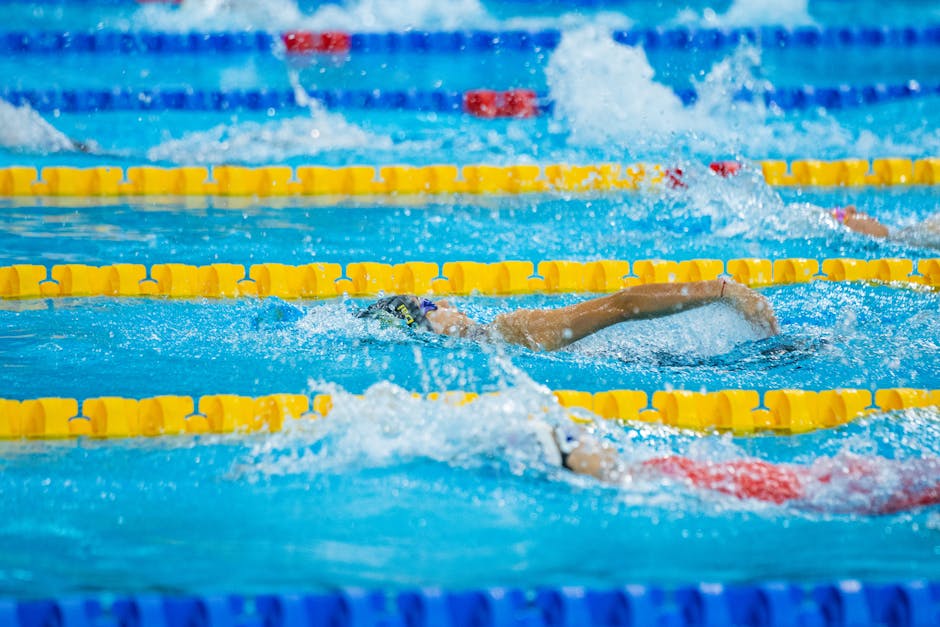
12 Little-Known Facts About Olympic Records

12 Little-Known Facts About Olympic Records

⏱️ 6 min read

The Olympic Games have produced some of the most remarkable athletic achievements in human history. While many people are familiar with household names like Usain Bolt and Michael Phelps, the deeper history of Olympic records contains fascinating stories that rarely make headlines. These lesser-known facts reveal the complexity, controversy, and sheer determination behind the numbers that define sporting excellence.

Remarkable Olympic Record Achievements

1. The Unchanged Standing Jump Records from 1900

Among the most peculiar Olympic records are those that can never be broken because the events no longer exist. Ray Ewry, an American athlete, holds the records for the standing high jump, standing long jump, and standing triple jump—all events discontinued after the 1912 Olympics. Ewry's standing long jump record of 3.47 meters, set in 1904, remains unbeaten simply because the event vanished from Olympic competition. These "eternal" records represent a fascinating footnote in Olympic history, frozen in time by changes to the competitive program.

2. The Oldest Olympic Record Still Standing

The men's long jump record held by Bob Beamon stood for an astonishing 23 years, but an even more impressive feat belongs to the hammer throw. Yuriy Sedykh's world record throw of 86.74 meters, set at the 1986 European Championships, remains the standard. However, in terms of Olympic records that have endured, several track and field marks from the 1980s and 1990s continue to stand, raising questions about changes in training methods, drug testing protocols, and athletic evolution.

3. The Record That Improved By Mere Millimeters

In shooting sports, Olympic records sometimes improve by margins so small they're barely perceptible to spectators. The 10-meter air rifle event has seen records progress by fractions of a point over decades, with athletes reaching levels of accuracy that approach the theoretical maximum possible score. These incremental improvements represent years of technological refinement in equipment and countless hours of precision training, demonstrating that breaking records isn't always about dramatic leaps forward.

4. The Swimmer Who Set Records in Landlocked Altitudes

The 1968 Mexico City Olympics, held at 2,240 meters above sea level, produced unusual conditions for record-setting. While distance runners struggled with the thin air, swimmers actually benefited from reduced air resistance above the water. Multiple swimming records fell during these Games, though the altitude advantage meant these records carried an asterisk in many observers' minds. This highlighted how environmental factors can significantly impact Olympic records, leading to ongoing debates about fair conditions for record attempts.

5. The Record Broken Before It Was Officially Recognized

Olympic records sometimes exist in a bureaucratic limbo. During preliminary heats or qualifying rounds, athletes have posted times faster than the official Olympic record, only to have these marks not recognized because they weren't achieved in the final. The rules state that Olympic records can only be set in medal-round competitions, meaning some of the fastest performances in Olympic history don't appear in record books. This technicality has frustrated numerous athletes who delivered their best performances at the "wrong" moment.

6. The Team Record That Required Perfect Synchronization

The 4x100 meter relay holds a special place in Olympic records because it demands not just individual speed but flawless baton exchanges. The world record of 36.84 seconds, set by the Jamaican men's team in 2012, represents a level of coordination where a single fumbled exchange could cost a tenth of a second—the difference between gold and missing the podium entirely. These team records showcase how Olympic excellence sometimes transcends individual ability and requires collective perfection.

7. The Record Set by the Youngest Champion

Olympic records aren't just about times and distances; they include remarkable demographic achievements. Dimitrios Loundras of Greece competed in gymnastics at the 1896 Athens Olympics at just 10 years old, making him the youngest documented Olympic competitor and medal winner. While age restrictions now prevent such young participation in most events, this record reminds us how Olympic eligibility rules have evolved to protect young athletes while still celebrating exceptional talent.

8. The Weight Class Peculiarity in Lifting Records

Weightlifting presents a unique challenge for Olympic records because weight classes change periodically, effectively erasing previous records and creating new categories. When the International Weightlifting Federation restructured weight classes in 2018, decades of records were wiped clean, forcing athletes to establish entirely new benchmarks. This means some of the most impressive feats of strength in Olympic history no longer appear in official records, existing only in historical archives and memories.

9. The Photo Finish That Changed Everything

The introduction of electronic timing and photo finish technology fundamentally altered how Olympic records are measured and verified. Before 1972, track times were recorded to the nearest tenth of a second; afterward, they were measured to the hundredth. This technological advancement meant that many records from earlier eras were effectively incomparable to modern performances. The 1960 100-meter dash, for instance, featured multiple athletes credited with the same time, something electronic timing has eliminated.

10. The Winter Olympics Record Affected by Climate Change

Alpine skiing records face an unprecedented challenge: changing snow conditions due to global temperature increases. Several Olympic host cities from past decades might not meet current snowfall requirements for Winter Games. Speed skiing records set on courses with specific snow density and temperature conditions may become increasingly difficult to break—or replicate—as climate patterns shift. This makes some winter sport records potential artifacts of specific climatic moments in history.

11. The Record That Came With Controversial Technology

The introduction of full-body polyurethane swimsuits in 2008-2009 led to an explosion of swimming records, with 43 world records broken at the 2009 World Championships alone. These suits were subsequently banned, but the records remained, creating a strange era in Olympic swimming where the record books are filled with marks that may never be approached under current equipment regulations. This controversy highlights the ongoing tension between technological advancement and maintaining fair competition.

12. The Paralympic Record That Exceeded Olympic Standards

In one of the most remarkable developments in Olympic history, certain Paralympic records have surpassed their Olympic equivalents. The men's 1500-meter T13 Paralympic record (for athletes with visual impairments) has approached times that would be competitive in Olympic qualifying rounds. Similarly, Paralympic powerlifting records in some weight classes exceed Olympic weightlifting records when adjusted for the different lift styles. These achievements have sparked important conversations about the definition of athletic excellence and the arbitrary nature of some sporting categories.

Understanding the Legacy of Olympic Records

These twelve lesser-known facts reveal that Olympic records are far more than simple numbers in a database. They represent the intersection of human achievement, technological progress, regulatory decisions, and sometimes pure chance. From events that no longer exist to records that pushed the boundaries of equipment regulations, each mark tells a story about a specific moment in sporting history. As the Olympics continue to evolve, with new events added and old ones retired, the record books will remain a fascinating chronicle of human athletic achievement—complete with asterisks, controversies, and moments of undeniable brilliance that transcend their statistical representation.