

















⏱️ 7 min read
Ancient Egypt stands as one of history's most fascinating civilizations, captivating our imagination with its monumental architecture, complex religious beliefs, and remarkable achievements. While many people are familiar with pyramids and pharaohs, this ancient civilization holds countless lesser-known facts that reveal the sophistication and ingenuity of its people. From their advanced medical practices to their surprising beauty routines, these twelve remarkable facts illuminate the daily lives, innovations, and cultural practices that made Ancient Egypt truly extraordinary.
Surprising Revelations from the Land of the Pharaohs
1. Ancient Egyptians Invented Toothpaste
Long before modern dental care, Ancient Egyptians created one of the world's first toothpastes around 5000 BCE. This abrasive mixture combined rock salt, mint, dried iris flowers, and pepper to create a cleaning paste. While effective at removing debris, the mixture was so coarse that it often wore down tooth enamel. Archaeological evidence reveals that dental problems were surprisingly common among Ancient Egyptians, partly due to sand particles that contaminated their bread during the grinding process.
2. Cleopatra Was Not Actually Egyptian
Despite being Egypt's most famous queen, Cleopatra VII was ethnically Greek, not Egyptian. She descended from Ptolemy I Soter, a Macedonian general who served under Alexander the Great and established the Ptolemaic dynasty after Alexander's death. What made Cleopatra exceptional among her lineage was her decision to learn the Egyptian language—she was the first Ptolemaic ruler to do so in nearly 300 years. This linguistic ability helped her connect with Egyptian subjects and priests, strengthening her political position.
3. Workers Who Built the Pyramids Were Not Slaves
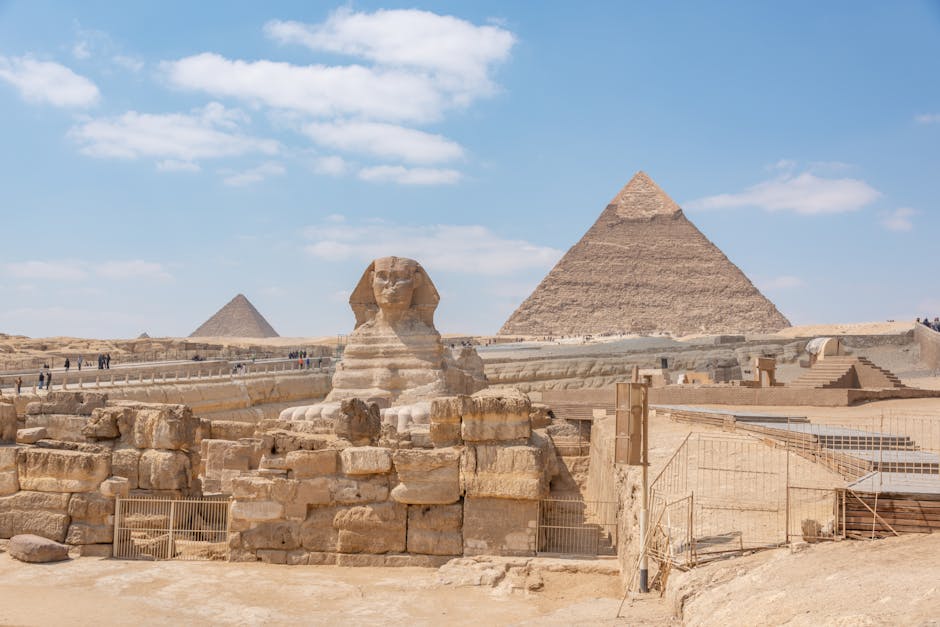
Contrary to popular belief perpetuated by Hollywood films, the Great Pyramids were not constructed by slaves. Archaeological evidence from workers' villages near the Giza plateau reveals that pyramid builders were paid laborers who received regular wages, medical care, and proper burials. These workers were skilled craftsmen and seasonal laborers, often farmers who worked on pyramid construction during the Nile's flood season when agricultural work was impossible. They took pride in their work, leaving graffiti that identified their work gangs with names like "Friends of Khufu" and "Drunkards of Menkaure."
4. Ancient Egyptians Practiced Advanced Brain Surgery
Medical papyri from Ancient Egypt document remarkably sophisticated surgical procedures, including brain surgery. The Edwin Smith Papyrus, dating to approximately 1600 BCE, describes 48 surgical cases, including skull fractures and spinal injuries. Ancient Egyptian physicians understood the relationship between brain injuries and paralysis, and they attempted trepanation—drilling holes into the skull to relieve pressure. While not all patients survived these procedures, evidence suggests some did, making these among the earliest successful neurosurgical interventions in human history.
5. Makeup Served Multiple Purposes Beyond Beauty
The distinctive eye makeup worn by Ancient Egyptians, made from ground minerals like malachite (green) and galena (black), served practical purposes beyond aesthetics. Recent scientific analysis revealed that these cosmetics contained lead-based compounds that stimulated the immune system, helping prevent eye infections. The thick eye paint also reduced glare from the intense desert sun, similar to modern athletic eye black. Both men and women wore this makeup daily, and it held religious significance, believed to provide protection from evil spirits and the gods Horus and Ra.
6. Ancient Egyptian Police Used Trained Monkeys and Dogs
Law enforcement in Ancient Egypt employed animals as part of their security forces. Archaeological evidence and ancient artwork depict trained baboons and dogs accompanying police officers on patrol. These animals helped guards apprehend criminals and provided protection during night watches. The practice was particularly common during the Middle Kingdom period, demonstrating the Egyptians' sophisticated approach to animal training and their practical application of these skills in maintaining social order.
7. Women Enjoyed Remarkable Legal Rights
Ancient Egyptian women possessed legal rights that wouldn't be matched in many Western societies until the 19th and 20th centuries. Women could own property, initiate divorce, enter contracts, serve on juries, and conduct business independently. They could inherit estates equally with male siblings and had full authority over their possessions. Some women even rose to positions of tremendous power, serving as pharaohs, high priestesses, and royal advisors. This relative gender equality was exceptional in the ancient world and reflected a society that valued women's contributions to family and community.
8. The Egyptians Created One of the Earliest Peace Treaties
Following the Battle of Kadesh in 1274 BCE between Egyptian Pharaoh Ramesses II and the Hittite Empire, both sides crafted the Egyptian-Hittite Peace Treaty—one of the earliest surviving international peace agreements. This diplomatic document established borders, created a mutual defense pact, and arranged for the extradition of refugees. Remarkably, both Egyptian and Hittite versions of the treaty survive, carved in hieroglyphics and cuneiform respectively. A replica hangs in the United Nations headquarters in New York, symbolizing humanity's long pursuit of peaceful conflict resolution.
9. Ancient Egyptians Kept Exotic Pets
Beyond cats, which were famously revered in Egyptian society, wealthy Ancient Egyptians kept an array of exotic pets including baboons, monkeys, gazelles, and even hippos. Cats held special religious significance as manifestations of the goddess Bastet, but other animals were valued as status symbols and companions. Archaeological excavations have uncovered elaborate animal cemeteries where beloved pets were mummified and buried with their owners, complete with food offerings and toys for the afterlife.
10. They Invented the 365-Day Calendar
Ancient Egyptians developed one of the first 365-day calendars around 4000 BCE, dividing the year into twelve months of thirty days each, with five extra days at year's end. This calendar was based on careful astronomical observations of the star Sirius, whose annual appearance coincided with the Nile's flooding. Their calendar formed the foundation for the Julian calendar and, eventually, our modern Gregorian calendar. This innovation demonstrated the Egyptians' advanced understanding of astronomy and their practical application of this knowledge to agriculture and religious festivals.
11. Antibiotics Were Used Thousands of Years Before Modern Medicine
Ancient Egyptian medical practitioners used moldy bread to treat infections, unknowingly harnessing the antibiotic properties of penicillin thousands of years before Alexander Fleming's official discovery in 1928. Medical papyri describe applying moldy bread poultices to wounds to prevent infection. The Egyptians also used honey, which has natural antimicrobial properties, and copper compounds as antiseptics. These treatments were remarkably effective and demonstrate sophisticated empirical medical knowledge gained through careful observation and experimentation.
12. The Great Pyramid's Construction Demonstrates Extraordinary Precision
The Great Pyramid of Giza exhibits engineering precision that challenges modern construction capabilities. Each side of the pyramid's base measures approximately 230 meters, with a maximum difference of just 4.4 centimeters between the longest and shortest sides—an accuracy rate of 0.02%. The pyramid's orientation aligns almost perfectly with true north, deviating by only 3/60th of a single degree. The structure contains approximately 2.3 million stone blocks, each weighing between 2.5 and 15 tons. This level of precision, achieved without modern surveying equipment, lasers, or powered machinery, testifies to the extraordinary mathematical and engineering knowledge possessed by Ancient Egyptian architects and builders.
The Lasting Legacy of Ancient Egypt
These twelve facts merely scratch the surface of Ancient Egypt's remarkable civilization, which flourished for over 3,000 years. From their groundbreaking medical advances and sophisticated legal systems to their architectural marvels and astronomical knowledge, the Ancient Egyptians created innovations that continue to influence modern society. Their achievements in mathematics, engineering, medicine, and governance laid foundations for future civilizations and demonstrated the human capacity for innovation and excellence. Understanding these lesser-known aspects of Egyptian civilization helps us appreciate not just their monuments, but the daily lives, ingenuity, and progressive thinking of the people who created one of history's most influential cultures.
