

1 / 10 Questions
0 Points

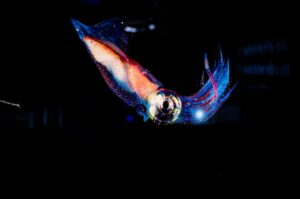
Which Deep-Sea Squid Uses Bioluminescent Ink Clouds?

Firefly squid

Vampire squid

Giant squid

Humboldt squid

Points won
0
Correct score
0%

More Questions

More Articles

Top 10 Oldest Living Things on Earth

Top 10 Oldest Living Things on Earth

⏱️ 7 min read

The natural world contains living organisms that have survived for thousands of years, witnessing the rise and fall of civilizations, dramatic climate shifts, and the transformation of entire landscapes. These ancient life forms represent nature's most resilient survivors, continuing to grow and thrive despite centuries of environmental challenges. From individual organisms to vast colonial systems, these ancient beings offer remarkable insights into longevity, adaptation, and the enduring power of life on Earth.

Ancient Survivors That Continue to Thrive

1. Pando: The Trembling Giant Clone Colony

In the Fishlake National Forest of Utah stands Pando, a massive clonal colony of quaking aspen trees that shares a single root system. This remarkable organism spans 106 acres and consists of approximately 47,000 genetically identical stems. Scientists estimate Pando to be around 80,000 years old, making it potentially the oldest living organism on Earth. Weighing approximately 6,000 metric tons, it is also among the heaviest known organisms. The name "Pando" derives from Latin, meaning "I spread," which perfectly describes how this colony has expanded through root propagation over millennia. Despite its ancient origins, Pando faces modern threats from grazing animals and human development that prevent new stems from maturing.

2. Methuselah: The Ancient Bristlecone Pine

Hidden somewhere in California's White Mountains grows Methuselah, a Great Basin bristlecone pine tree that has endured for 4,853 years. This individual tree began its life around 2831 BCE, making it older than the Egyptian pyramids. The exact location is kept secret by the U.S. Forest Service to protect it from vandalism. Bristlecone pines thrive in harsh, high-altitude environments where few other species can survive, growing incredibly slowly in the nutrient-poor dolomite soil. Their dense, resinous wood is highly resistant to insects, fungi, and rot, contributing to their extraordinary longevity. These trees can continue living even when most of their trunk is dead, surviving on a thin strip of living bark.

3. The Gran Abuelo Alerce Tree of Chile

Deep within Chile's Alerce Costero National Park stands the Gran Abuelo, or "Great Grandfather," a Patagonian cypress estimated to be over 5,400 years old according to recent research. This towering giant measures 60 meters tall and 4 meters in diameter. The Patagonian cypress, locally known as alerce, can live for millennia in the cool, wet climate of southern Chile and Argentina. The Gran Abuelo's age was determined through a combination of tree ring counting and statistical modeling, as extracting a complete core sample would damage the tree. This ancient giant has survived numerous earthquakes, volcanic eruptions, and climate fluctuations throughout its existence.

4. Seagrass Meadows of the Mediterranean

Beneath the azure waters of the Mediterranean Sea lies an organism that has been growing for approximately 100,000 years. Posidonia oceanica, a species of seagrass, forms vast underwater meadows through clonal growth. The most ancient known colony stretches for nearly 10 miles near the Spanish island of Formentera. These seagrass meadows grow extremely slowly, expanding only about one centimeter per year. They provide critical habitat for marine life, produce oxygen, and help stabilize the seafloor. The meadows have persisted through ice ages and dramatic sea level changes, adapting to shifting environmental conditions over tens of thousands of years.

5. The Jurupa Oak of California

In the Jurupa Mountains of California, a Palmer's oak colony has been surviving through clonal reproduction for an estimated 13,000 years. This ancient plant has endured since the last Ice Age by repeatedly regenerating from its root crown after wildfires and droughts kill its above-ground stems. The colony consists of about 70 clusters of stems connected by a shared root system spanning roughly 25 feet in diameter. Unlike trees that grow continuously upward, this scrub oak remains relatively small, with individual stems rarely exceeding a few feet in height. Its survival strategy relies on persistence rather than size, allowing it to outlive countless generations of much larger trees.

6. Antarctic Glass Sponge Colonies

In the frigid depths of the Southern Ocean surrounding Antarctica, enormous glass sponges have been growing for thousands of years. Some specimens are estimated to be over 10,000 years old, with the oldest potentially reaching 15,000 years. These sponges grow incredibly slowly in the cold Antarctic waters, adding only millimeters to their size each year. Their silica-based skeletal structures create intricate glass-like frameworks that can reach massive proportions. The extreme cold and stable conditions of Antarctic waters contribute to their longevity, as the environment experiences minimal seasonal variation and slow metabolic rates extend their lifespan considerably.

7. Ancient Stromatolites of Western Australia

Stromatolites in Shark Bay, Western Australia, represent living connections to Earth's earliest life forms. While the structures themselves can be thousands of years old, the communities of cyanobacteria creating them are descendants of organisms that first appeared 3.5 billion years ago. Modern stromatolites grow through the accumulation of sediments trapped by microbial mats, building layered structures at rates of less than a millimeter per year. Some individual stromatolite formations in Shark Bay are estimated to be 2,000 to 3,000 years old. These living fossils provide scientists with insights into how early life transformed Earth's atmosphere by producing oxygen through photosynthesis.

8. The Old Tjikko Norway Spruce

On Fulufjället Mountain in Sweden grows Old Tjikko, a Norway spruce with a root system that has been alive for 9,565 years. While the visible tree trunk is relatively young at a few hundred years old, the root system beneath has been continuously regenerating new trunks since the end of the last Ice Age. This clonal regeneration allowed the organism to survive harsh Ice Age conditions when the tree existed as a stunted shrub. As the climate warmed, the root system began producing the full-sized tree trunk visible today. Old Tjikko demonstrates how some organisms achieve longevity not through a single persistent structure but through continuous renewal of connected parts.

9. Ancient Box Huckleberry Colony

In the forests of Pennsylvania, a box huckleberry colony has been slowly expanding for an estimated 13,000 years. This low-growing shrub spreads through underground rhizomes, creating a circular colony that now spans several acres. The plant expands outward at a rate of approximately six inches per century, making it one of the slowest-growing organisms known. Scientists determined its age by measuring the colony's diameter and calculating backward based on its growth rate. The colony has survived countless environmental changes, including the transformation of the landscape from post-glacial tundra to temperate forest, by maintaining its slow but steady expansion strategy.

10. Welwitschia Mirabilis of the Namib Desert

In the ancient Namib Desert of Namibia and Angola lives Welwitschia mirabilis, a bizarre plant species with individuals known to exceed 2,000 years of age. These strange plants produce only two leaves throughout their entire lifetime, which continuously grow from the base while the ends weather away into tattered ribbons. The largest specimens have leaves that can reach lengths of several meters, sprawling across the desert floor. Welwitschia survives in one of Earth's oldest and driest deserts by capturing moisture from coastal fog and developing an extensive root system. Carbon dating of the largest individuals suggests some may be as old as 3,000 years, having endured millennia of extreme desert conditions.

Lessons from Earth's Most Enduring Organisms

These ten ancient living organisms demonstrate the remarkable diversity of survival strategies that enable extraordinary longevity. From clonal colonies that spread underground to individual trees growing in harsh mountaintop environments, each has adapted uniquely to its environment. Many of these ancient organisms thrive in extreme or stable conditions where competition is limited and environmental change occurs slowly. Their continued existence provides invaluable opportunities for scientific research into aging, climate change, and ecosystem dynamics. Protecting these ancient organisms requires dedicated conservation efforts, as many face unprecedented threats from human activities and rapid environmental change. These living monuments to resilience remind us that life, when given the right conditions and protection, can endure far longer than human civilizations, connecting us to Earth's deep biological history.

Did You Know Dolphins Have Names for Each Other?

Did You Know Dolphins Have Names for Each Other?

⏱️ 5 min read

Among the many remarkable traits that dolphins possess, their sophisticated communication system stands out as one of nature's most fascinating phenomena. Recent scientific discoveries have revealed that these intelligent marine mammals don't just communicate with random sounds—they actually develop unique signature whistles that function remarkably similar to human names. This groundbreaking finding has revolutionized our understanding of dolphin society and cognition, demonstrating levels of social complexity previously thought to be unique to humans and a few other species.

The Discovery of Dolphin Signature Whistles

The journey to understanding dolphin names began in the 1960s when researchers first started seriously studying dolphin vocalizations. However, it wasn't until decades of careful observation and technological advances that scientists could definitively prove that dolphins develop individual signature whistles. These aren't arbitrary sounds assigned by researchers, but rather self-created vocal signatures that each dolphin develops within their first few months of life.

Marine biologists conducting long-term studies, particularly with bottlenose dolphins, documented that each dolphin creates a unique whistle pattern that remains consistent throughout their lifetime. Using underwater recording equipment and sophisticated acoustic analysis software, researchers were able to identify and track these individual signatures across years and even decades of observation.

How Dolphin Names Actually Work

Unlike human names that are given to us by our parents, dolphins appear to invent their own signature whistles during their first year of life. This process occurs while young dolphins are still closely bonded with their mothers, listening to the whistles of family members and other dolphins in their pod. Through this acoustic environment, each dolphin crafts a unique whistle that sets them apart from all others in their community.

These signature whistles are not simple sounds. They contain specific frequency modulations, duration patterns, and tonal qualities that make them as distinct as human fingerprints. Scientists have observed that dolphins maintain these signatures throughout their lives, with only minor variations that might be comparable to different inflections or accents in human speech.

Evidence of True Naming Behavior

The most compelling evidence that these whistles function as true names came from playback experiments conducted by marine biologists. When researchers recorded a dolphin's signature whistle and played it back through underwater speakers, that specific dolphin would respond, often by repeating its own signature whistle. Other dolphins in the area typically did not respond to whistles that weren't their own, demonstrating clear recognition and discrimination.

Even more remarkably, dolphins have been observed "calling out" to each other using these signature whistles. When separated from their pod mates, dolphins will produce the signature whistle of the individual they're trying to locate, essentially calling that dolphin by name. The named dolphin often responds with its own signature whistle, confirming its location and identity.

Social Functions of Dolphin Names

The use of signature whistles serves multiple critical functions in dolphin society:

  • Maintaining contact between individuals when visibility is poor or when pod members are separated
  • Identifying themselves during reunions after periods of separation
  • Coordinating group activities such as hunting or traveling
  • Establishing and maintaining social bonds within complex pod structures
  • Teaching offspring about pod membership and social relationships

Research has shown that dolphins with strong social bonds frequently exchange signature whistles, much like humans might call out to friends or family members. Mother-calf pairs maintain almost constant vocal contact during the early months of the calf's life, with mothers using their signature whistles to help young dolphins locate them in busy social environments.

Cognitive Implications and Intelligence

The existence of naming behavior among dolphins has profound implications for our understanding of animal intelligence and consciousness. The ability to create, learn, and use arbitrary labels for individuals requires several sophisticated cognitive abilities, including self-awareness, individual recognition, vocal learning, and abstract thinking.

This discovery places dolphins in an extremely exclusive group of species known to use learned vocal labels for individuals. Besides humans, only a handful of other species have demonstrated similar abilities, including some parrot species and possibly certain primates. The fact that dolphins independently evolved this capability in an entirely different evolutionary lineage and environment highlights the remarkable convergent evolution of complex cognition.

Ongoing Research and Future Discoveries

Scientists continue to uncover new layers of complexity in dolphin communication. Recent studies suggest that dolphins may not only have names for themselves but might also recognize and remember the signature whistles of dozens or even hundreds of other individuals throughout their lives. Some researchers believe that dolphins may have reunited with pod mates after more than twenty years of separation by recognizing their signature whistles, suggesting an extraordinary capacity for long-term social memory.

Advanced technology is now allowing researchers to study dolphins in their natural habitats more effectively than ever before. Underwater microphone arrays, artificial intelligence-powered acoustic analysis, and non-invasive tracking methods are revealing even more about how these naming systems function in wild dolphin populations.

Conservation and Ethical Considerations

Understanding that dolphins have names and complex social relationships adds another dimension to conservation efforts and ethical considerations surrounding these marine mammals. It emphasizes their status as highly intelligent, socially sophisticated beings with rich inner lives and meaningful relationships. This knowledge strengthens arguments for protecting dolphin habitats, reducing ocean noise pollution that interferes with their communication, and reconsidering practices that separate dolphins from their social groups.

The revelation that dolphins call each other by name reminds us that human beings are not as unique as we once thought and that the natural world contains depths of complexity and wonder that we are only beginning to understand.