














1 / 20 Questions
0 Points

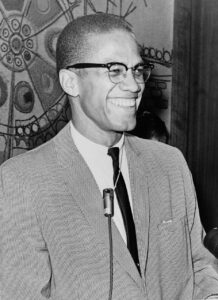
Which civil rights leader was assassinated at the Audubon Ballroom in 1965?

Martin Luther King Jr.

Medgar Evers

Fred Hampton

Malcolm X

Points won
0
Correct score
0%

More Questions

More Articles

12 Fun Facts About International Cuisines

12 Fun Facts About International Cuisines

⏱️ 6 min read

Food is a universal language that transcends borders, bringing people together through flavors, techniques, and traditions passed down through generations. Every culture has developed unique culinary practices shaped by geography, history, and available ingredients. From unexpected ingredient origins to surprising cooking methods, the world of international cuisine is filled with fascinating details that reveal much about human creativity and cultural exchange. Here are twelve remarkable facts that showcase the diversity and ingenuity of global food traditions.

Discovering the Unexpected Origins and Traditions

Fortune Cookies Are Actually American, Not Chinese

Despite being synonymous with Chinese restaurants worldwide, fortune cookies originated in California in the early 1900s. Japanese-American bakers in San Francisco and Los Angeles are credited with their creation, inspired by Japanese crackers called tsujiura senbei. The cookies became associated with Chinese cuisine when Chinese restaurant owners adopted them after World War II, when Japanese-Americans faced internment and discrimination. Today, fortune cookies remain a staple in Chinese-American restaurants, though they're virtually unknown in China itself.

Ketchup Originally Came From Southeast Asia as a Fish Sauce

The beloved tomato condiment has surprisingly exotic roots. Ketchup evolved from "ke-tsiap," a fermented fish sauce from southern China and Southeast Asia that British colonists encountered in the 17th century. Early Western versions included ingredients like mushrooms, walnuts, and oysters—anything but tomatoes. It wasn't until the 1800s in America that tomatoes became the primary ingredient, transforming it into the sweet, tangy sauce recognized today.

Croissants Were Inspired by Austrian Pastries, Not French Innovation

While croissants are quintessentially French, their origin story traces back to Vienna, Austria. The crescent-shaped pastry evolved from the Austrian "kipferl," which was brought to France by Marie Antoinette's bakers in the 1770s. French bakers later refined the recipe by incorporating laminated dough techniques, creating the buttery, flaky layers that define the modern croissant. This culinary transformation demonstrates how cultural exchange shapes beloved foods.

Unusual Ingredients and Preparation Methods

Korean Kimchi Has Over 200 Varieties and Its Own Museum

This iconic fermented vegetable dish is so central to Korean culture that an entire museum in Seoul is dedicated to its history and variations. Traditional kimchi preparation, called "kimjang," is a UNESCO-recognized cultural heritage practice involving entire communities. Families historically gathered each autumn to prepare massive quantities for winter storage. The fermentation process creates beneficial probiotics, and different regions produce distinct varieties using ingredients ranging from radishes and scallions to seafood and fruits.

Wasabi Served in Most Restaurants Isn't Real Wasabi

Authentic wasabi (Wasabia japonica) is notoriously difficult to cultivate, requiring specific stream conditions and taking up to two years to mature. This makes genuine wasabi extremely expensive, costing up to $250 per kilogram. Most sushi restaurants worldwide serve a mixture of horseradish, mustard, and green food coloring instead. Real wasabi has a more complex, subtle flavor that dissipates quickly, unlike the sinus-clearing burn of the common substitute.

India Has the World's Largest Vegetarian Population

Approximately 40% of India's population follows a vegetarian diet, making it the country with the highest concentration of vegetarians globally. This dietary tradition stems from religious beliefs, particularly Hinduism, Jainism, and Buddhism, which emphasize non-violence toward living beings. Indian cuisine has consequently developed sophisticated vegetarian cooking techniques and an incredible diversity of plant-based dishes that have influenced global vegetarian cooking. Regional variations showcase thousands of vegetarian recipes using lentils, vegetables, dairy, and aromatic spices.

Cultural Practices and Food Rituals

Italians Have Strict Rules About Coffee Consumption

Italian coffee culture follows unwritten but widely observed guidelines. Cappuccinos and milk-based coffees are consumed only before 11 a.m., as Italians believe milk interferes with digestion after meals. Espresso is the afternoon and post-dinner standard, consumed quickly while standing at the bar rather than lingering at tables. Ordering a cappuccino after lunch marks someone as a tourist. These traditions reflect deep-rooted beliefs about proper food timing and digestion that have shaped Italian dining culture for generations.

Ethiopian Cuisine Uses a Unique Sour Flatbread as Both Plate and Utensil

Injera, Ethiopia's national staple, is a spongy sourdough flatbread made from teff flour. This distinctive bread serves the dual purpose of edible plate and utensil—various stews and dishes are served atop the injera, and diners tear off pieces to scoop up food. The fermentation process takes several days, developing its characteristic tangy flavor. Eating with hands from a communal plate represents Ethiopian values of community and sharing, with social etiquette governing this practice.

Surprising Global Food Connections

Chicken Tikka Masala May Have Been Invented in Scotland

This popular curry dish's origins are hotly debated, with one prominent claim tracing it to Glasgow in the 1970s. According to legend, a customer complained that his chicken tikka was too dry, prompting the chef to improvise a creamy tomato-based sauce using condensed soup and spices. Whether fully accurate or not, the dish evolved as a British-Asian fusion creation, adapting traditional Indian flavors to Western preferences. Today, it ranks among Britain's favorite dishes, illustrating how immigration and adaptation create new culinary traditions.

Thai Cuisine's Signature Chili Peppers Came From the Americas

Despite being essential to Thai cooking, chili peppers aren't native to Thailand. Portuguese traders introduced them from Central and South America in the 16th century. Thai cuisine quickly integrated these fiery ingredients, transforming regional cooking and creating the spicy dishes now considered traditional. This relatively recent addition demonstrates how global trade routes have continuously reshaped what we consider authentic national cuisines, with ingredients traveling across continents to become cultural staples.

Japanese Tempura Technique Originated From Portuguese Missionaries

The light, crispy batter-frying technique called tempura came to Japan in the 16th century through Portuguese Catholic missionaries. The word likely derives from "tempora," referring to Ember Days when Catholics abstained from meat and ate fish instead. Japanese chefs refined this foreign technique, developing the delicate, barely-there batter that distinguishes Japanese tempura from heavier Western fried foods. This adaptation exemplifies Japan's historical pattern of adopting external influences and perfecting them into distinctly Japanese art forms.

The World's Most Expensive Spice Requires 75,000 Flowers for One Pound

Saffron, valued at up to $5,000 per pound, is laboriously harvested from crocus flower stigmas. Each flower produces only three stigmas, requiring approximately 75,000 flowers to yield a single pound of dried saffron. The harvest window lasts just one week annually, and collection must occur by hand at dawn before flowers fully open. This extreme labor intensity explains saffron's status as the world's costliest spice, prized in Middle Eastern, Mediterranean, and Indian cuisines for its distinctive flavor, aroma, and golden color.

Conclusion

These twelve facts reveal that international cuisines are far more interconnected and historically complex than commonly assumed. From mistaken origins to unexpected ingredient journeys across continents, food traditions continuously evolve through cultural exchange, adaptation, and innovation. What we consider authentic national dishes often resulted from trade routes, colonization, immigration, and creative improvisation. Understanding these surprising connections enriches our appreciation for the meals we enjoy and reminds us that cuisine, like culture itself, is never static but constantly transforming through human interaction and creativity across borders.

Top 10 Most Influential Kings and Queens in History

Top 10 Most Influential Kings and Queens in History

⏱️ 8 min read

Throughout human history, certain monarchs have wielded extraordinary power and influence, shaping the course of civilizations, religions, and cultures in ways that continue to resonate today. These rulers were more than ceremonial figureheads; they were visionaries, conquerors, legislators, and patrons whose decisions affected millions and whose legacies endure across centuries. From ancient empires to Renaissance Europe, these sovereigns left indelible marks on world history through military conquests, legal reforms, cultural achievements, and political innovations.

The Most Transformative Monarchs of All Time

1. Cyrus the Great of Persia (c. 600-530 BCE)

Cyrus the Great founded the Achaemenid Empire, which became the largest empire the ancient world had ever seen, stretching from the Mediterranean to the Indus Valley. What distinguished Cyrus from other conquerors was his revolutionary approach to governance. He respected the customs, religions, and traditions of conquered peoples, allowing them to maintain their cultural identity while under Persian rule. His Cyrus Cylinder is often considered the first declaration of human rights, proclaiming religious tolerance and the freedom of people to practice their own beliefs. His administrative genius in organizing a vast, diverse empire influenced governance models for millennia, and his legacy as a liberator was so profound that he is mentioned favorably in both the Hebrew Bible and Greek histories.

2. Alexander the Great of Macedon (356-323 BCE)

Alexander III of Macedon transformed the ancient world by conquering territories spanning three continents before his death at age 32. His military campaigns spread Greek culture, language, and ideas throughout the known world, creating the Hellenistic period that fundamentally shaped Western civilization. Alexander founded over twenty cities bearing his name, most notably Alexandria in Egypt, which became a center of learning and scholarship. His practice of cultural fusion, encouraging marriages between Greeks and locals and adopting aspects of Persian customs, created a cosmopolitan empire. Though his empire fragmented after his death, the cultural and intellectual exchange he facilitated influenced art, science, philosophy, and politics for centuries, serving as a bridge between Eastern and Western civilizations.

3. Emperor Ashoka of India (304-232 BCE)

Ashoka the Great ruled the Mauryan Empire and underwent one of history's most remarkable personal transformations. After the brutal Kalinga War, which resulted in massive casualties, Ashoka converted to Buddhism and dedicated his reign to peace, non-violence, and moral governance. He established a welfare state with hospitals, veterinary clinics, and rest houses throughout his empire. His edicts, carved on pillars and rocks across the Indian subcontinent, promoted religious tolerance, environmental conservation, and ethical treatment of all living beings. Ashoka's embrace of dhamma (righteous conduct) as state policy represented an unprecedented approach to governance, and his support helped Buddhism spread throughout Asia, making him one of the most spiritually influential monarchs in history.

4. Cleopatra VII of Egypt (69-30 BCE)

The last active pharaoh of ancient Egypt, Cleopatra VII was a brilliant political strategist and polyglot who spoke multiple languages and was the first Ptolemaic ruler to learn Egyptian. In an era when Egypt faced absorption by Rome, Cleopatra skillfully navigated international politics, forming strategic alliances with Julius Caesar and later Mark Antony to maintain Egyptian independence and prosperity. She promoted economic development, commissioned building projects, and positioned herself as the reincarnation of the goddess Isis. Though often portrayed through a romantic lens, Cleopatra was fundamentally a capable administrator and diplomat who prolonged her kingdom's independence during Rome's expansion. Her influence extended beyond politics into culture, inspiring countless works of art, literature, and drama throughout the centuries.

5. Charlemagne, King of the Franks and Holy Roman Emperor (742-814 CE)

Charlemagne united much of Western Europe for the first time since the Roman Empire, establishing the Carolingian Empire and earning the title "Father of Europe." His coronation as Holy Roman Emperor by Pope Leo III on Christmas Day 800 CE established a political alliance between the church and state that shaped European politics for centuries. Beyond his military conquests, Charlemagne's lasting influence came through the Carolingian Renaissance, a revival of art, culture, and learning. He established schools, standardized writing through Carolingian minuscule, preserved classical texts, and promoted literacy among clergy. His administrative reforms, including the missi dominici system of royal envoys, created effective governance structures that influenced feudal systems throughout medieval Europe.

6. Queen Elizabeth I of England (1533-1603)

Elizabeth I transformed England from a relatively minor European power into a major political and cultural force during her 45-year reign. Her skillful navigation of religious conflicts through the Elizabethan Religious Settlement brought stability after decades of turmoil. The defeat of the Spanish Armada in 1588 established England as a formidable naval power and opened the way for colonial expansion. Elizabeth's court became a center of English Renaissance culture, patronizing William Shakespeare, Christopher Marlowe, and other literary giants whose works defined English literature. Her decision to remain unmarried allowed her to maintain political independence while using the possibility of marriage as a diplomatic tool. The Elizabethan era saw exploration, economic growth, and the foundations of England's future global empire.

7. Suleiman the Magnificent of the Ottoman Empire (1494-1566)

Suleiman I presided over the Ottoman Empire's golden age, expanding its territories across three continents and transforming it into a major Mediterranean and global power. Known in the Islamic world as "Suleiman the Lawgiver," he reformed the Ottoman legal system, harmonizing religious law with secular governance and ensuring justice throughout his diverse empire. His court in Constantinople became a center of artistic and architectural achievement, producing magnificent mosques, palaces, and public works. Suleiman personally wrote poetry, supported the arts, and promoted intellectual life. His military campaigns extended Ottoman influence into Europe, North Africa, and the Middle East, while his patronage of culture made the Ottoman Empire a center of Islamic civilization and a bridge between East and West.

8. Peter the Great of Russia (1672-1725)

Peter I forcibly modernized Russia, transforming it from a medieval backwater into a major European power. His extensive reforms touched every aspect of Russian life: he reorganized the military along Western lines, created a navy from nothing, reformed the government bureaucracy, and established new industries. Peter's construction of St. Petersburg as a "window to the West" symbolized his vision of a Europeanized Russia. He traveled incognito throughout Europe to learn shipbuilding, military tactics, and governance, then implemented these lessons at home. Though his methods were often brutal and his reforms met resistance, Peter's vision fundamentally redirected Russian history, establishing patterns of centralized authority and westernization that influenced Russian development for centuries.

9. Catherine the Great of Russia (1729-1796)

Catherine II, born a German princess, became Russia's longest-ruling female leader and one of history's most successful monarchs. An enlightened despot who corresponded with Voltaire and Diderot, Catherine promoted education, arts, and Enlightenment ideals while expanding Russian territory significantly through military victories and diplomatic skill. She founded schools, hospitals, and the Hermitage Museum, transforming St. Petersburg into a cultural capital rivaling Paris and Vienna. Catherine's administrative reforms modernized provincial governance and promoted economic development. Despite contradictions between her enlightened rhetoric and autocratic reality, particularly regarding serfdom, she established Russia as a dominant European power and patron of culture, with her reign representing a golden age of Russian imperial achievement.

10. Queen Victoria of the United Kingdom (1819-1901)

Victoria's 63-year reign, the longest in British history until recently, gave its name to an entire era characterized by industrial progress, scientific advancement, and imperial expansion. During her rule, the British Empire reached its zenith, encompassing roughly a quarter of the world's population and territory. Victoria restored dignity to the British monarchy after the excesses of her predecessors, establishing a model of moral propriety that defined Victorian society. Her marriage to Prince Albert created a template for royal domesticity that humanized the monarchy. The Victorian era saw unprecedented technological innovation, from railways to telegraphs, social reforms including labor laws and education expansion, and Britain's emergence as the world's predominant industrial and imperial power. Victoria's influence extended beyond politics into culture, fashion, and social norms throughout the English-speaking world.

The Enduring Legacy of Royal Power

These ten monarchs demonstrate the profound impact individual rulers could have on history's trajectory. From Cyrus's religious tolerance to Victoria's imperial reach, each shaped their civilizations through military conquest, legal innovation, cultural patronage, or administrative reform. Their legacies persist in legal systems, territorial boundaries, cultural institutions, and political structures that continue to influence the modern world. While monarchy as a form of absolute power has largely faded, the achievements and failures of these rulers offer timeless lessons about leadership, governance, and the responsibilities of power. Their stories remind us that individual vision and determination, when combined with historical opportunity, can indeed change the world.