





1 / 10 Questions
0 Points

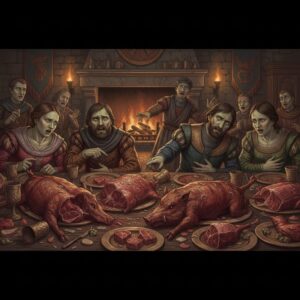
What type of dishware, popular at medieval banquets, could leach toxic substances into acidic foods and wine?

Iron cookware

Wooden trenchers

Lead-glazed pottery

Silver plates

Points won
0
Correct score
0%

More Questions

More Articles

10 Surprising Facts About Jazz Legends

10 Surprising Facts About Jazz Legends

⏱️ 7 min read

Jazz music has captivated audiences for over a century, producing some of the most innovative and influential musicians in history. While many fans know the famous recordings and performances of jazz's greatest artists, the personal stories and lesser-known facts about these legends often remain hidden in the shadows of their towering reputations. These remarkable individuals led lives as complex and fascinating as the music they created, filled with unexpected talents, unusual circumstances, and surprising connections that shaped both their careers and the evolution of jazz itself.

Hidden Stories Behind the Icons

Miles Davis's Secret Career as a Visual Artist

Beyond his revolutionary trumpet playing and compositional genius, Miles Davis was an accomplished visual artist who dedicated the final decades of his life to painting. During a five-year hiatus from music in the 1970s, Davis immersed himself in visual arts, creating bold, colorful abstract works that reflected the same innovative spirit as his music. His paintings have been exhibited in galleries worldwide, and he created several of his own album covers, including the artwork for "Tutu." Davis approached painting with the same intensity he brought to music, often working through the night and treating his canvas as another medium for improvisation.

Ella Fitzgerald's Lottery Ticket That Changed Everything

Before becoming the "First Lady of Song," a teenage Ella Fitzgerald originally planned to enter an amateur contest at Harlem's Apollo Theater as a dancer. However, on the night of the competition in 1934, she became terrified after watching a phenomenal dance act perform before her. At the last moment, she decided to sing instead—a spontaneous decision that launched her legendary career. Even more surprisingly, Fitzgerald won the contest but didn't receive the promised week-long engagement at the Apollo because theater management deemed her appearance too shabby. This rejection ultimately led her to other opportunities that proved far more valuable to her career.

John Coltrane's Spiritual Journey to India

John Coltrane's interest in Eastern spirituality and philosophy profoundly influenced his later work, but few know the depth of his dedication to these studies. Coltrane seriously considered traveling to India to study with Ravi Shankar, and he named his son Ravi in honor of the sitar master. His album "A Love Supreme" was a direct expression of his spiritual awakening and devotion, written as a prayer and meditation. Coltrane would often fast before performances and spent hours in meditation, viewing his saxophone as a vehicle for spiritual expression rather than mere musical performance.

Duke Ellington's Rejection of the Pulitzer Prize

In 1965, Duke Ellington was recommended for a special Pulitzer Prize in music, but the Pulitzer board rejected the recommendation, creating one of the most controversial decisions in the award's history. Ellington's response demonstrated his characteristic grace and wit: "Fate is being kind to me. Fate doesn't want me to be famous too young." When he was finally awarded a special posthumous Pulitzer Prize in 1999, it acknowledged not just his compositional brilliance but also the board's historical mistake. Despite this early rejection, Ellington had already received 13 Grammy Awards, the Presidential Medal of Freedom, and France's Legion of Honor during his lifetime.

Billie Holiday's Collaboration With Inventor and Musician

Billie Holiday possessed an extraordinary talent that extended beyond her haunting vocal style—she was a skilled collaborator who co-wrote many of her songs, including "God Bless the Child" and "Don't Explain." What's particularly surprising is that Holiday taught herself to read and write music relatively late in her career, relying instead on her remarkable ear and memory. She could hear a song once and perform it perfectly, often improving upon the original arrangement. Her compositional contributions were frequently overlooked during her lifetime, with male collaborators receiving disproportionate credit for their shared work.

Charlie Parker's Photographic Memory for Music

Charlie "Bird" Parker possessed such an extraordinary memory that he could hear a piece of music once and play it back perfectly, often in multiple keys. Parker reportedly memorized the entire Stravinsky catalog and could quote classical compositions during his improvisations. He practiced with such intensity that neighbors complained, and he once practiced a single phrase for eleven hours straight until he mastered it. This dedication paid off when he became one of the architects of bebop, revolutionizing jazz harmony and improvisation. Parker's ability to hear and internalize complex musical structures allowed him to create the sophisticated melodic lines that became his signature.

Thelonious Monk's Unique Musical Mathematics

Thelonious Monk's distinctive piano style wasn't just artistic preference—it was rooted in his unique understanding of musical mathematics and space. Monk's use of dissonance, unusual intervals, and unexpected silences created a compositional approach that baffled many musicians initially but influenced generations afterward. He would spend hours at the piano working out a single chord voicing, treating each note placement as a precise mathematical calculation. Monk's compositions, including standards like "Round Midnight" and "Straight, No Chaser," are now among the most recorded jazz tunes in history, studied by musicians worldwide for their innovative harmonic structures.

Louis Armstrong's Secret Tapes and Private Recordings

Louis Armstrong was an obsessive documentarian who recorded hundreds of hours of private tape recordings throughout his life, capturing conversations, rehearsals, and personal moments. These tapes, discovered after his death, revealed Armstrong's sharp wit, intellectual depth, and complex views on race relations in America—aspects of his personality that he often concealed behind his public persona. Armstrong also wrote extensive memoirs and maintained detailed scrapbooks, demonstrating a self-awareness about his historical importance. His archive included candid recordings criticizing racial injustice, contradicting the "Uncle Tom" image some critics had unfairly assigned to him.

Dizzy Gillespie's Diplomatic Mission to the Middle East

During the Cold War, Dizzy Gillespie became an unlikely cultural ambassador when the U.S. State Department sent him on tours to the Middle East, Africa, and Asia as part of its Jazz Ambassadors program. Gillespie's 1956 tour to Pakistan, Lebanon, Syria, Iran, Turkey, Yugoslavia, and Greece helped improve America's image abroad during a tense political period. He even jokingly ran for president in 1964, promising to rename the White House "The Blues House" and appoint Duke Ellington as Secretary of State and Miles Davis as head of the CIA. Beyond his comedic bent trumpet and puffed cheeks, Gillespie was a serious student of Afro-Cuban music who helped introduce Latin rhythms into modern jazz.

Nina Simone's Classical Training and Career Rejection

Before becoming the "High Priestess of Soul," Nina Simone trained as a classical pianist with dreams of becoming the first Black American classical pianist. She was rejected by Philadelphia's Curtis Institute of Music, a rejection she believed was racially motivated and that devastated her for years. This crushing disappointment redirected her toward jazz and popular music, where she developed her unique style blending classical technique with jazz, blues, and folk influences. Simone's classical training remained evident throughout her career in her sophisticated arrangements and virtuosic piano playing. Her song "Mississippi Goddam" became a civil rights anthem, demonstrating how her artistry became a powerful vehicle for social justice.

The Lasting Impact of Jazz Pioneers

These surprising facts about jazz legends reveal that the greatest musicians in the genre were far more than their public personas suggested. They were spiritual seekers, visual artists, political activists, and intellectual pioneers who pushed boundaries not just in music but in how they lived their lives. Their dedication to their craft, combined with their willingness to take risks and embrace innovation, created the foundation for modern music. Understanding these hidden dimensions of their lives helps us appreciate the full scope of their genius and the personal sacrifices they made to advance their art. These jazz legends transformed not only music but also cultural attitudes, proving that true artistry extends far beyond technical mastery into the realm of human experience and expression.

Top 10 Strange Moments in World History

Top 10 Strange Moments in World History

⏱️ 6 min read

History is filled with peculiar events that defy logic, challenge our understanding, and leave historians scratching their heads. From mysterious dances that gripped entire cities to bizarre military operations involving animals, the past contains moments so strange they seem almost fictional. These unusual incidents remind us that human history is not merely a collection of wars, treaties, and revolutions, but also a tapestry woven with inexplicable occurrences that continue to fascinate and perplex us centuries later.

Unexplained and Peculiar Events Throughout History

1. The Dancing Plague of 1518

In the summer of 1518, the city of Strasbourg, France, experienced one of history's most bizarre medical mysteries. A woman named Frau Troffea began dancing uncontrollably in the street, and within a week, 34 others had joined her. By the end of the month, approximately 400 people were dancing without rest, many collapsing from exhaustion, strokes, or heart attacks. The affliction lasted for weeks, and despite various theories ranging from mass hysteria to ergot poisoning, no definitive explanation has ever been established. Local authorities, believing the dancers needed to "dance it out," even constructed stages and hired musicians, which only seemed to worsen the epidemic.

2. The Great Emu War of 1932

Australia's military once waged war against birds—and lost. After World War I, ex-soldiers turned farmers in Western Australia faced an invasion of approximately 20,000 emus destroying their wheat crops. The government dispatched soldiers armed with machine guns to cull the bird population. However, the emus proved remarkably difficult targets, scattering into small groups and outrunning the military vehicles. After expending thousands of rounds of ammunition with minimal success, the operation was deemed a failure. The "Emu War" remains one of the most embarrassing military campaigns in modern history, with the birds emerging victorious.

3. The Disappearance of the Roanoke Colony

In 1587, over 100 English settlers established a colony on Roanoke Island in present-day North Carolina. When their governor, John White, returned from a supply trip to England in 1590, he found the settlement completely abandoned. The only clue was the word "CROATOAN" carved into a wooden post and "CRO" etched into a tree. No signs of struggle or violence were evident, and no bodies were ever discovered. Despite numerous investigations and theories ranging from Spanish attacks to assimilation with Native American tribes, the fate of the "Lost Colony" remains one of America's greatest unsolved mysteries.

4. The London Beer Flood of 1814

On October 17, 1814, a massive vat containing over 135,000 imperial gallons of beer ruptured at the Meux and Company Brewery in London. The explosion caused a domino effect, bursting other vats and releasing approximately 388,000 gallons of beer into the streets of the St. Giles district. The resulting tsunami of beer demolished two houses and killed eight people, most of whom were attending a funeral. The flood was so devastating that survivors attempted to collect the free beer in whatever containers they could find, and some allegedly died from alcohol poisoning after excessive consumption.

5. The Tunguska Event of 1908

On June 30, 1908, a massive explosion occurred near the Tunguska River in Siberia, flattening approximately 80 million trees across 770 square miles of forest. The blast was estimated to be 1,000 times more powerful than the atomic bomb dropped on Hiroshima. Eyewitnesses reported seeing a fireball streak across the sky, followed by a shock wave that knocked people off their feet hundreds of miles away. Remarkably, no impact crater was ever found. Scientists believe a meteor or comet exploded in the atmosphere before reaching the ground, but the event remains shrouded in mystery and speculation.

6. The War of the Bucket

One of history's pettiest conflicts occurred in 1325 between the Italian city-states of Bologna and Modena. The war allegedly began when Modenese soldiers stole a wooden bucket from a well in Bologna. This trivial theft escalated into a full-scale conflict that resulted in approximately 2,000 deaths. The Battle of Zappolino saw Modena emerge victorious, and the stolen bucket was kept as a trophy. Remarkably, the bucket still resides in Modena's town hall today, serving as a bizarre reminder of this absurd medieval conflict.

7. The Cadaver Synod of 897

In one of the Catholic Church's most macabre moments, Pope Stephen VI ordered the exhumation of his predecessor, Pope Formosus, who had been dead for nine months. The decomposing corpse was dressed in papal vestments, propped up on a throne, and put on trial for perjury and violating church law. A deacon was appointed to speak for the deceased pope. Formosus was found guilty, his papacy was declared null and void, his body was stripped of its vestments, three fingers were cut off, and the corpse was thrown into the Tiber River. This grotesque spectacle shocked even medieval sensibilities and remains one of history's strangest legal proceedings.

8. The Mystery of the Mary Celeste

In December 1872, the merchant ship Mary Celeste was discovered adrift in the Atlantic Ocean, completely abandoned. The vessel was seaworthy, its cargo intact, and there were six months' worth of food and water aboard. The lifeboat was missing, but no distress signals had been sent. Personal belongings, including valuables and the crew's pipes, remained undisturbed. The last log entry was dated nine days earlier and revealed nothing unusual. The captain, his family, and the entire crew had vanished without explanation, creating one of maritime history's most enduring mysteries.

9. The Halifax Slasher Panic of 1938

In November 1938, the English town of Halifax was gripped by mass hysteria over reports of a mysterious attacker wielding a razor or mallet. Dozens of people claimed to have been assaulted by this phantom figure, leading to vigilante groups patrolling the streets and widespread panic. Scotland Yard investigators eventually determined that nearly all reports were fabrications or self-inflicted injuries designed to gain attention. Several people were prosecuted for public mischief, and the incident became a classic example of mass hysteria and moral panic, demonstrating how fear can spread rapidly through communities.

10. The Assassination Attempt That Started with a Sandwich

The assassination of Archduke Franz Ferdinand in 1914, which triggered World War I, succeeded partly due to incredible coincidence. After an initial assassination attempt failed, the Archduke's driver made a wrong turn onto a side street where one of the conspirators, Gavrilo Princip, happened to be eating a sandwich. Finding his target unexpectedly before him, Princip seized the opportunity and fired the fatal shots. This random sandwich break at the precise moment the Archduke's car took a wrong turn changed the course of world history, leading to a war that claimed millions of lives.

The Enduring Fascination with Historical Oddities

These strange moments in history serve as reminders that the past was populated by real people experiencing genuinely bizarre circumstances. From dancing plagues and beer floods to wars fought over buckets and military defeats at the hands of flightless birds, these events demonstrate that truth is often stranger than fiction. They humanize history, showing that even in earlier eras, people faced absurd situations that challenged logic and reason. These peculiar episodes continue to captivate historians and the public alike, proving that the most memorable historical moments are not always the most conventionally significant, but rather those that defy our expectations and challenge our understanding of how the world works.