


1 / 10 Questions
0 Points

What Color Stripes Almost Got Painted On The Golden Gate Bridge?

Red and white

Blue and silver

Green and gold

Black and yellow

Points won
0
Correct score
0%

More Questions

More Articles

Top 10 Fun Facts About K-Pop

Top 10 Fun Facts About K-Pop

⏱️ 6 min read

Korean pop music, commonly known as K-Pop, has exploded onto the global entertainment scene, captivating millions of fans worldwide with its infectious beats, stunning choreography, and charismatic performers. Beyond the catchy songs and elaborate music videos lies a fascinating world filled with surprising details and remarkable achievements. From training systems to cultural impact, the K-Pop industry operates unlike any other music scene in the world, creating phenomena that continue to break records and challenge conventions.

The Rigorous Training System Behind the Stars

1. Trainees Spend Years Perfecting Their Craft Before Debut

Before K-Pop idols ever step onto a stage, they undergo one of the most demanding training programs in the entertainment industry. Aspiring stars typically train for an average of three to four years, though some spend as long as seven to ten years perfecting their skills. During this period, trainees practice singing, dancing, rapping, foreign languages, and even acting for up to 12-16 hours daily. Major entertainment companies like SM Entertainment, YG Entertainment, and JYP Entertainment run these intensive programs, carefully molding young talents into polished performers. This system explains why K-Pop idols demonstrate such exceptional synchronization and professional stage presence from their very first performances.

2. The Monthly Evaluation System Determines Who Debuts

K-Pop trainees face regular monthly evaluations where they perform in front of company executives and trainers. These assessments determine whether they continue training, need improvement in specific areas, or should be dropped from the program entirely. The pressure is immense, as only a small percentage of trainees actually debut in a group. This competitive environment pushes aspiring idols to constantly improve and explains the incredibly high performance standards that K-Pop groups consistently maintain.

Global Achievements and Record-Breaking Success

3. BTS Made History as the First K-Pop Group to Top the Billboard Hot 100

In 2020, BTS achieved what many thought impossible when their English-language single "Dynamite" debuted at number one on the Billboard Hot 100 chart. This historic achievement marked the first time a Korean act topped this prestigious chart since its inception in 1958. The group has since repeated this feat multiple times with songs like "Savage Love (Remix)," "Life Goes On," "Butter," and "Permission to Dance," proving that language barriers no longer limit musical success in the streaming era.

4. K-Pop Generates Billions in Economic Impact

The K-Pop industry contributes approximately $10 billion annually to South Korea's economy, according to the Hyundai Research Institute. This economic phenomenon extends beyond album and concert ticket sales to include tourism, merchandise, cosmetics, fashion, and food exports. Fans traveling to South Korea specifically for K-Pop-related experiences inject significant revenue into the country's tourism sector, while Korean beauty products and fashion trends gain global popularity through idol endorsements.

Unique Industry Practices and Cultural Elements

5. Fan Engagement Reaches Unprecedented Levels

K-Pop has revolutionized artist-fan relationships through innovative engagement strategies. Idol groups maintain constant communication with fans through multiple platforms including V Live broadcasts, Weverse, Bubble, and social media. Fans can watch live streams of idols' daily activities, participate in video calls through fan sign events, and interact through personalized messaging apps. This accessibility creates intensely loyal fandom communities that organize streaming parties, fund billboard advertisements, and execute coordinated album-buying campaigns to support their favorite groups.

6. Comeback Seasons Transform the Industry Calendar

Unlike Western artists who may release albums sporadically, K-Pop operates on a "comeback" system where groups return with new music multiple times per year. These comebacks involve weeks of teasers, concept photos, music video previews, and promotional activities across various music shows. Groups typically promote their title tracks for three to four weeks, performing on programs like "Music Bank," "Inkigayo," and "M Countdown," where they can win weekly awards based on digital sales, physical sales, and viewer votes. This system keeps the industry constantly buzzing with fresh content and maintains intense fan engagement year-round.

Cultural Impact and Innovation

7. Synchronized Choreography Defines K-Pop Performance Art

K-Pop has elevated dance to an essential element of musical performance. Groups learn intricate choreography that requires perfect synchronization among all members, often incorporating challenging moves that become viral dance trends. Choreographers work closely with groups to create signature moves for each song, which fans worldwide learn and recreate in dance covers. This emphasis on visual performance has influenced global pop music, with Western artists increasingly incorporating elaborate choreography into their own performances.

8. Multilingual Idols Bridge Cultural Divides

Many K-Pop groups strategically include members from different countries, creating truly international ensembles. Groups often feature Korean, Chinese, Japanese, Thai, American, Australian, and Canadian members who speak multiple languages fluently. This diversity allows groups to communicate directly with fans across different markets without relying solely on translators. Some idols speak four or five languages, making K-Pop one of the most linguistically accessible music genres globally and facilitating its rapid international expansion.

The Business and Marketing Innovation

9. Album Packaging Becomes Collectible Art

K-Pop has transformed physical album sales in the digital age by creating elaborate packages that fans eagerly collect. Albums include multiple photo card versions, posters, stickers, photo books, and sometimes even special items like postcards or folded posters. Random photo card inclusions encourage fans to purchase multiple copies, hoping to collect their favorite member's card. Some albums feature different cover versions, further incentivizing multiple purchases. This innovative approach has kept physical album sales thriving while most of the global music industry has shifted entirely to streaming.

10. Social Media Dominance Reshapes Global Pop Culture

K-Pop artists and agencies have mastered social media marketing, consistently trending worldwide on platforms like Twitter, YouTube, and Instagram. BLACKPINK's music videos routinely break YouTube records, with "How You Like That" gaining over 80 million views within 24 hours of release. K-Pop fans have developed sophisticated streaming strategies, creating tutorials and organizing mass-streaming events to boost view counts and chart positions. This social media prowess has established K-Pop as a dominant force in online entertainment, with hashtags regularly trending globally and fandom communities demonstrating unprecedented organizational capabilities.

Conclusion

The K-Pop phenomenon represents far more than just catchy music and talented performers. It embodies a comprehensive entertainment system that has revolutionized how music is created, marketed, and consumed globally. From the rigorous training protocols that produce exceptionally skilled performers to the innovative fan engagement strategies that build devoted communities, K-Pop has established new standards for the entertainment industry. Its economic impact, cultural influence, and record-breaking achievements demonstrate that this Korean wave shows no signs of receding. As K-Pop continues to evolve and expand its global reach, it remains a fascinating case study in how dedication, innovation, and cultural authenticity can create a worldwide entertainment revolution.
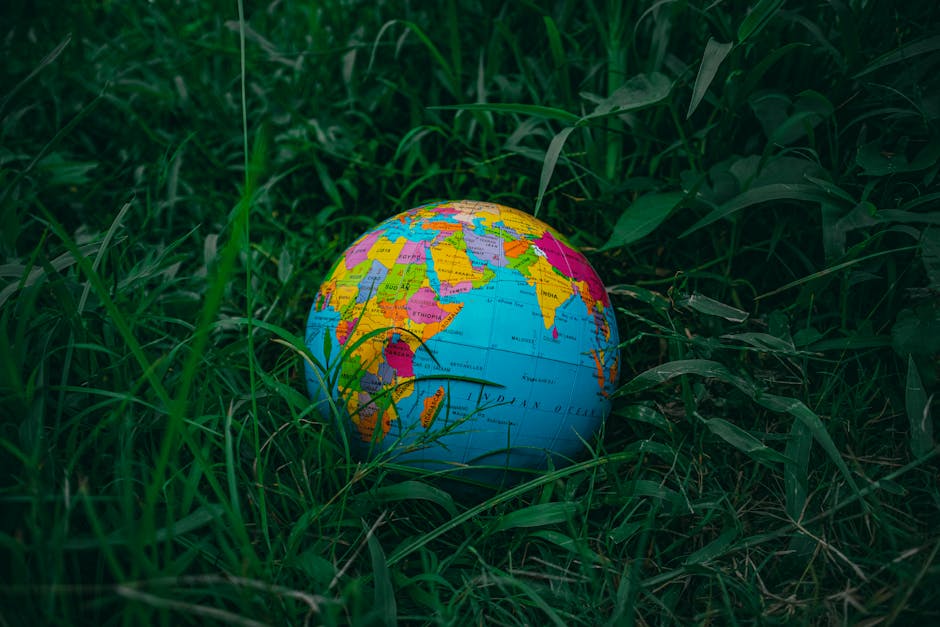
Top 10 Largest Countries in the World

Top 10 Largest Countries in the World

⏱️ 7 min read

The world's largest countries span vast distances, encompassing diverse landscapes, climates, and ecosystems that shape the lives of billions of people. When measuring nations by total area, including both land and water territories, a fascinating picture emerges of geographical giants that dominate entire continents and regions. These expansive countries play crucial roles in global politics, economics, and environmental systems, influencing everything from international trade routes to climate patterns. Understanding the scale and characteristics of these massive territories provides valuable insight into global geography and the distribution of natural resources across our planet.

The World's Most Expansive Nations

1. Russia: The Transcontinental Titan

Spanning an astounding 17,098,242 square kilometers (6,601,668 square miles), Russia holds the undisputed title as the world's largest country by total area. This vast nation stretches across eleven time zones, extending from Eastern Europe to the Pacific Ocean. Russia encompasses approximately one-eighth of Earth's inhabited land area, featuring diverse landscapes ranging from Arctic tundra in the north to subtropical beaches along the Black Sea. The country's immense territory includes significant portions of both Europe and Asia, making it the world's only true transcontinental superpower. Russia's vast forests, particularly the Siberian taiga, represent the largest forested area on the planet, while its extensive mineral and energy resources make it a crucial player in global commodity markets.

2. Canada: North America's Northern Giant

With a total area of 9,984,670 square kilometers (3,855,100 square miles), Canada ranks as the second-largest country globally. This North American nation possesses the world's longest coastline, stretching over 202,080 kilometers along three different oceans: the Atlantic, Pacific, and Arctic. Despite its enormous size, Canada has a relatively small population of approximately 38 million people, resulting in one of the lowest population densities among major nations. The country contains more lakes than the rest of the world combined, with over 31,700 lakes larger than three square kilometers. Canada's geography ranges from vast prairie grasslands to towering Rocky Mountain peaks, dense boreal forests, and Arctic archipelagos in its northern territories.

3. United States: Diverse Geography from Coast to Coast

The United States encompasses 9,833,517 square kilometers (3,796,742 square miles), securing its position as the third-largest country worldwide. This total includes all fifty states, from Alaska's Arctic wilderness to Hawaii's tropical islands in the Pacific. The contiguous United States alone features remarkable geographical diversity, including mountain ranges like the Rockies and Appalachians, the Great Plains, extensive desert regions, and fertile agricultural valleys. The country's varied climate zones support different ecosystems and economic activities, from subtropical regions in Florida to temperate rainforests in the Pacific Northwest. America's size has historically contributed to its economic development, providing abundant natural resources and agricultural land.

4. China: Asia's Territorial Powerhouse

China covers approximately 9,596,960 square kilometers (3,705,407 square miles), making it the fourth-largest country and the largest nation entirely within Asia. The country's territory encompasses dramatic geographical contrasts, from the Himalayan mountains in the southwest—including portions of the world's highest peaks—to low-lying coastal plains in the east. China contains the Gobi Desert, one of the world's largest deserts, as well as extensive river systems including the Yangtze and Yellow Rivers that have sustained civilization for millennia. The nation's vast size accommodates five different climate zones and supports the world's largest population, demonstrating how territorial expanse can sustain massive demographic concentrations when combined with fertile land and water resources.

5. Brazil: South America's Dominant Territory

Brazil's 8,515,767 square kilometers (3,287,956 square miles) make it the fifth-largest country globally and by far the largest in South America, occupying nearly half of the continent's total area. The country is home to the Amazon Rainforest, the world's largest tropical rainforest, which plays a critical role in global climate regulation and biodiversity. Brazil's territory also includes extensive portions of other important ecosystems, such as the Pantanal wetlands and the Cerrado savanna. The country's Atlantic coastline stretches for 7,491 kilometers, supporting major urban centers and economic activities. Brazil's geographical position astride the equator gives it a predominantly tropical climate, though southern regions experience subtropical conditions.

6. Australia: The Island Continent

Australia occupies 7,692,024 square kilometers (2,969,907 square miles), ranking sixth globally and holding the distinction of being the world's largest country that is also a continent. This island nation features some of Earth's most unique landscapes, including vast desert regions that cover approximately 70% of the continent's interior. The famous Outback represents one of the most sparsely populated areas on the planet. Australia's isolation has resulted in extraordinary biodiversity, with many species found nowhere else on Earth. The country's coastal regions, where most of the population resides, contrast sharply with the arid interior, featuring temperate forests, tropical rainforests in the north, and Mediterranean climates in the south.

7. India: The Subcontinent's Geographic Jewel

India's 3,287,263 square kilometers (1,269,219 square miles) make it the seventh-largest country worldwide. Despite being significantly smaller than the countries ranked above it, India supports the world's second-largest population within its borders. The country's geography is defined by the Himalayan mountain range in the north, the Indo-Gangetic Plain—one of the world's most fertile and densely populated regions—and peninsular plateaus extending into the Indian Ocean. India's position gives it access to extensive coastlines along the Arabian Sea and Bay of Bengal, facilitating maritime trade that has been crucial throughout history. The country experiences diverse climatic conditions, from alpine conditions in mountainous regions to tropical climates in the south.

8. Argentina: Stretching Along South America's Southern Cone

Argentina covers 2,780,400 square kilometers (1,073,500 square miles), making it the eighth-largest country and the second-largest in South America. The nation extends from subtropical regions in the north to the subantarctic territories near Antarctica, spanning an extraordinary range of latitudes. This north-south extension creates remarkable climatic and geographical diversity, including the Andes Mountains along its western border, the Pampas grasslands that support extensive agriculture, Patagonian steppes in the south, and the Mesopotamian wetlands in the northeast. Argentina's territorial claims also include portions of Antarctica and several South Atlantic islands, though some of these claims are disputed internationally.

9. Kazakhstan: Central Asia's Vast Expanse

Kazakhstan encompasses 2,724,900 square kilometers (1,052,100 square miles), ranking as the ninth-largest country globally and the largest landlocked nation in the world. This Central Asian country stretches from the Caspian Sea in the west to the Altai Mountains near China in the east. Kazakhstan's terrain is predominantly characterized by vast steppes and semi-arid plains, though it also includes portions of significant mountain ranges and the northern shores of the Caspian Sea. The country's size and position along the ancient Silk Road have historically made it a crucial crossroads between East and West. Despite its enormous territory, Kazakhstan has a relatively modest population, resulting in low population density across most of the country.

10. Algeria: Africa's Largest Nation

Algeria's 2,381,741 square kilometers (919,595 square miles) secure its position as the tenth-largest country worldwide and the largest on the African continent. Approximately 80% of Algeria's territory is covered by the Sahara Desert, making it one of the most arid countries on Earth. The population concentrates primarily in the northern coastal regions along the Mediterranean Sea, where more favorable climate conditions support agriculture and urban development. Algeria's vast desert interior includes dramatic sand dunes, rocky plateaus, and mountain ranges, including portions of the Atlas Mountains. The country's size and natural resources, particularly oil and natural gas deposits, have made it an important regional power in North Africa and the wider Arab world.

Understanding Global Geographic Distribution

These ten largest countries collectively account for approximately 49% of Earth's total land surface, demonstrating how a small number of nations control vast portions of global territory. Their sizes have profound implications for resource distribution, population settlement patterns, and international relations. From Russia's sprawling Eurasian expanse to Algeria's Saharan dominance in Africa, these geographical giants shape regional and global dynamics through their territorial reach, natural resources, and strategic positions. Understanding the scale and characteristics of these massive countries provides essential context for comprehending global geography, environmental systems, and the complex interplay between physical space and human civilization.