




1 / 10 Questions
0 Points

What gives Roman concrete its 2000-year strength?

Volcanic ash

Crushed marble

Sea salt

Animal blood

Points won
0
Correct score
0%

More Questions

More Articles

Top 10 Most Watched Sports Events Ever

Top 10 Most Watched Sports Events Ever

⏱️ 6 min read

Throughout history, certain sporting events have transcended their competitive nature to become global phenomena that unite billions of viewers across continents. These monumental occasions captivate audiences not just for the athletic excellence on display, but for their cultural significance, dramatic narratives, and ability to bring humanity together in shared experience. The viewership numbers for these events represent some of the largest audiences ever assembled for any broadcast in television history.

The Most Watched Sporting Spectacles in History

1. FIFA World Cup Final - A Quadrennial Global Phenomenon

The FIFA World Cup Final consistently ranks as the most-watched sporting event globally, with the 2018 final between France and Croatia drawing an estimated 1.12 billion viewers. The tournament's cumulative viewership across all matches reaches approximately 3.5 billion people, representing nearly half of the world's population. The 2014 final between Germany and Argentina in Brazil attracted over 1 billion viewers alone, while the 2010 final in South Africa saw similar numbers. The World Cup's universal appeal stems from football being the world's most popular sport and the tournament's accessibility across nearly every nation.

2. Summer Olympic Games Opening Ceremonies

The Summer Olympics opening ceremony represents one of television's grandest spectacles, with viewership regularly exceeding 3 billion across the entire multi-week event. The 2008 Beijing Olympics opening ceremony alone attracted approximately 1 billion viewers, while the cumulative audience for all Olympic events during those games reached an estimated 4.7 billion people. The London 2012 Olympics drew 3.6 billion total viewers, and Rio 2016 attracted 3.5 billion. These ceremonies showcase not just athletic competition but cultural celebration and national pride on an unprecedented scale.

3. UEFA Champions League Final - Europe's Premier Club Competition

The UEFA Champions League Final has evolved into one of football's most-watched annual events, with recent finals attracting between 300-400 million viewers worldwide. The 2019 final between Liverpool and Tottenham drew 380 million viewers, while the 2018 clash between Real Madrid and Liverpool reached 390 million. This competition brings together the best club teams from across Europe, creating matchups that transcend national boundaries and attract global audiences invested in following their favorite players and clubs throughout the tournament.

4. Super Bowl - America's Biggest Television Event

While more regionally focused than global football events, the Super Bowl consistently ranks as the most-watched television broadcast in the United States, with recent editions attracting 100-115 million American viewers. However, international viewership has grown significantly, with the Super Bowl now reaching approximately 160-180 million viewers globally. Super Bowl XLIX in 2015 holds the U.S. record with 114.4 million domestic viewers. The event's appeal extends beyond the game itself, with the halftime show and commercials becoming cultural phenomena in their own right.

5. Tour de France - Three Weeks of Cycling Drama

The Tour de France, cycling's most prestigious race, attracts a cumulative global television audience of approximately 3.5 billion viewers across its three-week duration. While individual stage viewership varies, the final stage on the Champs-Élysées in Paris regularly draws over 50 million viewers. The race's unique format allows for sustained engagement over multiple weeks, and its passage through picturesque French countryside provides compelling television regardless of viewers' interest in cycling. The 2019 edition reached audiences in 190 countries.

6. Cricket World Cup Final - The Commonwealth's Premier Event

Cricket's popularity in populous nations like India, Pakistan, Bangladesh, and across the Commonwealth ensures massive viewership for World Cup finals. The 2019 Cricket World Cup Final between England and New Zealand attracted approximately 1.6 billion viewers, making it one of the most-watched sporting events in history. The 2015 final drew similar numbers, with over 1 billion viewers in India alone. Cricket's passionate following in South Asia particularly drives these extraordinary viewership figures.

7. Winter Olympic Games - Cold Weather Competition

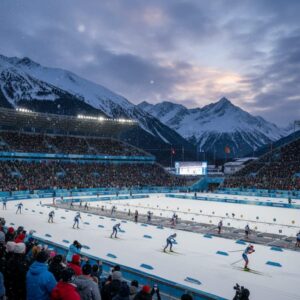
While typically drawing smaller audiences than their summer counterpart, Winter Olympics still command impressive global viewership. The 2018 PyeongChang Winter Olympics attracted approximately 2 billion viewers worldwide, while Sochi 2014 reached 2.1 billion. These games showcase unique sporting disciplines not widely visible during regular broadcasts, from figure skating to alpine skiing, creating special viewing occasions for audiences worldwide. Host nation time zones significantly impact viewership patterns for these events.

8. Boxing's Biggest Fights - Mayweather vs. Pacquiao

The May 2015 welterweight championship bout between Floyd Mayweather and Manny Pacquiao became one of the most-watched boxing matches in history, with approximately 400 million viewers globally. In the United States alone, it generated 4.6 million pay-per-view buys, the highest in boxing history. The fight's significance stemmed from years of anticipation and the convergence of two undefeated champions at the peak of boxing's popularity. Other historic fights, including Muhammad Ali's bouts, attracted similarly massive audiences during their respective eras.

9. UEFA European Championship Final - Continental Glory

The UEFA European Championship Final, held every four years, consistently draws viewership exceeding 300 million. The Euro 2016 final between Portugal and France attracted approximately 330 million viewers, while Euro 2012's final reached similar numbers. This tournament carries particular significance as it represents continental supremacy among European nations, often featuring higher-quality football than World Cup matches due to Europe's dominance in the sport. The 2020 edition (played in 2021) saw the final between Italy and England draw over 328 million viewers.

10. Formula 1 Monaco Grand Prix - Motorsport's Crown Jewel

The Monaco Grand Prix, Formula 1's most prestigious race, regularly attracts over 100 million viewers worldwide, making it one of motorsport's most-watched events. The race's glamorous location on the streets of Monte Carlo, combined with its historical significance and challenging circuit, creates compelling television. Formula 1's overall season viewership has grown substantially, with cumulative audiences reaching 1.9 billion across all races in recent seasons. The sport's global expansion and Netflix documentary series have broadened its appeal beyond traditional markets.

The Power of Global Sporting Events

These ten sporting spectacles demonstrate the unique power of athletics to unite global audiences in ways few other cultural phenomena can match. From football's worldwide dominance through the World Cup and Champions League to the comprehensive celebration of human athletic achievement at the Olympics, these events transcend language barriers, political divisions, and cultural differences. They create shared moments of drama, triumph, and heartbreak that resonate across continents. As broadcast technology continues evolving and reaching previously underserved markets, these viewership numbers will likely continue growing, cementing sport's position as one of humanity's most universal languages.

Did You Know? 12 Secrets Behind Iconic Movie Scenes

Did You Know? 12 Secrets Behind Iconic Movie Scenes

⏱️ 7 min read

Movies have the power to transport audiences to different worlds, evoke powerful emotions, and create unforgettable moments that stay with us long after the credits roll. However, behind many of cinema's most memorable scenes lie fascinating secrets, innovative techniques, and surprising stories that even devoted film fans might not know. From groundbreaking special effects to improvised dialogue that became legendary, these behind-the-scenes revelations offer a deeper appreciation for the artistry and creativity that goes into filmmaking.

Uncovering the Hidden Stories of Cinema's Greatest Moments

The Chest-Burster Scene in "Alien" Featured Genuine Shock

One of horror cinema's most disturbing moments came from director Ridley Scott's decision to keep his cast largely in the dark. During the filming of the infamous chest-burster scene in "Alien" (1979), only John Hurt knew exactly what would happen. The other actors were told something would emerge, but they had no idea about the explosive violence or the amount of blood that would spray everywhere. Their genuine reactions of shock and horror were captured on film, with Veronica Cartwright's terrified response being completely authentic. The crew even used real animal organs and high-pressure blood pumps to enhance the realism, making the scene even more disturbing for the unprepared cast members.

The Iconic "You're Gonna Need a Bigger Boat" Was Improvised

In "Jaws" (1975), one of cinema's most quotable lines wasn't in the original script. Roy Scheider's character, Chief Brody, delivers the unforgettable line "You're gonna need a bigger boat" after getting his first real look at the massive shark. Scheider improvised this line during filming, and it became such a running joke on set that he said it multiple times throughout production. Steven Spielberg loved it so much that he kept it in the final cut, and it became one of the film's most memorable moments, perfectly capturing the character's understated terror.

The Silence of the Lambs' Terrifying Slurping Sound Was Added Later

Anthony Hopkins' chilling performance as Hannibal Lecter included one particularly unsettling moment that wasn't originally planned. When Lecter describes eating a census taker's liver "with some fava beans and a nice Chianti," Hopkins added a spontaneous slurping sound that sent shivers down everyone's spine. This improvised touch was so effective that it remained in the film and became one of the character's most disturbing trademark moments, enhancing the character's cannibalistic menace.

The Wizard of Oz's Snow Was Made of Asbestos

Behind the magical wonder of "The Wizard of Oz" (1939) lay some shocking production realities. The snow that falls on Dorothy and her friends as they emerge from the poppy field wasn't actually snow at all—it was pure asbestos. At the time, the health dangers of asbestos weren't widely known, and it was commonly used in Hollywood productions for its flame-retardant properties and snow-like appearance. The cast and crew were exposed to this toxic material throughout filming, a sobering reminder of how much safety standards have evolved in the film industry.

The Famous Leg Crossing Scene in "Basic Instinct" Sparked Controversy

Sharon Stone's infamous interrogation scene in "Basic Instinct" (1992) became one of cinema's most talked-about moments, but the actress later claimed she was misled about how it would appear on screen. Stone stated that director Paul Verhoeven assured her that nothing would actually be visible in the shot, and she only discovered the truth when she saw the film with an audience. The controversy surrounding this scene and Stone's allegations about being deceived brought important conversations about actor consent and directorial ethics to the forefront of Hollywood discourse.

The Shower Scene in "Psycho" Took Seven Days to Film

Alfred Hitchcock's legendary shower scene in "Psycho" (1960) lasted only 45 seconds on screen but required an entire week of filming. The sequence consisted of 77 different camera angles and 50 cuts, meticulously planned and executed to create maximum psychological impact without showing explicit violence. Hitchcock used chocolate syrup for blood because it photographed better in black and white, and most of the knife stabs were aimed at a dummy rather than actress Janet Leigh. The scene revolutionized film editing and demonstrated how suggestion and quick cuts could be more powerful than graphic imagery.

Leonardo DiCaprio Cut His Hand During "Django Unchained" But Kept Acting

During the filming of "Django Unchained" (2012), Leonardo DiCaprio accidentally smashed his hand on a glass during an intense dinner scene, severely cutting his palm. Rather than breaking character, DiCaprio continued with the scene, even smearing his real blood on co-star Kerry Washington's face (later replaced with fake blood for safety). Director Quentin Tarantino was so impressed with DiCaprio's commitment and the raw intensity of the moment that he kept it in the final film. This dedication to staying in character despite genuine injury showcased DiCaprio's intense method acting approach.

The Spinning Hallway Fight in "Inception" Used a Real Rotating Set

Christopher Nolan's commitment to practical effects was fully displayed in "Inception's" (2010) gravity-defying hallway fight scene. Rather than relying on CGI, Nolan's team built a massive rotating corridor set that could spin 360 degrees. Actor Joseph Gordon-Levitt spent weeks training and performing the complex choreography while the entire hallway rotated around him. The sequence required precise timing and coordination, with the actor often getting bruised and battered during the lengthy filming process. This practical approach created a visceral, realistic quality that purely digital effects couldn't replicate.

The Famous Orgasm Scene in "When Harry Met Sally" Was Shot in a Real Deli

Meg Ryan's memorable fake orgasm scene in "When Harry Met Sally" (1989) was filmed in the authentic Katz's Delicatessen in New York City, with real customers dining in the background. Director Rob Reiner's mother delivered the famous final line, "I'll have what she's having," which was improvised on set. The deli has since marked the specific table where the scene was filmed, turning it into a tourist attraction. The scene's impact on popular culture and its bold approach to discussing female sexuality in romantic comedies made it one of cinema's most iconic moments.

The T-Rex Attack in "Jurassic Park" Was Enhanced by Unplanned Rain

The terrifying T-Rex attack scene in "Jurassic Park" (1993) became even more dramatic thanks to unexpected weather conditions. The animatronic dinosaur wasn't designed to get wet, and when rain began falling during filming, the massive robot began malfunctioning and moving unpredictably. Rather than shutting down production, Steven Spielberg worked with these technical difficulties, and the dinosaur's erratic, shuddering movements made it appear even more menacing and lifelike. The actors' genuine concern about the malfunctioning multi-ton robot added authentic fear to their performances.

The Opening Beach Battle of "Saving Private Ryan" Made Actors Vomit

Steven Spielberg's unflinching depiction of the D-Day landing in "Saving Private Ryan" (1998) was so realistic that some actors became physically ill during filming. Spielberg deliberately made the production grueling, requiring actors to undergo military training and exposing them to loud explosions and chaotic battle conditions. The handheld camera work, desaturated color palette, and commitment to historical accuracy created such an immersive and traumatic experience that some World War II veterans had to leave theaters during screenings. The visceral realism set a new standard for war films.

The "Here's Johnny!" Door Was Destroyed by Jack Nicholson's Real Firefighting Experience

In "The Shining" (1980), the script called for Jack Nicholson's character to break through a bathroom door with an axe. However, Nicholson, who had previously worked as a volunteer firefighter, demolished the door so quickly and efficiently that the crew had to rebuild it with stronger wood. His experience made him too proficient at breaking down doors, and the scene required multiple takes with reinforced materials to make the sequence last long enough. Nicholson's improvised "Here's Johnny!" line, borrowed from "The Tonight Show" with Johnny Carson, became one of horror cinema's most quoted moments.

The Magic Behind the Movies

These twelve secrets reveal that some of cinema's most powerful moments resulted from happy accidents, actor improvisation, directorial ingenuity, and occasionally questionable production decisions. From genuine reactions captured on film to elaborate practical effects that pushed the boundaries of what was possible, these behind-the-scenes stories demonstrate that movie magic often comes from unexpected sources. The dedication, creativity, and sometimes sheer luck involved in creating these iconic scenes remind us that filmmaking is both an art and a craft, where the final product we see on screen represents countless decisions, innovations, and occasionally fortuitous accidents. Understanding these secrets doesn't diminish the impact of these memorable scenes—instead, it deepens our appreciation for the complex collaborative process that brings unforgettable moments to life on the silver screen.