










1 / 10 Questions
0 Points

What do we call animals that live entirely underground without sunlight?

Butterflies

Troglobites

Amphibians

Dinosaurs

Points won
0
Correct score
0%

More Questions

More Articles

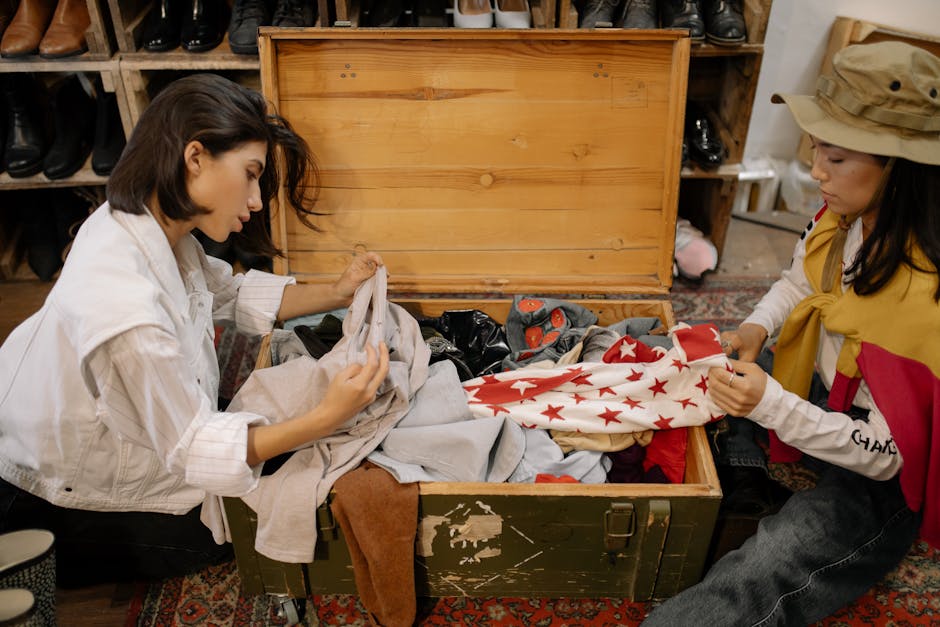
Did You Know? 10 Fun Facts About Fashion History

Did You Know? 10 Fun Facts About Fashion History

⏱️ 7 min read

Fashion has always been more than just clothing—it's a reflection of culture, technology, social movements, and human creativity throughout the ages. From unexpected origins of everyday garments to surprising regulations that once governed what people could wear, the history of fashion is filled with fascinating stories that reveal how our ancestors dressed, thought, and lived. These remarkable facts about fashion history showcase the ingenuity, oddity, and evolution of style across centuries.

Surprising Stories from the World of Fashion

1. High Heels Were Originally Designed for Men

Contrary to modern associations with women's fashion, high heels were initially created for men in the 10th century. Persian cavalry soldiers wore heeled shoes to help secure their feet in stirrups while riding horses and shooting arrows. The trend spread to Europe in the 17th century when aristocratic men adopted high heels as a symbol of status and masculinity. King Louis XIV of France was particularly fond of heels, often wearing shoes with heels as tall as five inches, frequently dyed red to signify his royal status. It wasn't until the 18th century that heels became predominantly associated with women's fashion, as men's clothing moved toward more practical styles during the Enlightenment period.

2. Purple Dye Was Once Worth More Than Gold

In ancient times, the color purple was so expensive that only royalty and the extremely wealthy could afford to wear it. The dye came from the mucus secretions of a specific type of sea snail found in the Mediterranean called the Murex. It took approximately 12,000 snails to produce just 1.4 grams of dye, making it extraordinarily rare and valuable. This "Tyrian purple" became synonymous with imperial power in Rome, where laws were passed restricting who could wear the color. The phrase "born to the purple" still references this association with royalty and privilege.

3. Sumptuary Laws Dictated Fashion by Social Class

Throughout medieval and Renaissance Europe, governments enacted sumptuary laws that strictly regulated what people could wear based on their social class. These laws controlled everything from fabric types and colors to the length of garments and the size of accessories. In Elizabethan England, only members of the royal family could wear certain shades of purple, while gold and silver fabrics were restricted to nobility. These regulations were designed to maintain visible social hierarchies and prevent lower classes from appearing above their station. Violations could result in fines, public humiliation, or even imprisonment.

4. The Little Black Dress Revolutionized Women's Wardrobes

Before Coco Chanel introduced her famous little black dress in 1926, black clothing was primarily associated with mourning and servants' uniforms. Chanel's simple, elegant black dress design challenged these conventions and democratized fashion by creating an affordable, versatile garment that any woman could wear. Vogue magazine compared the impact of Chanel's creation to that of the Ford Model T automobile, predicting it would become "a sort of uniform for all women of taste." The little black dress became a wardrobe staple that transcended class boundaries and remains an essential fashion piece nearly a century later.

5. Buttons Were Once Luxurious Status Symbols

While buttons are now commonplace fasteners, they were originally decorative items that signified wealth and social standing. In the 13th century when buttons first appeared in Europe, they were made from precious materials like gold, silver, ivory, and gemstones. The wealthy would commission elaborate buttons as displays of their affluence, sometimes owning buttons worth more than the garments they adorned. King Francis I of France reportedly owned a set of black velvet garments decorated with 13,600 gold buttons. The invention of the buttonhole in the 13th century transformed buttons from purely decorative objects into functional fasteners, though their status symbol quality persisted for centuries.

6. Neckties Originated from Croatian Mercenaries

The modern necktie traces its origins to 17th-century Croatian mercenaries who wore distinctive knotted neckerchiefs as part of their military uniforms. When these soldiers served in France during the Thirty Years' War, their unique neckwear caught the attention of Parisians, including King Louis XIV. The French adopted and refined the style, calling it "cravate" after the Croats who inspired it. This accessory became a staple of men's fashion throughout Europe and eventually evolved into the modern necktie. The tradition of wearing ties as professional attire continues to this day, though the original military purpose has long been forgotten.

7. Pockets Were Separate Accessories Women Tied Around Their Waists

Before pockets were sewn into garments, women wore separate pocket bags tied around their waists beneath their skirts, accessed through slits in the outer garment. These detachable pockets could hold various personal items and were often beautifully embroidered or decorated, despite being hidden from view. When women's fashion shifted toward slimmer silhouettes in the late 18th century, these practical pockets disappeared, replaced by small decorative reticules (handbags) that could hold very little. The removal and minimal restoration of functional pockets in women's clothing has remained a point of contention in fashion for over two centuries, with modern movements advocating for practical pockets in women's garments.

8. Denim Jeans Were Invented for Gold Miners

In 1873, Jacob Davis and Levi Strauss patented the first riveted denim work pants, specifically designed to withstand the harsh conditions faced by gold miners and laborers in the American West. The copper rivets reinforced stress points where pants typically tore, while the sturdy denim fabric could endure heavy wear. Originally called "waist overalls," these practical work pants remained primarily workwear for decades. It wasn't until the mid-20th century that jeans transformed into a fashion statement, adopted by rebellious youth culture and eventually becoming one of the most ubiquitous garments worldwide, worn by people of all ages and social classes.

9. Chopines Could Reach Two Feet in Height

During the Renaissance, particularly in Venice and throughout Italy, wealthy women wore platform shoes called chopines that could reach heights of up to 24 inches. These towering platforms were originally practical, designed to protect expensive clothing from muddy streets, but they evolved into status symbols—the higher the chopine, the higher the wearer's social status. Women needed assistance walking in these extreme shoes, often requiring servants or walking sticks for support. Some cities eventually banned or restricted chopines due to safety concerns and the impractical nature of the footwear. These precarious platforms represent one of fashion history's most extreme examples of style over comfort.

10. Gas Masks Influenced 1960s Fashion Design

The space age and Cold War anxieties of the 1960s led fashion designers to incorporate elements inspired by gas masks and protective gear into their avant-garde creations. Designer Pierre Cardin and others embraced futuristic, utilitarian aesthetics that reflected contemporary concerns about nuclear war and space exploration. This influence appeared in helmet-like hats, goggle-inspired sunglasses, and streamlined silhouettes that suggested protective equipment. The intersection of fashion and functionality during this era demonstrated how global political tensions and technological advancement could directly inspire clothing design, creating a distinctive aesthetic that defined 1960s mod fashion.

The Ever-Evolving Nature of Style

These ten fascinating facts reveal that fashion history is far more complex and intriguing than simply the evolution of hemlines and silhouettes. From practical inventions that became status symbols to social regulations that controlled personal expression, fashion has always been intertwined with economics, politics, technology, and cultural values. Understanding these historical contexts enriches our appreciation of contemporary fashion and reminds us that today's trends will someday become tomorrow's curious historical footnotes. The garments we wear carry stories of innovation, rebellion, practicality, and artistry that connect us to centuries of human creativity and social evolution.

Did You Know? 10 Fun Facts About Tennis Grand Slams

Did You Know? 10 Fun Facts About Tennis Grand Slams

⏱️ 7 min read

Tennis Grand Slams represent the pinnacle of professional tennis, drawing millions of viewers worldwide and creating legends on the court. The four major tournaments—the Australian Open, French Open, Wimbledon, and US Open—have rich histories filled with remarkable achievements, quirky traditions, and surprising records that even devoted fans might not know. These fascinating aspects of Grand Slam tennis reveal the unique character of each tournament and the extraordinary feats accomplished by the sport's greatest players.

Uncovering the Remarkable Stories Behind Tennis's Biggest Tournaments

1. The Calendar Year Grand Slam Remains One of Sport's Rarest Achievements

Winning all four Grand Slam tournaments in a single calendar year stands as one of the most elusive accomplishments in all of sports. In the Open Era, which began in 1968, only two players have achieved this remarkable feat in singles competition. Steffi Graf accomplished it in 1988, adding an Olympic gold medal to create the "Golden Slam." Rod Laver achieved it twice, in 1962 and 1969, making him the only player ever to complete the Calendar Year Grand Slam more than once. The difficulty stems from the vastly different playing surfaces and conditions across all four tournaments, requiring players to master clay, grass, and hard courts within the same season.

2. Wimbledon's Strict All-White Dress Code Has Victorian Origins

The All England Club maintains the strictest dress code in professional tennis, requiring players to wear almost entirely white clothing. This tradition dates back to the Victorian era when white was chosen because it was the least likely to show sweat stains, which were considered improper. The rules are so stringent that even the color of undergarments is regulated, and players have been asked to change clothing for violations as minor as having colored trim that exceeds acceptable dimensions. This dress code has caused controversy in recent years, with some players challenging its relevance in modern tennis.

3. The French Open's Unique Red Clay Creates the Slowest Playing Surface

Roland Garros uses crushed brick to create its distinctive red clay courts, making it the only Grand Slam played on this surface. The clay significantly slows down the ball and produces a high bounce, fundamentally changing the game's dynamics. This surface favors players with exceptional endurance, defensive skills, and heavy topspin groundstrokes. The clay also shows ball marks, making it the only Grand Slam where players and umpires can check impact points to resolve disputed line calls. Rafael Nadal's dominance on this surface is unparalleled, with the Spanish champion winning the tournament a record fourteen times, earning him the nickname "King of Clay."

4. The Australian Open Moved Dates to Escape the Southern Hemisphere's Peak Summer Heat

The Australian Open originally took place in December but moved to January in 1987 to avoid conflicts with other tournaments and improve player participation. However, January still falls in Australia's summer, leading to extreme heat conditions that have caused matches to be suspended and players to suffer heat-related illnesses. The tournament has implemented an extreme heat policy and invested in retractable roofs for its main courts. In 2014, temperatures reached 42 degrees Celsius (108 degrees Fahrenheit), causing players to hallucinate and collapse, highlighting the brutal conditions athletes face at this Grand Slam.

5. The US Open Was the First Grand Slam to Implement the Tiebreak System

In 1970, the US Open became the first Grand Slam tournament to use the tiebreak system to decide sets, revolutionizing professional tennis. Before this innovation, sets could theoretically continue indefinitely, leading to exhausting marathon matches. The tiebreak, played when a set reaches 6-6, allows the first player to reach seven points with a two-point margin to win the set. This system has since been adopted by the Australian Open and French Open for all sets, while Wimbledon uses it for all sets except the final set, which now has a special tiebreak at 12-12.

6. Margaret Court Holds the All-Time Record for Grand Slam Singles Titles

While contemporary discussions often focus on Roger Federer, Rafael Nadal, Serena Williams, and Novak Djokovic, Australian legend Margaret Court holds the overall record with 24 Grand Slam singles titles. She won these championships between 1960 and 1973, during an era when tennis was transitioning from amateur to professional status. Court also achieved the Calendar Year Grand Slam in 1970 and won more than half of her titles at the Australian Open. Her record demonstrates the historical depth of Grand Slam competition and provides context for evaluating modern champions' achievements.

7. Wimbledon Still Pays Prize Money in British Pounds Sterling

Unlike the other Grand Slams that announce prize money in their local currencies for practical reasons, Wimbledon maintains the tradition of paying in British pounds sterling, reflecting its long heritage as the oldest tennis tournament in the world, founded in 1877. The tournament has significantly increased prize money over the years to maintain its prestige. Interestingly, Wimbledon also maintained different prize money for men and women until 2007, when it became the last Grand Slam to implement equal pay for both singles champions.

8. The French Open Named Roland Garros After a World War I Aviation Pioneer

The French Open's official name, Roland Garros, honors a French aviation pioneer who became the first person to fly across the Mediterranean Sea. Roland Garros was also a World War I fighter pilot who developed a system allowing machine guns to fire through airplane propellers. He was shot down and died in 1918, just one month before the war ended. The tennis stadium was named in his honor in 1928, though he had no particular connection to tennis. This makes Roland Garros unique among Grand Slams for being named after someone unrelated to the sport.

9. The Golden Slam Requires Olympic Gold in Addition to All Four Majors

The "Golden Slam" extends beyond the traditional Grand Slam by requiring an Olympic gold medal in addition to all four major championships. Steffi Graf achieved this incredible feat in 1988, winning all four Grand Slams and Olympic gold in the same calendar year. No other player has matched this achievement in a single year, though several players, including Rafael Nadal, Serena Williams, and Andre Agassi, have completed the Career Golden Slam by winning all four majors and an Olympic gold medal across their careers. The rarity of this accomplishment reflects the challenge of peaking during the Olympics, which occur only once every four years.

10. Qualifying Tournaments Give Lower-Ranked Players Their Grand Slam Chance

Each Grand Slam features an extensive qualifying tournament held the week before the main draw begins, offering lower-ranked players the opportunity to earn a coveted spot in the tournament. Typically, 128 players compete in the qualifying rounds for 16 available spots in the main singles draw. These qualifying tournaments are grueling, requiring players to win three consecutive matches just to reach the first round of the main tournament. Some players have remarkably advanced from qualifiers to win the entire championship, though this remains extremely rare. The qualifying system democratizes access to Grand Slam tournaments and occasionally produces inspiring underdog stories.

Conclusion

The Grand Slam tournaments combine athletic excellence with rich traditions, surprising historical facts, and remarkable individual achievements. From the pristine grass courts of Wimbledon to the red clay of Roland Garros, each tournament presents unique challenges that test players' versatility and mental fortitude. Understanding these fascinating facts deepens appreciation for the complexity of professional tennis and the extraordinary dedication required to succeed at the highest level. Whether it's the rarity of the Calendar Year Grand Slam, the quirky traditions maintained across decades, or the historical figures these tournaments honor, Grand Slam tennis continues to captivate audiences worldwide with its blend of athletic excellence and cultural significance.