






1 / 10 Questions
0 Points

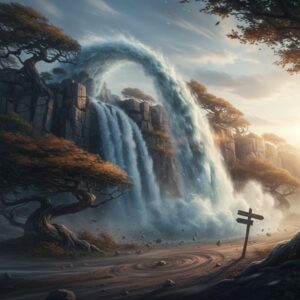
What Australian natural wonder involves water flowing in opposite directions due to tidal forces?

Horizontal Falls

Vertical Tides

Tidal Cascades

Reverse Rapids

Points won
0
Correct score
0%

More Questions

More Articles

Top 10 Fun Facts About Iconic Movie Scenes

Top 10 Fun Facts About Iconic Movie Scenes

⏱️ 6 min read

Cinema has given us countless memorable moments that have become embedded in popular culture. Behind these unforgettable scenes lie fascinating stories of improvisation, happy accidents, and creative decisions that shaped film history. From unexpected ad-libs that became legendary lines to technical innovations that revolutionized filmmaking, these behind-the-scenes revelations offer a deeper appreciation for the art of cinema.

Legendary Movie Moments and Their Hidden Stories

1. The Improvised "Here's Looking at You, Kid" in Casablanca

One of cinema's most romantic lines was never in the original script. Humphrey Bogart's famous "Here's looking at you, kid" was actually something he used to say to Ingrid Bergman between takes while teaching her poker during breaks. Director Michael Curtiz loved it so much that he encouraged Bogart to work it into the film naturally. The line appears four times throughout Casablanca, and each delivery feels organic because it genuinely was part of the actors' off-screen rapport.

2. The Chest-Burster Scene Shocked the Cast in Alien

Director Ridley Scott deliberately kept the cast of Alien mostly in the dark about how graphic the chest-burster scene would be. While they knew something would emerge from John Hurt's chest, they weren't prepared for the explosive gore that erupted during filming. The actors' horrified reactions are completely genuine, with Veronica Cartwright's shock so real that she stumbled backward. The crew used high-pressure pumps to spray blood, and some of it hit Cartwright directly in the face, adding to the scene's visceral authenticity.

3. The Silence of the Lambs' Iconic Slurping Sound

Anthony Hopkins' terrifying ad-lib in The Silence of the Lambs created one of cinema's most disturbing moments. After Hannibal Lecter describes eating a census taker's liver with "fava beans and a nice Chianti," Hopkins added an unscripted slurping sound. This improvised detail made the scene exponentially more chilling and perfectly captured the character's disturbing combination of sophistication and savagery. Director Jonathan Demme wisely kept it in the final cut, and it became one of the most quoted and parodied moments in thriller history.

4. The Real Pinprick in The Princess Bride

During the climactic sword fight in The Princess Bride, Cary Elwes insisted that Christopher Guest actually hit him over the head with the sword pommel for authenticity. Elwes wanted the scene to look as realistic as possible, so Guest reluctantly agreed to make genuine contact. The result was so effective that Elwes was knocked unconscious and had to be taken to the hospital. The footage made it into the film, creating one of the most believable action sequences in a movie filled with deliberately theatrical moments.

5. Leo DiCaprio's Bloody Hand in Django Unchained

Leonardo DiCaprio accidentally smashed a glass with his hand during the dinner table scene in Django Unchained, severely cutting his palm. Rather than breaking character, DiCaprio continued with the scene, incorporating his real bleeding hand into his performance. When he smeared his actual blood on Kerry Washington's face, it created an even more disturbing and intense moment than originally scripted. Quentin Tarantino was so impressed by DiCaprio's commitment that he kept the take in the final film, though some blood was added digitally for additional shots.

6. The Backwards-Walking Scene in Twin Peaks

David Lynch's surreal Red Room sequences in Twin Peaks were achieved through an ingenious practical effect. The actors actually learned their dialogue backwards and spoke it phonetically while walking in reverse. The footage was then played backwards, creating the dreamlike, unsettling quality of the Black Lodge scenes. Michael J. Anderson, who played The Man from Another Place, had to practice extensively to master speaking backwards while maintaining the strange rhythm and inflection that made his character so memorable.

7. The Genuine Tears in E.T. the Extra-Terrestrial

Steven Spielberg employed an emotional technique to capture genuine reactions from young Drew Barrymore during E.T.'s death scene. He told the seven-year-old actress that her real dog had died, which caused her to cry authentically on camera. While controversial by today's standards, this method acting approach created one of cinema's most heartbreaking moments. Spielberg later stated he wouldn't use such tactics again, recognizing the ethical concerns, but the scene remains powerfully affecting decades later.

8. The Staircase Stumble in The Exorcist

The famous scene of Father Karras falling down the stairs in The Exorcist was far more dangerous than it appeared. Stuntman Paul Bateson performed the fall down a genuine Georgetown staircase with only thin padding hidden beneath his costume. Director William Friedkin, known for his commitment to realism, insisted on minimal safety measures to make the tumble look authentic. The stuntman actually injured himself during the fall, but Friedkin got the visceral, brutal shot he wanted, contributing to the film's reputation for pushing boundaries in pursuit of horror authenticity.

9. The Iconic "You're Gonna Need a Bigger Boat" Ad-Lib

Roy Scheider's legendary line in Jaws was completely improvised and wasn't in Peter Benchley's script. The phrase was actually an in-joke among the crew, who constantly complained about their production barge being too small for all the equipment needed. Scheider borrowed this running gag and delivered it perfectly upon first seeing the shark, capturing both humor and terror in five words. Steven Spielberg immediately recognized it as perfect and kept it in the film, where it became one of cinema's most quotable lines.

10. The Zipper Mishap That Made There's Something About Mary

The infamous zipper scene in There's Something About Mary required careful choreography to appear both painful and comedic. Ben Stiller actually wore a prosthetic piece that got caught in the zipper, but the reactions from the other actors were genuine responses to how convincing the effect looked. The Farrelly Brothers shot multiple takes with different reactions, ultimately choosing the ones where the supporting cast looked most authentically horrified. The scene became so iconic that it's credited with launching the gross-out comedy renaissance of the late 1990s.

The Magic Behind Movie Making

These behind-the-scenes stories reveal that some of cinema's most memorable moments emerged from spontaneity, accidents, and creative risks. Whether through improvisation, practical effects, or unexpected mishaps, these scenes demonstrate that filmmaking is an unpredictable art form where the best moments often can't be planned. The willingness of directors to embrace the unexpected and actors to take risks has given audiences unforgettable experiences that continue to resonate across generations. Understanding these hidden stories enriches our appreciation for the collaborative creativity and occasional chaos that produces movie magic.

Top 10 Animated Series Loved by Adults

Top 10 Animated Series Loved by Adults

⏱️ 6 min read

Animation has evolved far beyond Saturday morning cartoons, becoming a sophisticated medium that tackles complex themes, sharp social commentary, and mature storytelling. While animated series were once primarily targeted at children, a growing number of shows have captured the hearts and minds of adult audiences worldwide. These series blend intelligent humor, intricate narratives, and stunning artistry to create entertainment that resonates with grown-up viewers. Here are ten animated series that have become beloved staples among adult audiences.

The Golden Age of Adult Animation

1. BoJack Horseman: Depression and Fame in Hollywoo

Netflix's BoJack Horseman stands as a masterpiece of adult animation, offering a deeply introspective look at mental health, addiction, and the emptiness of celebrity culture. Set in a world where humans and anthropomorphic animals coexist, the series follows a washed-up sitcom star struggling with depression, substance abuse, and his own toxic behavior. What sets BoJack apart is its unflinching honesty about mental illness and personal responsibility. The show balances devastating emotional moments with clever wordplay and visual gags, creating a unique viewing experience that refuses to provide easy answers or simple redemption arcs. Its exploration of trauma, accountability, and the possibility of change resonated with audiences seeking more than superficial entertainment.

2. Rick and Morty: Nihilism Meets Science Fiction

This interdimensional adventure series combines high-concept science fiction with dark humor and philosophical undertones. Rick and Morty follows an alcoholic genius scientist and his anxious grandson through infinite realities, exploring existential themes while maintaining rapid-fire comedy. The show's appeal to adults stems from its intellectual references, ranging from quantum mechanics to literary theory, alongside its willingness to confront nihilism, mortality, and the meaninglessness of existence. Despite its often cynical worldview, the series manages to find moments of genuine emotion and family connection, creating a complex narrative that rewards repeated viewing and analysis.

3. Arcane: Elevating Video Game Adaptations

Based on the League of Legends universe, Arcane shattered expectations for video game adaptations with its stunning visual artistry and emotionally compelling storytelling. The series explores themes of class warfare, scientific ethics, and family bonds through the relationship between two sisters torn apart by conflicting ideologies. Its mature approach to violence, political corruption, and moral ambiguity attracted viewers who had never played the game, proving that animation could deliver cinematic-quality storytelling. The show's painterly animation style and complex character development demonstrated that adult animation could be both visually breathtaking and narratively sophisticated.

4. Attack on Titan: Dark Fantasy and Political Intrigue

This Japanese anime transformed from a monster-fighting premise into a complex examination of war, propaganda, and the cyclical nature of hatred. Attack on Titan presents a world where humanity lives behind enormous walls, protecting themselves from giant humanoid creatures. As the series progresses, it evolves into a sophisticated political thriller that questions notions of good and evil, explores the consequences of nationalism, and examines how historical trauma perpetuates violence. Its mature themes, graphic violence, and morally ambiguous characters have made it essential viewing for adults seeking substantive animated storytelling.

5. The Simpsons: Satirical Cultural Institution

Despite declining ratings in recent years, The Simpsons remains one of the most influential animated series in television history. For over three decades, the show has provided sharp social satire, lampooning American culture, politics, and family dynamics with remarkable consistency. The golden era episodes from the 1990s and early 2000s featured sophisticated humor that operated on multiple levels, offering slapstick for casual viewers while embedding cultural criticism and literary references for more attentive audiences. Its influence on adult animation cannot be overstated, as it proved that animated sitcoms could achieve both critical acclaim and mainstream success.

6. Castlevania: Gothic Horror Reimagined

Netflix's Castlevania brought mature, Gothic horror to animated form with exceptional results. Based on the classic video game series, the show follows Trevor Belmont and his allies as they battle Dracula and supernatural forces threatening humanity. What distinguishes Castlevania is its Shakespearean dialogue, complex villain motivations, and unflinching violence. Dracula himself is portrayed with tragic depth, mourning his murdered wife while seeking vengeance against humanity. The series treats its audience with intelligence, exploring themes of religious corruption, grief, and redemption through beautifully choreographed action sequences and character-driven storytelling.

7. Invincible: Deconstructing Superhero Mythology

Robert Kirkman's Invincible takes the superhero genre and subjects it to brutal deconstruction. The series begins as a seemingly traditional coming-of-age superhero story before violently subverting expectations. Its exploration of the superhero genre examines what would realistically happen when beings with godlike power interact with fragile human bodies and political systems. The show's willingness to depict graphic violence and explore morally complex situations distinguishes it from lighter superhero fare. Themes of legacy, power's corrupting influence, and the cost of heroism resonate with adult viewers seeking substantive superhero narratives.

8. South Park: Controversial Commentary for Decades

South Park has maintained cultural relevance for over 25 years through its rapid-response satire and willingness to offend all sides of political debates. Created by Trey Parker and Matt Stone, the show uses crude animation and juvenile humor as a Trojan horse for sophisticated social commentary. Its quick production schedule allows it to respond to current events within days, making it uniquely positioned to comment on contemporary issues. While its shock value often generates headlines, the show's enduring appeal comes from its consistent challenge to political correctness, hypocrisy, and cultural trends, regardless of ideological position.

9. Cowboy Bebop: Jazz-Infused Space Western

This landmark anime series blends film noir, westerns, and jazz into a stylish space adventure following bounty hunters across the solar system. Cowboy Bebop's episodic structure allows for diverse storytelling, ranging from action-packed adventures to melancholic character studies. Its mature themes include existential loneliness, running from the past, and the impossibility of escaping one's history. The show's sophisticated jazz soundtrack, cinematic direction, and complex characters have made it a gateway anime for adult viewers and a enduring influence on both Eastern and Western animation.

10. Futurama: Science Fiction Comedy with Heart

Created by Matt Groening and David X. Cohen, Futurama combines scientific concepts with emotional storytelling and satirical humor. Set in the 31st century, the show follows a delivery crew on interstellar adventures that serve as vehicles for exploring scientific theories, philosophical questions, and social issues. What distinguishes Futurama from other comedies is its emotional depth, particularly in episodes exploring love, loss, and mortality. The series respects its audience's intelligence, incorporating mathematical jokes, physics references, and literary allusions while maintaining accessibility through character-driven humor.

The Enduring Appeal of Adult Animation

These ten animated series demonstrate that animation is not a genre but a medium capable of delivering any type of story. From existential comedy to political thriller, from superhero deconstruction to Gothic horror, these shows have expanded what audiences expect from animated entertainment. They've proven that animated series can tackle mature themes, complex narratives, and sophisticated humor while maintaining the unique advantages of animation—unlimited visual possibilities and the ability to make the fantastic feel tangible. As streaming platforms continue investing in animated content and animation techniques become more accessible, the future of adult animation promises even more diverse and compelling storytelling that challenges, entertains, and resonates with grown-up audiences worldwide.