


1 / 10 Questions
0 Points

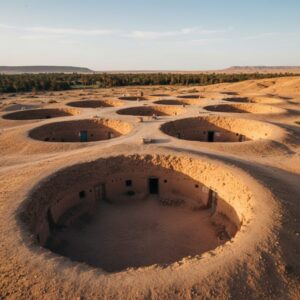
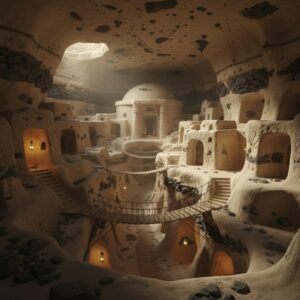
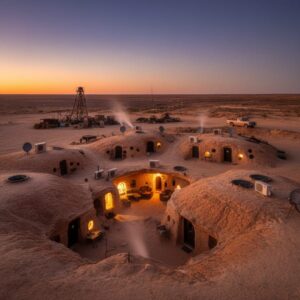
Which Australian town moved entirely underground to escape the scorching desert heat?

Broken Hill

Coober Pedy

Kalgoorlie

Alice Springs

Points won
0
Correct score
0%

More Questions

More Articles

18 Surprising Facts About The Lord of the Rings

18 Surprising Facts About The Lord of the Rings

⏱️ 7 min read

Peter Jackson's epic film trilogy brought J.R.R. Tolkien's beloved fantasy world to life in ways that captivated audiences worldwide. While millions have watched Frodo's journey to Mount Doom, there are countless fascinating behind-the-scenes stories and surprising details that even devoted fans may not know. From groundbreaking filmmaking techniques to unexpected casting decisions and remarkable coincidences, the production of these films was as epic as the story itself.

Behind the Scenes of Middle-earth

1. The Massive Scale of Simultaneous Filming

Unlike most film trilogies that are made sequentially, all three Lord of the Rings films were shot simultaneously over a grueling 438-day principal photography period. This unprecedented approach saved millions in production costs but required extraordinary planning and coordination. The cast and crew spent over a year in New Zealand, moving between locations and sets while filming scenes from all three movies in whatever order made logistical sense.

2. Viggo Mortensen's Last-Minute Casting

Viggo Mortensen wasn't the original choice for Aragorn. Stuart Townsend was initially cast and even trained for two months before being replaced just days before filming began. Peter Jackson felt Townsend appeared too young for the role. Mortensen's son was a huge Tolkien fan and convinced his father to take the part, despite Viggo's initial hesitation about committing to such a massive project.

3. The Real Broken Toe Scream

In one of the most famous on-set injuries, Viggo Mortensen actually broke his toe while filming the scene where Aragorn kicks an Orc helmet in The Two Towers. The anguished scream that follows wasn't acting—it was genuine pain. Jackson loved the raw emotion and kept the take in the final film. Mortensen continued filming despite the injury, embodying the dedication that characterized the entire production.

4. Sean Bean's Fear of Flying

Sean Bean's well-known fear of helicopters led to some unusual commuting methods during filming in New Zealand's remote locations. Rather than fly to mountain filming locations, Bean would often hike for hours in full Boromir costume and gear. On one occasion, he climbed for nearly two hours to reach a mountaintop set while his co-stars arrived via helicopter in minutes.

5. Christopher Lee's Tolkien Connection

Christopher Lee was the only cast member to have actually met J.R.R. Tolkien. Lee was a lifelong fan who read the books annually and had long dreamed of appearing in an adaptation. He originally hoped to play Gandalf but was considered too old for the role's physical demands. His deep knowledge of the source material made him an invaluable resource on set, and he would occasionally correct Peter Jackson on details from the books.

6. The Massive Wig Budget

The trilogy required the creation of thousands of wigs and hairpieces. Orlando Bloom alone wore different Legolas wigs that collectively cost around $10,000. The production's wigmakers created distinctive hair designs for each of Middle-earth's cultures, helping to visually distinguish the different races and kingdoms. Many background extras also required custom wigs to maintain consistency across the massive battle scenes.

7. Gandalf's Head-Bumping Was Genuine

When Gandalf bumps his head on the chandelier in Bilbo's hobbit hole, Ian McKellen's surprised reaction was authentic. The actor genuinely forgot to duck during that take, and Jackson kept the unscripted moment because it perfectly captured the wizard's discomfort in the small dwelling. This happy accident added a touch of humor that fans still appreciate.

8. The Scale Doubles Technique

To create the illusion of hobbits appearing smaller than humans, the filmmakers employed "scale doubles"—actors of different heights who would appear in the same scene using forced perspective. Sometimes a scene would be shot multiple times with different-sized versions of the same props and sets. This painstaking technique was revolutionary for its time and more convincing than simply using CGI to shrink actors.

9. New Zealand's Economic Boom

The Lord of the Rings trilogy transformed New Zealand's economy and international profile. Tourism increased by over 40% in the years following the films' release, with visitors flocking to see filming locations. The success led to the New Zealand government offering tax incentives for film productions, establishing the country as a major destination for Hollywood blockbusters. The economic impact continues today with the Hobbit trilogy and other productions.

10. The One Ring's Inscription Fade

The production created multiple versions of the One Ring, including hero rings for close-ups, stunt rings, and versions with different levels of the Elvish inscription. The inscription was designed to appear and fade based on lighting conditions, requiring careful attention during filming. Some versions had raised lettering while others used special coatings to create the glowing effect seen when Gandalf throws the ring into Bilbo's fireplace.

11. Andy Serkis's Gollum Revolution

Andy Serkis's performance as Gollum revolutionized motion capture technology in filmmaking. Initially, Gollum was intended to be entirely computer-generated with Serkis only providing the voice. However, Serkis insisted on performing on set with the other actors, wearing a motion capture suit. His commitment led to a far more nuanced and emotionally resonant character, and his performance set new standards for digital characters in cinema.

12. The Accidental Knife Deflection

During the fight scene at Amon Hen in The Fellowship of the Ring, the Uruk-hai actor accidentally threw a real knife directly at Viggo Mortensen instead of past him as choreographed. Mortensen's lightning-fast reflexes allowed him to deflect the blade with his sword in a genuine moment of danger. The incredible feat was captured on film and kept in the final cut, showcasing Mortensen's extensive sword training.

13. The Massive Miniatures Paradox

The production created enormous "miniatures" of locations like Minas Tirith, Helm's Deep, and Barad-dûr that were actually huge sculptures nicknamed "bigatures." Some of these models were over 20 feet tall and required teams of artists months to complete. The detail was extraordinary, with individual bricks, windows, and weathering effects that made them photorealistic on camera. These massive models remain some of the largest ever created for film.

14. Liv Tyler's Last-Minute Expansion

Arwen's role was significantly expanded during production and post-production. Originally a minor character with limited screen time, test audiences responded so positively to Liv Tyler's performance that scenes were rewritten and added. Some of Arwen's sequences, including her rescue of Frodo from the Ringwraiths, were filmed during additional photography sessions well after principal photography had wrapped.

15. The Authentic Chain Mail Burden

Much of the armor worn by actors was authentic chain mail, not rubber or plastic substitutes. This commitment to realism meant that costumes could weigh 40-50 pounds. The chain mail was created by linking hundreds of thousands of individual metal rings, and the costume department spent months assembling the armor. Actors genuinely struggled under the weight during long shooting days, particularly during physically demanding battle sequences.

16. Elijah Wood's Blue Eyes Contact Lenses

Elijah Wood wore blue contact lenses to darken his naturally bright blue eyes, giving Frodo a more distinctive appearance that matched Tolkien's descriptions. However, the lenses caused Wood considerable discomfort during the long shooting days. Several other actors also wore contacts to change their eye color, including Orlando Bloom, who wore blue contacts to create Legolas's striking otherworldly gaze.

17. The Missing Tom Bombadil Controversy

The decision to exclude Tom Bombadil from the films remains one of the most debated creative choices. Peter Jackson felt the character, while beloved by book fans, would slow the narrative pace and prove difficult to adapt without seeming jarring. This decision freed up screen time for other elements but disappointed many purists. Jackson has said this was one of the most difficult cuts to make during the scripting process.

18. The Post-Production Marathon

The post-production process continued throughout the entire trilogy's release. While The Fellowship of the Ring was being shown in theaters, the team was still editing The Two Towers, and The Return of the King was being filmed. Howard Shore was composing music for the second film while the first was in cinemas. This overlapping workflow created immense pressure but allowed the filmmakers to learn from each film's reception and adjust subsequent installments accordingly.

The Legacy of Middle-earth

These eighteen facts reveal just how extraordinary the Lord of the Rings trilogy truly was. From revolutionary filming techniques and last-minute casting changes to genuine injuries and massive practical effects, every aspect of the production pushed boundaries. The dedication of the cast and crew, combined with Peter Jackson's vision and New Zealand's stunning landscapes, created a cinematic achievement that continues to influence filmmaking two decades later. The trilogy's success wasn't just about bringing Tolkien's world to life—it was about creating movie magic through innovation, perseverance, and an unwavering commitment to quality that resonates with audiences to this day.

Did You Know? 12 Surprising Facts About the American Revolution

Did You Know? 12 Surprising Facts About the American Revolution

⏱️ 7 min read

The American Revolution stands as one of the most pivotal events in world history, marking the birth of a new nation and inspiring democratic movements across the globe. While most people know the basic story of the colonies breaking free from British rule, the revolution contains numerous lesser-known details that challenge common assumptions and reveal the complexity of this transformative period. From unexpected alliances to unusual military tactics, these fascinating facts illuminate the human drama and historical nuances often overlooked in traditional narratives.

Unexpected Truths from America's Fight for Independence

1. The Revolution Started Before the Declaration

Many assume the American Revolution began on July 4, 1776, but armed conflict actually erupted more than a year earlier. The Battles of Lexington and Concord took place on April 19, 1775, marking the first military engagements between colonial militia and British troops. For over a year, the Continental Congress attempted reconciliation with Britain while simultaneously waging war. The colonies were fighting for their rights as British subjects long before they fought for complete independence, making the revolution a gradual evolution of ideas rather than a sudden break.

2. Most Colonists Didn't Support Independence

Contrary to popular belief, the majority of colonists were not revolutionary firebrands. Historians estimate that only about one-third of colonists actively supported the revolution, while another third remained loyal to the British Crown, and the final third tried to remain neutral. These Loyalists, or Tories, included wealthy merchants, government officials, and many ordinary citizens who feared the chaos of rebellion. After the war, approximately 60,000 to 100,000 Loyalists fled to Canada, Britain, or the Caribbean, representing one of the largest political exoduses in American history.

3. France's Critical Role Started Secretly

While France's official alliance with America in 1778 is well documented, French support began much earlier through covert operations. Even before the Declaration of Independence, France secretly provided gunpowder, weapons, and financial support to the rebels. French playwright Pierre-Augustin Caron de Beaumarchais established a fake trading company to funnel military supplies to the colonists. By the time of the Battle of Saratoga in 1777, it's estimated that 90 percent of the gunpowder used by American forces came from France, making their eventual victory possible.

4. Smallpox Posed a Deadlier Threat Than Bullets

Disease killed more soldiers during the Revolutionary War than combat did. Smallpox was particularly devastating, and George Washington made the controversial decision to inoculate the Continental Army in 1777, one of the first mass military inoculations in history. The procedure, which involved deliberately infecting soldiers with a mild form of the disease, was risky and kept secret from the public. This bold medical gambit significantly improved the army's fighting strength and may have been as crucial to American victory as any battlefield strategy.

5. The Boston Tea Party Protesters Wore Inappropriate Disguises

The famous Boston Tea Party participants didn't dress as Native Americans with any degree of accuracy or respect. They crudely daubed their faces with coal dust and wore random feathers and blankets, creating caricatures that served the practical purpose of concealment while unfortunately perpetuating stereotypes. The disguises were meant to symbolize that they were no longer British subjects but "Americans," though the Mohawk Nation they poorly imitated had nothing to do with the protest. This act of colonial rebellion had long-lasting implications for how Native Americans were portrayed in popular culture.

6. British Soldiers Were Often Younger Than Portrayed

The image of hardened British veterans doesn't match reality for many troops. The British Army recruited boys as young as 10 to serve as drummers, while many regular soldiers enlisted in their mid-teens. Approximately 4,000 British soldiers were actually German mercenaries, called Hessians, hired from various German states. These Hessians comprised nearly one-third of British forces in America, and interestingly, about 5,000 of them deserted and settled in America after the war, attracted by offers of land and freedom.

7. Women Served in Combat Roles

While women couldn't officially enlist, several hundred disguised themselves as men to fight in the Continental Army. Deborah Sampson served for over a year under the name Robert Shurtliff, fighting in multiple battles before her identity was discovered. Other women, like Margaret Corbin and Mary Ludwig Hays (Molly Pitcher), took over cannon operations when their husbands fell in battle. Countless others served as spies, messengers, and saboteurs, playing crucial intelligence roles that directly impacted military outcomes.

8. The Liberty Bell Never Rang for Independence

Despite popular mythology, the Liberty Bell didn't ring on July 4, 1776, to announce the Declaration of Independence. The bell had been used for various Pennsylvania State House announcements, but it acquired its iconic status and name much later. The famous crack in the bell didn't occur during a patriotic moment either—it likely developed gradually over years of use, though the exact timing remains uncertain. The bell became a symbol of American independence only in the 1830s when abolitionists adopted it as an icon of liberty.

9. The Revolution Was Also a Civil War

The conflict tore apart communities, churches, and families in ways that foreshadowed the Civil War. Neighbors fought neighbors, and family members found themselves on opposite sides. Benjamin Franklin's son William remained a steadfast Loyalist and served as the last Royal Governor of New Jersey, creating a permanent rift between father and son. In the Carolinas and Georgia, the fighting between Patriots and Loyalists was particularly brutal, with guerrilla warfare, revenge killings, and property destruction becoming common.

10. African Americans Fought on Both Sides

Approximately 5,000 African Americans served in the Continental Army, while tens of thousands joined the British forces after Lord Dunmore's 1775 proclamation promising freedom to enslaved people who fought for the Crown. This British strategy proved highly effective, creating manpower shortages for plantation owners and adding thousands of motivated soldiers to British ranks. Tragically, many Black Loyalists who fought for promised freedom faced betrayal when some were re-enslaved after the war, though thousands did achieve liberty and relocated to Canada, Britain, or Sierra Leone.

11. The War Nearly Bankrupted Everyone Involved

The Revolutionary War cost Britain approximately £80 million, roughly equivalent to billions today, contributing to massive national debt that took generations to repay. France's financial support for America, while strategically beneficial, helped precipitate the French Revolution by bankrupting the French monarchy. America itself faced severe economic crisis, with Continental currency becoming virtually worthless—giving rise to the phrase "not worth a Continental." The economic aftermath shaped fiscal policies and debates about federal power that continue influencing American politics today.

12. Peace Negotiations Took Two Years

The fighting effectively ended with Cornwallis's surrender at Yorktown in October 1781, but the Treaty of Paris wasn't signed until September 3, 1783. During these two years, military forces remained mobilized, prisoners languished in captivity, and political uncertainty prevailed. The delay resulted from complex negotiations involving not just America and Britain, but also France, Spain, and the Netherlands, each with their own territorial and strategic interests. The final treaty gave America far more territory than the colonies had controlled, extending westward to the Mississippi River and setting the stage for future expansion.

The Revolution's Lasting Complexity

These surprising facts reveal that the American Revolution was far more complicated, controversial, and contingent than simplified historical narratives suggest. The war involved difficult moral compromises, unlikely alliances, and consequences that reverberated globally. Understanding these nuances doesn't diminish the revolution's significance—rather, it illuminates the messy reality of how transformative change actually occurs. The diverse participants, competing motivations, and unintended consequences demonstrate that historical events rarely fit neat categories of heroes and villains. By appreciating the revolution's full complexity, we gain deeper insight into both America's founding and the ongoing challenges of balancing liberty, equality, and justice in any society. These lesser-known stories remind us that history is made by real people facing difficult choices, and their struggles continue to resonate with contemporary issues of freedom, representation, and national identity.