





⏱️ 6 min read
Throughout history, extraordinary coincidences have captured our imagination and challenged our understanding of probability. These remarkable occurrences make us wonder whether they're simply statistical anomalies or something more mysterious. From historical events that aligned in impossible ways to personal stories that defy explanation, the following examples demonstrate how reality can sometimes be stranger than fiction.
Remarkable Coincidences That Changed History
1. The Twin Brothers Killed on the Same Street, One Year Apart
In 1975, a man was riding a moped in Hamilton, Bermuda when he was tragically struck and killed by a taxi. Exactly one year later, his brother was killed in the same manner, on the same street, riding the same moped. Incredibly, it was the same taxi driver carrying the same passenger that had killed his brother the previous year. This extraordinary coincidence was documented in local records and demonstrates how improbable events can intersect in the most unexpected ways.
2. The Assassination Connections Between Lincoln and Kennedy
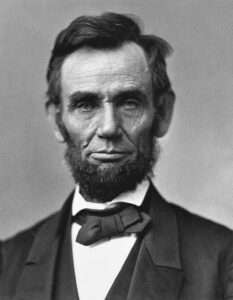
The parallels between Presidents Abraham Lincoln and John F. Kennedy are so numerous they seem almost impossible. Lincoln was elected to Congress in 1846; Kennedy in 1946. Lincoln became president in 1860; Kennedy in 1960. Both were assassinated on a Friday, in the presence of their wives. Lincoln was shot in Ford's Theatre; Kennedy was shot in a Lincoln automobile made by Ford. Both were succeeded by vice presidents named Johnson—Andrew Johnson, born in 1808, and Lyndon Johnson, born in 1908. Lincoln's assassin, John Wilkes Booth, was born in 1839, while Kennedy's assassin, Lee Harvey Oswald, was born in 1939. These connections continue with numerous other details, creating one of history's most discussed coincidences.
3. The Falling Baby Saved Twice by the Same Man
In Detroit during the 1930s, a young mother named Joseph Figlock was walking down the street when a baby fell from a fourth-floor window and landed on him. Both Figlock and the baby survived with minor injuries. Remarkably, the following year, Figlock was walking along the same street when the same baby fell from the same window, again landing on him. Once more, both survived. This incredible double rescue remains one of the most extraordinary documented coincidences of the 20th century.
4. Edgar Allan Poe's Novel That Predicted the Future
In 1838, Edgar Allan Poe published his only complete novel, "The Narrative of Arthur Gordon Pym of Nantucket," which told the story of four survivors of a shipwreck who were stranded in an open boat. Facing starvation, they killed and ate a cabin boy named Richard Parker. Forty-six years later, in 1884, the yacht Mignonette sank in real life, leaving four survivors in an open boat. After being stranded for days without food, three of the men killed and ate the fourth. His name was Richard Parker. This chilling coincidence between fiction and reality remains one of literature's most haunting examples.
5. The Identical Lives of the "Jim Twins"
James Lewis and James Springer were identical twins separated at birth in 1940 and adopted by different families. When they were reunited at age 39, they discovered astonishing similarities in their lives. Both had been named James by their adoptive parents. Both had married women named Linda, divorced them, and remarried women named Betty. Both had named their first sons James Alan (although one used the spelling Allan). Both had owned dogs named Toy. Both had worked as part-time deputy sheriffs, both enjoyed mechanical drawing and carpentry, and both had vacation homes on the same beach in Florida. These coincidences helped spark scientific studies into nature versus nurture.
6. The Hoover Dam Deaths of Father and Son
J.G. Tierney was the first person to die during the construction of the Hoover Dam, drowning while surveying the Colorado River on December 20, 1922. His son, Patrick Tierney, was the last person to die during the dam's construction, falling from an intake tower on December 20, 1935—exactly 13 years to the day after his father's death. This tragic coincidence occurred at one of America's most ambitious engineering projects and has been documented in official dam records.
7. The Book That Found Its Intended Owner
American writer Anne Parrish was browsing bookstores in Paris in the 1920s when she came across a children's book called "Jack Frost and Other Stories." She picked it up and showed it to her husband, explaining it had been one of her favorite books as a child growing up in Colorado Springs. When her husband opened the book, he found written on the flyleaf: "Anne Parrish, 209 N. Weber Street, Colorado Springs, Colorado"—it was her very own book from childhood, found thousands of miles from home decades later.
8. The Royal Poker Hand
In 1858, Robert Fallon was shot dead during a poker game in San Francisco after being accused of cheating to win a $600 pot. The other players refused to continue with Fallon's body in the room and demanded a replacement player. They found a man off the street to take Fallon's place and play with his $600. By the time police arrived to investigate the death, the replacement player had turned Fallon's $600 into $2,200. The police discovered that the replacement player was Fallon's son, who hadn't seen his father in seven years. Furthermore, the money was immediately seized as the son's inheritance, meaning he inherited his father's money minutes after his death without knowing it.
9. The Three Strangers on the Train
In 1953, a reporter for Time magazine named Irv Kupcinet was in London staying at the Savoy Hotel. He was surprised to find in a drawer some items that had belonged to a friend of his named Harry Hannin, who was a basketball player for the Harlem Globetrotters. Kupcinet contacted Hannin about the coincidence, only to receive a letter from Hannin revealing an even stranger twist. Hannin wrote that while staying at the Hotel Meurice in Paris, he had found in a drawer a tie with Kupcinet's name on it. This double coincidence of personal items crossing paths in European hotels amazed both men.
10. Mark Twain and Halley's Comet
Mark Twain was born on November 30, 1835, just two weeks after Halley's Comet made its closest approach to Earth. In 1909, Twain predicted: "I came in with Halley's Comet in 1835. It is coming again next year, and I expect to go out with it." True to his prediction, Twain died on April 21, 1910, the day following the comet's subsequent perihelion. The comet appears roughly every 76 years, making this celestial bookend to his life an extraordinary coincidence that Twain himself seemed to anticipate.
Understanding Extraordinary Coincidences
These ten examples remind us that while probability theory can explain many events, some occurrences seem to defy mathematical explanation. Whether they represent pure chance, confirmation bias where we remember unusual coincidences more than mundane events, or something beyond our current understanding, these stories continue to fascinate. They challenge our perception of randomness and causality while demonstrating that truth can indeed be stranger than fiction. While skeptics might argue that in a world with billions of people and countless interactions, unlikely events become inevitable, the specific details and timing of these coincidences continue to capture our imagination and spark wonder about the nature of chance itself.