
⏱️ 5 min read
When visitors from around the world gaze upon the Eiffel Tower today, they see an enduring symbol of Paris and French ingenuity. However, few realize that this iconic iron lattice structure, which has defined the Parisian skyline for over a century, was originally intended to stand for only 20 years. The fascinating story of how a temporary exhibition piece became one of the world’s most recognizable landmarks reveals much about changing artistic tastes, technological innovation, and the power of cultural evolution.
A Monument for the World’s Fair
The Eiffel Tower was conceived as the centerpiece for the 1889 Exposition Universelle, a World’s Fair held in Paris to commemorate the centennial of the French Revolution. The French government sought a structure that would showcase France’s industrial prowess and engineering capabilities to an international audience. In 1886, a competition was announced, attracting over 100 submissions from architects and engineers across Europe.
Gustave Eiffel’s company won the commission with their revolutionary design for an iron tower standing 300 meters tall—which would make it the tallest man-made structure in the world at the time. The contract explicitly stated that the tower would be dismantled after 20 years, with the iron materials potentially being sold for scrap or repurposed elsewhere. This temporary designation was not unusual for World’s Fair structures, which were typically demolished after exhibitions concluded.
Construction and Immediate Controversy
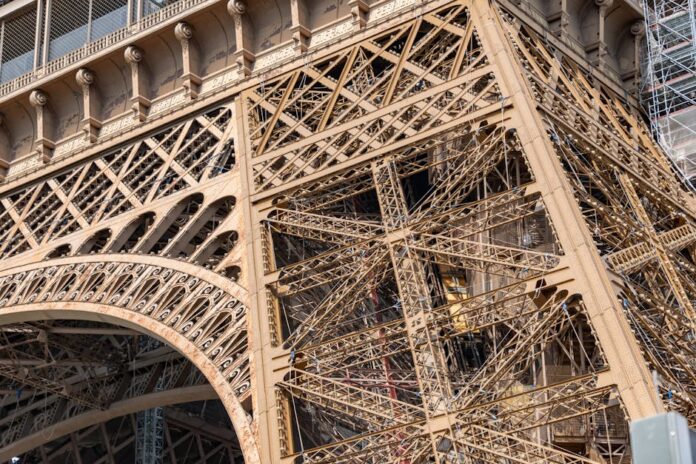
Construction began in January 1887, and the tower rose with remarkable speed thanks to Eiffel’s precise engineering and prefabrication techniques. All 18,000 metallic parts were designed in advance and assembled on-site using approximately 2.5 million rivets. The structure was completed in just over two years, a testament to industrial-age efficiency.
However, the tower faced fierce opposition from Parisian artists, writers, and intellectuals even before its completion. In 1887, a group of prominent figures published a scathing letter in Le Temps newspaper, denouncing the structure as a “metal monstrosity” and a “gigantic black smokestack” that would disgrace the elegant Parisian skyline. Notable signatories included:
- Guy de Maupassant, renowned novelist and short story writer
- Alexandre Dumas fils, celebrated playwright and author
- Charles Gounod, famous composer
- Charles Garnier, architect of the Paris Opera House
The critics argued that the industrial aesthetic clashed with Paris’s classical architecture and that the tower represented a crude celebration of engineering over art. Some claimed it resembled an incomplete construction project rather than a finished monument worthy of the City of Light.
The Tower’s Surprising Utility
As the 20-year permit approached expiration in 1909, the Eiffel Tower’s fate hung in the balance. Gustave Eiffel had anticipated this challenge and worked diligently to demonstrate the structure’s practical value beyond its aesthetic appeal. The tower’s salvation came from an unexpected source: telecommunications.
In the early 1900s, wireless telegraphy was emerging as a revolutionary communication technology. Eiffel recognized that the tower’s exceptional height made it ideal for transmitting radio signals. He established a wireless telegraph station at the tower’s summit and convinced the French military of its strategic importance. The tower proved invaluable for intercepting enemy communications during World War I, including helping to thwart German advances during the First Battle of the Marne in 1914.
Scientific Applications
Beyond military communications, the Eiffel Tower became an important platform for scientific research. Gustave Eiffel himself conducted meteorological observations, aerodynamic experiments, and even physiological studies at various heights of the structure. Scientists used the tower for:
- Measuring air resistance and studying wind patterns
- Testing early parachute designs
- Conducting atmospheric pressure experiments
- Installing weather monitoring equipment
- Broadcasting early radio and television signals
Transformation from Eyesore to Icon
Public opinion gradually shifted during the early 20th century. The tower that had once been derided as an industrial eyesore began to be appreciated for its unique aesthetic qualities. Artists of the modern movement, including painters like Robert Delaunay and photographers like André Kertész, found inspiration in the tower’s geometric forms and industrial materials. The structure became associated with modernity, progress, and the dynamic spirit of the new century.
The tower’s popularity increased further as it became a tourist destination. Visitors flocked to experience the panoramic views from its observation decks, and the structure appeared in countless postcards, paintings, and photographs that circulated globally. What had been conceived as temporary exhibition architecture gradually became inseparable from Paris’s identity.
Cultural Legacy and Modern Status
Today, the Eiffel Tower receives approximately seven million visitors annually, making it one of the most visited paid monuments in the world. It has transcended its original purpose to become a universal symbol of romance, French culture, and human achievement. The tower appears in countless films, serves as the backdrop for marriage proposals, and features prominently in Paris’s New Year’s Eve celebrations.
The structure has undergone numerous renovations and modifications since its construction, including the addition of elevators, restaurants, and lighting systems. Modern preservation efforts ensure that the tower receives regular maintenance, with teams of painters applying 60 tons of paint every seven years to protect against rust and maintain its distinctive bronze color.
The story of the Eiffel Tower demonstrates how initial rejection can transform into universal acceptance, how practical utility can preserve beauty, and how temporary solutions sometimes become permanent treasures. What began as a 20-year exhibition piece has endured for well over a century, proving that truly innovative designs can transcend their original purposes and the prejudices of their time to achieve lasting cultural significance.