
⏱️ 5 min read
Every morning, millions of people around the world reach for their cup of coffee, rarely considering the vast global network that brings those beans to their mug. Beyond its role as a beloved beverage, coffee represents one of the most significant commodities in international trade. While many assume products like gold or wheat dominate global markets, coffee holds the remarkable distinction of being the second most traded commodity in the world, surpassed only by crude oil. This caffeinated phenomenon involves billions of dollars, millions of workers, and a complex supply chain spanning continents.
Understanding Coffee’s Position in Global Trade
The global coffee industry generates approximately $200 billion annually, with over 25 million farmers across 70 countries depending on coffee cultivation for their livelihoods. The sheer volume of coffee traded internationally is staggering—roughly 10 million tons of coffee beans move across borders each year. This massive scale of trade reflects not just the beverage’s popularity but also its economic importance to producing and consuming nations alike.
The commodity status of coffee means it’s traded on major exchanges worldwide, including the New York Mercantile Exchange and the Intercontinental Exchange. Price fluctuations can significantly impact economies of coffee-producing nations, particularly in developing countries where coffee exports may represent a substantial portion of national GDP.
The Coffee Belt: Where Production Happens
Coffee cultivation occurs exclusively in what’s known as the “Bean Belt”—a region that circles the equator between the Tropics of Cancer and Capricorn. This geographic limitation creates a natural dependency between coffee-producing countries in Latin America, Africa, and Asia, and consuming countries primarily located in North America, Europe, and increasingly, Asia.
Top Coffee Producing Nations
- Brazil: Accounting for approximately one-third of global coffee production
- Vietnam: The world’s largest producer of Robusta coffee beans
- Colombia: Famous for its high-quality Arabica beans
- Indonesia: A major supplier in the Asian market
- Ethiopia: The birthplace of coffee and a significant producer
These countries have built entire sectors of their economies around coffee production, with intricate infrastructure dedicated to growing, processing, and exporting beans. For nations like Ethiopia and Honduras, coffee exports can represent 25% or more of total export earnings, demonstrating the crop’s critical economic role.
The Two Main Coffee Species Driving Trade
The global coffee trade primarily revolves around two species: Arabica and Robusta. Arabica beans account for approximately 60-70% of worldwide production and are prized for their smoother, more complex flavor profiles. These beans typically command higher prices and are grown at higher altitudes with more demanding cultivation requirements.
Robusta beans, representing 30-40% of global production, contain nearly twice the caffeine content of Arabica and exhibit a stronger, more bitter taste. Vietnam’s emergence as a coffee powerhouse stems largely from its Robusta production, which has applications in instant coffee and espresso blends. The price differential between these two species creates distinct market segments within the broader coffee trade.
The Complex Journey from Farm to Cup
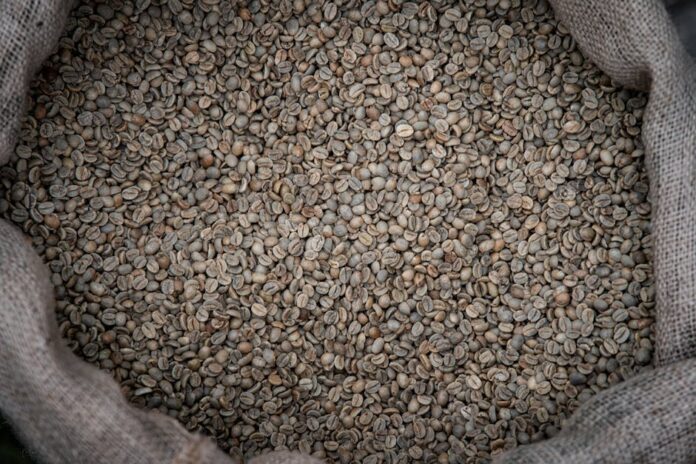
The coffee supply chain involves numerous intermediaries and processes before beans reach consumers. After harvesting, coffee cherries undergo processing to extract the beans, which are then dried, sorted, and graded. These green coffee beans form the basis of international trade, shipped in large quantities to consuming countries where they’re roasted, packaged, and distributed.
This multi-stage process involves various stakeholders including farmers, cooperatives, exporters, importers, roasters, distributors, and retailers. Each step adds value but also complexity to the supply chain, creating both opportunities and challenges for ensuring fair compensation throughout the network.
Economic Impact and Price Volatility
Coffee prices experience significant volatility due to various factors including weather conditions, political instability in producing regions, currency fluctuations, and changes in global demand. A frost in Brazil or drought in Vietnam can send prices soaring, while oversupply can depress prices to levels that threaten farmer livelihoods.
This volatility has profound implications for producing countries. When prices are high, coffee-dependent economies flourish, but price crashes can trigger economic hardship, food insecurity, and social instability. The 1990s coffee crisis saw prices plummet to historic lows, forcing many farmers into poverty and demonstrating the vulnerability inherent in commodity dependence.
Fair Trade and Sustainability Movements
Growing awareness of inequities in the coffee trade has spawned movements aimed at ensuring more equitable distribution of profits and sustainable production practices. Fair Trade certification guarantees minimum prices to farmers and promotes environmentally responsible cultivation methods. Similarly, Direct Trade arrangements connect roasters directly with farmers, potentially increasing farmer income while ensuring quality control.
Sustainability certifications such as Rainforest Alliance and Organic have gained traction, responding to consumer demand for environmentally conscious products. These initiatives address concerns about deforestation, pesticide use, and biodiversity loss associated with intensive coffee cultivation.
The Future of Coffee Trade
Climate change poses perhaps the greatest long-term threat to coffee production. Rising temperatures and changing precipitation patterns are already affecting yields and quality in traditional growing regions. Some projections suggest that up to 50% of current coffee-growing land may become unsuitable for cultivation by 2050, potentially reshaping the entire industry.
Technological innovations, including disease-resistant varieties and improved processing methods, offer potential solutions. Meanwhile, changing consumer preferences in emerging markets, particularly China and India, are expected to drive increased demand, potentially straining supply further and reinforcing coffee’s position as a globally critical commodity.
Understanding coffee’s status as the second most traded commodity illuminates the interconnected nature of modern global commerce and the profound economic, social, and environmental implications of our daily consumption choices.