
⏱️ 5 min read
When most people think of berries, they picture strawberries, raspberries, and blueberries. However, botanical science reveals a surprising truth that challenges our everyday understanding of fruit classification. Bananas, despite their size and appearance, are scientifically classified as berries, while many fruits commonly called berries are not berries at all. This fascinating botanical distinction highlights the difference between culinary terminology and scientific classification, offering a glimpse into the complex world of plant biology.
Understanding the Botanical Definition of a Berry
In botanical terms, a berry is defined as a fleshy fruit produced from a single ovary of a flower and containing seeds embedded in the flesh. This scientific definition is quite specific and differs significantly from the common usage of the word. For a fruit to qualify as a true berry, it must meet several criteria: it must develop from a flower with one ovary, have a soft exocarp (outer skin), a fleshy mesocarp (middle layer), and an endocarp (inner layer) that contains the seeds.
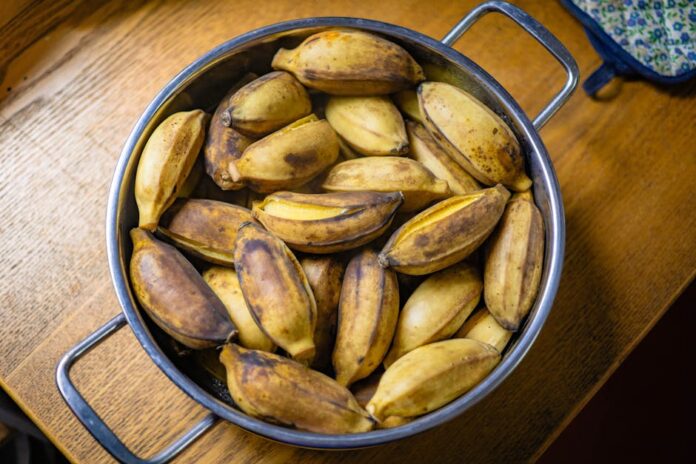
The banana meets all these requirements perfectly. It develops from a flower with a single ovary, has three distinct layers, and contains what would be seeds in wild varieties. Modern cultivated bananas have been selectively bred to be seedless, but those tiny black specks visible in the center of a banana are actually undeveloped seeds, remnants of the banana’s wild ancestors.
Why Common “Berries” Aren’t Actually Berries
The revelation about bananas becomes even more intriguing when we examine fruits that are commonly called berries but fail to meet the botanical criteria. Strawberries, raspberries, and blackberries are not true berries according to scientific classification.
Strawberries are classified as “aggregate accessory fruits” because the fleshy part we eat is not derived from the plant’s ovary but from the receptacle that holds the ovaries. The actual fruits of the strawberry are the tiny yellow “seeds” visible on its surface, each of which is technically a separate fruit called an achene.
Raspberries and blackberries are considered “aggregate fruits” because they form from flowers with multiple ovaries. Each little bulblet on a raspberry or blackberry comes from a separate ovary, making them clusters of tiny fruits rather than single berries.
Other Surprising True Berries
Bananas are not alone in their surprising berry classification. Several other unexpected fruits fall into the true berry category:
- Grapes: These familiar fruits perfectly meet the botanical definition, developing from a single ovary and containing seeds within their flesh
- Kiwis: Despite their fuzzy exterior and unique appearance, kiwis are legitimate berries
- Tomatoes: These culinary vegetables are botanically classified as berries
- Eggplants: Another vegetable in the kitchen that qualifies as a berry in botanical terms
- Peppers: Both sweet bell peppers and hot chili peppers are true berries
- Watermelons and cucumbers: These large fruits are actually specialized berries called “pepos”
The Evolution and Domestication of Bananas
Understanding bananas as berries becomes even more interesting when examining their evolutionary history. Wild bananas, unlike the seedless varieties found in supermarkets, contain numerous large, hard seeds that make them nearly inedible. These wild varieties can still be found in Southeast Asia, where bananas originated.
Around 10,000 years ago, humans began cultivating bananas, selecting plants with genetic mutations that produced seedless fruit. Through centuries of selective breeding, farmers developed the parthenocarpic bananas we know today—fruits that develop without fertilization and therefore without viable seeds. This human intervention has created a fruit that is both a convenient food source and a perfect example of botanical classification.
The Science Behind Fruit Classification
The confusion between culinary and botanical classifications exists because these systems serve different purposes. Culinary classification focuses on taste, usage, and traditional categorization, while botanical classification is based on the plant’s reproductive structure and developmental origin.
Botanists classify fruits based on several factors, including which part of the flower develops into the fruit, whether the fruit comes from a single or multiple ovaries, and whether additional flower parts contribute to the fruit’s structure. This scientific approach creates categories that often seem counterintuitive to non-botanists but provide a systematic way to understand plant reproduction and evolution.
Practical Implications of Berry Classification
While the classification of bananas as berries might seem like mere academic trivia, it has practical applications in various fields. Agricultural scientists use these classifications to understand plant breeding, disease resistance, and cultivation techniques. Similar botanical structures often respond to similar growing conditions and face comparable pest and disease challenges.
The botanical classification also helps in understanding nutritional similarities among true berries. Many true berries share certain nutritional characteristics, such as high antioxidant content and beneficial phytochemicals, though the specific nutrients vary widely among species.
Educational Value and Scientific Literacy
The surprising truth about bananas being berries serves as an excellent example of why scientific literacy matters. It demonstrates that everyday language and scientific terminology often diverge, and that our common assumptions about the natural world may not align with biological reality. This knowledge encourages critical thinking and highlights the importance of precise scientific definitions in understanding the world around us.
Furthermore, this botanical oddity reminds us that science often reveals unexpected connections and classifications in nature. The systematic study of plants has uncovered relationships and categories that aren’t immediately obvious through casual observation, enriching our understanding of biodiversity and evolutionary biology. Whether enjoyed as a convenient snack or studied as a fascinating example of botanical classification, bananas continue to surprise and educate those who take the time to look beyond surface appearances.