








1 / 10 Questions
0 Points

What's The Main Metal Thousands Of Miles Below Your Feet?

Copper

Iron

Nickel

Aluminum

Points won
0
Correct score
0%

More Questions

More Articles

Top 10 Movie Villains Everyone Remembers

Top 10 Movie Villains Everyone Remembers

⏱️ 6 min read

Cinema's most memorable antagonists have transcended their films to become cultural icons, representing the darkest aspects of human nature while captivating audiences for generations. These villains aren't simply obstacles for heroes to overcome—they're complex characters whose motivations, charisma, and sheer presence have left an indelible mark on film history. The following villains represent the pinnacle of antagonistic performances that continue to influence storytelling and remain firmly embedded in popular consciousness.

The Most Unforgettable Villains in Cinema History

1. Hannibal Lecter: The Sophisticated Cannibal

Anthony Hopkins delivered one of the most chilling performances in cinema history as Dr. Hannibal Lecter in "The Silence of the Lambs" (1991). Despite appearing on screen for merely 16 minutes, Hopkins created a villain whose intelligence, refinement, and horrifying appetites created an unforgettable paradox. Lecter's cultured demeanor, combined with his cannibalistic nature, made him terrifyingly unique. His ability to manipulate those around him through psychological insight, paired with Hopkins' measured delivery and piercing gaze, earned him an Academy Award and cemented Lecter as perhaps the most sophisticated monster in film history. The character's impact extended across multiple films and influenced countless psychological thrillers that followed.

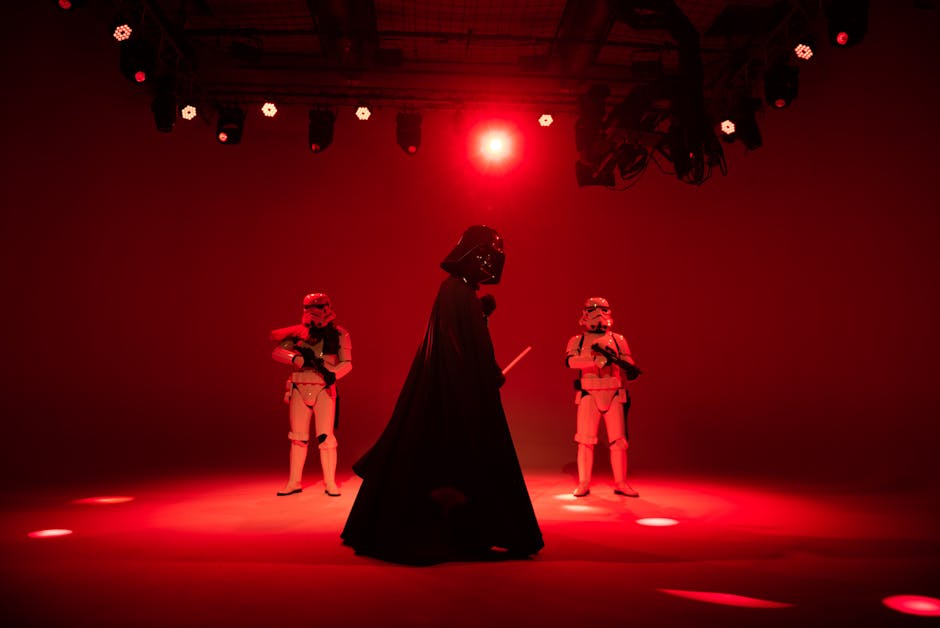
2. Darth Vader: The Face of Galactic Evil

Few villains have achieved the iconic status of Darth Vader from the "Star Wars" franchise. Introduced in 1977, Vader's imposing black armor, mechanical breathing, and James Earl Jones' commanding voice created an instantly recognizable symbol of tyranny. What elevated Vader beyond typical villainy was the revelation of his tragic backstory and eventual redemption, transforming him from a one-dimensional antagonist into a complex figure consumed by anger, loss, and regret. His relationship with Luke Skywalker and the famous line "I am your father" became one of cinema's most quoted moments, demonstrating how a villain's humanity can enhance rather than diminish their impact.

3. The Joker: Chaos Personified

Heath Ledger's interpretation of the Joker in "The Dark Knight" (2008) redefined what a comic book villain could be. Ledger's commitment to portraying pure chaos—a villain without traditional motivations of wealth or power—created a character that felt genuinely dangerous and unpredictable. His anarchistic philosophy, grotesque appearance, and unsettling mannerisms earned Ledger a posthumous Academy Award and elevated superhero films to new dramatic heights. The Joker's appeal lies in his representation of disorder in a world desperately seeking order, making him a villain that resonates across different interpretations and actors, from Jack Nicholson to Joaquin Phoenix.

4. Norman Bates: The Boy Next Door

Alfred Hitchcock's "Psycho" (1960) introduced audiences to Norman Bates, a seemingly mild-mannered motel owner whose fractured psyche created one of cinema's most disturbing villains. Anthony Perkins' performance brilliantly portrayed Bates' awkward charm and underlying instability, making the character's violent acts even more shocking. The reveal of Norman's split personality and his preservation of his mother's corpse shocked audiences and established templates for psychological horror that persist today. Bates demonstrated that true horror often wears a familiar, unthreatening face, revolutionizing how villains could be portrayed on screen.

5. Nurse Ratched: Institutional Cruelty

Louise Fletcher's portrayal of Nurse Ratched in "One Flew Over the Cuckoo's Nest" (1975) presented villainy through the abuse of institutional power rather than physical violence. Ratched's calm demeanor and systematic psychological manipulation of patients made her terrifyingly real. She represented how authority figures can wield power to crush individuality and spirit, making her relevant beyond the film's mental hospital setting. Fletcher's measured performance, devoid of theatricality, earned her an Academy Award and created a character whose name became synonymous with oppressive bureaucratic control.

6. Anton Chigurh: The Personification of Fate

Javier Bardem's Oscar-winning performance as Anton Chigurh in "No Country for Old Men" (2007) created a villain of almost supernatural menace. With his distinctive bowl haircut, cattle gun weapon, and philosophical musings about chance and fate, Chigurh operated by an incomprehensible moral code that made him utterly unpredictable. His coin-flip methodology for determining victims' fates transformed random chance into a terrifying death sentence. Bardem's minimalist performance, combined with the character's relentless pursuit and calm demeanor in the face of violence, created a villain that felt like an unstoppable force of nature.

7. Wicked Witch of the West: The Original Fantasy Villain

Margaret Hamilton's portrayal of the Wicked Witch in "The Wizard of Oz" (1939) established the template for fantasy villains for generations. Her green skin, cackling laugh, and threats against Dorothy became instantly iconic elements of cinema history. Despite the film's family-friendly nature, Hamilton created genuine menace through her commitment to the role. The character's vanity, cruelty, and eventual melting created memorable moments that have influenced countless fairy tale villains. Her impact on popular culture extends far beyond the film, making her one of the most recognizable villains in entertainment history.

8. Hans Gruber: The Elegant Terrorist

Alan Rickman's film debut as Hans Gruber in "Die Hard" (1988) revolutionized action movie villains. Unlike the muscle-bound antagonists common to 1980s action films, Gruber was sophisticated, intelligent, and cultured. Rickman's theatrical background brought elegance and wit to the role of a terrorist mastermind, creating a villain audiences could almost admire for his meticulous planning and composed demeanor. Gruber's chess match with John McClane elevated "Die Hard" beyond typical action fare, proving that a compelling villain could be as important as the hero in creating classic cinema.

9. Michael Corleone: The Tragic Transformation

While "The Godfather" films present Michael Corleone as the protagonist, Al Pacino's portrayal tracks his transformation into a ruthless crime lord, making him one of cinema's most complex villain-protagonists. Michael's journey from war hero to cold-blooded mafia don demonstrated how circumstance, family loyalty, and moral compromises can corrupt even those with the best intentions. Pacino's subtle performance showed Michael's humanity draining away as power consumed him, creating a character study that remains unparalleled in its depiction of moral decay and the price of power.

10. Terminator: The Unstoppable Machine

Arnold Schwarzenegger's T-800 in "The Terminator" (1984) created a villain defined by absolute relentlessness. As a killing machine from the future with no emotion, no pain, and no capacity for mercy, the Terminator represented technological horror and humanity's fear of its own creations. James Cameron's direction and Schwarzenegger's physicality created iconic moments that defined the cyberpunk genre. The character's minimal dialogue, including "I'll be back," became cultural touchstones, and the Terminator's cold, calculating nature made it a uniquely terrifying antagonist that stood apart from human villains.

The Enduring Legacy of Great Villains

These ten villains represent the highest achievements in antagonistic character creation, each bringing unique qualities that have ensured their place in film history. From psychological manipulators to physical threats, from tragic figures to embodiments of pure chaos, they demonstrate that memorable villains require more than evil actions—they need distinctive personalities, clear motivations, and performances that bring depth to darkness. Their continued relevance in popular culture proves that audiences are drawn to complexity in storytelling, and that the best villains challenge heroes while reflecting society's deepest fears and moral questions. These characters remain not just remembered, but studied, quoted, and recreated, ensuring their immortality in the cinematic pantheon.
Did You Know? 10 Actors Who Played Themselves in Movies

Did You Know? 10 Actors Who Played Themselves in Movies

⏱️ 7 min read

Hollywood has a long-standing tradition of blurring the lines between fiction and reality, and one of the most entertaining ways filmmakers achieve this is by casting actors to play themselves. This meta-narrative device can add layers of humor, authenticity, or surrealism to a film, creating memorable moments that resonate with audiences who recognize the inside joke. From cameos to substantial roles, these appearances offer a unique glimpse into how celebrities are willing to poke fun at their own personas or lend their star power to enhance a story. Here are ten remarkable instances where actors stepped into the shoes of their real-life selves on the silver screen.

Notable Actors Who Portrayed Themselves

1. Neil Patrick Harris in the Harold & Kumar Franchise

Neil Patrick Harris delivered one of the most outrageous and memorable performances as a fictionalized version of himself in "Harold & Kumar Go to White Castle" (2004) and its sequels. Rather than playing the wholesome Doogie Howser character that made him famous, Harris portrayed himself as a wild, drug-fueled party animal who picks up the protagonists and takes them on increasingly bizarre adventures. This self-deprecating and completely unexpected portrayal became a highlight of the franchise, with Harris stealing nearly every scene he appeared in. The performance was so well-received that he reprised the role in subsequent films, each time pushing the envelope further with his fictional bad-boy persona.

2. John Malkovich in Being John Malkovich

In one of the most surreal films ever made, John Malkovich played himself in "Being John Malkovich" (1999), a Charlie Kaufman-penned masterpiece about a puppeteer who discovers a portal into the actor's mind. Malkovich's willingness to participate in such a bizarre, metaphysical exploration of identity and celebrity was remarkable. The film features a particularly memorable sequence where Malkovich enters his own portal and finds himself in a world where everyone looks like him and only says his name. His commitment to this strange role demonstrated not only his sense of humor but also his willingness to deconstruct his own celebrity for the sake of art.

3. Mike Tyson in The Hangover

Former heavyweight boxing champion Mike Tyson made a surprising and hilarious appearance as himself in "The Hangover" (2009). In the film, the main characters wake up after a wild night in Las Vegas to discover they've stolen Tyson's tiger from his mansion. When Tyson appears to reclaim his pet, the scene becomes one of the film's most memorable moments. Tyson even performs Phil Collins' "In the Air Tonight" in a scene that showcases his comedic timing and willingness to embrace his intimidating public persona while simultaneously subverting it. His performance was so popular that he returned for "The Hangover Part II."

4. James Franco in This Is the End

James Franco played an exaggerated version of himself in the apocalyptic comedy "This Is the End" (2013), hosting a party at his Hollywood Hills home when the end of the world begins. The film features Franco showing off his house, complete with ridiculous art pieces and props from his films, all while maintaining a hilariously pretentious persona. The meta-humor extends to references to his actual career and public image, including jokes about his various artistic pursuits and his role in "127 Hours." Franco's willingness to satirize his own reputation as a Renaissance man of questionable taste made his performance particularly entertaining.

5. Bruce Campbell in My Name Is Bruce

"My Name Is Bruce" (2007) features cult icon Bruce Campbell playing a fictionalized version of himself as a washed-up B-movie actor who is mistaken for a real hero by a small town facing a supernatural threat. The film is a loving parody of Campbell's career and his status as a cult favorite, particularly his role as Ash in the "Evil Dead" franchise. Campbell's portrayal shows him as cowardly, alcoholic, and self-centered—a far cry from the heroic characters he typically plays. The film serves as both a tribute to and satire of his devoted fan base and his career in low-budget horror films.

6. Jean-Claude Van Damme in JCVD

In "JCVD" (2008), Jean-Claude Van Damme delivered a surprisingly introspective and emotional performance as himself, playing a fading action star who becomes caught up in a real hostage situation in his hometown of Brussels. The film is a meditation on fame, aging, and the disconnect between a celebrity's public persona and their private reality. Van Damme's performance culminates in a powerful six-minute monologue delivered directly to the camera, where he breaks the fourth wall to discuss his career, his failures as a father, and the toll that fame has taken on his life. This raw, vulnerable performance revealed depths many didn't know the action star possessed.

7. Eminem in Funny People

Rapper and actor Eminem appeared as himself in Judd Apatow's "Funny People" (2009) in a scene where he sits down for an interview with comedian Ray Romano. The scene takes an unexpected turn when the conversation drifts toward whether Eminem is gay, playing off years of speculation and the rapper's own controversial lyrics about the subject. Eminem's deadpan delivery and willingness to engage with the uncomfortable topic showed his ability to laugh at himself and the rumors that have surrounded his career, making for one of the film's most surprising and funny moments.

8. Bill Murray in Zombieland

Bill Murray's cameo as himself in "Zombieland" (2009) is considered one of the greatest celebrity appearances in modern cinema. In the post-apocalyptic comedy, Murray has survived the zombie outbreak by disguising himself as one of the undead and continues living in his mansion, watching movies and playing golf. The scene where the main characters meet him is both hilarious and touching, with Murray displaying his characteristic dry wit. The cameo works perfectly because it plays on Murray's reputation as Hollywood's most mysterious and unpredictable actor, and his death scene in the film has become iconic.

9. Danny Trejo in Machete

While Danny Trejo's character in "Machete" (2010) is fictional, the film plays heavily on Trejo's real-life persona and career. Director Robert Rodriguez crafted the character specifically around Trejo's tough-guy image and his actual background, including his past incarceration and subsequent redemption. The film features numerous references to Trejo's career in exploitation films and his status as Hollywood's go-to tough guy. While technically playing a character named Machete, the role is so closely tied to Trejo's real identity and public persona that it blurs the line between fiction and reality.

10. Martin Sheen in Being John Malkovich

In another appearance from "Being John Malkovich" worth noting separately, Martin Sheen plays himself in a brief but memorable scene. However, there's a twist—due to a running gag in the film, other characters keep mistaking John Cusack's character for various celebrities, and when Sheen appears, he's mistakenly identified as a different actor entirely. Sheen's good-natured participation in this joke, where he essentially plays himself being confused for someone else, adds another layer to the film's exploration of identity and celebrity recognition.

The Impact of Self-Portrayal in Cinema

These ten examples demonstrate how actors playing themselves can serve various purposes in filmmaking. Sometimes it's pure comedy, as with Neil Patrick Harris's wild antics or Mike Tyson's unexpected singing. Other times, it's deeply introspective, as seen in Jean-Claude Van Damme's emotional examination of his own life and career. The device can be used to satirize Hollywood culture, comment on celebrity worship, or simply provide a surprising moment that delights audiences. What makes these performances special is the actors' willingness to examine, parody, or even demolish their own public personas for the sake of entertainment. Whether playing exaggerated versions of themselves or offering genuine glimpses behind the curtain of fame, these actors have created some of cinema's most memorable and unique moments by simply being themselves—or at least, a version of themselves they're willing to share with the world.