

1 / 10 Questions
0 Points

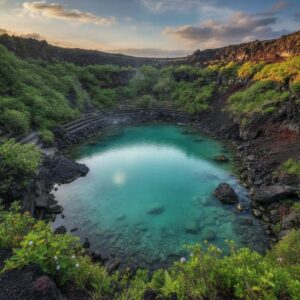
What famous Icelandic swimming destination was accidentally created in 1976 when a geothermal power plant began discharging mineral-rich water onto a lava field?

The Myvatn Nature Baths

The Secret Lagoon

The Blue Lagoon

The Sky Lagoon

Points won
0
Correct score
0%

More Questions

More Articles

Did You Know? 10 Film Locations You Can Visit Today

Did You Know? 10 Film Locations You Can Visit Today

⏱️ 7 min read

Movie magic doesn't end when the credits roll. Some of cinema's most iconic scenes were filmed in real locations that fans can visit and explore today. From sweeping fantasy landscapes to gritty urban settings, these filming locations offer a tangible connection to beloved films. Whether you're a casual moviegoer or a dedicated cinephile, visiting these sites provides a unique opportunity to step into the worlds of your favorite characters and relive memorable moments from the big screen.

Iconic Film Locations Around the World

1. Skellig Michael, Ireland - Star Wars: The Force Awakens

Rising dramatically from the Atlantic Ocean off Ireland's southwestern coast, Skellig Michael served as the remote island where Luke Skywalker chose his exile in "Star Wars: The Force Awakens" and "The Last Jedi." This UNESCO World Heritage Site features ancient monastic settlements dating back to the 6th century, with stone beehive huts perched on steep cliffs. Visitors can climb over 600 steps carved into the rock face to reach the summit, where the Jedi temple scenes were filmed. Access is limited and weather-dependent, with boats departing from Portmagee between May and October. The location's authentic remoteness and spiritual atmosphere made it perfect for depicting Luke's isolated sanctuary.

2. Highclere Castle, England - Downton Abbey

The magnificent Highclere Castle in Hampshire served as the primary filming location for both the "Downton Abbey" television series and subsequent films. This Victorian country house, still home to the Earl and Countess of Carnarvon, features over 300 rooms set within 5,000 acres of parkland designed by Capability Brown. Visitors can tour the main state rooms, including the library and drawing rooms seen throughout the series, as well as exhibitions featuring original costumes from the production. The castle opens seasonally for public tours, and fans can even book afternoon tea experiences in the same rooms where the Crawley family entertained their guests.

3. Central Park, New York City - Countless Hollywood Films

Few locations have been featured in more films than New York's Central Park. This 843-acre urban oasis has appeared in over 300 movies, from romantic comedies like "When Harry Met Sally" to thrillers like "John Wick: Chapter 2." Specific recognizable spots include Bow Bridge, featured in romantic scenes from "The Way We Were" and "Spider-Man 3," and the Bethesda Terrace, prominently featured in "The Avengers" and "Elf." Visitors can take self-guided tours following film location maps or join organized movie location walking tours. The park remains freely accessible year-round, offering fans endless opportunities to recreate their favorite movie moments.

4. Petra, Jordan - Indiana Jones and the Last Crusade

The ancient city of Petra, carved into rose-colored sandstone cliffs, became forever linked with adventure cinema when it appeared as the location of the Holy Grail's temple in "Indiana Jones and the Last Crusade." The Treasury (Al-Khazneh), with its elaborate 40-meter-high facade, is the site where Indy emerged after successfully navigating the temple's deadly traps. This archaeological wonder, dating back to around 300 BCE, is accessible to visitors through the narrow Siq canyon. Tours range from basic day visits to multi-day explorations of the extensive ruins. Walking through the same passageways seen in the film provides an unparalleled connection to one of cinema's greatest adventure franchises.

5. Matamata, New Zealand - The Lord of the Rings Trilogy

The rolling green hills of Matamata in New Zealand's North Island transformed into the Shire for Peter Jackson's "Lord of the Rings" and "Hobbit" trilogies. The Hobbiton Movie Set features 44 permanent hobbit holes, the Mill, the double-arched bridge, and the Green Dragon Inn, all meticulously maintained to look exactly as they did on screen. Unlike many film sets that are dismantled after production, this location was rebuilt as a permanent attraction following "The Hobbit" films. Guided tours take visitors through Bag End, along the Party Tree, and into the working pub where you can sample specially brewed beverages. The site's 12-acre spread captures Tolkien's vision perfectly, making it a pilgrimage site for fantasy fans worldwide.

6. Platform 9¾ at King's Cross Station, London - Harry Potter Series

While the magical Platform 9¾ exists only in J.K. Rowling's imagination, Warner Bros. and King's Cross Station have created a permanent installation where fans can capture their own Hogwarts departure photos. The station's western departures concourse features the famous luggage trolley appearing to disappear into the wall, complete with Gryffindor scarf. An adjacent Harry Potter shop offers house robes, wands, and other memorabilia. For the actual filming location used in the movies, visitors can find the archway between platforms 4 and 5, which doubled for the magical barrier. The station itself, a stunning example of Victorian architecture, appears throughout the film series and remains a fully functioning transportation hub.

7. The Grand Hotel Pupp, Czech Republic - Casino Royale

The luxurious Grand Hotel Pupp in Karlovy Vary stood in for the Hotel Splendide in Montenegro during Daniel Craig's first outing as James Bond in "Casino Royale." This opulent 228-room resort has been welcoming guests since 1701 and exudes the old-world elegance befitting a Bond film. Visitors can stay in the same suites and dine in the restaurants where key scenes were filmed, including the poker game sequences. The hotel's baroque architecture and lavish interiors provide an authentic taste of the sophisticated world 007 inhabits. Beyond Bond, the property has appeared in numerous films during the Karlovy Vary International Film Festival, which the hotel hosts annually.

8. Kualoa Ranch, Hawaii - Jurassic Park

The lush valleys of Kualoa Ranch on Oahu's windward coast served as Isla Nublar in the original "Jurassic Park" and subsequent films in the franchise. This 4,000-acre working cattle ranch offers specialized movie site tours that take visitors to locations where the gallimimus stampede was filmed and where Dr. Grant first encountered the towering brachiosaurs. The dramatic Ka'a'awa Valley, with its distinctive mountain ridges, appears in numerous other productions including "Godzilla," "Kong: Skull Island," and the "Jurassic World" films. Various tour options include bus tours, ATV adventures, and horseback riding experiences through these prehistoric-looking landscapes that continue to captivate filmmakers and visitors alike.

9. The Griffith Observatory, Los Angeles - Rebel Without a Cause and La La Land

Perched on the southern slope of Mount Hollywood, the Griffith Observatory has been an iconic filming location since its opening in 1935. James Dean immortalized the location in "Rebel Without a Cause," with the building's Art Deco architecture providing the backdrop for the film's famous knife fight scene. More recently, the observatory featured prominently in "La La Land," where Ryan Gosling and Emma Stone's characters shared a magical dance among the stars. The facility offers free admission to its exhibits and telescope viewing, while the grounds provide stunning views of the Hollywood Sign and downtown Los Angeles. Visiting at sunset allows you to experience the same golden-hour lighting that filmmakers favor.

10. Alnwick Castle, England - Harry Potter and the Philosopher's Stone

Before Hogwarts scenes moved primarily to studio sets, Alnwick Castle in Northumberland served as the exterior and some interior locations for Harry's first year at the wizarding school. The Outer Bailey is where Madam Hooch taught first-year students their broomstick flying lessons, and visitors can take broomstick training sessions in the same courtyard. This medieval fortress, home to the Duke of Northumberland, remains one of England's largest inhabited castles. Beyond Harry Potter, it has appeared in "Downton Abbey," "Transformers: The Last Knight," and "Robin Hood: Prince of Thieves." The castle offers year-round tours, special events, and activities designed specifically for Potter fans wanting to recreate movie moments.

Planning Your Cinematic Pilgrimage

These ten remarkable locations demonstrate how film and reality intersect, creating destinations that serve dual purposes as both functional spaces and cultural landmarks. Each site offers its own unique experience, from the rugged authenticity of Skellig Michael to the polished elegance of the Grand Hotel Pupp. When planning visits to film locations, research accessibility, seasonal closures, and booking requirements in advance, as popular sites often require reservations months ahead. Many locations offer specialized tours led by guides familiar with filming details and behind-the-scenes stories. Whether visiting one location or embarking on a worldwide tour of film history, these destinations provide unforgettable experiences that bring cinema to life in ways that rewatching films simply cannot match.

25 Facts About the Oceans That Will Blow Your Mind

25 Facts About the Oceans That Will Blow Your Mind

⏱️ 7 min read

The world's oceans remain one of the most mysterious and awe-inspiring frontiers on our planet. Covering more than 70% of Earth's surface, these vast bodies of water hold secrets that continue to astound scientists and ocean enthusiasts alike. From the deepest trenches to the most vibrant coral reefs, the ocean's wonders extend far beyond what most people realize. Here are incredible facts that reveal just how extraordinary our oceans truly are.

The Depths and Dimensions of Our Oceans

1. The Ocean Contains 99% of Earth's Living Space

When considering habitable volume rather than surface area, the ocean provides 99% of the space where life can exist on our planet. This three-dimensional environment extends from sunlit surface waters to trenches deeper than Mount Everest is tall, creating an almost incomprehensibly vast ecosystem that dwarfs all terrestrial habitats combined.

2. We've Explored Less Than 5% of the Ocean Floor

Despite centuries of maritime exploration and modern technological advances, humans have mapped and explored only a small fraction of the ocean floor. We have more detailed maps of the surface of Mars and the Moon than we do of the depths of our own oceans, highlighting how much remains unknown about this underwater realm.

3. The Mariana Trench Could Swallow Mount Everest

The deepest point in Earth's oceans, Challenger Deep in the Mariana Trench, plunges approximately 36,200 feet below sea level. If Mount Everest were placed at this depth, its peak would still be covered by more than a mile of water, demonstrating the extreme depths our oceans reach.

Ocean Life and Biodiversity

4. More Species Live in the Ocean Than on Land

Scientists estimate that between 700,000 to one million species currently inhabit the ocean, with potentially millions more awaiting discovery. This biodiversity exceeds terrestrial life, with many species living in conditions once thought impossible for life to exist.

5. The Largest Living Structure Exists Underwater

The Great Barrier Reef stretches over 1,400 miles along Australia's coast, making it the largest living structure on Earth. This massive ecosystem, visible from space, consists of billions of tiny coral polyps and supports thousands of species in one of the most biodiverse environments on the planet.

6. Ocean Creatures Create Their Own Light

Approximately 80-90% of deep-sea creatures possess bioluminescent capabilities, producing their own light through chemical reactions. This adaptation helps them hunt, communicate, and camouflage themselves in the perpetual darkness of the deep ocean.

7. Blue Whales Are Louder Than Jet Engines

The blue whale's call can reach 188 decibels, making it louder than a jet engine and the loudest sound produced by any animal on Earth. These powerful vocalizations can travel hundreds of miles through ocean waters, allowing whales to communicate across vast distances.

Ocean Chemistry and Composition

8. The Ocean Contains Enough Gold to Give Everyone on Earth Nine Pounds

Approximately 20 million tons of gold are dissolved in seawater throughout the world's oceans. While extraction remains economically unfeasible, this amount would theoretically provide every person on Earth with roughly nine pounds of gold if it could be harvested.

9. Ocean Water Contains Every Element Found on Earth

The ocean serves as nature's ultimate solution, containing traces of every naturally occurring element in the periodic table. While some elements exist in minute quantities, this chemical diversity makes seawater one of the most complex solutions in nature.

10. A Single Drop of Seawater Contains Millions of Organisms

Within just one milliliter of seawater exist approximately one million bacteria and ten million viruses. These microscopic organisms form the foundation of ocean food webs and play crucial roles in global nutrient cycling and climate regulation.

Ocean Currents and Movement

11. Ocean Currents Regulate Global Climate

The global ocean conveyor belt, a continuous system of deep-ocean circulation, distributes heat around the planet and influences weather patterns worldwide. This thermohaline circulation takes approximately 1,000 years to complete one full cycle, constantly regulating Earth's temperature.

12. The Gulf Stream Moves Faster Than the Amazon River

The Gulf Stream, one of the world's most powerful ocean currents, transports more water than all of Earth's rivers combined. This massive current moves approximately 100 times the flow of the Amazon River, carrying warm water from the Gulf of Mexico toward northern Europe.

Ocean Geography and Features

13. Underwater Mountains Outnumber Those on Land

The ocean floor contains more mountains than all continents combined, with scientists estimating over 100,000 seamounts rising at least 1,000 meters from the seafloor. These underwater mountains create unique ecosystems and influence ocean circulation patterns.

14. The Mid-Ocean Ridge Forms Earth's Longest Mountain Range

Stretching approximately 40,000 miles across the globe, the mid-ocean ridge system represents the longest mountain range on Earth. This underwater volcanic mountain chain marks where tectonic plates diverge and new oceanic crust forms.

15. Underwater Waterfalls Exist Beneath the Waves

The Denmark Strait cataract between Greenland and Iceland represents the world's largest waterfall, dropping cold water over 11,500 feet. This underwater waterfall carries more water than all terrestrial waterfalls combined, though it remains invisible from the surface.

Ocean Physics and Phenomena

16. Ocean Pressure at the Deepest Point Equals 50 Jumbo Jets

At the bottom of the Mariana Trench, water pressure exceeds 8 tons per square inch, equivalent to approximately 50 commercial aircraft stacked on top of a person. Despite these crushing conditions, specialized organisms thrive in these extreme environments.

17. Sound Travels Five Times Faster in Water

Sound waves travel at approximately 3,320 miles per hour through seawater, compared to roughly 767 miles per hour through air. This property allows marine mammals to communicate over vast distances and enables technologies like sonar to function effectively.

18. The Ocean Contains Earth's Largest Volcanic Activity

More volcanic eruptions occur beneath the ocean than on land, with approximately three-quarters of Earth's volcanic activity happening underwater. These submarine volcanoes constantly reshape the ocean floor and contribute to the formation of new islands and seafloor.

Ocean Resources and Production

19. Oceans Produce More Than Half of Earth's Oxygen

Marine plants, particularly phytoplankton, generate between 50-80% of the oxygen in Earth's atmosphere. These microscopic organisms perform more photosynthesis than all terrestrial forests combined, making them essential to life on our planet.

20. The Ocean Absorbs Over 90% of Heat from Climate Change

Since the 1970s, Earth's oceans have absorbed more than 90% of the excess heat generated by greenhouse gas emissions. This thermal absorption has helped moderate atmospheric temperature increases but has led to significant changes in marine ecosystems.

Surprising Ocean Facts

21. Only One Ocean Truly Exists on Earth

While we designate five ocean basins—Pacific, Atlantic, Indian, Southern, and Arctic—they all connect to form one continuous body of water. These artificial divisions reflect geography and history rather than physical boundaries, as ocean water flows freely between all regions.

22. Ancient Romans Used the Ocean as a Postal Service

Historical evidence suggests ancient civilizations sealed messages in amphorae and released them into ocean currents, relying on natural circulation patterns to deliver communications across vast distances. This primitive system demonstrated early understanding of ocean current dynamics.

23. The Ocean Floor Contains Lakes and Rivers

Underwater brine pools form when seawater seeps through salt deposits on the ocean floor, creating bodies of extremely dense, salty water that don't mix with surrounding seawater. These underwater "lakes" have distinct shorelines and remain separated from the ocean above them.

24. Tsunamis Can Travel as Fast as Jet Planes

In deep ocean waters, tsunami waves can travel at speeds exceeding 500 miles per hour, comparable to commercial jet aircraft. These waves slow considerably as they approach shallow coastal waters but increase dramatically in height, creating devastating impacts.

25. The Ocean Contains Enough Salt to Cover All Land

If all the salt in the ocean were extracted and spread evenly across Earth's land surface, it would form a layer approximately 500 feet thick. This staggering amount of dissolved minerals has accumulated over billions of years through weathering and volcanic activity.

Conclusion

These remarkable facts only scratch the surface of oceanic wonders waiting to be discovered. From supporting the vast majority of Earth's life to regulating our climate and producing most of our oxygen, the oceans remain fundamental to our planet's health and our own survival. As we continue exploring these depths, each discovery reminds us how much remains unknown about this vital resource. Understanding and protecting our oceans becomes increasingly critical as we recognize their essential role in maintaining the delicate balance of life on Earth. The mysteries hiding beneath the waves promise generations of future discoveries that will continue to challenge our understanding of the natural world.