







1 / 10 Questions
0 Points

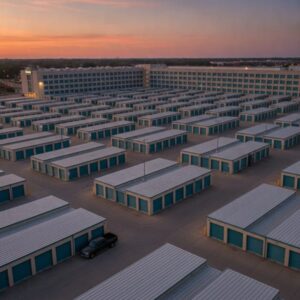
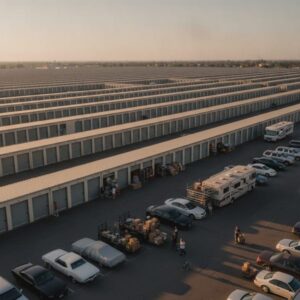
What percentage of American households currently rent a self-storage unit?

About 20%

About 5%

About 9%

About 13%

Points won
0
Correct score
0%

More Questions

More Articles

Did You Know The Dead Sea Is Disappearing Fast?

Did You Know The Dead Sea Is Disappearing Fast?

⏱️ 5 min read

The Dead Sea, one of Earth's most extraordinary natural wonders, is vanishing before our eyes. This hypersaline lake, nestled between Jordan, Israel, and the West Bank, has been shrinking at an alarming rate for decades. What was once a vast body of water stretching approximately 80 kilometers in length is now receding by more than one meter per year, creating a cascade of environmental, economic, and geological consequences that demand immediate attention.

Understanding the Dead Sea's Unique Characteristics

Before examining its decline, it's essential to understand what makes the Dead Sea exceptional. Situated at 430 meters below sea level, it holds the distinction of being the lowest point on Earth's surface. The water's salinity reaches approximately 34%, nearly ten times saltier than ocean water, creating an environment where virtually no life can survive—hence its name.

This extraordinary salt concentration allows swimmers to float effortlessly on the surface, a phenomenon that has attracted visitors for thousands of years. The mineral-rich mud and water have been prized since ancient times for their therapeutic properties, with historical figures like Cleopatra reportedly using Dead Sea products for cosmetic purposes.

The Shocking Rate of Decline

The Dead Sea has lost approximately one-third of its surface area since the 1960s. The water level drops by an average of 1.2 meters annually, though some years see even more dramatic decreases. Since 1930, the sea has receded by more than 40 meters vertically, exposing vast expanses of salt-crusted shoreline and creating a dramatically altered landscape.

In 1930, the Dead Sea covered roughly 1,000 square kilometers. Today, that figure has diminished to approximately 605 square kilometers. The sea has also separated into two distinct basins—northern and southern—with the southern basin now maintained artificially through pumping operations to support the mineral extraction industry.

Primary Causes Behind the Disappearance

Water Diversion from the Jordan River

The Jordan River once supplied the Dead Sea with approximately 1.3 billion cubic meters of fresh water annually. Today, that number has plummeted to less than 100 million cubic meters per year. Israel, Jordan, and Syria have diverted massive amounts of water from the Jordan River and its tributaries for agricultural irrigation and drinking water, severely limiting the Dead Sea's primary water source.

Mineral Extraction Industries

Large-scale potash and mineral extraction operations along the Dead Sea's shores contribute significantly to water loss. These industrial facilities pump water into evaporation ponds to harvest valuable minerals like potash, magnesium, and bromine. While economically beneficial, this process removes millions of cubic meters of water annually that never returns to the sea.

Climate Change and Reduced Rainfall

The region's increasingly arid climate, exacerbated by global climate change, has reduced precipitation in the watershed areas feeding into the Dead Sea. Higher temperatures also increase evaporation rates, compounding the water loss problem. The combination of reduced inflow and increased evaporation creates a devastating double impact.

Environmental and Geological Consequences

Sinkhole Formation

Perhaps the most dramatic and dangerous consequence of the Dead Sea's decline is the proliferation of sinkholes. More than 6,500 sinkholes have appeared along the shoreline since the 1980s, with dozens of new ones forming each year. These sinkholes develop when freshwater from underground aquifers dissolves subsurface salt layers left behind by the receding sea, creating underground cavities that suddenly collapse.

These sinkholes range from one meter to over 25 meters in diameter and pose serious safety hazards. They've swallowed roads, buildings, and agricultural land, forcing the closure of beaches and tourist facilities that were once thriving enterprises.

Ecosystem Disruption

While the Dead Sea itself supports minimal life, the surrounding ecosystem depends on freshwater springs and oases fed by underground aquifers. As the sea level drops, these freshwater sources diminish, threatening unique desert wildlife and vegetation. The receding shoreline also affects migratory bird populations that rely on the area as a crucial stopover point.

Economic and Social Impacts

The tourism industry, worth hundreds of millions of dollars annually, faces significant challenges as beaches disappear and hotels find themselves increasingly distant from the water's edge. Infrastructure built decades ago when water levels were higher now sits stranded, requiring constant adaptation and investment.

Agricultural communities that relied on irrigation from diverted Jordan River water face difficult choices between maintaining their livelihoods and preserving the Dead Sea. The mineral extraction industry, while contributing to the problem, also provides thousands of jobs and represents a major economic sector for both Jordan and Israel.

Proposed Solutions and Ongoing Debates

The most ambitious proposal involves the Red Sea-Dead Sea Conveyance project, a massive engineering undertaking that would pipe water from the Red Sea to the Dead Sea, using the elevation difference to generate hydroelectric power and produce desalinated water for regional consumption. However, this project faces concerns about environmental impacts, costs exceeding $10 billion, and complex political negotiations.

Alternative proposals include reducing water diversion from the Jordan River, improving agricultural water efficiency, treating and redirecting wastewater to the Dead Sea, and implementing stricter regulations on industrial water use. Each solution presents its own challenges, requiring cooperation between nations with complicated political relationships and competing water needs.

The Dead Sea's disappearance represents more than the loss of a geographic landmark—it's a stark reminder of humanity's profound impact on natural systems and the urgent need for sustainable water management in water-scarce regions worldwide.
Did You Know? 12 Facts About Climate Change You Didn’t Know

Did You Know? 12 Facts About Climate Change You Didn’t Know

⏱️ 7 min read

Climate change is one of the most pressing challenges facing our planet today, yet many surprising aspects of this phenomenon remain largely unknown to the general public. While most people are familiar with the basics—rising temperatures, melting ice caps, and extreme weather events—the full scope of climate change extends far beyond these commonly discussed topics. The following facts reveal lesser-known dimensions of how our changing climate affects ecosystems, weather patterns, historical records, and even aspects of daily life that might seem completely unrelated to environmental shifts.

Unexpected Realities of Our Changing Planet

1. The Ocean Absorbs More Than 90% of Excess Heat

While atmospheric temperature increases grab headlines, the world's oceans have been silently absorbing approximately 93% of the excess heat trapped by greenhouse gases since the 1970s. This massive heat sink has actually slowed the rate of atmospheric warming, but at a significant cost. The thermal expansion of warming ocean water contributes substantially to sea-level rise, and this heat absorption is fundamentally altering ocean chemistry and circulation patterns. Without this oceanic buffer, atmospheric temperatures would have risen much more dramatically over the past several decades.

2. Permafrost Contains Double the Atmospheric Carbon

Frozen Arctic and sub-Arctic soils, known as permafrost, contain an estimated 1,600 billion metric tons of carbon—roughly twice the amount currently in Earth's atmosphere. As global temperatures rise, this permafrost is thawing at unprecedented rates, releasing carbon dioxide and methane that have been locked away for millennia. This creates a dangerous feedback loop: warming causes thawing, which releases greenhouse gases, which causes more warming. Scientists are particularly concerned about methane release, as this gas is approximately 25 times more potent than carbon dioxide at trapping heat over a 100-year period.

3. Climate Change Is Altering Earth's Rotation

The redistribution of water mass from melting ice sheets and glaciers is actually affecting Earth's rotation. As ice melts primarily from the poles and flows toward the equator, the planet's mass distribution changes, similar to how a figure skater's spin slows when they extend their arms. While this effect is minuscule—measured in milliseconds per century—it represents a remarkable demonstration of how profoundly climate change is impacting our planet's fundamental physical properties. Scientists use precise astronomical measurements to detect these changes, which also affect the length of our days.

4. Ancient Air Bubbles Provide a 800,000-Year Climate Record

Ice cores drilled from Antarctica contain tiny air bubbles that preserve atmospheric samples from up to 800,000 years ago. These natural time capsules allow scientists to measure historical concentrations of carbon dioxide, methane, and other gases with remarkable precision. The data reveals that current CO2 levels, exceeding 420 parts per million, are higher than at any point during this entire period. Previous natural fluctuations occurred over thousands of years, while the current spike has occurred in mere decades—an unprecedented rate of change in the geological record.

5. Mountain Ecosystems Are Climbing Upward

Plant and animal species in mountainous regions are migrating to higher elevations at an average rate of 11 meters per decade as they follow their preferred temperature zones. This upward migration creates a "summit trap" for species already living at high elevations, as they have nowhere left to go. Researchers have documented this phenomenon across multiple mountain ranges worldwide, from the Alps to the Rockies. This biological reshuffling is creating novel ecosystems as species that never previously coexisted are now forced to share diminishing alpine habitats.

6. Lightning Strikes Are Increasing With Temperature

For every degree Celsius of warming, lightning strikes increase by approximately 12%, according to climate models and observational data. Warmer air holds more moisture and creates more unstable atmospheric conditions that fuel thunderstorms. This has serious implications for wildfire ignition, particularly in regions experiencing simultaneous increases in temperature and drought. The western United States, Australia, and the Mediterranean region are especially vulnerable to this dangerous combination of more lightning and drier, more flammable vegetation.

7. The North Pole Is Developing a Tourist Season

Arctic sea ice extent has declined by approximately 13% per decade since satellite measurements began in 1979. This dramatic loss of ice has opened the Arctic Ocean to increased maritime traffic, including tourism. Cruise ships now regularly traverse routes that were previously impassable, and adventure tourists can visit regions that remained inaccessible throughout human history. While this may seem like an opportunity, it poses significant risks to fragile Arctic ecosystems and indigenous communities, while also demonstrating the profound physical changes occurring in polar regions.

8. Coral Reefs Are Dissolving From Acidification

Beyond the well-known threat of coral bleaching, ocean acidification poses an even more fundamental threat to reef ecosystems. The ocean has absorbed approximately 30% of human-produced carbon dioxide, which reacts with seawater to form carbonic acid. This process has increased ocean acidity by 30% since the Industrial Revolution. More acidic water dissolves the calcium carbonate structures that corals use to build their skeletons, making it progressively harder for reefs to grow and maintain themselves. At current rates, many coral reefs may begin dissolving faster than they can rebuild by mid-century.

9. Coffee and Chocolate Growing Regions Are Shrinking

Climate change is dramatically reducing the land suitable for growing coffee and cacao, the plants that produce chocolate. Rising temperatures, shifting rainfall patterns, and increased pest pressure are forcing these crops into ever-smaller suitable zones, primarily at higher elevations. Studies suggest that up to 50% of land currently used for coffee production could become unsuitable by 2050. This threatens not only consumer products but also the livelihoods of millions of smallholder farmers in tropical regions who depend on these crops for income.

10. Jet Streams Are Becoming More Erratic

The jet stream—a high-altitude river of air that guides weather systems—is becoming wavier and more unpredictable due to Arctic warming. Because the Arctic is warming faster than lower latitudes, the temperature difference that drives the jet stream is weakening. This causes the jet stream to meander more dramatically and sometimes stall in place, leading to prolonged heat waves, cold snaps, and precipitation events. This mechanism contributed to several extreme weather disasters, including the 2021 heat dome over the Pacific Northwest and severe flooding events in Europe.

11. Volcanic Eruptions Could Temporarily Mask Warming

Large volcanic eruptions inject sulfur dioxide into the stratosphere, where it forms reflective aerosol particles that can cool global temperatures for several years. The 1991 eruption of Mount Pinatubo in the Philippines cooled global temperatures by about 0.5°C for approximately two years. Some scientists have proposed mimicking this effect through solar geoengineering, but such interventions carry enormous risks and ethical questions. Meanwhile, the natural cooling effect of eruptions temporarily obscures the underlying warming trend, making it resume even more noticeably once the volcanic particles settle out of the atmosphere.

12. Cities Create Their Own Warming Zones

Urban areas experience the "urban heat island effect," where cities can be 1-7°C warmer than surrounding rural areas due to heat-absorbing surfaces like concrete and asphalt, reduced vegetation, and waste heat from buildings and vehicles. Climate change amplifies this effect, making cities particularly vulnerable to extreme heat. By 2050, approximately 970 cities with a combined population of 1.6 billion people are projected to experience average summer temperatures above 35°C. This creates serious public health challenges, as urban populations face compounding heat stress from both global climate change and local urban warming.

Understanding the Full Picture

These twelve facts illustrate the far-reaching and often surprising ways that climate change affects our planet. From the microscopic air bubbles in ancient ice to the rotation of Earth itself, from the chemistry of ocean water to the behavior of atmospheric rivers, climate change touches every aspect of our natural world. Many of these effects create feedback loops and cascading impacts that multiply the challenges we face. Understanding these lesser-known dimensions of climate change is essential for developing comprehensive solutions and appreciating the true scope of the transformation our planet is undergoing. As research continues, scientists are discovering new connections and consequences, reminding us that climate change is not a single problem but an interconnected web of changes reshaping our world in profound and lasting ways.