









⏱️ 6 min read
Museums serve as guardians of human history, culture, and artistic achievement, preserving invaluable treasures and making them accessible to millions of visitors each year. From ancient artifacts to contemporary masterpieces, these institutions house collections that span millennia and represent civilizations from every corner of the globe. The world's most renowned museums not only showcase extraordinary art and artifacts but also harbor fascinating stories, architectural marvels, and surprising secrets that many visitors never discover.
Remarkable Facts About the World's Premier Museums
1. The Louvre's Underground Shopping Mall Origins
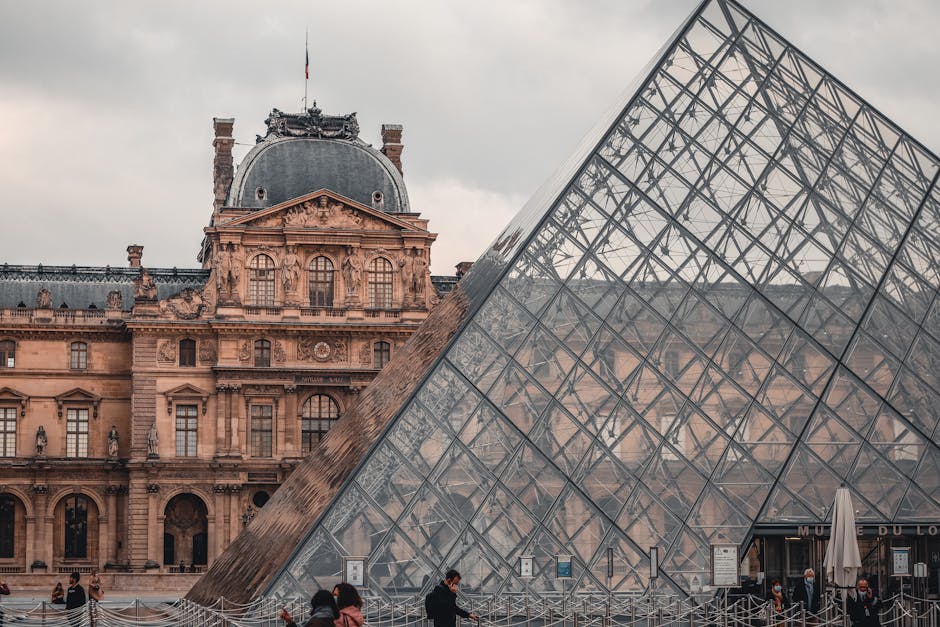
The Louvre Museum in Paris, now the world's most visited museum with over 10 million annual visitors, sits atop a surprising foundation. Before becoming the iconic glass pyramid entrance designed by I.M. Pei in 1989, the Carrousel du Louvre was constructed as an underground commercial and cultural complex. The museum itself was originally a fortress built in the late 12th century before being converted into a royal palace. Today, it houses approximately 38,000 objects spanning from prehistoric times to the 21st century, though it would take someone roughly 100 days to view every piece if they spent just 30 seconds on each artwork.
2. The Hermitage's Army of Feline Guards
The State Hermitage Museum in St. Petersburg, Russia, employs an unconventional security force that has protected its treasures for over 250 years. Since Empress Elizabeth declared cats official guardians of the art galleries in 1745, approximately 70 cats currently patrol the museum's basements and grounds, keeping the massive complex free from rodents. These felines have their own press secretary, receive regular veterinary care, and even have their own kitchen. The museum celebrates them annually with a special "Day of the Hermitage Cat," and they've become beloved mascots with dedicated social media followings.
3. The British Museum's Impossible-to-See-in-One-Day Collection
The British Museum in London houses over 8 million objects in its collection, making it physically impossible to view everything in a single visit or even multiple visits. If a visitor spent one minute looking at each object for 8 hours daily, it would take approximately 34 years to see the entire collection. The museum's establishment in 1753 makes it the world's first national public museum, and remarkably, it has never charged admission fees, maintaining its founding principle of being "free to all studious and curious persons."
4. The Vatican Museums' Nine-Mile Artistic Journey
The Vatican Museums contain approximately 9 miles of rooms, galleries, and corridors adorned with some of the world's most important Renaissance art. Founded by Pope Julius II in the early 16th century, the museums attract over 6 million visitors annually who come to witness masterpieces including Michelangelo's Sistine Chapel ceiling and Raphael's Rooms. The museums employ a team of restoration experts who work continuously to preserve the collections, and the Sistine Chapel alone required a 14-year restoration project completed in 1994 that revealed colors scholars had never seen before.
5. The Metropolitan Museum's Rooftop Secret Garden
New York's Metropolitan Museum of Art, the largest art museum in the United States, features a hidden gem that many visitors overlook: its rooftop garden. Open seasonally from spring through fall, this 8,000-square-foot space showcases contemporary art installations with stunning views of Central Park and Manhattan's skyline. The Met's collection spans 5,000 years of art from every corner of the world, with over 2 million works in its permanent collection. The museum is so vast that it occupies more than 2 million square feet, approximately equivalent to 35 full-sized basketball courts.
6. The Uffizi Gallery's Secret Corridor
Florence's Uffizi Gallery, home to the world's finest collection of Italian Renaissance art, contains a secret elevated passageway known as the Vasari Corridor. Built in 1565, this kilometer-long enclosed walkway connects the Uffizi with Palazzo Pitti, allowing the Medici family to move between their residence and government offices without mingling with commoners. The corridor passes over the Ponte Vecchio and houses an impressive collection of self-portraits by famous artists. Though closed for extensive renovations, it represents one of the most unique architectural features of any museum worldwide.
7. The Smithsonian's Staggering Storage Problem
The Smithsonian Institution comprises 19 museums, 21 libraries, nine research centers, and a zoo, collectively holding more than 154 million artifacts, specimens, and works of art. Only a tiny fraction—approximately 1-2%—of this massive collection can be displayed at any given time. The remaining objects are carefully preserved in climate-controlled storage facilities, including a massive 4.5-acre complex in Maryland. The Smithsonian's collections range from the Hope Diamond to Dorothy's ruby slippers, from moon rocks to the original Star-Spangled Banner.
8. The Prado Museum's Royal Collection Legacy
Madrid's Museo Nacional del Prado boasts the world's finest collection of Spanish art and houses numerous masterpieces by Velázquez, Goya, and El Greco. The museum's origins trace directly to the Spanish Royal Collection, begun in the 16th century, making it unique among major European museums as it was based on royal collecting rather than revolutionary seizures. The Prado possesses the most comprehensive collection of works by Hieronymus Bosch outside the Netherlands, including his famous "The Garden of Earthly Delights," and maintains such strict conservation standards that photography is prohibited to protect the artworks from light damage.
9. The Egyptian Museum's Treasure Overflow
Cairo's Egyptian Museum houses the world's largest collection of Pharaonic antiquities, with over 120,000 items spanning Egypt's ancient history. The museum became world-famous for exhibiting the complete treasures of Tutankhamun, discovered in 1922, which include over 5,000 objects. So vast is the collection that many artifacts remain in storage basements, and some items are displayed in simple wooden cases unchanged since the early 20th century. The museum itself has become a historical artifact, having opened in 1902 and surviving numerous political upheavals while continuing to protect Egypt's irreplaceable heritage.
10. The Rijksmuseum's Digital Innovation Leadership
Amsterdam's Rijksmuseum has revolutionized public access to art by making high-resolution images of over 700,000 works from its collection freely available online for download and use. This groundbreaking initiative, launched in 2013, allows anyone worldwide to print, adapt, and use images of masterpieces including works by Rembrandt and Vermeer without copyright restrictions. The museum underwent a 10-year renovation completed in 2013 that restored its 19th-century glory while incorporating modern technology, creating a seamless blend of historical architecture and contemporary museum practices.
Conclusion
These remarkable institutions represent far more than mere repositories of art and artifacts. Each museum tells its own unique story through architectural innovation, quirky traditions, massive collections, and dedication to preservation and public access. From feline security forces to secret corridors, from impossible-to-view-entirely collections to pioneering digital access, these museums continue to evolve while maintaining their essential mission: preserving humanity's cultural heritage for future generations. Whether housing millions of specimens or showcasing carefully curated masterpieces, these world-famous museums remind us of our shared human creativity, history, and ongoing quest to understand and celebrate artistic achievement across time and cultures.