









1 / 10 Questions
0 Points

Which animal gives us milk?

Dog

Chicken

Rabbit

Cow

Points won
0
Correct score
0%

More Questions

More Articles

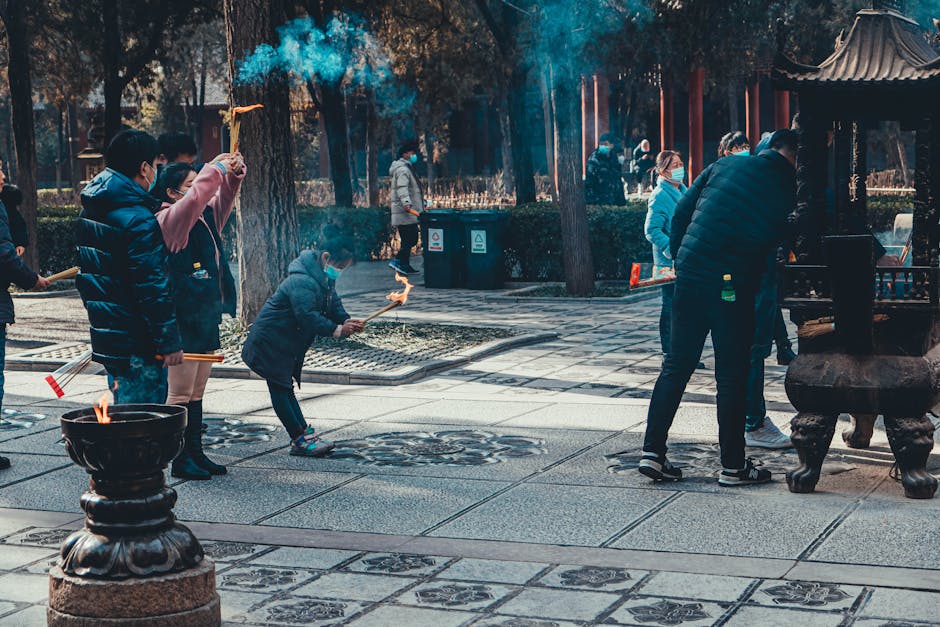
Did You Know The Great Fire of London Killed Only 6 People?

Did You Know The Great Fire of London Killed Only 6 People?

⏱️ 6 min read

The Great Fire of London, which raged through the capital city from September 2-6, 1666, stands as one of the most catastrophic urban disasters in British history. This devastating conflagration consumed approximately 13,200 houses, 87 parish churches, St Paul's Cathedral, and most of the buildings of the City authorities, leaving tens of thousands homeless. Yet remarkably, official records indicate that only six people perished in the flames—a figure that continues to baffle historians and challenge our understanding of this monumental event. This astonishingly low death toll raises numerous questions about record-keeping in 17th-century London and reveals fascinating insights about the fire itself.

Understanding the Remarkably Low Death Toll

1. The Fire's Slow Initial Spread Allowed Mass Evacuation

The Great Fire began in the early hours of September 2nd in Thomas Farriner's bakery on Pudding Lane. Unlike modern conflagrations that can engulf buildings in minutes, the fire initially spread relatively slowly, giving residents crucial time to escape. The flames took several hours to gain significant momentum, starting in just one building before gradually spreading to neighboring structures. This gradual progression meant that most Londoners had sufficient warning to flee their homes with their families. Contemporary accounts describe streets filled with people carrying their possessions toward the river or open fields. The medieval street layout, while ultimately facilitating the fire's spread, initially created bottlenecks that ironically slowed the flames' advance, allowing more people to escape ahead of the inferno.

2. The Wealthy and Poor Fled to Open Spaces and the Thames

London's proximity to the River Thames and surrounding open areas proved crucial for survival. As news of the fire spread, thousands of residents made their way to Moorfields, an open area north of the city walls, while others took to boats on the Thames or gathered on the river's banks. Samuel Pepys, the famous diarist whose accounts provide invaluable documentation of the event, described pigeons hovering above their burning homes until their wings caught fire, but noted that people were able to wade into the river or move to safety. The Thames served as both an evacuation route and a firebreak, with many Londoners spending days camping along its shores watching their city burn. These open refuges meant that even as the fire destroyed vast swathes of densely packed housing, the population had somewhere to go.

3. Grossly Incomplete Death Records of the Era

The official figure of six deaths is almost certainly a dramatic undercount, reflecting the inadequate record-keeping systems of 17th-century England rather than historical reality. Death registration was inconsistent at best, and many victims would have gone unrecorded. The poorest residents, immigrants, and the homeless—who made up a significant portion of London's population—were rarely documented in official records even in normal times. Additionally, deaths that occurred in the weeks following the fire from injuries, smoke inhalation, or exposure would not have been attributed to the fire itself. Bodies completely consumed by the intense flames would have left no trace, and in the chaos and destruction, there was no systematic effort to account for missing persons. Modern historians believe the true death toll was likely in the hundreds or possibly thousands, but the lack of comprehensive records makes it impossible to determine with certainty.

4. London's Wooden Architecture Burned Hot But Provided Warning

The predominantly wooden construction of 17th-century London buildings was both a blessing and a curse during the Great Fire. While timber structures ignited easily and burned fiercely, they also burned in a relatively predictable manner that residents would have understood. Unlike modern buildings filled with plastics and chemicals that can produce toxic fumes and cause rapid, catastrophic collapse, wooden buildings burned more slowly and with clear visible warning signs—creaking timbers, smoke, and progressive structural failure. Medieval Londoners were also accustomed to fires; small blazes were common in a city lit by candles and heated by open flames. This familiarity meant people knew when to abandon buildings and understood the dangers, likely contributing to the low casualty count. The fire burned hot enough to melt pottery and metals, but this intensity paradoxically meant it announced its presence unmistakably, giving people time to flee rather than being trapped by sudden collapse.

5. The Fire Occurred During Daytime Hours When People Were Alert

While the fire started in the early morning hours around 1 AM, it remained relatively contained for the first few hours. By the time it became truly dangerous and began spreading rapidly—around dawn and into Sunday morning—most Londoners were awake or awakening naturally. Had the fire reached its peak intensity during the middle of the night when the entire city slept, the death toll would almost certainly have been catastrophic. The timing meant that as the fire grew in severity throughout Sunday and into Monday, the population was alert, mobile, and able to make rational decisions about evacuation. Church bells rang out warnings, neighbors alerted one another, and city officials, despite their inadequate response to fighting the fire itself, were able to coordinate some evacuation efforts. This daytime occurrence proved crucial in allowing the elderly, children, and infirm to be moved to safety, even if slowly.

6. Medieval City Walls and the Fire's Geographic Containment

London's ancient Roman and medieval walls, though no longer serving their defensive purpose, played an unexpected role in the evacuation. These walls and gates created defined boundaries and channeled fleeing residents toward specific exits, preventing the chaos of people scattering in all directions. The walls also helped contain the fire to the old City of London, preventing it from spreading to the developing suburbs and settlements beyond. Approximately 80% of the walled city was destroyed, but areas outside the walls, including most of Westminster and Southwark, remained largely untouched. This geographic containment meant that nearby areas could serve as refuges, and once people passed through the city gates, they were essentially safe from the flames. The concentration of destruction within these boundaries, while devastating to property, actually created clear zones of safety that facilitated organized evacuation rather than panicked dispersal across the countryside.

Historical Legacy and Modern Understanding

The Great Fire of London's official death toll of six people remains one of history's most striking statistics, but it must be understood within the context of incomplete records, class bias in documentation, and the definition of fire-related deaths in the 17th century. While the low number of recorded fatalities is remarkable given the fire's scale—destroying roughly 436 acres within the city walls—modern historians approach this figure with appropriate skepticism. The fire's true legacy lies not just in the death toll, but in how it transformed London, leading to new building regulations, the requirement for brick and stone construction, wider streets, and improved firefighting capabilities. The destruction paved the way for Christopher Wren's architectural renaissance and the creation of the modern London we know today. Understanding these six key factors behind the historically low casualty count provides insight into both the nature of the disaster itself and the limitations of historical records from this tumultuous period in British history.
Top 10 Oldest Living Things on Earth

Top 10 Oldest Living Things on Earth

⏱️ 7 min read

The natural world contains living organisms that have survived for thousands of years, witnessing the rise and fall of civilizations, dramatic climate shifts, and the transformation of entire landscapes. These ancient life forms represent nature's most resilient survivors, continuing to grow and thrive despite centuries of environmental challenges. From individual organisms to vast colonial systems, these ancient beings offer remarkable insights into longevity, adaptation, and the enduring power of life on Earth.

Ancient Survivors That Continue to Thrive

1. Pando: The Trembling Giant Clone Colony

In the Fishlake National Forest of Utah stands Pando, a massive clonal colony of quaking aspen trees that shares a single root system. This remarkable organism spans 106 acres and consists of approximately 47,000 genetically identical stems. Scientists estimate Pando to be around 80,000 years old, making it potentially the oldest living organism on Earth. Weighing approximately 6,000 metric tons, it is also among the heaviest known organisms. The name "Pando" derives from Latin, meaning "I spread," which perfectly describes how this colony has expanded through root propagation over millennia. Despite its ancient origins, Pando faces modern threats from grazing animals and human development that prevent new stems from maturing.

2. Methuselah: The Ancient Bristlecone Pine

Hidden somewhere in California's White Mountains grows Methuselah, a Great Basin bristlecone pine tree that has endured for 4,853 years. This individual tree began its life around 2831 BCE, making it older than the Egyptian pyramids. The exact location is kept secret by the U.S. Forest Service to protect it from vandalism. Bristlecone pines thrive in harsh, high-altitude environments where few other species can survive, growing incredibly slowly in the nutrient-poor dolomite soil. Their dense, resinous wood is highly resistant to insects, fungi, and rot, contributing to their extraordinary longevity. These trees can continue living even when most of their trunk is dead, surviving on a thin strip of living bark.

3. The Gran Abuelo Alerce Tree of Chile

Deep within Chile's Alerce Costero National Park stands the Gran Abuelo, or "Great Grandfather," a Patagonian cypress estimated to be over 5,400 years old according to recent research. This towering giant measures 60 meters tall and 4 meters in diameter. The Patagonian cypress, locally known as alerce, can live for millennia in the cool, wet climate of southern Chile and Argentina. The Gran Abuelo's age was determined through a combination of tree ring counting and statistical modeling, as extracting a complete core sample would damage the tree. This ancient giant has survived numerous earthquakes, volcanic eruptions, and climate fluctuations throughout its existence.

4. Seagrass Meadows of the Mediterranean

Beneath the azure waters of the Mediterranean Sea lies an organism that has been growing for approximately 100,000 years. Posidonia oceanica, a species of seagrass, forms vast underwater meadows through clonal growth. The most ancient known colony stretches for nearly 10 miles near the Spanish island of Formentera. These seagrass meadows grow extremely slowly, expanding only about one centimeter per year. They provide critical habitat for marine life, produce oxygen, and help stabilize the seafloor. The meadows have persisted through ice ages and dramatic sea level changes, adapting to shifting environmental conditions over tens of thousands of years.

5. The Jurupa Oak of California

In the Jurupa Mountains of California, a Palmer's oak colony has been surviving through clonal reproduction for an estimated 13,000 years. This ancient plant has endured since the last Ice Age by repeatedly regenerating from its root crown after wildfires and droughts kill its above-ground stems. The colony consists of about 70 clusters of stems connected by a shared root system spanning roughly 25 feet in diameter. Unlike trees that grow continuously upward, this scrub oak remains relatively small, with individual stems rarely exceeding a few feet in height. Its survival strategy relies on persistence rather than size, allowing it to outlive countless generations of much larger trees.

6. Antarctic Glass Sponge Colonies

In the frigid depths of the Southern Ocean surrounding Antarctica, enormous glass sponges have been growing for thousands of years. Some specimens are estimated to be over 10,000 years old, with the oldest potentially reaching 15,000 years. These sponges grow incredibly slowly in the cold Antarctic waters, adding only millimeters to their size each year. Their silica-based skeletal structures create intricate glass-like frameworks that can reach massive proportions. The extreme cold and stable conditions of Antarctic waters contribute to their longevity, as the environment experiences minimal seasonal variation and slow metabolic rates extend their lifespan considerably.

7. Ancient Stromatolites of Western Australia

Stromatolites in Shark Bay, Western Australia, represent living connections to Earth's earliest life forms. While the structures themselves can be thousands of years old, the communities of cyanobacteria creating them are descendants of organisms that first appeared 3.5 billion years ago. Modern stromatolites grow through the accumulation of sediments trapped by microbial mats, building layered structures at rates of less than a millimeter per year. Some individual stromatolite formations in Shark Bay are estimated to be 2,000 to 3,000 years old. These living fossils provide scientists with insights into how early life transformed Earth's atmosphere by producing oxygen through photosynthesis.

8. The Old Tjikko Norway Spruce

On Fulufjället Mountain in Sweden grows Old Tjikko, a Norway spruce with a root system that has been alive for 9,565 years. While the visible tree trunk is relatively young at a few hundred years old, the root system beneath has been continuously regenerating new trunks since the end of the last Ice Age. This clonal regeneration allowed the organism to survive harsh Ice Age conditions when the tree existed as a stunted shrub. As the climate warmed, the root system began producing the full-sized tree trunk visible today. Old Tjikko demonstrates how some organisms achieve longevity not through a single persistent structure but through continuous renewal of connected parts.

9. Ancient Box Huckleberry Colony

In the forests of Pennsylvania, a box huckleberry colony has been slowly expanding for an estimated 13,000 years. This low-growing shrub spreads through underground rhizomes, creating a circular colony that now spans several acres. The plant expands outward at a rate of approximately six inches per century, making it one of the slowest-growing organisms known. Scientists determined its age by measuring the colony's diameter and calculating backward based on its growth rate. The colony has survived countless environmental changes, including the transformation of the landscape from post-glacial tundra to temperate forest, by maintaining its slow but steady expansion strategy.

10. Welwitschia Mirabilis of the Namib Desert

In the ancient Namib Desert of Namibia and Angola lives Welwitschia mirabilis, a bizarre plant species with individuals known to exceed 2,000 years of age. These strange plants produce only two leaves throughout their entire lifetime, which continuously grow from the base while the ends weather away into tattered ribbons. The largest specimens have leaves that can reach lengths of several meters, sprawling across the desert floor. Welwitschia survives in one of Earth's oldest and driest deserts by capturing moisture from coastal fog and developing an extensive root system. Carbon dating of the largest individuals suggests some may be as old as 3,000 years, having endured millennia of extreme desert conditions.

Lessons from Earth's Most Enduring Organisms

These ten ancient living organisms demonstrate the remarkable diversity of survival strategies that enable extraordinary longevity. From clonal colonies that spread underground to individual trees growing in harsh mountaintop environments, each has adapted uniquely to its environment. Many of these ancient organisms thrive in extreme or stable conditions where competition is limited and environmental change occurs slowly. Their continued existence provides invaluable opportunities for scientific research into aging, climate change, and ecosystem dynamics. Protecting these ancient organisms requires dedicated conservation efforts, as many face unprecedented threats from human activities and rapid environmental change. These living monuments to resilience remind us that life, when given the right conditions and protection, can endure far longer than human civilizations, connecting us to Earth's deep biological history.