







⏱️ 7 min read
World War I, often called "The Great War," reshaped the modern world in ways that continue to resonate more than a century later. While many are familiar with the broad strokes of this devastating conflict, numerous fascinating details remain largely unknown to the general public. These lesser-known aspects of the war reveal the human experiences, technological innovations, and curious circumstances that defined this pivotal moment in history.
Remarkable Facts from the First World War
1. The Christmas Truce of 1914
One of the most extraordinary events of World War I occurred during the first Christmas of the conflict. Along various sections of the Western Front, British and German soldiers independently initiated unofficial ceasefires. Soldiers emerged from their trenches to exchange gifts, sing carols, and even play football in No Man's Land. Some truces lasted several days. This spontaneous outbreak of peace demonstrated the humanity that persisted despite the war's brutality, though military commanders quickly suppressed such fraternization in subsequent years.
2. Animals Served in Astonishing Numbers
Approximately 16 million animals served during World War I, including horses, dogs, cats, pigeons, and even camels and elephants. Horses and mules bore the brunt of service, with eight million horses dying during the conflict. Pigeons carried crucial messages with a 95% success rate, while dogs served as messengers, sentries, and even pulled machine guns. Cats protected food supplies from rats in the trenches, and their acute hearing helped warn soldiers of incoming gas attacks.
3. The Youngest Known Combatant Was Only Twelve
Sidney Lewis enlisted in the British Army at just twelve years old, lying about his age to join the East Surrey Regiment. He served at the Battle of the Somme in 1916 before his mother discovered his whereabouts and had him discharged. Lewis was far from alone—an estimated 250,000 underage British boys enlisted during the war, with some as young as fourteen. Similar patterns occurred in other nations' armed forces.
4. Plastic Surgery Advanced Dramatically
The horrific facial injuries caused by modern weaponry drove unprecedented advances in reconstructive surgery. New Zealand surgeon Harold Gillies pioneered modern plastic surgery techniques at the Queen's Hospital in Sidcup, England. He performed over 11,000 operations and developed the "tubed pedicle" method of skin grafting. These innovations laid the groundwork for modern plastic and reconstructive surgery, transforming medicine permanently.
5. Tank Crews Wore Chainmail Masks
Early tank crews faced severe danger from metal fragments that spalled off the interior walls when bullets struck the exterior. To protect themselves, tank operators wore leather helmets with chainmail visors that resembled medieval armor. These cumbersome masks proved only partially effective and were uncomfortable in the already stifling tank interiors, which could reach temperatures exceeding 120 degrees Fahrenheit.
6. Soldiers Developed Their Own Language
Trench warfare spawned a unique vocabulary that blended English, French, and made-up terms. "Napoo" (from the French "il n'y a plus," meaning "there is no more") meant something was finished or useless. A "whizz-bang" was a high-velocity shell, while "taking a toffee" meant getting wounded. This linguistic creativity helped soldiers cope with the psychological stress of prolonged combat and created bonds within units.
7. Germany's Secret Telegram Changed Everything
In January 1917, German Foreign Minister Arthur Zimmermann sent an encrypted telegram to Mexico proposing a military alliance against the United States. The message promised to help Mexico recover Texas, New Mexico, and Arizona if they joined the Central Powers. British intelligence intercepted and decoded the telegram, sharing it with American authorities. The revelation outraged American public opinion and contributed significantly to the U.S. decision to enter the war in April 1917.
8. Soldiers Experienced "Trench Foot" Epidemic
The unsanitary, waterlogged conditions of trench warfare caused a debilitating condition called trench foot. This affliction occurred when feet remained wet and cold for extended periods, causing tissue breakdown, gangrene, and sometimes necessitating amputation. At its peak, trench foot affected thousands of soldiers. British forces alone reported 20,000 casualties from the condition in 1914-1915. The problem led to strict daily foot inspection routines and the court-martial of officers who failed to prevent it among their men.
9. The First Aerial Dogfights Used Surprising Weapons
Before machine guns were synchronized to fire through propellers, early fighter pilots employed pistols, rifles, and even grappling hooks to combat enemy aircraft. Some pilots carried bricks or grenades to drop on opponents flying below them. French pilot Roland Garros initially mounted a machine gun to fire through his propeller by adding steel deflector plates to the blades, though this damaged the propeller. Dutch engineer Anthony Fokker later perfected the interrupter gear that revolutionized air combat.
10. War Poets Transformed Literature
World War I produced some of history's most powerful war poetry. Soldiers like Wilfred Owen, Siegfried Sassoon, and Rupert Brooke used verse to process their traumatic experiences and challenge romanticized notions of warfare. Owen's famous line "Dulce et decorum est pro patria mori" ("It is sweet and fitting to die for one's country") was written ironically to expose the "old Lie" of glorified warfare. Many of these poets, including Owen, died in combat, but their work permanently influenced how society views war.
11. Tunneling Created Underground Warfare
Both sides dug elaborate tunnel systems beneath enemy trenches to plant massive explosive mines. At the Battle of Messines in 1917, British forces detonated 19 mines containing nearly one million pounds of explosives beneath German positions. The blast was reportedly heard in London, 140 miles away, and created 19 enormous craters, some still visible today. Thousands of "tunnelers" worked in these claustrophobic, dangerous conditions, constantly listening for enemy counter-tunneling operations.
12. The War's Deadliest Day Killed 60,000
July 1, 1916—the first day of the Battle of the Somme—remains the deadliest day in British military history. The British Army suffered nearly 60,000 casualties, including almost 20,000 deaths, in a single day. Many units walked slowly toward German positions carrying 60-pound packs, presenting easy targets for machine-gunners. Some battalions lost 90% of their men within minutes. Despite this catastrophic loss, the battle continued for four more months.
13. Women Entered the Workforce Massively
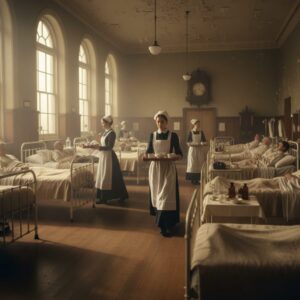
With millions of men serving in the military, women filled roles previously denied to them. They worked in munitions factories, drove ambulances, served as nurses near the front lines, and took over farms and businesses. In Britain, the number of employed women increased from 3.2 million in 1914 to 4.8 million by 1918. This social transformation contributed to women's suffrage movements worldwide, as their essential wartime contributions undermined arguments against their political participation.
14. The Influenza Pandemic Killed More Than the War
The 1918 Spanish Flu pandemic, which coincided with the war's final year, killed an estimated 50-100 million people worldwide—more than twice the war's military and civilian casualties combined. The crowded conditions of military camps and troop movements facilitated the disease's rapid spread. The pandemic particularly affected young, healthy adults, the same demographic fighting the war, making it especially devastating to military forces and home populations already weakened by years of conflict.
15. Peace Treaty Planted Seeds of Future Conflict
The Treaty of Versailles, signed on June 28, 1919, imposed harsh terms on Germany, including massive reparations payments and territorial losses. Germany lost 13% of its territory and all colonial possessions, while being forced to accept full responsibility for the war. Many historians argue these punitive measures humiliated Germany and created economic hardship that contributed to political instability and the eventual rise of Nazi ideology. Marshal Ferdinand Foch presciently observed that the treaty was "not peace" but merely "an armistice for twenty years"—almost exactly the time until World War II began.
Understanding the Great War's Legacy
These fifteen facts reveal the profound complexity of World War I beyond the statistics of battles and casualties. From spontaneous truces to devastating pandemics, from technological innovations to social transformations, the war touched every aspect of human civilization. The conflict's legacy extended far beyond the 1918 armistice, fundamentally altering global politics, society, technology, and culture. Understanding these lesser-known aspects helps us appreciate how this "war to end all wars" shaped the modern world and continues to influence contemporary society more than a century after its conclusion.