










1 / 10 Questions
0 Points

What color is the 'black box' in airplanes?

Black

Bright orange

Silver

Yellow

Points won
0
Correct score
0%

More Questions

More Articles

Did You Know The Eiffel Tower Was Supposed to Be Temporary?

Did You Know The Eiffel Tower Was Supposed to Be Temporary?

⏱️ 5 min read

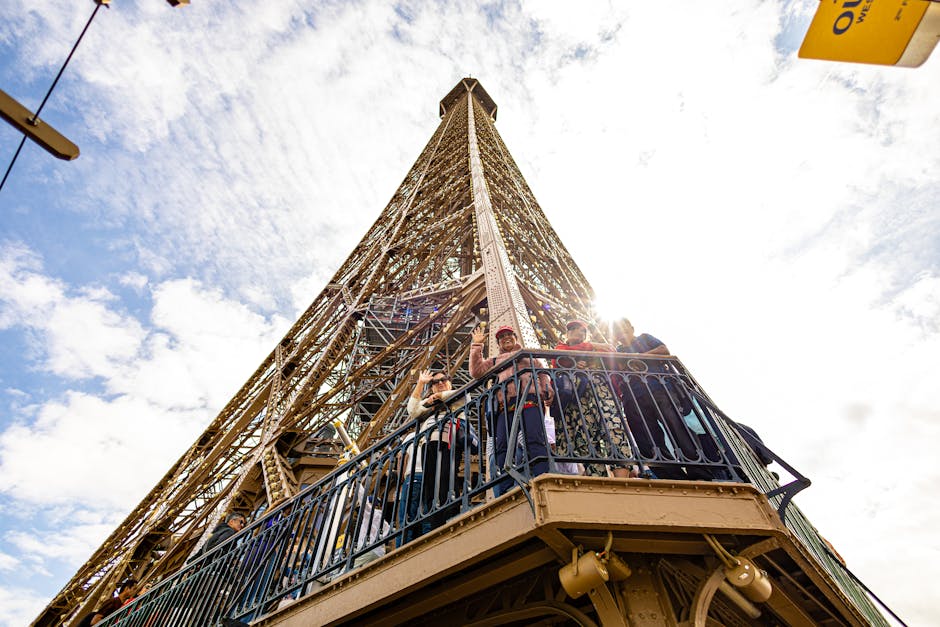
Standing majestically on the Champ de Mars in Paris, the Eiffel Tower has become synonymous with French culture and architectural innovation. Yet few visitors gazing up at its iron lattice framework realize that this iconic monument was never intended to grace the Parisian skyline permanently. The tower's journey from a temporary exhibition structure to one of the world's most recognizable landmarks is a fascinating tale of engineering triumph, public controversy, and fortunate circumstances that saved it from demolition.

The 1889 Universal Exposition: A Grand Vision

The Eiffel Tower was conceived as the grand entrance arch for the 1889 Exposition Universelle, a world's fair held to commemorate the centennial of the French Revolution. The French government wanted a structure that would demonstrate France's industrial prowess and engineering capabilities to the world. After reviewing over 100 proposals, officials selected the design submitted by Gustave Eiffel's engineering company, which proposed an iron tower that would reach an unprecedented height of 300 meters, making it the tallest man-made structure on Earth.

The construction contract explicitly stated that the tower would stand for only 20 years after its completion. According to the original agreement signed in January 1887, the structure was to be dismantled in 1909, with the materials potentially recycled or sold. This temporary status was actually a strategic decision that helped overcome initial resistance to the project, as critics believed the iron structure would be an eyesore marring Paris's classical beauty.

Fierce Opposition from Parisian Artists and Intellectuals

Before construction even began, the Eiffel Tower faced vehement opposition from prominent members of Parisian society. In February 1887, a group of approximately 300 artists, sculptors, writers, and architects published a petition in the newspaper Le Temps, denouncing the tower as a "metal monstrosity" that would overshadow Paris's elegant architecture.

The protest letter, signed by notable figures including composer Charles Gounod and writer Guy de Maupassant, referred to the proposed structure as "this truly tragic street lamp" and "this ridiculous tower dominating Paris like a gigantic black smokestack." Maupassant supposedly disliked the tower so intensely that he frequently ate lunch at the tower's restaurant because it was the one place in Paris where he couldn't see the structure itself.

Despite this artistic outcry, construction proceeded on schedule, beginning on January 28, 1887. The engineering feat required 18,000 individual iron pieces, 2.5 million rivets, and approximately 300 workers to complete over two years, two months, and five days.

A Spectacular Success at the World's Fair

When the Eiffel Tower opened to the public on May 15, 1889, it exceeded all expectations. During the six months of the Exposition Universelle, nearly two million people visited the tower, paying admission fees to ascend to its observation platforms. Visitors marveled at the engineering achievement and the breathtaking views of Paris from heights never before accessible to the general public.

The tower's commercial success during the exposition helped Gustave Eiffel recoup approximately 75 percent of the construction costs. However, as the initial excitement faded and the exposition concluded, questions about the tower's future intensified. The structure's fate hung in the balance as the 1909 deadline approached.

How the Tower Earned Its Permanent Status

Several factors converged to save the Eiffel Tower from its scheduled demolition. The most significant was its unexpected utility for scientific purposes and telecommunications. Gustave Eiffel himself actively promoted the tower's practical applications to justify its continued existence.

Scientific and Telecommunications Value

Eiffel permitted scientists to use the tower for various experiments, including meteorological observations, physics studies, and aerodynamics research. He even installed a laboratory for his own scientific pursuits on the tower's third level. These scientific activities demonstrated that the structure had value beyond aesthetics or tourism.

The tower's salvation ultimately came through wireless telegraphy. In 1898, Eugène Ducretet conducted radio transmission experiments from the tower, and by 1903, the military was using it for telecommunications. The tower proved invaluable for intercepting enemy communications during World War I, particularly during the First Battle of the Marne in 1914, when radio messages intercepted from the tower helped French forces detect German movements.

Strategic Military Importance

The Eiffel Tower's role in military communications secured its future. In 1910, when the original 20-year concession expired, the tower received a 70-year extension primarily because of its telecommunications capabilities. The French military recognized that the tower's height made it an irreplaceable asset for radio transmission, and dismantling it would have been strategically disadvantageous.

From Controversial Structure to Beloved Icon

Public opinion gradually shifted throughout the early 20th century. As Paris modernized and new generations grew up with the tower as part of the cityscape, it transformed from a controversial temporary exhibit to a cherished symbol of Paris and France itself. The structure that artists once denounced became a muse for painters, photographers, and poets.

The tower's cultural significance was further cemented through its appearances in films, literature, and popular media. It became impossible to imagine Paris without its iron landmark piercing the sky. Today, the Eiffel Tower attracts nearly seven million visitors annually, making it one of the world's most visited paid monuments.

The Lasting Legacy

The Eiffel Tower's transformation from a temporary exhibition piece to a permanent icon represents a remarkable reversal of fortune. Its survival demonstrates how architectural works can transcend their original purposes and how technological utility can preserve cultural landmarks. The tower that was meant to stand for just two decades has now graced the Parisian skyline for well over a century, proving that sometimes the most enduring monuments are those that were never meant to last. This iron giant's story serves as a reminder that society's initial reactions to bold architectural innovations don't always predict their ultimate historical significance.

Top 10 Greatest Bands of All Time

Top 10 Greatest Bands of All Time

⏱️ 7 min read

The history of rock and popular music has been shaped by countless talented musicians, but only a select few bands have achieved legendary status that transcends generations. These groups didn't just create hit songs—they revolutionized music, influenced culture, and left an indelible mark on society. Their innovative approaches to songwriting, performance, and recording techniques continue to inspire artists decades after their peak years. From the British Invasion to American rock pioneers, these ten bands represent the pinnacle of musical achievement and cultural impact.

The Definitive List of Musical Legends

1. The Beatles: Revolutionizing Popular Music Forever

No discussion of great bands is complete without The Beatles, who fundamentally transformed what popular music could be. John Lennon, Paul McCartney, George Harrison, and Ringo Starr didn't just write catchy songs—they expanded the artistic boundaries of rock music. From their early days of "I Want to Hold Your Hand" to the experimental masterpiece "Sgt. Pepper's Lonely Hearts Club Band," The Beatles demonstrated unprecedented musical evolution. They pioneered studio techniques like backwards recording, tape loops, and multitracking that became standard in modern music production. Their influence extends beyond music into fashion, film, and social consciousness, making them arguably the most important band in history.

2. The Rolling Stones: The Enduring Force of Rock and Roll

While The Beatles represented pop sophistication, The Rolling Stones embodied raw rock and roll rebellion. Mick Jagger and Keith Richards formed one of the most prolific songwriting partnerships in music history, creating timeless tracks like "Satisfaction," "Paint It Black," and "Sympathy for the Devil." The band's blues-influenced sound and provocative image established the template for rock star excess and longevity. With a career spanning over six decades and still performing sold-out stadium shows, The Rolling Stones prove that rock and roll is truly here to stay. Their fusion of blues, rock, and later world music influences created a sound that remains instantly recognizable and perpetually relevant.

3. Led Zeppelin: Masters of Hard Rock and Musical Complexity

Led Zeppelin redefined what a rock band could achieve in terms of power, complexity, and mystique. Jimmy Page's innovative guitar work, Robert Plant's soaring vocals, John Paul Jones's versatile bass and keyboard contributions, and John Bonham's thunderous drumming created a sound that was both heavy and intricate. Songs like "Stairway to Heaven," "Kashmir," and "Whole Lotta Love" showcase their ability to blend hard rock with folk, blues, and Eastern influences. Despite never releasing a single in the UK and maintaining a mysterious public image, Led Zeppelin became one of the best-selling bands in history, proving that artistic integrity and commercial success need not be mutually exclusive.

4. Pink Floyd: Pioneers of Progressive and Psychedelic Rock

Pink Floyd took rock music into cerebral, atmospheric territories previously unexplored. Their concept albums, particularly "The Dark Side of the Moon" and "The Wall," addressed profound themes of mental illness, alienation, and societal pressure through innovative sonic landscapes. The band's use of synthesizers, sound effects, and studio experimentation created immersive listening experiences that transcended conventional song structures. Their legendary live performances, featuring elaborate light shows and visual effects, established new standards for concert production. "The Dark Side of the Moon" remained on the Billboard charts for over 900 weeks, testament to their enduring appeal and artistic vision.

5. Queen: Theatrical Rock Excellence and Genre-Defying Artistry

Queen's combination of theatrical showmanship, musical virtuosity, and genre-blending compositions made them one of rock's most distinctive bands. Freddie Mercury's four-octave vocal range and commanding stage presence, Brian May's orchestral guitar arrangements, Roger Taylor's powerful drumming, and John Deacon's melodic bass lines created a signature sound that encompassed rock, opera, funk, and pop. Songs like "Bohemian Rhapsody," with its operatic sections and hard rock finale, demonstrated their willingness to break all musical rules. Their performance at Live Aid in 1985 is widely considered the greatest live rock performance ever, showcasing their ability to connect with massive audiences.

6. The Who: Explosive Energy and Rock Opera Innovation

The Who brought unprecedented aggression and ambition to rock music through their explosive performances and conceptual albums. Pete Townshend's windmill guitar style and guitar-smashing antics, Roger Daltrey's powerful vocals, Keith Moon's chaotic drumming, and John Entwistle's melodic bass work created a sound that was both destructive and beautiful. They pioneered the rock opera format with "Tommy" and "Quadrophenia," proving that rock could tell complex, sustained narratives. Songs like "My Generation," "Baba O'Riley," and "Won't Get Fooled Again" became anthems of youth rebellion and remain staples of classic rock radio.

7. Nirvana: Voice of a Generation and Grunge Revolution

Nirvana's impact on 1990s music and culture cannot be overstated. Kurt Cobain's raw songwriting, combined with Krist Novoselic's bass and Dave Grohl's powerful drumming, brought underground punk and grunge into the mainstream with their 1991 album "Nevermind." The album's lead single "Smells Like Teen Spirit" became an anthem for Generation X, expressing teenage angst and disillusionment with an authenticity that resonated worldwide. Nirvana's success opened doors for alternative rock and changed the trajectory of popular music, proving that raw emotion and authenticity could triumph over polished production. Despite their brief run, cut short by Cobain's tragic death in 1994, Nirvana's influence on modern rock remains profound.

8. U2: Stadium Rock with Social Consciousness

U2 transformed from Irish post-punk newcomers into one of the world's biggest stadium rock bands while maintaining artistic credibility and social awareness. Bono's distinctive vocals and activist platform, The Edge's atmospheric guitar effects, Adam Clayton's melodic bass, and Larry Mullen Jr.'s precise drumming created anthemic songs that addressed spiritual and political themes. Albums like "The Joshua Tree" and "Achtung Baby" demonstrated their ability to evolve while maintaining their core identity. Their concerts became legendary for their scale and emotional intensity, utilizing cutting-edge technology to create immersive experiences that connected with audiences on both personal and collective levels.

9. The Jimi Hendrix Experience: Guitar Innovation and Psychedelic Brilliance

Though their time together was brief, The Jimi Hendrix Experience revolutionized electric guitar and expanded rock's sonic possibilities. Jimi Hendrix's unprecedented guitar technique, using feedback, distortion, and the wah-wah pedal as musical tools rather than effects, changed how the instrument was played forever. Backed by Noel Redding's bass and Mitch Mitchell's jazz-influenced drumming, Hendrix created psychedelic masterpieces like "Purple Haze," "Voodoo Child," and his iconic rendition of "The Star-Spangled Banner" at Woodstock. His influence extends across all genres of modern music, and guitarists still study his techniques and improvisational genius decades after his death.

10. AC/DC: The Unstoppable Power of Pure Rock and Roll

AC/DC proved that straightforward, high-energy rock and roll could achieve legendary status without complexity or pretension. The Young brothers, Angus and Malcolm, created a blueprint for hard rock with their crunching guitar riffs and relentless rhythm. Combined with Bon Scott's charismatic vocals (later replaced by Brian Johnson), AC/DC crafted anthems like "Highway to Hell," "Back in Black," and "Thunderstruck" that became synonymous with pure rock power. "Back in Black" remains one of the best-selling albums in history, and their consistent sound—rarely deviating from their signature style—demonstrates that authenticity and dedication to one's artistic vision can lead to enduring success.

The Lasting Legacy of Musical Greatness

These ten bands represent more than just commercial success or critical acclaim—they embody the transformative power of music to shape culture, inspire generations, and push artistic boundaries. Each brought unique innovations to their craft, whether through technical virtuosity, songwriting brilliance, or sheer performance energy. Their influence can be heard in countless contemporary artists across all genres, proving that great music transcends time and trends. While debates about the "greatest" bands will always generate passionate discussion, these ten groups have undeniably earned their places in the pantheon of musical legends through their extraordinary contributions to the art form and their lasting impact on millions of listeners worldwide.