










1 / 10 Questions
0 Points

Which classical composer wrote music specifically for left-handed pianists?

Mozart

Ravel

Chopin

Debussy

Points won
0
Correct score
0%

More Questions

More Articles

Did You Know? 10 Animals That Change Color

Did You Know? 10 Animals That Change Color

⏱️ 6 min read

In the animal kingdom, survival often depends on the ability to adapt to changing environments. One of nature's most fascinating adaptations is the ability to change color—a remarkable feat that serves purposes ranging from camouflage and temperature regulation to communication and hunting. While chameleons are the poster children for this ability, they're far from alone. Numerous creatures across various habitats have evolved sophisticated mechanisms to alter their appearance, sometimes in the blink of an eye. These transformations involve complex biological processes including specialized cells, hormones, and neural responses that work in perfect harmony.

Masters of Color Transformation

1. The Cuttlefish: The Ocean's Quick-Change Artist

Cuttlefish possess perhaps the most sophisticated color-changing system in nature. These marine mollusks can transform their appearance in less than a second using millions of chromatophores—specialized pigment-containing cells in their skin. Beneath these lie iridophores and leucophores that reflect light, creating shimmering effects and patterns. What makes cuttlefish particularly remarkable is their ability to change color despite being colorblind themselves. They use this ability for camouflage against predators, communication with other cuttlefish, and mesmerizing prey during hunting. Scientists have documented cuttlefish displaying moving wave patterns and psychedelic shows that rival any digital display technology.

2. The Arctic Fox: Seasonal Wardrobe Changes

The Arctic fox undergoes one of nature's most dramatic seasonal transformations. During winter, these foxes sport thick, pristine white coats that provide perfect camouflage against snow and ice while offering superior insulation. As spring arrives and snow melts, their fur gradually transitions to brown or gray, matching the tundra's rocky, earthy terrain. This molting process takes several weeks and is triggered by changes in daylight duration rather than temperature. The color change serves dual purposes: concealment from both prey and predators, and temperature regulation suited to seasonal conditions.

3. The Mimic Octopus: Nature's Ultimate Impersonator

Beyond simple color changes, the mimic octopus can alter both its color and body shape to impersonate other marine animals. This Indonesian species can mimic at least fifteen different animals, including lionfish, sea snakes, and flatfish. Using specialized muscle cells and chromatophores, it can create patterns matching poisonous species, deterring predators through deception. The mimic octopus assesses threats in its environment and chooses which animal to imitate based on the specific predator it encounters, demonstrating remarkable intelligence alongside its physical transformation abilities.

4. The Panther Chameleon: Color Communication Specialists

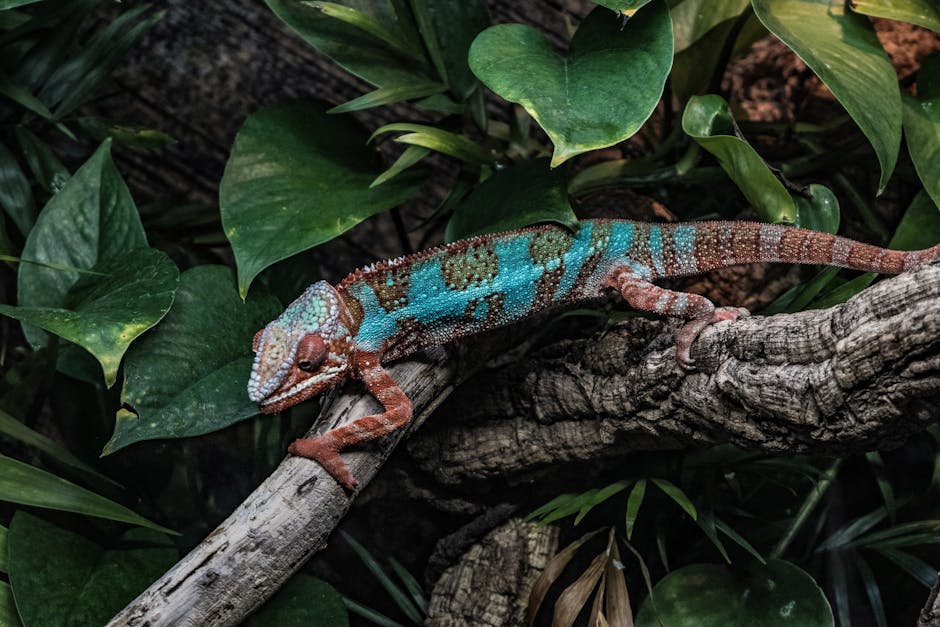
While all chameleons can change color to some degree, the panther chameleon native to Madagascar exhibits the most vibrant transformations. Contrary to popular belief, chameleons don't change color primarily for camouflage but rather for communication and temperature regulation. Males display brilliant reds, blues, and yellows during territorial disputes or courtship rituals. Recent research has revealed that chameleons change color by actively tuning nanocrystals in their skin cells, expanding or contracting the space between these crystals to reflect different wavelengths of light. When relaxed, the crystals are densely packed, reflecting blue light; when excited, they spread apart, reflecting yellow and red wavelengths.

5. The Peacock Flounder: Masters of Texture and Pattern

Peacock flounders possess extraordinary camouflage abilities that extend beyond color to include texture matching. These flatfish can replicate the exact pattern and texture of their surroundings, whether sandy bottoms, rocky surfaces, or even checkerboard patterns in laboratory settings. They achieve this by using their vision to analyze their environment, then adjusting thousands of chromatophores across their body. Remarkably, flounders can match complex backgrounds within eight seconds. Their eyes work independently to scan their surroundings, feeding information to their nervous system that orchestrates the transformation across their entire body surface.

6. The Golden Tortoise Beetle: Living Jewelry

This tiny beetle appears like a drop of molten gold under normal conditions, but can shift to a dull reddish-brown when disturbed or during mating. The transformation occurs through moisture control in the layers of their exoskeleton. The beetle's shell contains multiple transparent layers separated by liquid-filled grooves. By controlling the amount of moisture in these grooves, the beetle changes how light reflects through the layers, altering its appearance from shiny gold to matte orange-red. This process is reversible and can occur within minutes, serving as both camouflage and a distraction mechanism when threatened.

7. The Seahorse: Slow but Steady Color Shifters

Seahorses may change color more slowly than cephalopods, but their transformations are no less impressive. These unique fish alter their appearance to blend with coral, seagrass, and other marine environments where they anchor themselves. Their color changes serve multiple purposes: camouflage from predators, ambush hunting strategy, social signaling, and stress responses. During courtship, seahorses may brighten considerably or display synchronized color changes with their mates. Their color-changing ability relies on chromatophores controlled by hormones and their nervous system, with complete transformations taking anywhere from several minutes to hours.

8. The Pacific Tree Frog: Adapting to Humidity and Light

Pacific tree frogs can transition from brown to bright green and various shades in between, depending on environmental conditions. Temperature, humidity, and light levels all influence their coloration. Unlike some rapid color-changers, tree frogs' transformations occur over hours rather than seconds, making them better suited for long-term environmental matching than quick escape responses. The color change involves chromatophores and is regulated by hormones released in response to environmental stimuli detected through their skin. Darker colors help them absorb heat in cooler conditions, while lighter shades reflect light when temperatures rise.

9. The Crab Spider: Patient Predatory Camouflage

Crab spiders, particularly the white and yellow species, can change color to match the flowers where they hunt. These spiders don't spin webs but instead wait motionless on flower petals for pollinators to arrive. The color transformation from white to yellow or vice versa takes several days to complete, involving the secretion or circulation of pigments throughout their body. This slow change indicates the spider is committing to a particular hunting ground. The camouflage is so effective that even ultraviolet-sensitive insects, which see flowers differently than humans, fail to detect the hidden predator.

10. The Squid: Bioluminescent Light Shows

Many squid species combine color-changing chromatophores with bioluminescence—the ability to produce light through chemical reactions. The Hawaiian bobtail squid, for instance, uses bioluminescent bacteria housed in special organs to match the moonlight filtering through water, making it invisible to predators looking up from below. Other deep-sea squids create flashing light displays in various colors to communicate, confuse predators, or attract prey. This dual system of pigment-based color change and light production represents one of evolution's most sophisticated camouflage and communication systems.

The Science Behind the Spectacle

These remarkable abilities showcase the diverse evolutionary paths animals have taken to solve similar survival challenges. From the near-instantaneous transformations of cephalopods to the gradual seasonal changes of Arctic foxes, each species has developed color-changing abilities perfectly suited to its ecological niche. Understanding these mechanisms continues to inspire technological innovations in materials science, military camouflage, and display technologies. These ten animals remind us that nature's solutions to survival challenges often exceed anything human engineering has yet achieved, combining speed, precision, and beauty in ways that continue to astonish researchers and nature enthusiasts alike.
Top 10 Famous Historical Myths Debunked

Top 10 Famous Historical Myths Debunked

⏱️ 8 min read

Throughout history, certain narratives have become so deeply embedded in our collective consciousness that we accept them as undeniable truths. However, modern historical research, archaeological discoveries, and careful examination of primary sources have revealed that many of these widely believed "facts" are actually misconceptions or outright myths. Understanding which popular historical beliefs are false helps us develop a more accurate picture of the past and teaches us to approach history with a critical, questioning mind.

Separating Historical Fact from Fiction

The following myths have persisted for generations, appearing in textbooks, documentaries, and popular culture. Yet each one has been thoroughly debunked by historians and experts who have examined the actual evidence. Let's explore these misconceptions and discover what really happened.

1. Vikings Wore Horned Helmets

The popular image of Vikings sporting horned helmets is one of history's most enduring visual myths. In reality, there is no archaeological evidence that Vikings ever wore horned helmets in battle. This misconception likely originated from 19th-century Romantic nationalism and was popularized by costume designer Carl Emil Doepler for Wagner's opera cycle "Der Ring des Nibelungen" in 1876. Actual Viking helmets discovered by archaeologists were simple, practical designs made of iron or leather. Horned helmets would have been impractical in combat, offering opponents something to grab and creating unnecessary weight. Some ceremonial helmets from the Bronze Age featured horns, but these predated the Viking Age by thousands of years.

2. Napoleon Was Extremely Short

The notion that Napoleon Bonaparte was unusually short is a persistent myth that has shaped his historical image. Napoleon actually stood around 5 feet 7 inches tall, which was average or slightly above average for French men of his era. The confusion arose from differences between French and British measurement systems. Napoleon's height was recorded as 5 feet 2 inches in French units, which translated to the taller measurement in British imperial units. British propaganda during the Napoleonic Wars also deliberately portrayed him as diminutive to mock and diminish his stature as a leader. His nickname "le petit caporal" (the little corporal) was actually a term of endearment from his soldiers and referred to his rank, not his height.

3. People in Columbus's Time Believed the Earth Was Flat

Contrary to popular belief, educated people in Christopher Columbus's era did not believe the Earth was flat. Ancient Greek scholars, including Pythagoras and Aristotle, had established that the Earth was spherical, and this knowledge was preserved throughout the Middle Ages by both European and Islamic scholars. The myth that Columbus had to overcome widespread flat-earth beliefs was largely created in the 19th century by writers like Washington Irving. The actual debate concerning Columbus's voyage centered on the Earth's circumference—critics correctly argued that Asia was much farther away than Columbus calculated, and he would have perished without encountering the Americas.

4. Medieval People Had Extremely Short Lifespans

The statistic that medieval people had an average lifespan of 30-35 years is misleading and often misinterpreted. This low average was primarily due to extremely high infant and child mortality rates. If a medieval person survived childhood, they had a reasonable chance of living into their 60s or even 70s. The average lifespan calculation includes all the infants and children who died young, which dramatically lowers the number. Historical records show numerous examples of medieval people living long lives—many monarchs, nobles, and commoners reached advanced ages. The key difference was that fewer people made it past childhood compared to modern times, but those who did could expect a lifespan not drastically different from pre-industrial standards.

5. The Great Wall of China Is Visible from Space

Despite being repeated in countless textbooks and documentaries, the Great Wall of China is not visible from space with the naked eye. This myth has been definitively debunked by astronauts themselves, including Chinese astronaut Yang Liwei. From low Earth orbit, the wall is essentially impossible to distinguish from the surrounding terrain without aid. The wall is certainly long—stretching thousands of miles—but it is relatively narrow, typically only about 15-30 feet wide. Many highways and other human-made structures are actually more visible from space than the Great Wall. The myth likely originated from exaggerated claims made before space flight was possible.

6. Ancient Romans Used Vomitoriums for Purging After Meals

The term "vomitorium" has become associated with the idea that decadent Romans would gorge themselves at feasts, vomit to make room for more food, and repeat the process. In reality, a vomitorium was simply an architectural term for the passageways in amphitheaters and stadiums through which crowds would exit. The word comes from the Latin "vomere," meaning "to spew forth," referring to how crowds would spew forth from these passages. While some Romans did practice excessive eating, and there are historical references to induced vomiting, the vomitorium had nothing to do with this behavior. This misconception appears to have originated from a misunderstanding of the architectural terminology.

7. Nero Fiddled While Rome Burned

The famous image of Emperor Nero playing the fiddle while Rome burned in 64 CE is historically impossible for one simple reason: the fiddle wasn't invented until more than a thousand years later. Ancient sources do suggest Nero may have sung and played the lyre while the city burned, but even these accounts are questionable. Contemporary historians note that Nero was actually at his villa in Antium when the fire started and rushed back to Rome to organize relief efforts. He opened his palaces to house the displaced and arranged for food supplies to be brought in. The myth of Nero's callous indifference was likely political propaganda spread by his enemies and later embellished over centuries.

8. Isaac Newton Discovered Gravity When an Apple Fell on His Head

The charming story of Isaac Newton discovering gravity when an apple bonked him on the head is a simplified and dramatized version of events. While Newton himself mentioned observing a falling apple as inspiration for his thoughts about gravity, there's no historical evidence that the apple actually hit him on the head. Newton was already deeply engaged in studying the forces governing celestial mechanics, and the falling apple merely served as a moment of insight that connected earthly and cosmic gravity. The embellished version of the story emerged later, likely to make the discovery more memorable and accessible to popular audiences. Newton's actual work on gravity involved years of complex mathematical development and careful observation.

9. Marie Antoinette Said "Let Them Eat Cake"

Marie Antoinette never said "Let them eat cake" in response to hearing that peasants had no bread. This phrase, originally "Qu'ils mangent de la brioche," first appeared in Jean-Jacques Rousseau's autobiography "Confessions," written when Marie Antoinette was only 11 years old and still living in Austria. Rousseau attributed the quote to "a great princess," but not specifically to Marie Antoinette. The quote was later attached to her name during revolutionary propaganda efforts to portray her as callous and out of touch with her subjects' suffering. While Marie Antoinette was certainly extravagant and politically naive, there's no evidence she made this particular statement. The phrase has endured as a symbol of aristocratic indifference, regardless of its dubious historical accuracy.

10. The Pyramids Were Built by Slaves

The popular belief that the Egyptian pyramids were built by enslaved people under brutal conditions has been thoroughly refuted by modern archaeology. Evidence from workers' villages near the pyramids shows that the builders were actually paid laborers who received regular rations of food and medical care. Archaeological discoveries include workers' dormitories, bakeries, and even what appears to be a medical facility. Graffiti left by work gangs suggests a sense of pride in their contributions to these monumental projects. Workers were organized into rotating labor crews, and many were skilled craftsmen. The pyramid builders were likely a combination of permanent skilled workers and seasonal agricultural laborers who worked during the Nile's flood season when farming was impossible. This myth may have been perpetuated by biblical narratives and Hollywood films rather than historical evidence.

Learning from Historical Misconceptions

These ten debunked myths demonstrate how easily misinformation can become accepted as historical fact. Whether through propaganda, misinterpretation, oversimplification, or simple repetition, these false narratives have shaped our understanding of the past. Recognizing these myths encourages us to approach historical claims with healthy skepticism and to appreciate the importance of evidence-based historical research. As new discoveries continue to emerge and scholarly methods improve, we can expect to uncover even more truths that challenge our assumptions about history. The process of debunking myths doesn't diminish history—it enriches our understanding and brings us closer to what actually happened.