





1 / 10 Questions
0 Points

Which fruit tree species was restricted in American cities?

Persimmons

Mulberries

Quinces

Elderberries

Points won
0
Correct score
0%

More Questions

More Articles

Did You Know The Eiffel Tower Was Supposed to Be Temporary?

Did You Know The Eiffel Tower Was Supposed to Be Temporary?

⏱️ 5 min read

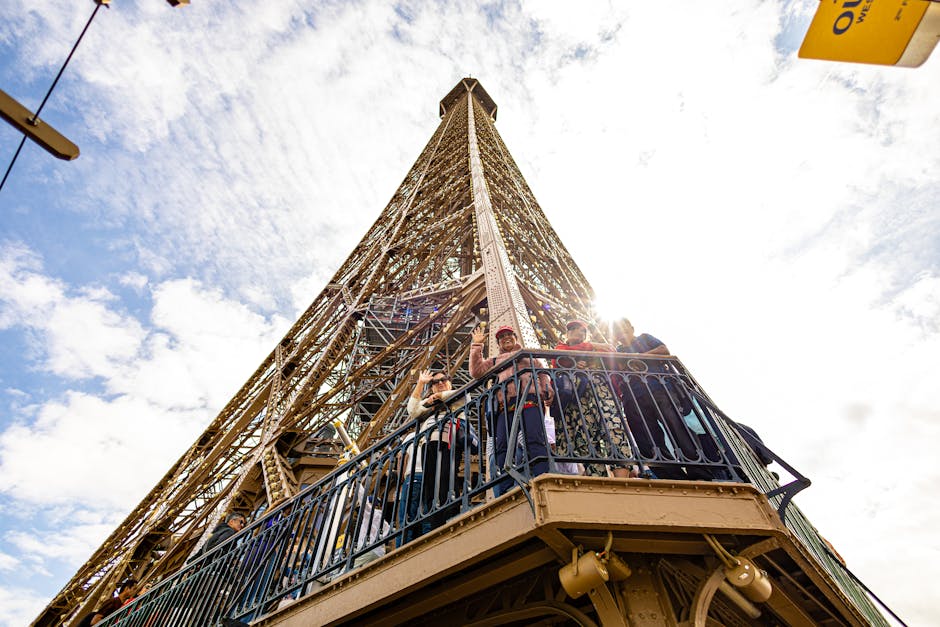
Standing majestically on the Champ de Mars in Paris, the Eiffel Tower has become synonymous with French culture and architectural innovation. Yet few visitors gazing up at its iron lattice framework realize that this iconic monument was never intended to grace the Parisian skyline permanently. The tower's journey from a temporary exhibition structure to one of the world's most recognizable landmarks is a fascinating tale of engineering triumph, public controversy, and fortunate circumstances that saved it from demolition.

The 1889 Universal Exposition: A Grand Vision

The Eiffel Tower was conceived as the grand entrance arch for the 1889 Exposition Universelle, a world's fair held to commemorate the centennial of the French Revolution. The French government wanted a structure that would demonstrate France's industrial prowess and engineering capabilities to the world. After reviewing over 100 proposals, officials selected the design submitted by Gustave Eiffel's engineering company, which proposed an iron tower that would reach an unprecedented height of 300 meters, making it the tallest man-made structure on Earth.

The construction contract explicitly stated that the tower would stand for only 20 years after its completion. According to the original agreement signed in January 1887, the structure was to be dismantled in 1909, with the materials potentially recycled or sold. This temporary status was actually a strategic decision that helped overcome initial resistance to the project, as critics believed the iron structure would be an eyesore marring Paris's classical beauty.

Fierce Opposition from Parisian Artists and Intellectuals

Before construction even began, the Eiffel Tower faced vehement opposition from prominent members of Parisian society. In February 1887, a group of approximately 300 artists, sculptors, writers, and architects published a petition in the newspaper Le Temps, denouncing the tower as a "metal monstrosity" that would overshadow Paris's elegant architecture.

The protest letter, signed by notable figures including composer Charles Gounod and writer Guy de Maupassant, referred to the proposed structure as "this truly tragic street lamp" and "this ridiculous tower dominating Paris like a gigantic black smokestack." Maupassant supposedly disliked the tower so intensely that he frequently ate lunch at the tower's restaurant because it was the one place in Paris where he couldn't see the structure itself.

Despite this artistic outcry, construction proceeded on schedule, beginning on January 28, 1887. The engineering feat required 18,000 individual iron pieces, 2.5 million rivets, and approximately 300 workers to complete over two years, two months, and five days.

A Spectacular Success at the World's Fair

When the Eiffel Tower opened to the public on May 15, 1889, it exceeded all expectations. During the six months of the Exposition Universelle, nearly two million people visited the tower, paying admission fees to ascend to its observation platforms. Visitors marveled at the engineering achievement and the breathtaking views of Paris from heights never before accessible to the general public.

The tower's commercial success during the exposition helped Gustave Eiffel recoup approximately 75 percent of the construction costs. However, as the initial excitement faded and the exposition concluded, questions about the tower's future intensified. The structure's fate hung in the balance as the 1909 deadline approached.

How the Tower Earned Its Permanent Status

Several factors converged to save the Eiffel Tower from its scheduled demolition. The most significant was its unexpected utility for scientific purposes and telecommunications. Gustave Eiffel himself actively promoted the tower's practical applications to justify its continued existence.

Scientific and Telecommunications Value

Eiffel permitted scientists to use the tower for various experiments, including meteorological observations, physics studies, and aerodynamics research. He even installed a laboratory for his own scientific pursuits on the tower's third level. These scientific activities demonstrated that the structure had value beyond aesthetics or tourism.

The tower's salvation ultimately came through wireless telegraphy. In 1898, Eugène Ducretet conducted radio transmission experiments from the tower, and by 1903, the military was using it for telecommunications. The tower proved invaluable for intercepting enemy communications during World War I, particularly during the First Battle of the Marne in 1914, when radio messages intercepted from the tower helped French forces detect German movements.

Strategic Military Importance

The Eiffel Tower's role in military communications secured its future. In 1910, when the original 20-year concession expired, the tower received a 70-year extension primarily because of its telecommunications capabilities. The French military recognized that the tower's height made it an irreplaceable asset for radio transmission, and dismantling it would have been strategically disadvantageous.

From Controversial Structure to Beloved Icon

Public opinion gradually shifted throughout the early 20th century. As Paris modernized and new generations grew up with the tower as part of the cityscape, it transformed from a controversial temporary exhibit to a cherished symbol of Paris and France itself. The structure that artists once denounced became a muse for painters, photographers, and poets.

The tower's cultural significance was further cemented through its appearances in films, literature, and popular media. It became impossible to imagine Paris without its iron landmark piercing the sky. Today, the Eiffel Tower attracts nearly seven million visitors annually, making it one of the world's most visited paid monuments.

The Lasting Legacy

The Eiffel Tower's transformation from a temporary exhibition piece to a permanent icon represents a remarkable reversal of fortune. Its survival demonstrates how architectural works can transcend their original purposes and how technological utility can preserve cultural landmarks. The tower that was meant to stand for just two decades has now graced the Parisian skyline for well over a century, proving that sometimes the most enduring monuments are those that were never meant to last. This iron giant's story serves as a reminder that society's initial reactions to bold architectural innovations don't always predict their ultimate historical significance.
Top 10 Most Watched Sports Events Ever

Top 10 Most Watched Sports Events Ever

⏱️ 6 min read

Throughout history, certain sporting events have transcended their competitive nature to become global phenomena that unite billions of viewers across continents. These monumental occasions captivate audiences not just for the athletic excellence on display, but for their cultural significance, dramatic narratives, and ability to bring humanity together in shared experience. The viewership numbers for these events represent some of the largest audiences ever assembled for any broadcast in television history.

The Most Watched Sporting Spectacles in History

1. FIFA World Cup Final - A Quadrennial Global Phenomenon

The FIFA World Cup Final consistently ranks as the most-watched sporting event globally, with the 2018 final between France and Croatia drawing an estimated 1.12 billion viewers. The tournament's cumulative viewership across all matches reaches approximately 3.5 billion people, representing nearly half of the world's population. The 2014 final between Germany and Argentina in Brazil attracted over 1 billion viewers alone, while the 2010 final in South Africa saw similar numbers. The World Cup's universal appeal stems from football being the world's most popular sport and the tournament's accessibility across nearly every nation.

2. Summer Olympic Games Opening Ceremonies

The Summer Olympics opening ceremony represents one of television's grandest spectacles, with viewership regularly exceeding 3 billion across the entire multi-week event. The 2008 Beijing Olympics opening ceremony alone attracted approximately 1 billion viewers, while the cumulative audience for all Olympic events during those games reached an estimated 4.7 billion people. The London 2012 Olympics drew 3.6 billion total viewers, and Rio 2016 attracted 3.5 billion. These ceremonies showcase not just athletic competition but cultural celebration and national pride on an unprecedented scale.

3. UEFA Champions League Final - Europe's Premier Club Competition

The UEFA Champions League Final has evolved into one of football's most-watched annual events, with recent finals attracting between 300-400 million viewers worldwide. The 2019 final between Liverpool and Tottenham drew 380 million viewers, while the 2018 clash between Real Madrid and Liverpool reached 390 million. This competition brings together the best club teams from across Europe, creating matchups that transcend national boundaries and attract global audiences invested in following their favorite players and clubs throughout the tournament.

4. Super Bowl - America's Biggest Television Event

While more regionally focused than global football events, the Super Bowl consistently ranks as the most-watched television broadcast in the United States, with recent editions attracting 100-115 million American viewers. However, international viewership has grown significantly, with the Super Bowl now reaching approximately 160-180 million viewers globally. Super Bowl XLIX in 2015 holds the U.S. record with 114.4 million domestic viewers. The event's appeal extends beyond the game itself, with the halftime show and commercials becoming cultural phenomena in their own right.

5. Tour de France - Three Weeks of Cycling Drama

The Tour de France, cycling's most prestigious race, attracts a cumulative global television audience of approximately 3.5 billion viewers across its three-week duration. While individual stage viewership varies, the final stage on the Champs-Élysées in Paris regularly draws over 50 million viewers. The race's unique format allows for sustained engagement over multiple weeks, and its passage through picturesque French countryside provides compelling television regardless of viewers' interest in cycling. The 2019 edition reached audiences in 190 countries.

6. Cricket World Cup Final - The Commonwealth's Premier Event

Cricket's popularity in populous nations like India, Pakistan, Bangladesh, and across the Commonwealth ensures massive viewership for World Cup finals. The 2019 Cricket World Cup Final between England and New Zealand attracted approximately 1.6 billion viewers, making it one of the most-watched sporting events in history. The 2015 final drew similar numbers, with over 1 billion viewers in India alone. Cricket's passionate following in South Asia particularly drives these extraordinary viewership figures.

7. Winter Olympic Games - Cold Weather Competition

While typically drawing smaller audiences than their summer counterpart, Winter Olympics still command impressive global viewership. The 2018 PyeongChang Winter Olympics attracted approximately 2 billion viewers worldwide, while Sochi 2014 reached 2.1 billion. These games showcase unique sporting disciplines not widely visible during regular broadcasts, from figure skating to alpine skiing, creating special viewing occasions for audiences worldwide. Host nation time zones significantly impact viewership patterns for these events.

8. Boxing's Biggest Fights - Mayweather vs. Pacquiao

The May 2015 welterweight championship bout between Floyd Mayweather and Manny Pacquiao became one of the most-watched boxing matches in history, with approximately 400 million viewers globally. In the United States alone, it generated 4.6 million pay-per-view buys, the highest in boxing history. The fight's significance stemmed from years of anticipation and the convergence of two undefeated champions at the peak of boxing's popularity. Other historic fights, including Muhammad Ali's bouts, attracted similarly massive audiences during their respective eras.

9. UEFA European Championship Final - Continental Glory

The UEFA European Championship Final, held every four years, consistently draws viewership exceeding 300 million. The Euro 2016 final between Portugal and France attracted approximately 330 million viewers, while Euro 2012's final reached similar numbers. This tournament carries particular significance as it represents continental supremacy among European nations, often featuring higher-quality football than World Cup matches due to Europe's dominance in the sport. The 2020 edition (played in 2021) saw the final between Italy and England draw over 328 million viewers.

10. Formula 1 Monaco Grand Prix - Motorsport's Crown Jewel

The Monaco Grand Prix, Formula 1's most prestigious race, regularly attracts over 100 million viewers worldwide, making it one of motorsport's most-watched events. The race's glamorous location on the streets of Monte Carlo, combined with its historical significance and challenging circuit, creates compelling television. Formula 1's overall season viewership has grown substantially, with cumulative audiences reaching 1.9 billion across all races in recent seasons. The sport's global expansion and Netflix documentary series have broadened its appeal beyond traditional markets.

The Power of Global Sporting Events

These ten sporting spectacles demonstrate the unique power of athletics to unite global audiences in ways few other cultural phenomena can match. From football's worldwide dominance through the World Cup and Champions League to the comprehensive celebration of human athletic achievement at the Olympics, these events transcend language barriers, political divisions, and cultural differences. They create shared moments of drama, triumph, and heartbreak that resonate across continents. As broadcast technology continues evolving and reaching previously underserved markets, these viewership numbers will likely continue growing, cementing sport's position as one of humanity's most universal languages.