















⏱️ 8 min read
Wolves have captivated human imagination for millennia, appearing in folklore, literature, and popular culture across virtually every civilization. These magnificent carnivores are among the most socially complex and misunderstood animals on Earth. Despite their prominent place in our collective consciousness, many misconceptions about wolves persist. Understanding these apex predators is crucial not only for conservation efforts but also for appreciating the intricate balance of ecosystems they help maintain. The following facts reveal the remarkable nature of these intelligent and highly adaptable creatures.
Essential Wolf Facts
1. Wolves Are Master Communicators With Complex Vocal Abilities
Wolves possess one of the most sophisticated communication systems in the animal kingdom. Their iconic howl can be heard up to 10 miles away in open terrain and serves multiple purposes: rallying pack members before a hunt, announcing territorial boundaries, and maintaining contact across vast distances. However, howling represents just one element of their vocal repertoire. Wolves also growl, bark, whimper, and whine, with each sound conveying specific meanings. The pitch, duration, and frequency of vocalizations communicate emotions ranging from aggression to affection, and even individual wolves can be identified by their unique howls.
2. Pack Structure Is Based on Family Bonds, Not Dominance
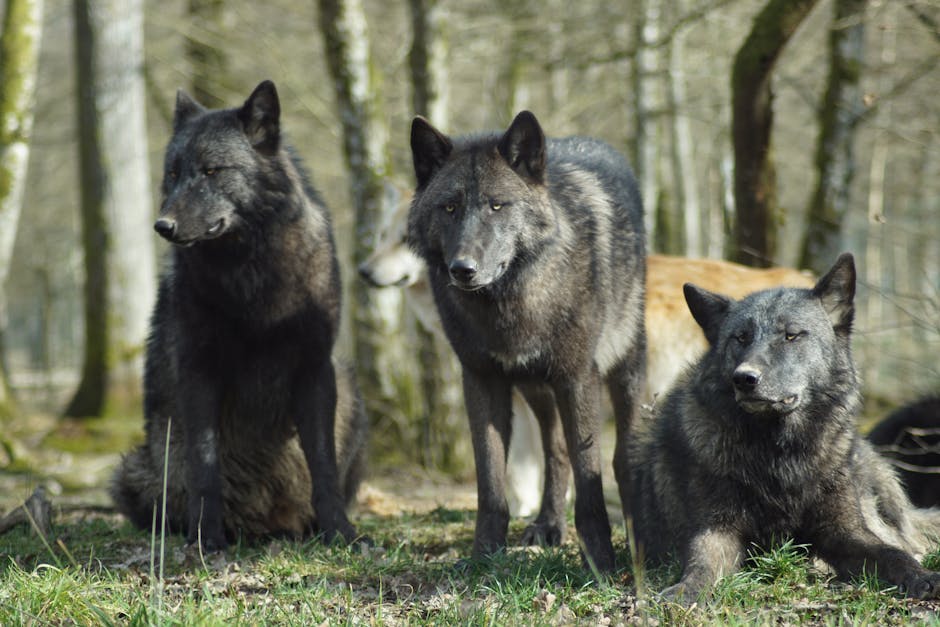
Contrary to popular belief perpetuated by outdated research, wolf packs are not dominated by "alpha" males who fight their way to the top. Modern research reveals that wolf packs are actually family units consisting of breeding parents and their offspring from various years. The parents naturally lead because they're the oldest, most experienced, and most invested in the pack's survival. Young wolves typically stay with their birth pack for two to three years before dispersing to find mates and establish their own families, creating a social structure based on cooperation rather than competition.
3. Their Hunting Success Rate Is Surprisingly Low
Despite their reputation as fearsome predators, wolves fail far more often than they succeed when hunting. Studies show that wolves successfully kill prey in only 10-20% of their hunting attempts, depending on the species they're pursuing and terrain conditions. This low success rate means wolves must hunt frequently and travel extensive distances to find vulnerable prey. They've evolved to target weak, sick, or elderly animals that are easier to catch, which actually benefits prey populations by removing individuals that might spread disease and allowing healthier animals to access more resources.
4. Wolves Can Travel Incredible Distances Daily
The endurance of wolves is truly extraordinary. These tireless travelers routinely cover 30 miles in a single day while patrolling their territory or searching for prey. When dispersing to find new territories, young wolves have been documented traveling over 500 miles from their birth packs. One wolf in Russia was recorded traveling more than 2,800 miles in just a few months. Their powerful legs and large paws, which can measure up to 5 inches across, act like natural snowshoes, allowing them to traverse deep snow and rough terrain with remarkable efficiency.
5. Multiple Wolf Species Exist Around the World
While the gray wolf is the most widely recognized species, wolves display remarkable diversity. There are three recognized wolf species: the gray wolf (Canis lupus), the red wolf (Canis rufus), and the Ethiopian wolf (Canis simensis). Within gray wolves alone, scientists recognize up to 38 subspecies adapted to different environments, ranging from Arctic tundra to desert regions. These subspecies vary considerably in size, coat color, and behavior, demonstrating the species' impressive adaptability to diverse habitats.
6. Wolves Have Powerful Jaws With Crushing Force
A wolf's bite exerts approximately 400 pounds per square inch of pressure, roughly twice that of a domestic dog. This tremendous bite force allows wolves to crack large bones and access nutritious bone marrow that other predators cannot reach. Their 42 teeth include specialized carnassials for shearing meat and robust molars for crushing bones. When feeding on a kill, wolves can consume up to 20 pounds of meat in a single sitting, then may not eat again for several days.
7. Wolf Packs Maintain Vast Territories
Wolf territories vary dramatically in size depending on prey availability, ranging from 50 square miles in prey-rich areas to over 1,000 square miles in regions where food is scarce. Packs defend these territories vigorously against neighboring wolves, with boundary disputes sometimes resulting in fatal conflicts. Wolves mark their territorial boundaries using scent marking, scratching, and howling, creating an olfactory and auditory map that other wolves can detect and respect.
8. Wolves Play a Critical Role in Ecosystem Health
As apex predators, wolves create what scientists call a "trophic cascade," where their presence affects multiple levels of the food chain. The reintroduction of wolves to Yellowstone National Park in 1995 demonstrated this phenomenon dramatically. Wolves controlled elk populations, which allowed vegetation to recover along riverbanks. This vegetation stabilized soil, changed river courses, and provided habitat for numerous other species, from songbirds to beavers. This ecological influence extends far beyond their direct predation, making wolves essential architects of healthy ecosystems.
9. Wolf Pups Require Extensive Care and Education
Wolf pups are born blind and deaf, weighing only about one pound. The entire pack participates in raising the young, with older siblings often serving as babysitters and teachers. Pups begin eating regurgitated meat at about three weeks old and start learning hunting skills through play at two months. However, they won't master the complex strategies needed for successful hunts until they're about two years old. This extended childhood allows young wolves to develop the sophisticated social and hunting skills necessary for survival.
10. Wolves Were Once the Most Widely Distributed Mammal
Before human persecution drastically reduced their range, gray wolves inhabited the entire Northern Hemisphere, from the Arctic tundra to the deserts of Arabia. They thrived across North America, Europe, and Asia, adapting to virtually every habitat type except tropical rainforests. Today, wolves occupy less than half of their historic range, primarily in remote wilderness areas, though conservation efforts have enabled some populations to recover in recent decades.
11. Wolves Have Keen Senses Adapted for Hunting
All of a wolf's senses are remarkably acute, specialized for detecting and tracking prey. Their hearing is so sensitive they can detect sounds up to six miles away in forested areas. Wolves can smell prey from distances over one mile away under favorable wind conditions. While their eyesight is adapted more for detecting movement than fine detail, they possess excellent night vision thanks to a reflective layer behind the retina called the tapetum lucidum, which gives their eyes that characteristic glow when light shines on them.
12. Different Coat Colors Provide Various Advantages
Wolf fur ranges from pure white to coal black, with most individuals displaying various shades of gray, brown, and tan. These color variations aren't merely cosmetic; they provide camouflage suited to different environments. Arctic wolves sport white coats for concealment in snow, while forest-dwelling wolves typically have darker coats that help them blend into shadowy woodlands. A wolf's thick double coat consists of a dense undercoat for insulation and longer guard hairs that repel water, enabling them to withstand temperatures as low as -40 degrees Fahrenheit.
13. Wolves and Dogs Share an Ancient Evolutionary Connection
All domestic dogs descended from wolves, with genetic evidence suggesting domestication began between 20,000 and 40,000 years ago. Despite thousands of years of selective breeding creating enormous diversity among dog breeds, wolves and dogs remain the same species and can produce fertile offspring. However, significant behavioral and physiological differences have emerged. Wolves retain much stronger predatory instincts, higher endurance, and more complex social behaviors than most domestic dogs, while dogs have evolved specialized abilities to understand human communication.
14. Wolves Face Numerous Modern Threats
Despite legal protections in many regions, wolves continue facing significant challenges. Habitat loss remains the primary threat as human development fragments wilderness areas. Illegal hunting still occurs in many regions, and conflicts with livestock operations create ongoing tensions between wolves and humans. Climate change threatens Arctic wolf populations by altering prey availability and habitat conditions. Additionally, diseases transmitted from domestic dogs, including parvovirus and mange, can devastate wolf populations that lack immunity to these pathogens.
15. Cultural Significance Varies Dramatically Across Societies
Human relationships with wolves have been contradictory throughout history. Many indigenous cultures revered wolves as teachers and spiritual guides, admiring their loyalty, intelligence, and hunting prowess. Conversely, European traditions often portrayed wolves as dangerous villains, leading to centuries of persecution. These cultural attitudes significantly influenced wolf conservation, with negative perceptions driving extermination campaigns while positive views have motivated restoration efforts. Understanding these cultural dimensions is crucial for developing effective conservation strategies that address both ecological needs and human concerns.
Conclusion
These fifteen facts merely scratch the surface of wolf biology, behavior, and ecology. Wolves represent remarkable examples of evolutionary adaptation, social complexity, and ecological importance. Their sophisticated communication systems, family-oriented pack structure, and pivotal role in maintaining ecosystem health demonstrate that these animals are far more nuanced than traditional stereotypes suggest. As apex predators facing an uncertain future, wolves require continued conservation efforts informed by scientific understanding rather than myth. By appreciating these magnificent carnivores for what they truly are—intelligent, social, and ecologically essential animals—humanity can work toward ensuring their survival for generations to come. The fate of wolves ultimately reflects our own relationship with wilderness and our commitment to preserving the natural world's complexity and beauty.