





1 / 10 Questions
0 Points

What Vegetable Did Ancient Greeks Award To Winners?

Celery

Radish

Lettuce

Cabbage

Points won
0
Correct score
0%

More Questions

More Articles

Did You Know There Were Female Samurai in Japan?

Did You Know There Were Female Samurai in Japan?

⏱️ 5 min read

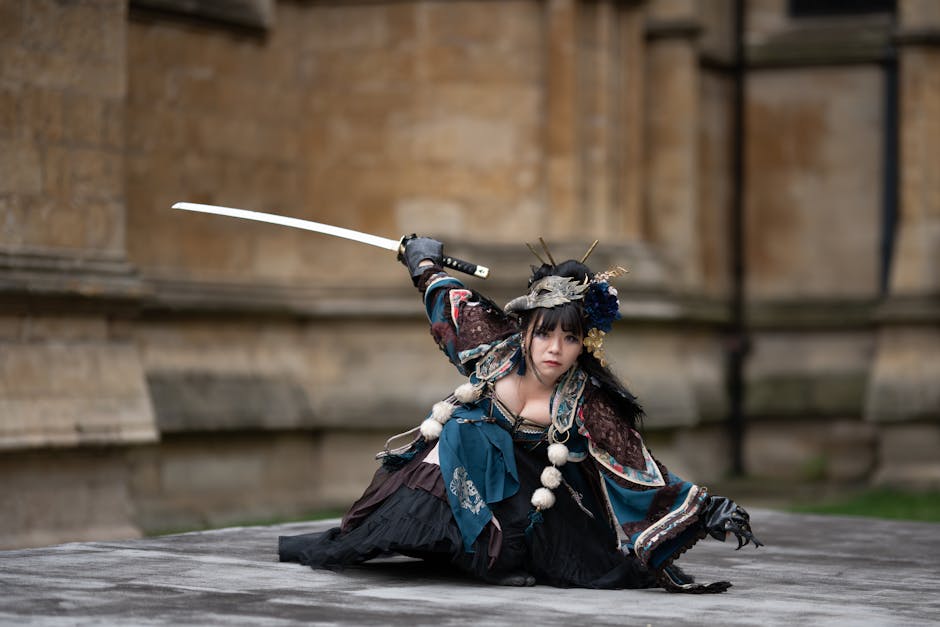
While the samurai warrior class is often depicted as an exclusively male domain in popular culture, historical records reveal a fascinating truth: women not only participated in samurai warfare but held respected positions as skilled warriors in feudal Japan. These female warriors, known as onna-bugeisha, trained in combat techniques, defended their homes and honor, and left an indelible mark on Japanese military history that has only recently begun to receive broader recognition.

The Onna-Bugeisha: Japan's Female Warriors

The onna-bugeisha were members of the Japanese nobility who received martial training and participated in combat alongside their male counterparts. Unlike the popular misconception that samurai culture excluded women entirely, these warriors were an integral part of feudal Japanese society from as early as the 12th century through the end of the samurai era in the 19th century.

The term "onna-bugeisha" translates literally to "female martial artist," and these women were expected to protect their households, family honor, and territory when necessary. They weren't merely symbolic figures or rare exceptions—DNA analysis of remains from ancient battle sites has revealed that approximately 30% of the bodies excavated showed female skeletal structures, suggesting that women's participation in warfare was far more common than previously believed.

Weapons and Training of Female Samurai

Female warriors typically specialized in the naginata, a pole weapon with a curved blade at the end, which became closely associated with women of the samurai class. The naginata's design offered several advantages: its length provided reach and leverage, compensating for potential differences in physical strength, while its sweeping motions were highly effective against multiple opponents or mounted warriors.

However, onna-bugeisha were not limited to just one weapon. Their training included:

  • Tantojutsu: the art of knife fighting, using a small blade that could be concealed
  • Kyujutsu: archery, which required precision and discipline
  • Tessenjutsu: combat with war fans, which could be used both defensively and offensively
  • Various hand-to-hand combat techniques adapted for self-defense

Training began in childhood for daughters of samurai families, just as it did for sons. They learned not only physical combat skills but also strategy, tactics, and the philosophical underpinnings of bushido—the samurai code of honor.

Legendary Female Samurai Warriors

Tomoe Gozen

Perhaps the most celebrated female warrior in Japanese history, Tomoe Gozen served during the Genpei War (1180-1185). Historical texts describe her as "exceptionally beautiful, a fearsome archer, and a swordswoman worth a thousand warriors." She fought in the Battle of Awazu in 1184, where accounts describe her beheading an enemy warrior after capturing him. Her legendary status has been preserved in "The Tale of the Heike," one of Japan's most important historical epics.

Nakano Takeko

Leading an army of female warriors during the Boshin War in 1868, Nakano Takeko demonstrated exceptional courage during the Battle of Aizu. She commanded a unit of approximately 20 women, fighting with the naginata against imperial Japanese forces equipped with modern weaponry. Despite being mortally wounded by a gunshot, her legacy lived on, and she became a symbol of female warrior spirit. Today, her memory is honored annually at the Aizu Autumn Festival.

Hangaku Gozen

Renowned for her defensive leadership during the Kennin Uprising in 1201, Hangaku Gozen commanded 3,000 warriors at Torisakayama Castle. She was celebrated for her archery skills and defensive strategies, holding off government forces for over a month before being captured. Her martial prowess earned her respect even from her captors.

The Social Role and Expectations

Female samurai occupied a unique position in Japanese society. While they were trained warriors, they also managed household affairs and were responsible for protecting the home during their husbands' absences. This dual role required both martial prowess and administrative capability.

During the peaceful Edo period (1603-1868), when actual combat became less frequent, the role of onna-bugeisha evolved. Martial training remained important for daughters of samurai families, but the emphasis shifted toward preparation for defending the home rather than battlefield service. Nevertheless, the tradition of training noble women in martial arts continued, preserving these skills through generations.

Why Their History Was Overlooked

Several factors contributed to the historical obscurity of female samurai warriors. The gradual consolidation of male-dominated power structures during the Edo period increasingly restricted women's roles. As Japan modernized during the Meiji Restoration, Western influences brought Victorian-era gender expectations that further marginalized historical accounts of female warriors.

Additionally, much of samurai history was recorded and preserved by male chroniclers who may have minimized or omitted women's contributions. The romanticization of the samurai in later periods often focused exclusively on male warriors, creating the persistent stereotype that continues today.

Modern Recognition and Legacy

Contemporary historians and archaeologists have worked to restore the onna-bugeisha to their rightful place in Japanese history. Archaeological evidence, including the DNA analysis mentioned earlier, has provided concrete proof of women's participation in battles. Academic research has also uncovered numerous historical documents, diaries, and records that reference female warriors and their accomplishments.

Today, the legacy of female samurai serves as an inspiration and a reminder that women have always been warriors, defenders, and leaders throughout history. Their story challenges modern assumptions about historical gender roles and enriches our understanding of feudal Japanese society. The onna-bugeisha demonstrate that courage, honor, and martial skill transcend gender, offering a more complete and accurate picture of Japan's fascinating warrior culture.
Did You Know? 12 Secrets Behind Iconic Movie Scenes

Did You Know? 12 Secrets Behind Iconic Movie Scenes

⏱️ 7 min read

Movies have the power to transport audiences to different worlds, evoke powerful emotions, and create unforgettable moments that stay with us long after the credits roll. However, behind many of cinema's most memorable scenes lie fascinating secrets, innovative techniques, and surprising stories that even devoted film fans might not know. From groundbreaking special effects to improvised dialogue that became legendary, these behind-the-scenes revelations offer a deeper appreciation for the artistry and creativity that goes into filmmaking.

Uncovering the Hidden Stories of Cinema's Greatest Moments

The Chest-Burster Scene in "Alien" Featured Genuine Shock

One of horror cinema's most disturbing moments came from director Ridley Scott's decision to keep his cast largely in the dark. During the filming of the infamous chest-burster scene in "Alien" (1979), only John Hurt knew exactly what would happen. The other actors were told something would emerge, but they had no idea about the explosive violence or the amount of blood that would spray everywhere. Their genuine reactions of shock and horror were captured on film, with Veronica Cartwright's terrified response being completely authentic. The crew even used real animal organs and high-pressure blood pumps to enhance the realism, making the scene even more disturbing for the unprepared cast members.

The Iconic "You're Gonna Need a Bigger Boat" Was Improvised

In "Jaws" (1975), one of cinema's most quotable lines wasn't in the original script. Roy Scheider's character, Chief Brody, delivers the unforgettable line "You're gonna need a bigger boat" after getting his first real look at the massive shark. Scheider improvised this line during filming, and it became such a running joke on set that he said it multiple times throughout production. Steven Spielberg loved it so much that he kept it in the final cut, and it became one of the film's most memorable moments, perfectly capturing the character's understated terror.

The Silence of the Lambs' Terrifying Slurping Sound Was Added Later

Anthony Hopkins' chilling performance as Hannibal Lecter included one particularly unsettling moment that wasn't originally planned. When Lecter describes eating a census taker's liver "with some fava beans and a nice Chianti," Hopkins added a spontaneous slurping sound that sent shivers down everyone's spine. This improvised touch was so effective that it remained in the film and became one of the character's most disturbing trademark moments, enhancing the character's cannibalistic menace.

The Wizard of Oz's Snow Was Made of Asbestos

Behind the magical wonder of "The Wizard of Oz" (1939) lay some shocking production realities. The snow that falls on Dorothy and her friends as they emerge from the poppy field wasn't actually snow at all—it was pure asbestos. At the time, the health dangers of asbestos weren't widely known, and it was commonly used in Hollywood productions for its flame-retardant properties and snow-like appearance. The cast and crew were exposed to this toxic material throughout filming, a sobering reminder of how much safety standards have evolved in the film industry.

The Famous Leg Crossing Scene in "Basic Instinct" Sparked Controversy

Sharon Stone's infamous interrogation scene in "Basic Instinct" (1992) became one of cinema's most talked-about moments, but the actress later claimed she was misled about how it would appear on screen. Stone stated that director Paul Verhoeven assured her that nothing would actually be visible in the shot, and she only discovered the truth when she saw the film with an audience. The controversy surrounding this scene and Stone's allegations about being deceived brought important conversations about actor consent and directorial ethics to the forefront of Hollywood discourse.

The Shower Scene in "Psycho" Took Seven Days to Film

Alfred Hitchcock's legendary shower scene in "Psycho" (1960) lasted only 45 seconds on screen but required an entire week of filming. The sequence consisted of 77 different camera angles and 50 cuts, meticulously planned and executed to create maximum psychological impact without showing explicit violence. Hitchcock used chocolate syrup for blood because it photographed better in black and white, and most of the knife stabs were aimed at a dummy rather than actress Janet Leigh. The scene revolutionized film editing and demonstrated how suggestion and quick cuts could be more powerful than graphic imagery.

Leonardo DiCaprio Cut His Hand During "Django Unchained" But Kept Acting

During the filming of "Django Unchained" (2012), Leonardo DiCaprio accidentally smashed his hand on a glass during an intense dinner scene, severely cutting his palm. Rather than breaking character, DiCaprio continued with the scene, even smearing his real blood on co-star Kerry Washington's face (later replaced with fake blood for safety). Director Quentin Tarantino was so impressed with DiCaprio's commitment and the raw intensity of the moment that he kept it in the final film. This dedication to staying in character despite genuine injury showcased DiCaprio's intense method acting approach.

The Spinning Hallway Fight in "Inception" Used a Real Rotating Set

Christopher Nolan's commitment to practical effects was fully displayed in "Inception's" (2010) gravity-defying hallway fight scene. Rather than relying on CGI, Nolan's team built a massive rotating corridor set that could spin 360 degrees. Actor Joseph Gordon-Levitt spent weeks training and performing the complex choreography while the entire hallway rotated around him. The sequence required precise timing and coordination, with the actor often getting bruised and battered during the lengthy filming process. This practical approach created a visceral, realistic quality that purely digital effects couldn't replicate.

The Famous Orgasm Scene in "When Harry Met Sally" Was Shot in a Real Deli

Meg Ryan's memorable fake orgasm scene in "When Harry Met Sally" (1989) was filmed in the authentic Katz's Delicatessen in New York City, with real customers dining in the background. Director Rob Reiner's mother delivered the famous final line, "I'll have what she's having," which was improvised on set. The deli has since marked the specific table where the scene was filmed, turning it into a tourist attraction. The scene's impact on popular culture and its bold approach to discussing female sexuality in romantic comedies made it one of cinema's most iconic moments.

The T-Rex Attack in "Jurassic Park" Was Enhanced by Unplanned Rain

The terrifying T-Rex attack scene in "Jurassic Park" (1993) became even more dramatic thanks to unexpected weather conditions. The animatronic dinosaur wasn't designed to get wet, and when rain began falling during filming, the massive robot began malfunctioning and moving unpredictably. Rather than shutting down production, Steven Spielberg worked with these technical difficulties, and the dinosaur's erratic, shuddering movements made it appear even more menacing and lifelike. The actors' genuine concern about the malfunctioning multi-ton robot added authentic fear to their performances.

The Opening Beach Battle of "Saving Private Ryan" Made Actors Vomit

Steven Spielberg's unflinching depiction of the D-Day landing in "Saving Private Ryan" (1998) was so realistic that some actors became physically ill during filming. Spielberg deliberately made the production grueling, requiring actors to undergo military training and exposing them to loud explosions and chaotic battle conditions. The handheld camera work, desaturated color palette, and commitment to historical accuracy created such an immersive and traumatic experience that some World War II veterans had to leave theaters during screenings. The visceral realism set a new standard for war films.

The "Here's Johnny!" Door Was Destroyed by Jack Nicholson's Real Firefighting Experience

In "The Shining" (1980), the script called for Jack Nicholson's character to break through a bathroom door with an axe. However, Nicholson, who had previously worked as a volunteer firefighter, demolished the door so quickly and efficiently that the crew had to rebuild it with stronger wood. His experience made him too proficient at breaking down doors, and the scene required multiple takes with reinforced materials to make the sequence last long enough. Nicholson's improvised "Here's Johnny!" line, borrowed from "The Tonight Show" with Johnny Carson, became one of horror cinema's most quoted moments.

The Magic Behind the Movies

These twelve secrets reveal that some of cinema's most powerful moments resulted from happy accidents, actor improvisation, directorial ingenuity, and occasionally questionable production decisions. From genuine reactions captured on film to elaborate practical effects that pushed the boundaries of what was possible, these behind-the-scenes stories demonstrate that movie magic often comes from unexpected sources. The dedication, creativity, and sometimes sheer luck involved in creating these iconic scenes remind us that filmmaking is both an art and a craft, where the final product we see on screen represents countless decisions, innovations, and occasionally fortuitous accidents. Understanding these secrets doesn't diminish the impact of these memorable scenes—instead, it deepens our appreciation for the complex collaborative process that brings unforgettable moments to life on the silver screen.