








1 / 20 Questions
0 Points

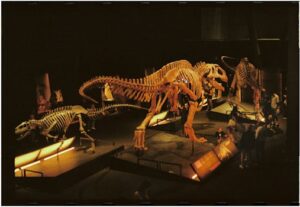
What was the largest dinosaur ever discovered?

Argentinosaurus

T-Rex

Brachiosaurus

Stegosaurus

Points won
0
Correct score
0%

More Questions

More Articles

Did You Know The Most Expensive Guitar Sold for $6 Million?

Did You Know The Most Expensive Guitar Sold for $6 Million?

⏱️ 7 min read

The world of rare guitars represents a fascinating intersection of music history, craftsmanship, and astronomical prices. While most musicians would be thrilled to own a quality instrument worth a few thousand dollars, some guitars have transcended their functional purpose to become cultural artifacts worth millions. The guitar market has witnessed some truly staggering sales over the decades, with certain instruments achieving legendary status that drives their value into the stratosphere. Understanding what makes these guitars so valuable provides insight into music history, celebrity culture, and the passion that drives collectors to pay extraordinary sums for these six-stringed treasures.

The Record-Breaking Guitars That Redefined Value

Kurt Cobain's "Smells Like Teen Spirit" MTV Unplugged Martin D-18E

In June 2020, the guitar world witnessed an unprecedented moment when Kurt Cobain's 1959 Martin D-18E acoustic-electric guitar sold for an astounding $6.01 million at auction. This instrument wasn't just any guitar—it was the very one Cobain played during Nirvana's legendary MTV Unplugged performance in November 1993, just five months before his tragic death. The performance became one of the most iconic moments in rock history, with Cobain delivering haunting renditions of songs in an intimate, stripped-down setting that contrasted sharply with Nirvana's usual grunge intensity.

The guitar came with its original hard-shell case, which Cobain had decorated with a flyer from Poison Idea's 1990 album "Feel the Darkness," three baggage claim tickets, a half-used pack of Martin guitar strings, and a suede "stash bag" with a silver spoon—items that added to the lot's authenticity and historical significance. The buyer, Peter Freedman, founder of Rode Microphones, purchased the guitar with the intention of displaying it publicly to honor Cobain's legacy and raise awareness about mental health issues.

David Gilmour's "Black Strat" Fender Stratocaster

Before Cobain's guitar claimed the record, David Gilmour's famous "Black Strat" held the distinction of being the most expensive guitar ever sold, fetching $3.975 million in June 2019. This 1969 Fender Stratocaster was Gilmour's primary guitar for most of Pink Floyd's legendary career, featured on iconic albums including "The Dark Side of the Moon," "Wish You Were Here," and "The Wall." The guitar's distinctive sound helped define progressive rock and created some of the most memorable guitar solos in music history, including the emotional climax of "Comfortably Numb."

What made this particular Stratocaster extraordinary was its extensive modification and customization over the years. Gilmour constantly refined the instrument to achieve his perfect tone, swapping pickups, adjusting the tremolo system, and making numerous other changes. The guitar's well-worn appearance tells the story of decades of professional use at the highest level of rock music. The proceeds from this sale benefited ClientEarth, a charity fighting climate change, demonstrating how these valuable instruments can serve philanthropic purposes beyond their musical heritage.

Eric Clapton's "Blackie" Stratocaster

Eric Clapton's composite Fender Stratocaster, affectionately known as "Blackie," sold for $959,500 in 2004, setting a record that stood for years. Clapton created this unique instrument in the early 1970s by combining the best parts from three different vintage Stratocasters he purchased at a Nashville guitar shop. He used Blackie extensively throughout the 1970s and 1980s, playing it on numerous recordings and concerts until he retired it in 1985 due to wear and tear.

The guitar's significance extends beyond its famous owner—it represents a period when Clapton was transitioning from his blues-rock roots into a more refined, melodic style. Songs like "Wonderful Tonight" and "Lay Down Sally" featured Blackie's warm, distinctive tone. The auction proceeds went to the Crossroads Centre, Clapton's drug and alcohol addiction treatment facility in Antigua, turning this musical artifact into a vehicle for helping others overcome the same struggles Clapton had faced in his career.

Bob Dylan's 1964 Fender Stratocaster from Newport

In December 2013, a 1964 Fender Stratocaster believed to be the guitar Bob Dylan played when he "went electric" at the 1965 Newport Folk Festival sold for $965,000. This moment represents one of the most controversial and significant events in popular music history. When Dylan plugged in an electric guitar at the traditionally acoustic folk festival, he faced boos and outrage from folk purists, but he also helped catalyze the folk-rock movement that would dominate the latter half of the 1960s.

The guitar's provenance was extensively researched and authenticated, though some debate remained about whether it was definitively the exact instrument used at Newport. Regardless, it represented a pivotal moment when popular music shifted directions, and Dylan's willingness to evolve artistically despite fierce criticism changed the trajectory of rock music. The sale demonstrated how guitars associated with transformative cultural moments command premium prices beyond their material value.

John Lennon's Gibson J-160E Acoustic-Electric

A 1962 Gibson J-160E acoustic-electric guitar that John Lennon used to write and record numerous early Beatles songs sold for $2.41 million in 2015. Lennon purchased this guitar in September 1962 and used it extensively during the Beatles' early recording sessions and performances. Songs written or recorded with this guitar include "I Want to Hold Your Hand," "She Loves You," and "Please Please Me"—tracks that launched Beatlemania and changed popular music forever.

The guitar's history is remarkable: Lennon lost it after a Christmas concert in 1963, and it remained missing for over 50 years. It had been purchased by a musician who had no idea of its significance until decades later when he began researching its serial number and history. The guitar's rediscovery and subsequent sale became a sensation, highlighting how valuable Beatles memorabilia can sometimes hide in plain sight. The instrument showed significant wear from its heavy use during one of the most productive periods in popular music history.

Jerry Garcia's "Wolf" Guitar

Jerry Garcia's custom "Wolf" guitar, built by luthier Doug Irwin, sold for $1.9 million in 2017 to benefit the Southern Poverty Law Center. Garcia played this distinctive instrument with the Grateful Dead from 1973 to 1993, making it one of the most recognizable guitars in rock history. The guitar featured intricate wood inlays depicting a wolf in the body, custom electronics, and modifications that Garcia requested to achieve his unique sound that blended rock, jazz, bluegrass, and psychedelic influences.

Wolf represented more than just Garcia's main instrument—it embodied the improvisational spirit and technical innovation that characterized the Grateful Dead's approach to live performance. Garcia's guitar work helped define the jam band genre and influenced countless musicians. The guitar required constant maintenance and modification throughout its playing life, reflecting Garcia's perfectionism and his desire to push the boundaries of what an electric guitar could sound like. Its sale demonstrated the enduring cultural impact of the Grateful Dead and Garcia's status as one of rock's most inventive guitarists.

Understanding What Drives Guitar Values Into the Millions

These extraordinary sales figures reflect several factors that elevate certain guitars above others. Historical significance plays the primary role—guitars used during pivotal moments in music history or on landmark recordings command premium prices. The celebrity factor cannot be underestimated; instruments played by legendary musicians carry an aura that resonates with collectors and fans. Provenance and authentication are crucial, as buyers need absolute certainty about a guitar's history and ownership. Finally, many of these sales serve charitable purposes, with buyers willing to pay more knowing their purchase supports important causes while acquiring a piece of music history.

The market for rare and significant guitars continues to evolve, with new records potentially on the horizon as more iconic instruments come to auction. These six guitars represent not just expensive purchases, but tangible connections to transformative moments and legendary artists who shaped popular music. They remind us that sometimes an instrument transcends its physical form to become a cultural treasure worth preserving at any cost.
Did You Know? 10 Facts About Time Perception

Did You Know? 10 Facts About Time Perception

⏱️ 6 min read

Time is one of the most fundamental aspects of human experience, yet how we perceive it remains deeply subjective and surprisingly malleable. While clocks measure time with mechanical precision, our brains process temporal information in ways that can stretch seconds into what feels like minutes or compress hours into mere moments. The science of time perception reveals fascinating insights into how our minds construct our experience of reality, influenced by everything from our age and emotions to our body temperature and attention span.

The Science Behind Our Experience of Time

Understanding how we perceive time requires exploring the intersection of neuroscience, psychology, and human biology. These remarkable facts demonstrate just how complex and variable our relationship with time truly is.

1. Fear Makes Time Slow Down

During frightening or dangerous situations, people consistently report that time seems to slow down dramatically. Research conducted by neuroscientist David Eagleman demonstrated that this isn't because we process information faster during fear, but rather because our brains encode richer, more detailed memories during threatening situations. The amygdala becomes highly active during fearful experiences, creating denser memories that, when recalled, give the impression that more time had passed. This explains why a car accident that lasted three seconds might feel like it unfolded over thirty seconds in the memory of those involved.

2. Time Speeds Up as We Age

One of the most commonly reported phenomena is that time seems to accelerate as people get older. There are several theories explaining this effect. The proportional theory suggests that a year represents a smaller fraction of total life experience for older individuals—one year is 10% of a ten-year-old's life but only 2% of a fifty-year-old's life. Additionally, as we age and establish routines, we create fewer novel memories. Since our perception of elapsed time is partly based on the number of new memories formed, fewer distinctive experiences can make months and years seem to pass more quickly.

3. Body Temperature Affects Temporal Judgment

The human body's internal temperature has a measurable effect on how we perceive time passing. Studies have shown that when body temperature rises, people tend to overestimate how much time has passed, making time feel like it's moving more slowly. Conversely, when body temperature drops, people underestimate elapsed time, making it seem to pass more quickly. This connection between thermoregulation and time perception suggests that our biological clock is intimately connected to our physical state, with the chemical processes governing our body temperature also influencing our temporal processing.

4. The Present Moment Lasts About Three Seconds

Cognitive scientists have determined that what we experience as "now" actually spans approximately three seconds. This duration, called the "subjective present," represents the window of time during which our brain integrates sensory information into a unified conscious experience. This three-second window appears across various human activities: musical phrases, conversational exchanges, and even the duration of hugs tend to naturally fall within this timeframe. This suggests that our neurological architecture has a built-in tempo for processing immediate experience.

5. Attention and Time Perception Are Interconnected

When we focus intently on time itself—watching a clock or waiting for something specific—time appears to pass more slowly. This "watched pot" effect occurs because directing attention to the passage of time increases our awareness of individual moments, making duration feel extended. Conversely, when deeply absorbed in an engaging activity, we experience "flow states" where time seems to disappear entirely. This phenomenon explains why enjoyable activities seem to end quickly while boring meetings feel interminable. The brain allocates attention differently based on engagement level, directly affecting temporal perception.

6. Children Experience Time Differently Than Adults

Young children genuinely experience time at a different pace than adults, partly due to their higher metabolic rates and faster neural processing. Research shows that children can process more information per unit of time than adults, which may make time feel longer to them. Additionally, nearly everything is novel to young children, leading to the formation of rich, detailed memories that expand their subjective experience of time. This helps explain why childhood summers felt endless while adult vacations seem to pass in a flash.

7. Dopamine Influences Internal Clocks

The neurotransmitter dopamine plays a crucial role in time perception. Studies have found that higher dopamine levels lead to overestimation of time intervals, making time feel like it's passing more slowly, while lower dopamine levels create the opposite effect. This has significant implications: conditions affecting dopamine systems, such as Parkinson's disease or ADHD, often come with altered time perception. Even recreational drugs that affect dopamine levels can dramatically distort users' sense of time, demonstrating the chemical basis of temporal experience.

8. Cultural Background Shapes Temporal Thinking

Different cultures conceptualize and experience time in remarkably different ways. Western cultures typically view time as linear and quantifiable, moving from past through present to future. However, some cultures, including certain indigenous communities, conceive of time as cyclical or even as something that can exist simultaneously in multiple states. The Aymara people of the Andes, for instance, linguistically place the past in front of them (because it's known) and the future behind them (because it's unknown), opposite to Western conceptualization. These cultural frameworks genuinely affect how individuals experience and prioritize time.

9. The Brain Has No Single Time Center

Unlike vision or hearing, which have dedicated processing regions, time perception doesn't originate from a single area of the brain. Instead, multiple neural networks across the cerebellum, basal ganglia, and cerebral cortex work together to create our sense of time. Different brain regions handle different temporal scales: the cerebellum processes millisecond-level timing crucial for motor coordination, while the prefrontal cortex manages longer intervals important for planning and decision-making. This distributed system explains why time perception can be affected by various neurological conditions and why it's so variable across different contexts.

10. Meditation Can Alter Time Perception

Regular meditation practice has been shown to significantly change how practitioners perceive time. Experienced meditators often report that time seems to expand during practice, with sessions feeling longer than they actually are. Neuroscience research suggests this occurs because meditation increases present-moment awareness and reduces the brain's tendency to operate on autopilot. By training attention and reducing mental time-travel between past and future, meditation can fundamentally alter the subjective experience of time's passage, allowing practitioners to experience greater temporal richness in ordinary moments.

Understanding Our Temporal Experience

These ten facts about time perception reveal that our experience of time is far more subjective and variable than we typically recognize. Rather than being passive receivers of an objective temporal reality, our brains actively construct our sense of time based on biological factors, emotional states, attention patterns, and even cultural conditioning. From the chemistry of neurotransmitters to the influence of fear and engagement, countless factors continuously shape whether time feels like it's flying or crawling. Recognizing the malleability of time perception not only helps us understand fascinating aspects of consciousness but also empowers us to potentially influence our temporal experience through attention, activity choices, and mindfulness practices. Time may march forward objectively, but subjectively, we each experience its passage in our own unique way.