
⏱️ 8 min read
The Great Wall of China stands as one of humanity’s most remarkable architectural achievements, stretching across mountains, deserts, and grasslands for thousands of miles. This ancient fortification system has captivated imaginations for centuries, yet many aspects of its history and construction remain surprising even to those familiar with its basic story. Beyond the common knowledge lies a wealth of fascinating details that reveal the true scope, complexity, and cultural significance of this wonder of the world.
Discovering the Extraordinary Details
1. Multiple Walls Built Across Different Dynasties
Contrary to popular belief, the Great Wall is not a single, continuous structure built during one era. Instead, it represents a collection of fortifications constructed, rebuilt, and connected over approximately 2,000 years. The earliest walls date back to the 7th century BCE, when various warring states built defensive barriers. The famous sections most visitors see today were primarily constructed during the Ming Dynasty (1368-1644 CE), which rebuilt and reinforced earlier walls to create a more unified defensive system. Different dynasties used varying construction techniques and materials, resulting in walls that differ significantly in appearance and durability across regions.
2. The Astonishing Total Length Exceeds 13,000 Miles
When people refer to the Great Wall’s length, estimates vary dramatically depending on what is included in the measurement. In 2012, a comprehensive archaeological survey by China’s State Administration of Cultural Heritage revealed that the wall system, including all branches, trenches, and natural defensive barriers, spans an incredible 13,170 miles (21,196 kilometers). This measurement includes walls from all dynasties, branches, and auxiliary structures. The Ming Dynasty walls alone account for approximately 5,500 miles of this total distance, showcasing the enormous scale of even a single dynasty’s contribution.
3. Sticky Rice Played a Crucial Role in Construction
One of the most surprising facts about the Great Wall’s construction involves an unusual ingredient: sticky rice. During the Ming Dynasty, builders developed a revolutionary mortar mixture combining sticky rice soup with standard lime mortar. This organic-inorganic composite created an incredibly strong binding material that has helped portions of the wall survive for centuries. Scientists have confirmed that the amylopectin from the rice made the mortar more stable and resistant to weathering, contributing to the exceptional durability of Ming-era sections. This ancient innovation demonstrates the sophistication of Chinese engineering long before modern construction materials.
4. Hundreds of Thousands Died During Construction
The human cost of building the Great Wall was staggering and tragic. Historians estimate that hundreds of thousands of workers died during its construction over the centuries, with some estimates suggesting the death toll may have reached into the millions when accounting for all dynasties. Workers faced harsh conditions, including extreme weather, inadequate food supplies, exhausting labor, and dangerous construction practices. During the Qin Dynasty alone, approximately 400,000 workers were conscripted for wall construction. Many who died during construction were allegedly buried within or near the wall itself, though archaeological evidence for mass burials directly within the wall structure remains limited.
5. The Wall Failed to Keep Out Invaders
Despite its imposing presence and defensive purpose, the Great Wall ultimately proved ineffective at its primary objective of keeping out invading forces. The wall was breached numerous times throughout history, and northern invaders successfully conquered China on several occasions. Most notably, the Manchus passed through the wall in 1644, establishing the Qing Dynasty that would rule China until 1912. The wall’s failure often resulted from human factors rather than structural weaknesses—guards could be bribed, gates could be opened by traitors, and determined armies could find ways around or through the fortifications. The wall functioned better as a means of controlling trade and migration than as an impenetrable military barrier.
6. Watchtowers Were Strategically Spaced for Communication
The Great Wall features approximately 25,000 watchtowers positioned at strategic intervals along its length. These towers served multiple purposes beyond simple observation. They were carefully spaced within visual signaling distance of each other, typically about two arrow-shots apart, allowing guards to communicate rapidly using smoke signals during the day and fire signals at night. This sophisticated communication system could relay messages across vast distances in remarkably short periods. Different smoke signal patterns conveyed specific information about enemy numbers and movements, creating an early warning system that could alert imperial forces to threats across hundreds of miles within hours.
7. Natural Geographic Features Were Incorporated
Ancient Chinese engineers demonstrated remarkable strategic thinking by incorporating natural defensive features into the wall system. Rather than building exclusively man-made structures, they utilized mountains, rivers, cliffs, and other terrain features as part of the defensive line. In many locations, steep mountain ridges served as natural barriers that required no additional fortification. Rivers were integrated into the defense system, and in some areas, builders constructed the wall along cliff edges where the natural terrain provided protection. This approach not only reduced construction requirements but also created a more formidable defensive system by combining human engineering with geographic advantages.
8. The Wall Served Economic and Administrative Functions
Beyond its military purpose, the Great Wall functioned as a sophisticated system for regulating trade and collecting customs duties. Gates along the wall served as checkpoints where merchants traveling the Silk Road and other trade routes had to pay taxes and tariffs. Guards monitored the movement of people and goods, controlling immigration and emigration while documenting commercial activities. This economic function generated substantial revenue for imperial governments and helped establish China’s northern boundary as a administrative border. The wall effectively delineated the edges of agricultural Chinese civilization from the nomadic cultures beyond, serving as both a physical and cultural boundary.
9. Modern Restoration Covers Only a Small Fraction
While millions of tourists visit the Great Wall annually, they see only a tiny, heavily restored portion of the massive structure. Of the thousands of miles of wall, only about 8% has been preserved in good condition. Much of the wall has deteriorated significantly due to natural erosion, human activity, and neglect. Some sections have been completely destroyed, with stones and bricks taken by local residents for building materials over the centuries. Recent decades have seen increased restoration efforts, but these focus primarily on tourist-accessible sections near major cities like Beijing. Vast stretches in remote regions remain unrestored ruins, crumbling quietly in deserts and mountains far from public view.
10. The Visibility from Space Myth
One of the most persistent myths about the Great Wall claims it is the only man-made structure visible from space with the naked eye. This assertion is definitively false. Astronauts have repeatedly confirmed that the wall is extremely difficult, if not impossible, to see from low Earth orbit without optical aids. The wall, while long, is relatively narrow—typically 15 to 30 feet wide—and its colors blend with the natural landscape. Many other human structures, including highways and cities, are far more visible from space than the Great Wall. This myth likely originated from 18th-century writings and became widely accepted before space travel could disprove it.
11. Construction Techniques Varied Dramatically by Region
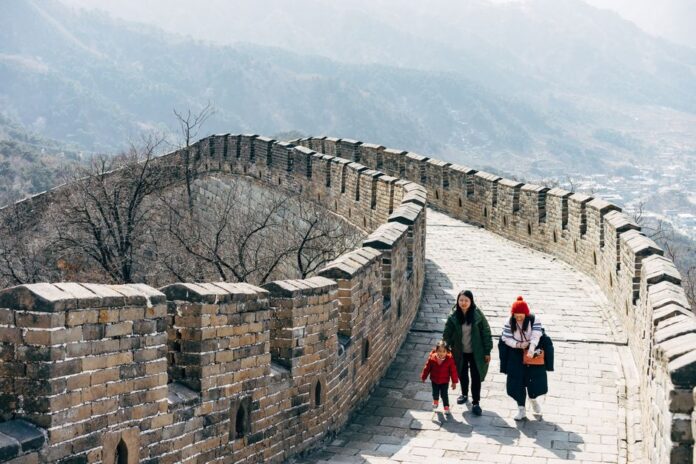
The Great Wall’s appearance and construction methods vary tremendously depending on location and available materials. In mountainous regions near Beijing, builders used cut stone blocks and fired bricks, creating the impressive, well-preserved sections tourists typically visit. In desert regions, workers constructed walls from tamped earth, reed layers, and whatever local materials were available. Some sections incorporated wood, while others used uncut stones. The western sections in particular differ dramatically from the eastern portions, appearing more like earthen mounds than the brick-and-stone fortifications commonly depicted in photographs. This regional variation reflects both the adaptation to local resources and the different time periods of construction.
12. UNESCO Recognition and Modern Cultural Significance
The Great Wall received UNESCO World Heritage Site designation in 1987, recognizing its outstanding universal value to human civilization. Today, it serves as China’s most iconic cultural symbol and tourist attraction, receiving over 10 million visitors annually at popular sections. The wall has transcended its original military purpose to become a powerful symbol of Chinese resilience, engineering prowess, and cultural identity. It features prominently in Chinese art, literature, and popular culture, representing both national pride and the complex legacy of imperial China. Modern conservation efforts struggle to balance tourist accessibility with preservation needs, as foot traffic and environmental factors continue to threaten the structure’s integrity.
A Monument to Human Ambition
The Great Wall of China encompasses far more than a simple defensive barrier; it represents an extraordinary chronicle of human ambition, innovation, and perseverance spanning millennia. From its surprising construction techniques using sticky rice to its sobering human cost, from its strategic communication systems to its ultimate failure as an impenetrable defense, these facts reveal the complex reality behind this ancient wonder. Understanding these fascinating details enriches our appreciation for both the wall’s achievements and its limitations, offering insights into the civilization that created it and the enduring legacy it represents in our modern world.