
⏱️ 6 min read
The evolution of writing represents one of humanity’s most transformative achievements, fundamentally changing how we communicate, preserve knowledge, and understand our world. From ancient clay tablets to digital screens, the journey of written language spans thousands of years and countless innovations. The following fascinating facts reveal surprising truths about how writing systems developed, spread, and shaped civilizations across the globe.
Ancient Mesopotamian Accountants Invented Writing
Contrary to popular belief, writing wasn’t invented to record epic poetry or religious texts. The earliest known writing system, cuneiform, emerged in ancient Mesopotamia around 3400 BCE primarily for accounting purposes. Sumerian merchants and temple administrators needed a reliable method to track grain supplies, livestock, and trade transactions. These early accountants pressed wedge-shaped marks into wet clay tablets using reed styluses, creating the world’s first written records. What began as simple pictographs representing commodities gradually evolved into a sophisticated system capable of expressing complex ideas, laws, and literature.
The Rosetta Stone Was Ancient Egypt’s Translation Key
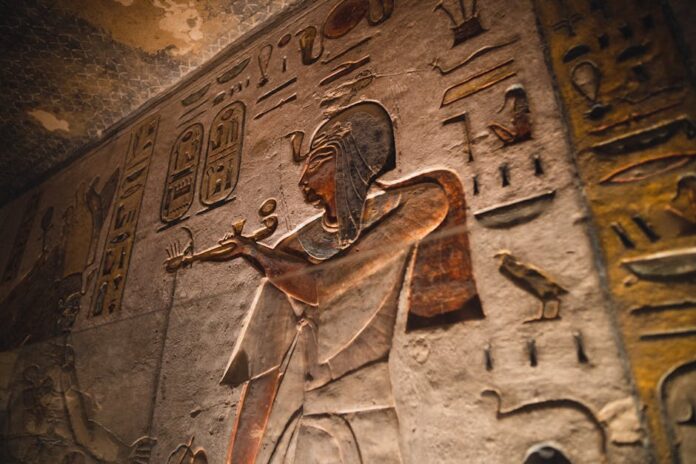
Discovered in 1799 by French soldiers in Egypt, the Rosetta Stone became the crucial breakthrough in deciphering Egyptian hieroglyphics after centuries of mystery. This granodiorite stele contained the same decree written in three scripts: ancient Greek, Demotic, and hieroglyphic Egyptian. Since scholars could read ancient Greek, they used it as a reference to unlock the meaning of hieroglyphics. French scholar Jean-François Champollion finally cracked the code in 1822, revealing that hieroglyphics combined logographic and alphabetic elements. This discovery opened the door to understanding three thousand years of Egyptian civilization that had been locked away in undecipherable texts.
Chinese Characters Have Remained Remarkably Stable for Millennia
The Chinese writing system boasts an extraordinary continuity spanning over three thousand years. Oracle bone inscriptions from the Shang Dynasty (1600-1046 BCE) show recognizable ancestors of modern Chinese characters. Unlike alphabetic systems that have undergone radical transformations, many Chinese characters retain visual connections to their ancient forms. This stability has allowed Chinese scholars to read texts written centuries or even millennia ago, creating an unbroken cultural and literary tradition. The system’s complexity, containing tens of thousands of characters, has also influenced neighboring cultures, with Japan, Korea, and Vietnam historically adopting Chinese characters for their own writing systems.
The Alphabet Originated from Egyptian Workers, Not Scholars
The alphabetic writing system that most of the world uses today didn’t originate in palaces or temples but among Semitic workers in Egyptian turquoise mines around 1800 BCE. These laborers, familiar with Egyptian hieroglyphics but seeking a simpler system, created the first alphabet by adapting Egyptian symbols to represent individual sounds in their own language. This Proto-Sinaitic script contained roughly 30 characters, dramatically fewer than the hundreds of symbols in Egyptian or cuneiform writing. This revolutionary simplification made literacy accessible beyond elite scribes, eventually evolving into the Phoenician alphabet, which became the ancestor of Greek, Latin, Arabic, and Hebrew scripts.
Medieval Manuscripts Used Bizarre Ingredients
Creating manuscripts in medieval Europe involved ingredients that would shock modern readers. Black ink was often made from oak galls—abnormal growths on trees caused by wasp larvae—mixed with iron salts and gum arabic. Red ink for decorative initials came from cinnabar, a toxic mercury compound. Even more surprisingly, manuscript pages themselves were made from animal skins. A single Bible could require the hides of 300 sheep or calves, making books extraordinarily expensive. Some medieval scribes added bizarre ingredients to their inks, including egg whites, wine, and even earwax, believing these substances improved the ink’s quality or durability.
The Printing Press Sparked Religious Revolution
Johannes Gutenberg’s movable type printing press, invented around 1440, didn’t just revolutionize book production—it fundamentally altered religious and political power structures. Before the printing press, hand-copied Bibles were so expensive that only institutions could afford them, giving the Church control over scriptural interpretation. The press enabled mass production of Bibles in vernacular languages, allowing ordinary people to read scripture themselves. This accessibility directly fueled the Protestant Reformation, as Martin Luther’s writings spread across Europe with unprecedented speed. Within 50 years of the printing press’s invention, millions of books had been printed, compared to the thousands of manuscripts produced in previous centuries.
Cherokee Invented Their Writing System in Twelve Years
One of history’s most remarkable linguistic achievements occurred in the early 19th century when Sequoyah, a Cherokee silversmith, single-handedly created a complete writing system for his language. Between 1809 and 1821, without being literate in any language, he developed a syllabary of 85 characters representing all syllables in Cherokee. Unlike alphabets developed over centuries, Sequoyah’s system was deliberately designed and implemented within his lifetime. The Cherokee Nation adopted it enthusiastically, achieving widespread literacy within years. By 1828, the Cherokee Phoenix newspaper was publishing in both Cherokee and English, demonstrating how quickly a motivated community could adopt a new writing system.
Ancient Libraries Used Unconventional Organization Systems
The famous Library of Alexandria and other ancient repositories organized texts in ways that seem bizarre by modern standards. Without standardized titles or author names, libraries often catalogued works by their opening lines. Scrolls were stored in pigeonholes or shelved horizontally in pottery jars, with small tags indicating contents. The transition from scrolls to codices (bound books) in the early Christian era revolutionized library organization, making texts easier to store, reference, and locate. This format change also enabled the creation of page numbers and indexes, fundamentally transforming how people accessed and organized written knowledge.
Shorthand Systems Saved Historical Speeches
Many famous ancient speeches survive today only because of skilled shorthand writers who recorded them in real-time. The Roman system of shorthand, called Tironian notes after its inventor Tiro (Cicero’s secretary), used approximately 4,000 symbols to rapidly transcribe speech. Without these systems, we would have lost countless philosophical debates, political speeches, and legal proceedings from antiquity. Medieval monks continued using shorthand variations to record sermons and scholarly disputations. These abbreviated writing systems remained crucial for journalism and court reporting until audio recording technology emerged, preserving centuries of spoken words that would otherwise have vanished.
Typewriters Changed Writing Style Forever
The typewriter’s invention in the 1870s didn’t just mechanize writing—it fundamentally altered prose style and business communication. The physical effort of typing encouraged shorter sentences and more direct language compared to the flowing, elaborate prose of the handwritten era. The typewriter also standardized document formatting, introducing conventions like double-spacing and uniform margins. Perhaps most significantly, typewriters democratized professional writing, particularly for women who found employment opportunities as typists and secretaries. The QWERTY keyboard layout, designed to prevent mechanical jamming, remains standard today despite being optimized for 19th-century technology rather than human efficiency.
Conclusion
The history of writing reveals unexpected connections between technology, society, and human expression. From Sumerian accountants tracking grain to Cherokee scholars creating new alphabets, written language has continuously evolved to meet human needs. Each innovation—whether clay tablets, alphabets, printing presses, or typewriters—transformed not just how we write, but how we think, organize societies, and preserve culture. Understanding these historical developments enriches our appreciation of the written word and reminds us that even our most fundamental communication tools have fascinating, often surprising origins. As we navigate the digital age, we continue this ancient tradition of adapting writing technologies to serve human creativity and connection.