








1 / 10 Questions
0 Points

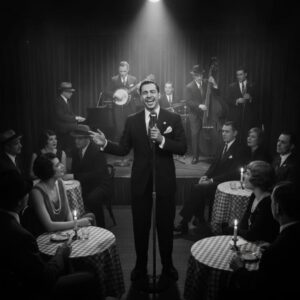
Which Instrument Made Louis Armstrong A Jazz Legend?

Clarinet

Trumpet

Saxophone

Trombone

Points won
0
Correct score
0%

More Questions

More Articles

Top 10 Fun Facts About Horror Movies

Top 10 Fun Facts About Horror Movies

⏱️ 7 min read

Horror films have captivated audiences for over a century, delivering spine-tingling scares and unforgettable nightmares. Behind the blood-curdling screams and shadowy cinematography lies a fascinating world of creative ingenuity, unexpected challenges, and bizarre real-world consequences. The genre has produced some of cinema's most iconic moments while simultaneously pushing boundaries and testing the limits of what audiences can endure. From revolutionary special effects techniques to surprising audience reactions, the history of horror cinema is filled with remarkable stories that rival the films themselves.

Behind the Screams: Fascinating Horror Movie Revelations

The Exorcist Caused Real-World Medical Emergencies

When "The Exorcist" premiered in 1973, theaters were unprepared for the audience response. Moviegoers fainted, vomited, and experienced panic attacks in such large numbers that some theaters stationed paramedics in lobbies. Reports emerged of people running from theaters, and at least one case involved a woman who suffered a miscarriage that she attributed to the film's intensity. The phenomenon became so widespread that media outlets covered the "Exorcist effect" as a cultural event, with psychiatrists appearing on talk shows to discuss why the film triggered such visceral reactions. The movie's director, William Friedkin, later revealed that he included subliminal imagery throughout the film, including brief flashes of demonic faces, which may have contributed to viewers' unease without their conscious awareness.

Psycho's Chocolate Syrup Blood Revolution

Alfred Hitchcock's infamous shower scene in "Psycho" revolutionized horror cinematography, but the "blood" that shocked audiences was actually Bosco chocolate syrup. Since the film was shot in black and white, Hitchcock and cinematographer John L. Russell discovered that chocolate syrup provided the perfect viscosity and contrast on camera. This improvisation became an industry standard for black-and-white horror films. The shower scene itself required seven days to film and used 70 camera setups for just 45 seconds of footage. Hitchcock's meticulous attention to detail paid off—the sequence remains one of the most studied and parodied scenes in cinema history, fundamentally changing how violence could be suggested rather than explicitly shown on screen.

The Blair Witch Project's Five-Day Shoot Budget Miracle

Created for approximately $60,000 and filmed in just eight days, "The Blair Witch Project" became one of the most profitable films ever made, grossing nearly $250 million worldwide. The filmmakers gave the actors handheld cameras and GPS coordinates, leaving them to improvise much of their dialogue while the directors remained hidden in the woods, occasionally terrorizing them at night. The actors genuinely didn't know what scares awaited them, creating authentic reactions. The innovative marketing campaign blurred the lines between fiction and reality, with many viewers initially believing the footage was real. This guerrilla filmmaking approach and viral marketing strategy predated social media and permanently influenced how independent horror films could achieve massive success.

Scream's Groundbreaking Meta-Horror Commentary

Wes Craven's "Scream" revitalized the slasher genre in 1996 by having characters explicitly discuss horror movie rules and clichés while simultaneously following and subverting them. This self-aware approach was revolutionary, as horror films had rarely acknowledged their own conventions. The film's screenwriter, Kevin Williamson, wrote the script in just three days after watching the news about a series of real murders and wondering how he would survive a similar situation. The opening scene featuring Drew Barrymore was strategically designed to shock audiences by killing off the biggest star within the first 12 minutes, signaling that no character was safe. This meta-approach influenced countless films and television shows across all genres.

The Texas Chain Saw Massacre's PG-Rating Attempt

Despite its reputation as one of the most violent horror films ever made, "The Texas Chain Saw Massacre" contains remarkably little onscreen blood or gore. Director Tobe Hooper actually hoped to receive a PG rating by relying on suggestion and implied violence rather than explicit imagery. The film ultimately received an R rating, but Hooper's strategy proved that psychological horror and atmosphere could be more effective than graphic violence. The dinner scene, considered one of the most disturbing sequences in horror cinema, shows almost no actual violence but creates overwhelming discomfort through sound design, acting, and editing. The film's visceral impact demonstrates how perception often exceeds reality in effective horror filmmaking.

The Shining's Destroyed Door and Jack Nicholson's Firefighting Past

During the filming of "The Shining," the iconic "Here's Johnny!" scene required multiple takes because Jack Nicholson, who had previously worked as a volunteer firefighter, destroyed the door too quickly with the axe. The prop department had to build a more durable door because Nicholson's technique was too efficient. Director Stanley Kubrick was famous for demanding numerous takes—some scenes required over 100 attempts—but Nicholson's real-world experience created an unexpected production challenge. The phrase "Here's Johnny!" was actually improvised by Nicholson, referencing Johnny Carson's "Tonight Show" introduction. Kubrick initially didn't understand the reference but kept it in the film, creating one of horror's most quoted lines.

A Nightmare on Elm Street's Real-Life Inspiration

Writer-director Wes Craven based Freddy Krueger on a series of Los Angeles Times articles about Southeast Asian refugees who died during nightmares. The articles described young, healthy men who refused to sleep, fearing their dreams, and eventually died in their sleep with no medical explanation. Craven combined this phenomenon with a childhood memory of a disturbing homeless man who stared at him through his window. The concept of a villain who attacks in dreams, where everyone is vulnerable and helpless, tapped into universal fears. Robert Englund's portrayal transformed Freddy into a cultural icon, and the film launched New Line Cinema to major studio status, earning it the nickname "The House That Freddy Built."

Poltergeist's Cursed Production Urban Legend

The "Poltergeist curse" became one of Hollywood's most persistent legends after four cast members died within six years of the trilogy's completion. Most notably, both Dominique Dunne and Heather O'Rourke died tragically young under different circumstances. The legend intensified due to the revelation that real human skeletons were used in the swimming pool scene during the first film because they were cheaper than plastic replicas—a decision that horrified actress JoBeth Williams when she learned about it years later. While the curse has been debunked as coincidence, it reflects how horror films can develop mythologies that extend beyond the screen, blurring fiction and reality in the public imagination.

The Silence of the Lambs' Unexpected Academy Sweep

This psychological horror thriller became only the third film in history to win the "Big Five" Academy Awards: Best Picture, Best Director, Best Actor, Best Actress, and Best Adapted Screenplay. Horror films rarely receive such mainstream critical recognition, making this achievement particularly remarkable. Anthony Hopkins won Best Actor despite appearing on screen for only 16 minutes, demonstrating the character's powerful impact. Director Jonathan Demme's technique of having Hannibal Lecter speak directly into the camera created an unsettling intimacy that made audiences feel personally confronted by the character. The film's success proved that horror could achieve both commercial success and critical acclaim while addressing serious themes.

Halloween's Shoestring Budget Innovation

John Carpenter's "Halloween" was made for approximately $300,000, with numerous creative solutions born from budget limitations. The iconic Michael Myers mask was actually a William Shatner Star Trek mask purchased for $1.98, spray-painted white, and modified to remove the eyebrows. Carpenter composed the minimalist piano theme himself in just three days, creating one of cinema's most recognizable horror scores. The film's production designer used cheap materials and creativity to transform suburban Pasadena into autumn-season Illinois, spray-painting leaves and scattering them throughout shots. Despite—or perhaps because of—these constraints, "Halloween" grossed over $70 million worldwide and established the slasher film template that countless movies would follow.

The Lasting Impact of Horror Cinema

These fascinating revelations demonstrate that horror filmmaking requires as much creativity, innovation, and psychological insight as any other genre. From budget constraints that sparked ingenious solutions to real-world phenomena that inspired terrifying villains, horror films reflect both the artistry of their creators and the primal fears of their audiences. The genre continues to evolve while honoring its rich history, proving that sometimes the stories behind the screams are just as compelling as what appears on screen. Whether through revolutionary special effects, guerrilla marketing campaigns, or performances that transcend their limited screen time, horror cinema has consistently pushed boundaries and challenged conventions, earning its place as one of film's most influential and enduring genres.

Top 10 Fun Facts About Ancient Greece

Top 10 Fun Facts About Ancient Greece

⏱️ 6 min read

Ancient Greece stands as one of history's most influential civilizations, laying the groundwork for Western philosophy, democracy, literature, and scientific thought. Beyond the well-known stories of gods and heroes, this remarkable culture harbored countless fascinating details that reveal the daily lives, innovations, and peculiarities of the ancient Greeks. From their unusual athletic traditions to their groundbreaking inventions, these facts illuminate why Greek civilization continues to captivate us thousands of years later.

Remarkable Discoveries About Ancient Greek Civilization

1. Olympic Athletes Competed Completely Naked

The ancient Olympic Games, first held in 776 BCE, featured athletes who competed entirely in the nude. The Greek word "gymnasium" actually derives from "gymnos," meaning naked. This practice wasn't considered shameful; rather, it celebrated the human body and athletic achievement. Women were not only barred from competing but were also forbidden from even watching the events under penalty of death. The Greeks believed that nudity equalized competitors by removing any advantages that clothing might provide, and it became a proud tradition that distinguished Greek athletics from those of other cultures they considered barbaric.

2. Ancient Greeks Invented the First Alarm Clock

The ancient Greek philosopher and engineer Plato created one of history's first alarm clocks around 400 BCE. This ingenious water clock, known as a clepsydra, used the steady flow of water to measure time. When the water reached a certain level, it would trigger a mechanism that produced a whistling sound created by air being forced through pipes. Later versions became more sophisticated, with the inventor Ctesibius developing complex water clocks that could move pointers on dials and even animate figures. These early timekeeping devices demonstrate the Greeks' advanced understanding of hydraulics and mechanics.

3. Democracy Excluded the Majority of the Population

While Athens is celebrated as the birthplace of democracy, the reality of who could participate was remarkably limited. Only free adult male citizens could vote and hold office, which represented merely 10-20% of the population. Women, slaves, foreigners, and children had no political rights whatsoever. Moreover, citizenship was restricted to those whose parents were both Athenian citizens. Despite these severe limitations, Athenian democracy was revolutionary for its time, introducing concepts like direct voting, jury trials, and the rotation of government officials that would influence political systems for millennia.

4. Yo-Yos Were Popular Ancient Greek Toys

Archaeological evidence confirms that yo-yos existed in ancient Greece as early as 500 BCE. Terra cotta disks discovered at Greek archaeological sites were used as toys by children and occasionally by adults. These ancient yo-yos were made from wood, metal, or painted terra cotta, and Greek vases depict young people playing with them. The toy was considered a rite of passage, with children often dedicating their yo-yos to the gods when they came of age, symbolizing their transition from childhood to adulthood.

5. The Greeks Had a Sophisticated Postal System

Ancient Greece developed an efficient communication network long before modern postal services. The system employed hemerodromes, professional long-distance runners who delivered messages between cities. These couriers could cover extraordinary distances, with the most famous being Pheidippides, who allegedly ran from Athens to Sparta—a distance of about 150 miles—in just two days to request military assistance. For written correspondence, Greeks used wax tablets for short messages and papyrus for longer communications, creating a complex infrastructure that connected their far-flung colonies and city-states.

6. Ancient Greek Actors Only Performed Male Roles

The ancient Greek theater, despite creating some of literature's most memorable female characters like Medea and Antigone, only allowed men to act on stage. Male actors wore elaborate masks and costumes to portray female characters, with the masks featuring exaggerated expressions visible even from the back rows of massive amphitheaters that could seat up to 15,000 spectators. These masks also served an acoustic purpose, amplifying the actors' voices in an era without electronic sound systems. The exclusion of women from theatrical performance reflected broader societal restrictions on women's public roles.

7. Greeks Practiced Ostracism as Democratic Punishment

Athens developed a unique practice called ostracism to protect democracy from tyranny. Once a year, citizens could vote to exile a politician or citizen they believed threatened the state. Voters would scratch names onto pottery shards called ostraka—from which the modern word "ostracism" derives. If at least 6,000 votes were cast and a person received a majority, they were banished from Athens for ten years, though they retained their property and citizenship. This system allowed Athenians to remove powerful individuals without executing them or confiscating their wealth, serving as a pressure valve for political tensions.

8. The Ancient Greeks Never Wore Blue

Linguistic and archaeological evidence suggests that ancient Greeks perceived and categorized colors differently than modern people. Homer's epics never describe the sea as blue but rather as "wine-dark." While Greeks could certainly see the color blue, they had no distinct word for it in their early language. Blue dye was also extremely rare and expensive, making blue clothing virtually non-existent. Instead, Greeks favored natural, undyed fabrics in white or cream, occasionally supplemented with reds and purples derived from costly dyes. This linguistic gap has sparked fascinating debates about whether ancient peoples literally perceived colors differently than we do today.

9. Ancient Greeks Discovered the Earth's Circumference with Remarkable Accuracy

Around 240 BCE, the Greek mathematician Eratosthenes calculated the Earth's circumference with astonishing precision using only simple geometry and shadows. By measuring the angle of shadows cast at noon in two different Egyptian cities—Alexandria and Syene—and knowing the distance between them, he computed the Earth's circumference to be approximately 250,000 stadia. Converting ancient measurements is imprecise, but his calculation was within 2-15% of the actual circumference, an extraordinary achievement accomplished over 1,700 years before Columbus sailed. This demonstrates that educated Greeks knew the Earth was spherical and could measure it scientifically.

10. Pirates Could Achieve Respectability in Greek Society

Contrary to the purely criminal image of pirates in later periods, piracy in ancient Greece occupied a morally ambiguous position. In Homer's "Odyssey," characters freely ask strangers if they are pirates without particular judgment, treating it as a legitimate, if dangerous, profession. Some Greek city-states even employed pirates to harass enemy shipping during wartime. Pirates who accumulated sufficient wealth could transition into respectable society, investing their gains in land and businesses. The line between legitimate maritime trade, naval warfare, and piracy remained blurry throughout much of Greek history, with many communities dependent on various forms of sea raiding for economic survival.

The Enduring Legacy of Greek Innovation

These fascinating aspects of ancient Greek civilization reveal a culture far more complex and nuanced than simplified historical narratives suggest. From their athletic traditions and democratic experiments to their technological innovations and social customs, the Greeks created a society that was simultaneously remarkably advanced and bound by the limitations of its era. Their achievements in mathematics, engineering, and political organization coexisted with practices that modern perspectives find problematic, reminding us that historical civilizations must be understood within their own contexts. The ancient Greeks' influence on subsequent Western civilization remains immeasurable, with their ideas about government, philosophy, science, and art continuing to shape our world. Understanding these details about daily life, social practices, and innovations helps us appreciate both the brilliance and the humanity of this foundational civilization that emerged over two millennia ago.