









1 / 20 Questions
0 Points

Which German leader signed the treaty of Versailles in 1919?

Philipp Scheidemann

Friedrich Ebert

Gustav Bauer

Hermann Müller

Points won
0
Correct score
0%

More Questions

More Articles

10 Fascinating Facts About Reality TV

10 Fascinating Facts About Reality TV

⏱️ 6 min read

Reality television has become one of the most dominant forces in modern entertainment, captivating millions of viewers worldwide and fundamentally changing how we consume media. From dating competitions to survival challenges, these unscripted shows have created cultural phenomena, launched careers, and sparked countless conversations. Behind the glossy production and dramatic moments lies a fascinating industry with surprising secrets and unexpected truths that even devoted fans might not know.

The Origins and Evolution of Reality Programming

1. Reality TV's Roots Date Back to the 1940s

While many people associate reality television with modern shows like "Survivor" or "Keeping Up with the Kardashians," the genre actually traces its origins to 1948 with "Candid Camera." This groundbreaking show filmed unsuspecting people in unusual situations, establishing the foundational concept of capturing genuine reactions on camera. The format evolved through programs like "An American Family" in 1973, which documented the Loud family's daily life for seven months, including the first televised same-sex marriage ceremony. These early experiments laid the groundwork for the reality TV explosion that would dominate the airwaves decades later.

2. Most Reality Shows Aren't Actually "Unscripted"

Despite the "reality" label, most shows follow detailed story outlines and producer guidance. While dialogue isn't typically scripted word-for-word, producers create scenarios, suggest conversations, and conduct numerous interviews to shape narratives. Participants often shoot the same scene multiple times to get better footage, and editors spend months crafting storylines from hundreds of hours of raw material. This process, known as "frankenbiting," can splice together audio clips to create conversations that never actually happened in sequence, fundamentally altering the authenticity viewers assume they're watching.

3. The $10 Billion Global Industry

Reality television generates approximately $10 billion annually in global revenue, making it one of the most profitable sectors in entertainment. The low production costs compared to scripted programming make these shows extremely attractive to networks. While a scripted drama might cost $3-5 million per episode, reality shows typically cost between $100,000 and $500,000 per episode. This dramatic cost difference explains why networks continue producing reality content prolifically, even when critical reception remains mixed. The genre's profitability has fundamentally reshaped television economics and programming strategies worldwide.

Behind-the-Scenes Production Secrets

4. Contestants Receive Psychological Evaluations

Before appearing on most major reality shows, participants undergo comprehensive psychological testing and background checks. Producers employ clinical psychologists to assess contestants' mental stability and ability to handle stress, isolation, and public scrutiny. These evaluations help production companies minimize legal liability and identify individuals who might create compelling television through their personalities and interpersonal dynamics. Shows like "The Bachelor" and "Survivor" maintain on-site mental health professionals throughout filming to support contestants dealing with the unique pressures of reality TV participation.

5. The Strategic Use of Alcohol and Sleep Deprivation

Many reality shows deliberately manipulate contestants' environments to increase drama and emotional reactions. Unlimited alcohol is commonly provided while food options remain limited, lowering inhibitions and heightening tensions. Production schedules often involve extremely long shooting days, sometimes extending 16-20 hours, leaving participants exhausted and more emotionally volatile. These environmental factors aren't accidental—they're calculated production strategies designed to generate the explosive confrontations and tearful confessions that drive ratings and social media engagement.

6. Legal Contracts Can Extend for Years

Reality TV contracts typically include extensive clauses that control participants' lives long after filming concludes. Contestants often sign away rights to their image and storyline for multiple years, face strict non-disclosure agreements with penalties exceeding $5 million, and must obtain production company approval before giving interviews or making public appearances. Some contracts include "bad faith" clauses preventing participants from contradicting the show's narrative publicly. These legal agreements give production companies tremendous control over how cast members are portrayed and discussed in media.

Cultural Impact and Influence

7. Reality TV Has Launched Legitimate Careers

Despite criticism of the genre, reality television has served as a legitimate launching pad for successful entertainment careers. Stars like Jennifer Hudson, Kelly Clarkson, and Carrie Underwood emerged from "American Idol" to become Grammy-winning artists. Gordon Ramsay transformed his reality TV presence into a restaurant empire worth hundreds of millions. The Kardashian family built a billion-dollar business empire from their reality show foundation. These success stories demonstrate that reality TV, while often dismissed as lowbrow entertainment, can provide genuine opportunities for talented individuals to showcase their abilities to massive audiences.

8. The Shows Employ Hundreds of Behind-the-Scenes Workers

A single reality TV production typically employs 150-300 crew members, including camera operators, sound technicians, story producers, editors, coordinators, and support staff. Major franchises like "The Bachelor" require even larger teams across multiple locations. These productions create significant employment in the entertainment industry, particularly for entry-level workers who gain valuable experience in television production. The boom in reality programming has generated thousands of jobs, supporting entire communities in production hubs like Los Angeles, New York, and Atlanta.

The Viewer Experience and Social Dynamics

9. Reality TV Influences Real-World Behavior and Expectations

Research indicates that heavy reality TV viewing correlates with altered perceptions of social norms and relationships. Studies have found that viewers of dating shows report higher expectations for romantic relationships and increased belief in traditional gender stereotypes. Reality programs also influence consumer behavior, with products featured on shows experiencing significant sales increases. The "Real Housewives" franchise alone has generated billions in product endorsements and business ventures. This cultural influence extends to social media behavior, with reality TV popularizing the concept of personal branding and curated self-presentation that dominates platforms like Instagram.

10. International Formats Generate Massive Licensing Revenues

Successful reality formats are licensed and adapted across dozens of countries, creating additional revenue streams worth millions. "Big Brother" has been produced in over 60 countries, while "Got Talent" franchises exist in more than 70 nations. These international adaptations generate licensing fees, production royalties, and format consulting revenues for original creators. The global appetite for reality television has created an international marketplace where production companies develop shows specifically for worldwide adaptation, fundamentally changing how television content is created and distributed across cultural boundaries.

Conclusion

Reality television represents far more than simple entertainment—it's a complex industry that blends psychology, economics, legal strategy, and cultural influence. From its mid-century origins to its current status as a multi-billion dollar global phenomenon, the genre has fundamentally reshaped television production and viewing habits. While critics continue debating its artistic merit and social impact, reality TV's influence on modern media culture remains undeniable. Understanding these behind-the-scenes facts reveals the sophisticated production machinery and strategic planning that creates the seemingly spontaneous moments captivating audiences worldwide. Whether celebrated or criticized, reality television has secured its place as a defining feature of contemporary entertainment.
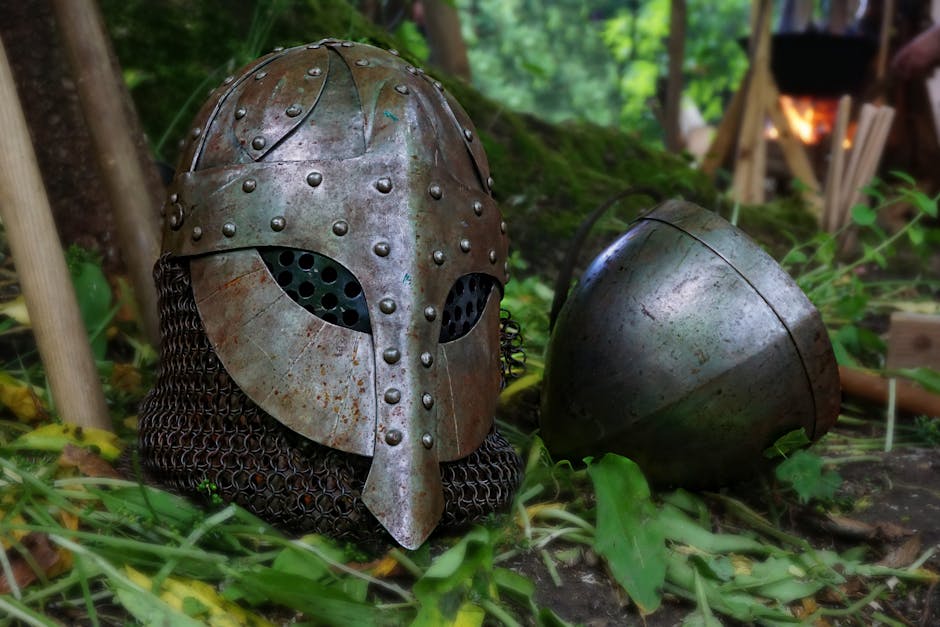
Did You Know? 15 Incredible Facts About Ancient Warfare

Did You Know? 15 Incredible Facts About Ancient Warfare

⏱️ 8 min read

The battlefields of antiquity were far more sophisticated and surprising than many people realize. Ancient civilizations developed ingenious tactics, devastating weapons, and military innovations that would influence warfare for millennia. From psychological warfare to revolutionary technologies, the ancient world was a crucible of military evolution that shaped the course of human history. Here are fifteen remarkable facts about ancient warfare that reveal the complexity and ingenuity of our martial ancestors.

Ancient Military Innovations and Tactics

1. Greek Fire: The Incendiary Weapon That Burned on Water

The Byzantine Empire possessed one of history's most feared secret weapons: Greek Fire. This incendiary mixture, whose exact composition remains unknown to this day, could burn on water and was nearly impossible to extinguish. Used primarily in naval warfare from the 7th century onwards, Greek Fire was deployed through siphons mounted on ships, creating devastating streams of flame that could incinerate entire enemy fleets. The Byzantines guarded this formula so zealously that its secret died with the empire, making it one of history's lost technologies.

2. The Assyrian Army's Psychological Terror Campaign

The Assyrian military machine, dominant from approximately 900 to 600 BCE, understood that fear could be as powerful as swords. They systematically documented and publicized their brutal treatment of conquered peoples, including impalement, flaying, and mass deportations. These accounts weren't merely boastful records—they were deliberate psychological warfare designed to encourage cities to surrender without resistance. This strategy of terror was so effective that many cities opened their gates rather than face Assyrian wrath.

3. Roman Soldiers Built Roads as They Conquered

Roman legions weren't just fighting forces; they were mobile engineering corps. Soldiers were required to carry tools and construction equipment weighing up to 80 pounds, in addition to weapons and armor. As they campaigned, they constructed roads, bridges, and fortifications, creating the famous Roman road network that spanned over 250,000 miles. This infrastructure not only facilitated military movements but also ensured rapid communication and economic integration of conquered territories.

4. The Mysterious Disappearance of the Persian Immortals

The Persian Immortals were an elite fighting force of exactly 10,000 soldiers who served as the personal guard of the Persian emperor. They earned their name because whenever a soldier died, was wounded, or became seriously ill, he was immediately replaced to maintain the unit's constant strength of 10,000. These warriors were equipped with the finest armor and weapons, and their reputation for invincibility struck fear throughout the ancient world.

Weapons and Technology

5. Ancient Chinese Crossbows Could Pierce Multiple Soldiers

Chinese crossbow technology during the Warring States period (475-221 BCE) was centuries ahead of the West. Archaeological evidence reveals crossbows with bronze triggers so sophisticated they included adjustment mechanisms for draw weight and precision. Some Chinese crossbows were powerful enough to pierce multiple enemies or shoot through armor at considerable distances. Mass-produced with interchangeable parts, these weapons represented an early form of standardized manufacturing.

6. War Elephants Created Ancient Tanks on the Battlefield

From India to Carthage, war elephants served as living tanks that could break enemy formations and spread terror among troops and horses unfamiliar with these massive beasts. Hannibal famously transported 37 elephants over the Alps to invade Italy, though most perished during the journey. In the Battle of Hydaspes in 326 BCE, King Porus of India deployed nearly 200 war elephants against Alexander the Great, creating one of history's most spectacular battlefield spectacles.

7. The Macedonian Sarissa Pike Revolutionized Infantry Combat

Alexander the Great's father, Philip II of Macedon, transformed infantry warfare with the sarissa—a pike measuring 13 to 20 feet in length. This weapon, wielded by the famed Macedonian phalanx, was twice as long as traditional spears, allowing soldiers to strike enemies well before they could close to fighting distance. The first five ranks of the phalanx could present their pikes forward simultaneously, creating an impenetrable wall of bronze points that helped Alexander conquer most of the known world.

8. Ancient Siege Towers Reached Ten Stories High

Ancient siege warfare produced architectural marvels in the form of massive siege towers, some reaching heights of 100 feet or more—equivalent to a modern ten-story building. The largest recorded siege tower was built by Demetrius I during the siege of Rhodes in 305-304 BCE. Called the "Helepolis" or "Taker of Cities," it stood approximately 130 feet tall, weighed over 160 tons, and required 3,400 men to move it. These mobile fortresses allowed attackers to overcome city walls and rain projectiles down on defenders.

Tactical Brilliance and Strategy

9. Hannibal's Double Envelopment at Cannae Remains a Military Masterpiece

At the Battle of Cannae in 216 BCE, Carthaginian general Hannibal executed perhaps the most perfect tactical victory in military history. Facing a Roman army nearly twice his size (approximately 86,000 Romans against 50,000 Carthaginians), Hannibal deliberately weakened his center and strengthened his flanks. When the Romans pushed forward, they found themselves surrounded as Hannibal's cavalry and wings closed around them like a vice. Between 50,000 and 70,000 Roman soldiers were killed in a single day—a casualty rate that made Cannae one of the bloodiest battles in human history.

10. The Spartan Agoge Created History's Most Feared Warriors

Spartan military dominance stemmed from the agoge, a brutal state-sponsored education system that began at age seven. Boys were deliberately underfed to encourage stealing (developing cunning), forced to fight one another, and subjected to harsh physical training. They slept on reed beds they made themselves and were given minimal clothing regardless of weather. This system produced warriors so formidable that a force of just 300 Spartans and their allies held off hundreds of thousands of Persian invaders at Thermopylae for three days.

11. Naval Warfare Evolved with the Devastating Trireme

The ancient Greek trireme revolutionized naval combat around the 7th century BCE. These vessels featured three banks of oars on each side, with approximately 170 rowers providing remarkable speed and maneuverability. Armed with a bronze ram at the waterline, triremes turned naval battles into high-speed collision courses where ships attempted to hole enemy vessels below the waterline. The Battle of Salamis in 480 BCE, where Greek triremes defeated the larger Persian fleet in narrow waters, demonstrated the devastating effectiveness of these warships.

Cultural Aspects of Ancient Warfare

12. Roman Decimation Punished Cowardly Legions Through Lottery of Death

Roman military discipline included one of history's most terrifying punishments: decimation. When an entire unit displayed cowardice or mutiny, the soldiers would be divided into groups of ten, and lots would be drawn. The one soldier in each group who drew the short lot would be clubbed or stoned to death by his nine comrades. This practice, though rarely employed, ensured that Roman soldiers feared their own commanders as much as the enemy, maintaining the legendary discipline of the legions.

13. Ancient Armies Carried Siege Equipment Across Continents

Contrary to popular belief, ancient armies didn't always construct siege engines on-site. Alexander the Great's campaigns demonstrate that armies transported pre-fabricated components for catapults, ballistae, and towers across thousands of miles. His siege train included engineers, carpenters, and specialized equipment that could be rapidly assembled. This mobile siege capability allowed Alexander to reduce fortified cities throughout Persia and India, making his conquests possible.

14. The Scythed Chariot Was Both Terrifying and Impractical

Persian and Seleucid armies employed scythed chariots—vehicles with blades extending from their wheel hubs designed to mow down infantry formations. While terrifying in concept, these weapons proved largely ineffective in practice. Disciplined troops learned to simply open their ranks and let the chariots pass harmlessly through, then close ranks again. Horses naturally avoided charging into dense formations of men, and rough terrain could render the chariots useless. Despite their fearsome reputation, scythed chariots represented more psychological than actual threat.

15. Ancient Battlefield Medicine Was Surprisingly Advanced

Ancient military medicine achieved remarkable sophistication, particularly in the Roman legions. Each legion included trained medics (capsarii) and field hospitals (valetudinaria) with surgical instruments, including scalpels, forceps, and bone saws that would look familiar to modern doctors. Roman military surgeons performed complex operations, including amputations, arrow extractions, and trepanation. They understood the importance of cleanliness, boiling instruments and washing wounds. Survival rates for Roman soldiers wounded in battle exceeded those of soldiers in many conflicts up through the American Civil War.

The Legacy of Ancient Military Innovation

These fifteen facts reveal that ancient warfare was far more sophisticated than simple sword-and-shield combat. Ancient civilizations developed complex logistics, revolutionary weapons technology, psychological warfare, professional military medicine, and tactical innovations that military theorists still study today. The ingenuity displayed on ancient battlefields—from Greek Fire's mysterious chemistry to Hannibal's tactical genius at Cannae—demonstrates that our ancestors possessed remarkable creativity and intelligence. Many principles established in ancient warfare, such as combined arms tactics, psychological operations, and military engineering, remain fundamental to modern military doctrine. Understanding these historical developments provides not only fascinating insights into human history but also reveals the continuous thread of innovation that connects ancient battlefields to contemporary military science.