











1 / 10 Questions
0 Points

Which everyday writing tool was inspired by a ball-bearing mechanism?

Pencil

Fountain pen

Ballpoint pen

Marker

Points won
0
Correct score
0%

More Questions

More Articles

Did You Know? 10 Amazing Facts About Numbers and Math

Did You Know? 10 Amazing Facts About Numbers and Math

⏱️ 6 min read

Mathematics is the universal language that governs our world, from the smallest atomic particles to the vastness of space. While many people view math as purely practical or even intimidating, it contains countless fascinating peculiarities and surprising connections that reveal the beauty and wonder hidden within numbers. These remarkable mathematical phenomena demonstrate that math is far more than equations and formulas—it's a realm filled with mystery, elegance, and extraordinary discoveries.

Fascinating Mathematical Phenomena That Will Change Your Perspective

1. Zero Was a Revolutionary Invention

While we take zero for granted today, this seemingly simple concept was actually a groundbreaking mathematical innovation. Ancient civilizations like the Greeks and Romans had no symbol for zero, making complex calculations extremely difficult. The concept of zero as both a placeholder and a number in its own right was developed independently by ancient Indian mathematicians around the 5th century CE and by Mayan civilization. The introduction of zero revolutionized mathematics, enabling the development of calculus, complex algebra, and modern computing. Without zero, our entire digital world would be impossible.

2. Prime Numbers Follow Mysterious Patterns

Prime numbers—those divisible only by themselves and one—have fascinated mathematicians for millennia. Despite extensive study, no one has discovered a formula to predict where the next prime number will appear. These numbers seem to be randomly distributed, yet they follow strange patterns. The Riemann Hypothesis, one of mathematics' greatest unsolved problems, attempts to explain the distribution of primes and carries a million-dollar prize for anyone who can prove it. Prime numbers are also crucial for modern encryption, protecting everything from bank transactions to classified government communications.

3. Pi Contains Infinite Non-Repeating Digits

The mathematical constant pi (π), representing the ratio of a circle's circumference to its diameter, is an irrational number with infinite decimal places that never repeat. Calculated to over 50 trillion digits by supercomputers, pi appears to contain every possible number sequence imaginable. Statistically, your phone number, birthday, and even your entire life story encoded in numbers exists somewhere within pi's infinite digits. This phenomenon is called a "normal number," though mathematicians haven't yet proven that pi definitively qualifies, making it an ongoing area of research.

4. The Fibonacci Sequence Appears Throughout Nature

The Fibonacci sequence—where each number is the sum of the two preceding ones (0, 1, 1, 2, 3, 5, 8, 13, 21...)—manifests remarkably throughout the natural world. Sunflower seed arrangements, pinecone spirals, nautilus shells, and even galaxy formations follow Fibonacci patterns. The ratio between consecutive Fibonacci numbers approaches the golden ratio (approximately 1.618), considered aesthetically pleasing and used in art and architecture for centuries. This mathematical sequence demonstrates the profound connection between abstract numbers and the physical universe.

5. Infinity Comes in Different Sizes

Contrary to intuition, mathematician Georg Cantor proved that some infinities are larger than others. The set of counting numbers (1, 2, 3...) is infinite, but the set of real numbers between 0 and 1 is a larger infinity. Cantor's diagonal argument demonstrated that you cannot create a one-to-one correspondence between these sets, revealing that infinity is more complex than simply "endless." This discovery fundamentally changed mathematics and introduced concepts like countable and uncountable infinity, which have implications for set theory, logic, and theoretical computer science.

6. The Birthday Paradox Defies Common Sense

In a group of just 23 randomly selected people, there's a greater than 50% probability that two people share the same birthday. With 70 people, the probability exceeds 99.9%. This counterintuitive result, known as the birthday paradox, surprises most people who assume you'd need far more people for such coincidences. The mathematics works because we're not asking about a specific birthday match, but any match among all possible pairs. This principle has applications in cryptography, particularly in detecting hash collisions in computer security systems.

7. A Googol Is Unimaginably Large

A googol is the number 1 followed by 100 zeros—a quantity so vast it exceeds the number of atoms in the observable universe, estimated at around 10^80. Even more mind-boggling is the googolplex: 10 to the power of a googol, a number so large that writing it out would require more space than exists in the universe. These numbers, coined by nine-year-old Milton Sirotta in 1938, demonstrate that mathematics can describe quantities far beyond anything physical. The search engine Google was named after googol, though misspelled, to represent the vast amount of information it indexes.

8. Negative Numbers Were Once Considered Absurd

For centuries, mathematicians rejected negative numbers as nonsensical. Ancient Greek mathematicians couldn't conceptualize quantities less than nothing, and even prominent European mathematicians in the Renaissance period viewed negative solutions to equations as meaningless. The acceptance of negative numbers only became widespread in the 17th century when their practical applications in accounting, temperature, and algebra became undeniable. Today, negative numbers are fundamental to mathematics, physics, and economics, demonstrating how mathematical thinking evolves over time.

9. Perfect Numbers Are Extremely Rare

A perfect number equals the sum of its proper divisors (factors excluding itself). The number 6 is perfect because 1 + 2 + 3 = 6, and 28 is perfect because 1 + 2 + 4 + 7 + 14 = 28. Despite their simple definition, perfect numbers are extraordinarily rare. Only 51 perfect numbers have been discovered, and mathematicians still don't know if infinitely many exist or whether any odd perfect numbers exist. All known perfect numbers are even, incredibly large, and connected to Mersenne primes, linking this ancient Greek concept to cutting-edge mathematical research.

10. The Number 1729 Has a Unique Story

The number 1729 gained fame through an encounter between mathematicians Srinivasa Ramanujan and G.H. Hardy. When Hardy mentioned he'd arrived in taxi number 1729, calling it "rather a dull number," Ramanujan immediately responded that it was actually very interesting—it's the smallest number expressible as the sum of two cubes in two different ways (1³ + 12³ and 9³ + 10³). This anecdote illustrates Ramanujan's extraordinary mathematical intuition and gives 1729 the nickname "the Ramanujan number." It exemplifies how mathematicians see patterns and beauty in numbers that others might overlook.

The Endless Wonder of Mathematical Discovery

These ten remarkable facts barely scratch the surface of mathematics' fascinating depths. From zero's revolutionary impact to the mysteries still surrounding prime numbers, from the surprising probability of shared birthdays to the mind-bending concept of different-sized infinities, mathematics continually reveals unexpected beauty and profound truths. These discoveries remind us that mathematics is not merely a tool for calculation but a rich landscape of patterns, surprises, and elegant solutions that connect abstract thought to the physical world. Whether appearing in nature's designs, challenging our intuitions, or pushing the boundaries of human knowledge, numbers and mathematical concepts continue to amaze, inspire, and transform our understanding of reality.
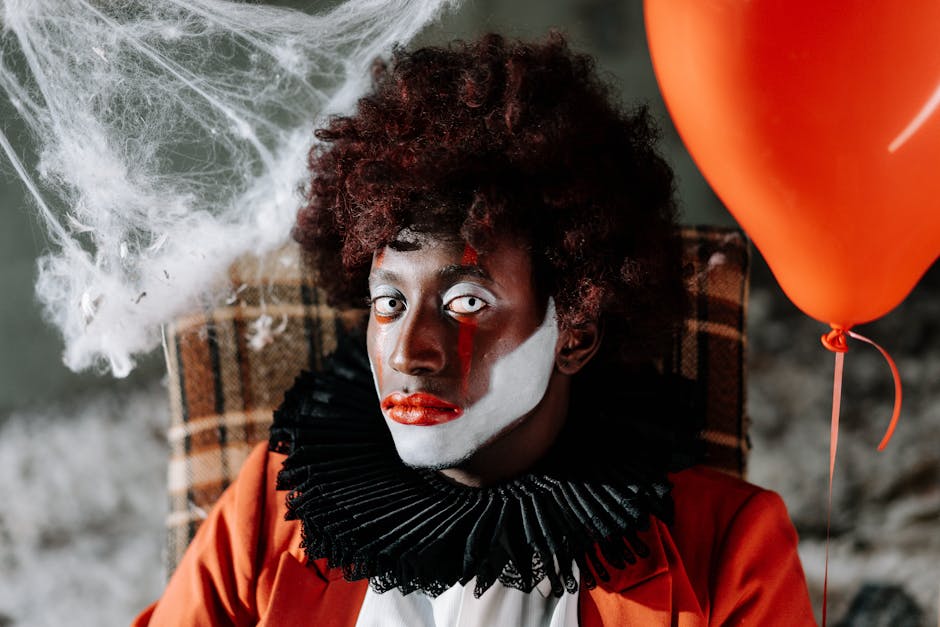
Did You Know? 15 Unusual Festivals Around the World

Did You Know? 15 Unusual Festivals Around the World

⏱️ 7 min read

Every culture celebrates in its own unique way, and around the globe, there are festivals that defy convention and challenge our understanding of celebration. From throwing tomatoes to rolling down hills chasing cheese, these extraordinary events showcase human creativity, cultural traditions, and our universal desire to come together in memorable ways. Here are fifteen of the world's most unusual festivals that demonstrate just how diverse and fascinating human celebration can be.

Festivals That Challenge Convention

1. La Tomatina: Spain's Epic Tomato Battle

Every August in the small Spanish town of Buñol, over 20,000 participants gather for the world's largest food fight. La Tomatina involves hurling approximately 150,000 tomatoes at fellow revelers in a chaotic, pulpy celebration that lasts just one hour. What began in 1945 as a spontaneous street brawl has evolved into an internationally recognized festival that requires tickets and attracts visitors from across the globe. The streets run red with tomato juice, and the entire town transforms into a slippery, messy playground for adults.

2. Cooper's Hill Cheese-Rolling: England's Dangerous Dairy Chase

In Gloucestershire, England, brave participants hurl themselves down a steep hill in pursuit of a nine-pound wheel of Double Gloucester cheese. The cheese reaches speeds of up to 70 miles per hour, while competitors tumble, roll, and sprint dangerously after it. This centuries-old tradition results in numerous injuries each year, yet continues to draw hundreds of participants and thousands of spectators who gather to watch this peculiar display of determination and questionable decision-making.

3. Boryeong Mud Festival: South Korea's Therapeutic Mess

South Korea's Boryeong Mud Festival transforms a beach town into a massive mud playground each July. Originally created as a marketing event for cosmetics containing mineral-rich mud from the region, the festival now attracts millions of visitors who cover themselves in therapeutic mud, participate in mud wrestling, slide down mud slopes, and engage in various mud-related activities. The event combines health benefits with uninhibited fun, proving that getting dirty can be both enjoyable and good for your skin.

4. Monkey Buffet Festival: Thailand's Primate Feast

In Lopburi, Thailand, locals prepare an elaborate banquet featuring over 4,000 kilograms of fruits, vegetables, and treats—but not for human consumption. This annual November festival honors the local monkey population, believed to bring good fortune to the community. Hundreds of macaques descend upon tables overflowing with food, creating a spectacle that celebrates the unique relationship between the town's human and primate residents.

Celebrations of Fire, Ice, and Everything Unusual

5. Up Helly Aa: Scotland's Viking Fire Festival

The Shetland Islands celebrate their Norse heritage each January with Up Helly Aa, Europe's largest fire festival. Participants dress in Viking costumes, parade through the streets carrying torches, and culminate the celebration by setting fire to a full-scale replica Viking longship. The festival features elaborate costumes, theatrical performances, and demonstrates the Scottish islands' commitment to honoring their Scandinavian roots in the most dramatic way possible.

6. Hadaka Matsuri: Japan's Naked Man Festival

Thousands of men wearing only loincloths brave freezing February temperatures in Okayama, Japan, competing to catch sacred wooden sticks thrown by a priest. Participants believe that touching these sticks brings good luck and happiness for the coming year. The festival, which dates back 500 years, involves ritual purification, mass jostling, and a remarkable display of endurance as nearly naked men pack together in the cold, creating an unforgettable spectacle of faith and tradition.

7. Battle of the Oranges: Italy's Citrus Warfare

The Italian town of Ivrea hosts a three-day carnival featuring organized teams who engage in massive orange-throwing battles. This festival commemorates the town's medieval rebellion against tyranny, with participants pelting each other with over 500,000 pounds of oranges. Teams on foot battle against others riding horse-drawn carts, creating a sticky, juice-soaked recreation of historical civil unrest that turns the streets orange and leaves participants bruised but jubilant.

8. Wife Carrying Championship: Finland's Matrimonial Marathon

In Sonkajärvi, Finland, male competitors race through an obstacle course while carrying a female teammate—traditionally their wife—through sand, grass, and water hazards. The winner receives the wife's weight in beer, making lighter partners potentially less advantageous. This quirky competition, which has spawned similar events worldwide, requires strength, strategy, and a partner willing to be carried upside-down through challenging terrain.

Nature, Animals, and Extraordinary Traditions

9. Blobfest: Pennsylvania's Retro Horror Celebration

The Colonial Theatre in Phoenixville, Pennsylvania, celebrates the 1958 horror film "The Blob" with an annual festival featuring a recreation of the movie's famous theater-escape scene. Attendees dress in 1950s attire, watch the cult classic film, and rush out of the theater screaming, just as moviegoers did in the original movie. This celebration of B-movie history includes costume contests, vendor markets, and proves that some communities will celebrate absolutely anything with enough enthusiasm.

10. Kanamara Matsuri: Japan's Festival of the Steel Phallus

Kawasaki, Japan, hosts this spring fertility festival featuring giant phallus-shaped decorations, candy, and parade floats. Originally connected to a local legend about a sharp-toothed demon, the Kanamara Matsuri now celebrates fertility, safe sex, and raises money for HIV research. The festival attracts tens of thousands of visitors who embrace the playful, uninhibited celebration of human sexuality in a context that's simultaneously sacred and lighthearted.

11. Lopburi Monkey Banquet: Thailand's Simian Celebration

Beyond the buffet, Lopburi's relationship with its monkey population extends to elaborate temple decorations, carved fruit displays, and ice sculptures—all designed for primate enjoyment. The festival acknowledges that the macaques are both tourism draw and occasional nuisance, offering this annual feast as thanks for the prosperity they bring. Locals believe the monkeys are descendants of the monkey god Hanuman, adding spiritual significance to this unusual celebration.

Global Gatherings That Defy Description

12. Burning Man: Nevada's Temporary Metropolis

In Nevada's Black Rock Desert, tens of thousands create a temporary city dedicated to art, self-expression, and radical self-reliance. Burning Man culminates in the burning of a massive wooden effigy, but the real festival is the week-long experiment in alternative community building. Participants create elaborate art installations, theme camps, and performances in an environment free from commercial transactions, where gifting and participation replace buying and consuming.

13. El Colacho: Spain's Baby-Jumping Festival

In Castrillo de Murcia, Spain, men dressed as devils jump over babies laid on mattresses in the street during this Corpus Christi celebration. Dating back to 1620, this ritual is believed to cleanse infants of original sin and protect them from evil spirits. Despite its seemingly dangerous nature, no injuries have been reported, and parents eagerly place their newborns in the devil's path, trusting in centuries of tradition.

14. Night of the Radishes: Mexico's Vegetable Art Exhibition

Every December 23rd, Oaxaca, Mexico, hosts a competition featuring intricate sculptures carved entirely from radishes. These aren't ordinary radishes—they're oversized vegetables specifically grown for carving, some reaching twenty pounds. Artists create nativity scenes, historical events, and elaborate displays that deteriorate within days. This pre-Christmas tradition combines agricultural pride with artistic expression in one of the world's most perishable art forms.

15. Underwater Music Festival: Florida's Subaquatic Concert

In the Florida Keys, divers and snorkelers gather for an underwater concert designed to promote coral reef protection. Musicians play waterproof instruments and participants listen to ocean-themed music broadcast through underwater speakers. Costumed performers create a surreal spectacle beneath the waves, combining environmental activism with creative celebration. The festival raises awareness about reef preservation while offering one of the world's most unusual concert experiences.

The Universal Language of Celebration

These fifteen extraordinary festivals demonstrate that human celebration knows no bounds. Whether throwing produce, chasing dairy products, honoring primates, or carving vegetables, communities worldwide have developed unique ways to come together, honor traditions, and create shared experiences. These unusual festivals remind us that celebration is as diverse as humanity itself, and that sometimes the most memorable cultural experiences are those that make us question what we thought we knew about how people gather and celebrate. From ancient religious rituals to modern marketing stunts turned tradition, these festivals continue because they fulfill our fundamental need for community, joy, and the occasional opportunity to do something completely unexpected.