










1 / 10 Questions
0 Points

Which Dog Was The First In Space?

Laika

Max

Buddy

Rover

Points won
0
Correct score
0%

More Questions

More Articles

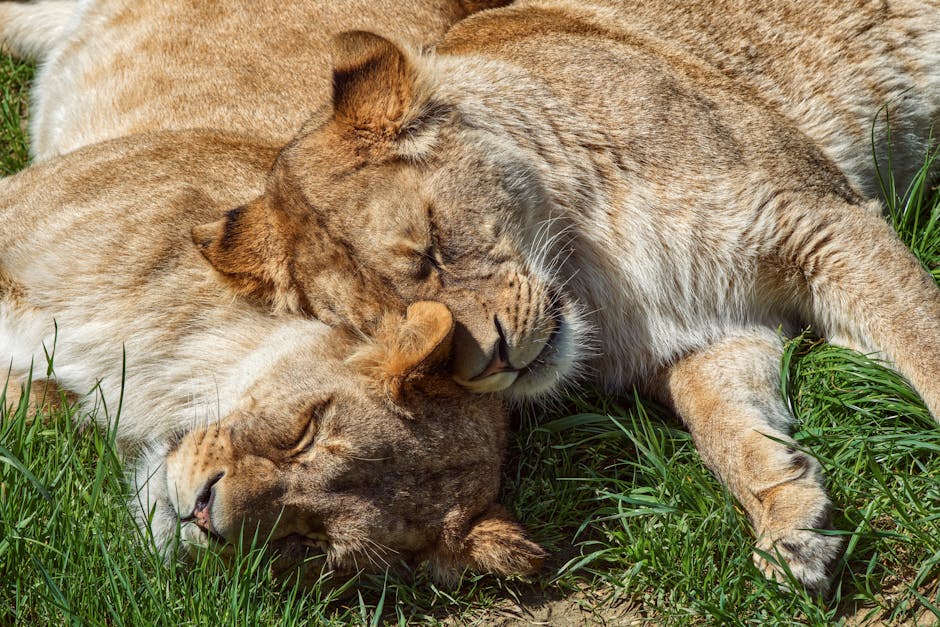
15 Amazing Facts About Lions You Didn’t Know

15 Amazing Facts About Lions You Didn’t Know

⏱️ 7 min read

Lions have captivated human imagination for millennia, symbolizing strength, courage, and royalty across cultures worldwide. Yet despite their iconic status, these magnificent big cats harbor numerous surprising secrets that challenge common perceptions. From their complex social structures to their remarkable physical adaptations, lions possess traits and behaviors that continue to astonish researchers and wildlife enthusiasts alike. The following fascinating insights reveal the lesser-known aspects of these apex predators that rule the African savanna.

Extraordinary Lion Characteristics and Behaviors

1. Male Lions Sleep Up to 20 Hours Daily

Contrary to their reputation as relentless hunters, male lions are among the animal kingdom's most dedicated nappers. These powerful predators conserve energy by resting or sleeping between 18 to 20 hours each day. This extensive downtime isn't laziness—it's a survival strategy in the scorching African heat, allowing them to maintain their strength for territorial defense and the occasional hunt. Their metabolism is adapted to process large meals infrequently rather than requiring constant activity.

2. Lionesses Perform 90% of the Hunting

While male lions often receive credit as fearsome hunters, females actually execute nearly all pride hunts. Lionesses work cooperatively in sophisticated strategies, using their smaller size and greater agility to pursue prey. Males primarily hunt when alone or in bachelor coalitions, but their impressive manes create wind resistance and make them more visible, rendering them less effective hunters within the pride structure.

3. A Lion's Roar Can Be Heard Five Miles Away

The thunderous roar of a lion serves as one of nature's most powerful acoustic signals, reaching volumes of 114 decibels—approximately as loud as a rock concert. This incredible vocalization can travel up to five miles across open terrain, serving multiple purposes including territory demarcation, pride coordination, and intimidation of rivals. Lions typically roar most frequently at dawn and dusk, with the sound uniquely designed to carry across vast distances.

4. Cubs Are Born With Spots That Disappear

Lion cubs enter the world covered in distinctive rosette patterns similar to leopard markings. These spots provide crucial camouflage during their vulnerable early weeks, helping conceal them from predators while their mothers hunt. As cubs mature into adulthood, typically around three months, these markings gradually fade, though some adults retain faint traces on their legs and underbellies throughout their lives.

5. Lions Have a Success Rate of Only 25% When Hunting

Despite their formidable reputation, lions fail far more often than they succeed when pursuing prey. Their hunting success rate hovers around 25-30%, with many factors influencing outcomes including prey vigilance, terrain conditions, and coordinated defense by herds. This relatively low success rate explains why lions must hunt frequently and why they've evolved to consume massive quantities—up to 70 pounds of meat—during a single feeding session.

6. Male Manes Indicate Health and Fighting Ability

A male lion's mane functions as far more than decorative plumage—it serves as a biological billboard advertising genetic fitness. Darker, fuller manes indicate higher testosterone levels, better nutrition, and superior fighting capability. Females preferentially mate with dark-maned males, while rival males often avoid confrontation with them. Research has shown that mane quality directly correlates with a male's ability to tolerate injury and protect his pride.

7. Lions Are the Only Truly Social Big Cats

Unlike solitary tigers, jaguars, and leopards, lions have evolved complex social structures centered around the pride. These family units typically consist of related females, their offspring, and a coalition of males. This social organization provides advantages including cooperative hunting, shared cub-rearing responsibilities, and collective territory defense. The pride structure represents a unique evolutionary adaptation among large felids.

8. Their Tongues Are Rough Enough to Peel Skin

A lion's tongue features backward-facing barbs called papillae, creating a surface similar to coarse sandpaper. These hook-like structures serve essential functions: removing parasites during grooming, rasping meat from bones, and even stripping fur from prey. The tongue's roughness is so pronounced that extended licking can remove paint from surfaces and abrade human skin.

9. White Lions Are Not Albinos

White lions possess a rare genetic condition called leucism, distinctly different from albinism. Unlike albinos with pink eyes, white lions have normal pigmentation in their eyes, which appear gold or blue-gray. This recessive trait occurs naturally in the Timbavati region of South Africa, where both parents must carry the gene. White lions face survival challenges in the wild due to reduced camouflage, making them more visible to both prey and potential threats.

10. Lions Once Roamed Across Three Continents

Historical evidence reveals that lions once dominated territories spanning Africa, Europe, and Asia, with populations extending from Greece to India. Cave lions inhabited Ice Age Europe, while Asiatic lions ranged throughout the Middle East and Indian subcontinent. Today, only fragmented populations remain—primarily in sub-Saharan Africa, with a critically endangered population of approximately 600 Asiatic lions surviving exclusively in India's Gir Forest.

11. A Pride's Territory Can Span 100 Square Miles

Lions maintain expansive territories varying dramatically based on prey availability and environmental conditions. In prey-rich areas, territories may encompass 20 square miles, while in sparse regions, they can exceed 100 square miles. Males patrol boundaries regularly, marking territory with urine, feces, and scent glands, while also using vocalizations to warn intruders. Territory disputes represent the leading cause of mortality among adult male lions.

12. Cubs Face a 50% Mortality Rate

Life for lion cubs is perilously uncertain, with approximately half dying before reaching two years of age. Threats include starvation, disease, attacks by hyenas or leopards, and infanticide by incoming males seeking to establish dominance. When new males take over a pride, they typically kill existing cubs to bring females into estrus more quickly, ensuring their own genetic legacy—a brutal but evolutionarily effective strategy.

13. Lions Can Reach Speeds of 50 Miles Per Hour

Despite their muscular bulk, lions demonstrate impressive bursts of speed during hunts, reaching maximum velocities around 50 mph over short distances. However, they lack endurance and can only maintain top speed for approximately 100 yards. This limitation shapes their hunting strategy, requiring careful stalking to position themselves within striking distance before launching their explosive final charge.

14. Their Night Vision Is Six Times Better Than Humans

Lions possess exceptional nocturnal vision, courtesy of a reflective layer behind their retinas called the tapetum lucidum. This biological mirror reflects light back through the retina, effectively doubling the photons available for visual processing. This adaptation grants lions vision approximately six times more sensitive than humans in low-light conditions, providing a decisive advantage during their preferred hunting hours at dusk and dawn.

15. Wild Lions Live 10-14 Years While Captive Lions Live 20+

The lifespan disparity between wild and captive lions is striking and reveals the harsh realities of survival in natural environments. Wild lions face constant threats from territorial fights, hunting injuries, disease, and eventual displacement by younger rivals. Males rarely exceed 10 years due to intense competition, while females may reach 14-15 years. In contrast, captive lions receiving veterinary care and consistent nutrition frequently surpass 20 years, with some individuals reaching their mid-twenties.

Conclusion

These remarkable facts illuminate the complex reality behind the lion's regal image, revealing animals far more nuanced than popular culture suggests. From their intricate social dynamics to their specialized physical adaptations, lions exemplify evolutionary refinement honed over millions of years. Understanding these magnificent predators beyond superficial stereotypes deepens appreciation for their ecological importance and underscores the urgency of conservation efforts. As human activities continue fragmenting lion habitats and reducing populations, knowledge and awareness become powerful tools for ensuring these iconic cats maintain their rightful place in the wild ecosystems they've inhabited for millennia.
Top 10 Most Influential Leaders of All Time

Top 10 Most Influential Leaders of All Time

⏱️ 7 min read

Throughout human history, certain individuals have risen to positions of power and used their influence to reshape civilizations, alter the course of nations, and leave indelible marks on humanity. These leaders have commanded armies, inspired movements, championed ideas, and transformed societies through their vision, determination, and actions. Their legacies continue to influence political systems, social structures, and cultural values across the globe. This examination explores ten of history's most influential leaders whose impact transcends their own eras and continues to resonate in the modern world.

The Leaders Who Changed History

1. Alexander the Great: The Architect of Cultural Fusion

Alexander III of Macedon conquered one of the largest empires in ancient history by the age of thirty, stretching from Greece to India. His military genius revolutionized warfare tactics, but his most enduring legacy was the spread of Hellenistic culture across three continents. By founding over twenty cities bearing his name and encouraging intermarriage between Greeks and conquered peoples, Alexander created a cultural synthesis that influenced art, science, philosophy, and governance for centuries. His vision of a unified world under shared cultural values set a precedent for future empires and demonstrated how military conquest could serve as a vehicle for cultural transformation.

2. Julius Caesar: The Transformer of Republican Rome

Gaius Julius Caesar's leadership fundamentally altered the trajectory of Western civilization. As a military commander, politician, and dictator of Rome, Caesar's conquest of Gaul expanded Roman territory significantly, while his crossing of the Rubicon River in 49 BCE marked the end of the Roman Republic and paved the way for the Roman Empire. His political and administrative reforms, including the Julian calendar, influenced governance systems for millennia. Caesar's centralization of power established a template for imperial rule that would dominate European political thought, and his life story became the archetypal narrative of ambition, power, and political transformation.

3. Emperor Qin Shi Huang: The Unifier of China

As the first emperor to unify China in 221 BCE, Qin Shi Huang established systems that defined Chinese civilization for over two thousand years. He standardized writing, currency, measurements, and laws across previously warring states, creating administrative unity that enabled China to function as a cohesive nation. His construction projects, including the early Great Wall and the Terracotta Army, demonstrated unprecedented organizational capability. Despite his authoritarian methods, including book burning and persecution of scholars, his creation of a centralized bureaucratic state became the foundation for all subsequent Chinese dynasties and influenced governance models throughout East Asia.

4. Muhammad: The Prophet Who Founded a Global Religion

As the founder of Islam in the 7th century, Muhammad's influence extends to over 1.8 billion followers today, making Islam the world's second-largest religion. Beyond spiritual teachings, Muhammad established a comprehensive way of life encompassing law, ethics, governance, and social organization. His unification of Arabian tribes created a powerful civilization that rapidly expanded across three continents, preserving and advancing Greek and Roman knowledge during Europe's Dark Ages. The Islamic Golden Age that followed his teachings produced breakthrough advances in mathematics, astronomy, medicine, and philosophy that fundamentally shaped human knowledge.

5. Genghis Khan: The Builder of History's Largest Contiguous Empire

Temujin, who became Genghis Khan, united the Mongol tribes and created an empire spanning from Korea to Hungary, the largest contiguous land empire in history. His military innovations, including superior cavalry tactics and psychological warfare, revolutionized combat. Beyond conquest, Genghis Khan established the Silk Road's safety, enabling unprecedented trade and cultural exchange between East and West. His merit-based leadership system, religious tolerance policies, and diplomatic innovations influenced governance across Eurasia. The Pax Mongolica facilitated technology transfer, including printing and gunpowder to Europe, fundamentally altering the trajectory of Western civilization.

6. Napoleon Bonaparte: The Revolutionary Who Reshaped Europe

Rising from minor Corsican nobility to Emperor of France, Napoleon Bonaparte's influence extended far beyond his military conquests. His Napoleonic Code became the foundation for civil law systems in dozens of countries and remains influential today. Napoleon's administrative reforms, including the establishment of public education systems, centralized banking, and merit-based advancement, modernized European governance. His spread of revolutionary ideals—liberty, equality, and nationalism—inadvertently inspired independence movements worldwide. Though his empire ultimately fell, the institutions, legal frameworks, and nationalistic concepts he propagated permanently transformed European and world politics.

7. Abraham Lincoln: The Preserver of Union and Emancipator

Leading the United States through its greatest constitutional, military, and moral crisis, Abraham Lincoln preserved the Union during the American Civil War and ended slavery through the Emancipation Proclamation and the Thirteenth Amendment. His leadership redefined the meaning of democracy and human rights, establishing principles that influenced civil rights movements globally. Lincoln's vision of government "of the people, by the people, for the people" became a foundational concept for democratic movements worldwide. His assassination transformed him into a martyr for freedom and equality, making his influence extend far beyond his presidency into global consciousness about human dignity and democratic values.

8. Mahatma Gandhi: The Pioneer of Nonviolent Resistance

Mohandas Karamchand Gandhi led India to independence from British rule through nonviolent civil disobedience, proving that moral authority could triumph over military might. His philosophy of Satyagraha (truth-force) inspired civil rights leaders worldwide, including Martin Luther King Jr. and Nelson Mandela, demonstrating that peaceful resistance could achieve political change without violence. Gandhi's emphasis on self-reliance, religious tolerance, and social justice influenced decolonization movements across Africa and Asia. His methods showed that ordinary citizens could challenge imperial powers through collective peaceful action, fundamentally changing how oppressed peoples worldwide approached liberation struggles.

9. Winston Churchill: The Defiant Voice Against Totalitarianism

As British Prime Minister during World War II, Winston Churchill's leadership and oratory were instrumental in rallying democratic nations against Nazi Germany during civilization's darkest hour. His refusal to negotiate with Hitler when Britain stood alone in 1940 proved decisive in preventing Nazi domination of Europe. Churchill's speeches inspired not only British resistance but also solidified American support for the Allied cause. Beyond wartime leadership, his warnings about Soviet expansion and his "Iron Curtain" speech helped shape Cold War policy. Churchill's demonstration that eloquence, moral clarity, and unwavering resolve could inspire nations during existential crises established him as the embodiment of democratic resistance to tyranny.

10. Nelson Mandela: The Champion of Reconciliation Over Revenge

After spending 27 years in prison for opposing South Africa's apartheid regime, Nelson Mandela emerged to lead his nation through a peaceful transition to majority rule, choosing reconciliation over retribution. As South Africa's first Black president, Mandela established the Truth and Reconciliation Commission, creating a model for post-conflict societies to address past injustices without perpetuating cycles of violence. His leadership demonstrated that forgiveness and unity could overcome even the most entrenched systems of racial oppression. Mandela's global moral authority and his transformation from revolutionary to statesman inspired democratic movements worldwide, proving that principled leadership could heal deeply divided societies.

The Enduring Legacy of Transformative Leadership

These ten leaders fundamentally shaped human civilization through their vision, determination, and ability to mobilize others toward transformative goals. Whether through military conquest, spiritual teachings, political innovation, or moral authority, each demonstrated how individual leadership can alter the course of history. Their varied approaches—from Alexander's cultural fusion to Gandhi's nonviolence, from Lincoln's preservation of democratic ideals to Mandela's reconciliation—illustrate that influence can be achieved through multiple paths. While their methods and moralities varied greatly, their common thread was the capacity to inspire followers, challenge existing systems, and create lasting change that extended far beyond their lifetimes. Their legacies continue to inform contemporary debates about leadership, governance, justice, and the proper use of power, ensuring their influence remains relevant in addressing modern challenges.