









⏱️ 7 min read
Money has fascinated humanity for thousands of years, serving as a universal medium of exchange and a symbol of prosperity. Throughout history, currency and wealth have taken many unexpected forms and spawned surprising truths that challenge our everyday understanding of financial systems. From ancient trading practices to modern economic phenomena, the world of money is filled with remarkable discoveries that reveal just how creative, strange, and ingenious human beings can be when it comes to accumulating and managing wealth.
Fascinating Discoveries About Currency and Prosperity
1. The World's First Paper Money Originated in China
While many civilizations used coins for centuries, China pioneered the use of paper money during the Tang Dynasty (618-907 AD), with widespread adoption occurring during the Song Dynasty. Merchants initially used receipts from deposit shops where they stored their coins, and these receipts eventually evolved into government-issued currency. This innovation occurred nearly 700 years before paper money appeared in Europe, demonstrating China's advanced economic thinking. The convenience of carrying lightweight paper instead of heavy metal coins revolutionized trade and commerce throughout ancient Asia.
2. More Monopoly Money Gets Printed Than Real Currency
The famous board game Monopoly produces more play money annually than many countries print in actual legal tender. Hasbro manufactures approximately $30 billion in Monopoly money each year, which exceeds the amount of real currency printed by several smaller nations. This surprising fact highlights both the enduring popularity of the classic game and the relatively controlled nature of actual money supply in modern economies. The colorful bills that have bankrupted countless virtual real estate moguls serve as an amusing reminder that not all money has genuine purchasing power.
3. Credit Cards Have Been Around Since Ancient Mesopotamia
The concept of "buy now, pay later" isn't a modern invention. Ancient Mesopotamian merchants used clay tablets as credit instruments as far back as 3000 BC. These tablets recorded debts and obligations, allowing traders to conduct business without immediate payment. The system operated on trust and community accountability, with detailed records kept of who owed what to whom. This ancient credit system demonstrates that humans have long understood the value of deferred payment arrangements, making today's credit cards merely a technological evolution of a practice that's thousands of years old.
4. A Million Dollars in $100 Bills Weighs Only 22 Pounds
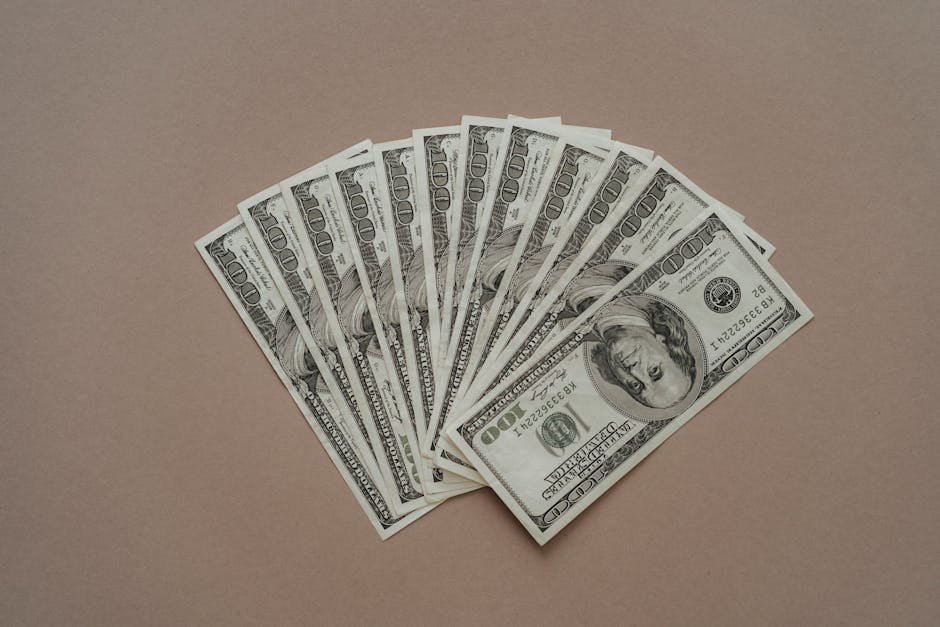
Despite the enormous buying power, a million dollars in one-hundred-dollar bills weighs approximately 22 pounds (10 kilograms) and could fit inside a standard briefcase. This relatively compact size has made high-denomination currency the preferred medium for both legitimate large transactions and, unfortunately, illicit activities. In contrast, the same amount in one-dollar bills would weigh about 2,200 pounds and require a significant vehicle for transport. This weight difference explains why higher denominations exist and why some countries have issued even larger bills for interbank transfers.
5. The Wealthiest Person in History Was an African King
When adjusted for inflation and relative wealth, Mansa Musa of Mali, who ruled in the 14th century, is considered the richest person ever to have lived. His fortune, derived primarily from Mali's vast gold and salt resources, was estimated to be worth over $400 billion in today's currency. During his famous pilgrimage to Mecca in 1324, he distributed so much gold along the route that he caused inflation in Egyptian markets that lasted for years. His wealth was so immense that historians struggle to calculate its true value, with some suggesting it was essentially incalculable by any meaningful standard.
6. Coins Have Ridges for Anti-Counterfeiting Reasons
The distinctive ridges found on the edges of many coins, called reeding, weren't added for grip or aesthetic purposes. This security feature originated when coins were made from precious metals like gold and silver. Dishonest individuals would shave small amounts of metal from smooth-edged coins and sell the shavings while passing the coins at full value. Adding ridges to coin edges made this tampering immediately visible. Although modern coins are no longer made from precious metals, the tradition continues as both a security feature and a way to help visually impaired individuals distinguish between different denominations.
7. The Average Life Span of Currency Is Surprisingly Short
Paper money doesn't last as long as most people imagine. A one-dollar bill typically survives only about 18 months in circulation before becoming too worn to use, while higher denominations last longer because they're handled less frequently. A hundred-dollar bill can last up to 15 years. The constant folding, crumpling, washing, and general wear and tear takes a significant toll on paper currency. This short lifespan means that central banks must constantly print replacement bills, not to increase the money supply, but simply to replace damaged currency that's been removed from circulation.
8. Some Cultures Used Giant Stone Discs as Money
On the island of Yap in Micronesia, people used enormous limestone discs called Rai stones as currency. These stones, some weighing several tons and measuring up to 12 feet in diameter, were quarried from islands hundreds of miles away. The value was determined by the stone's size, quality, and the difficulty involved in obtaining it. Remarkably, the stones rarely moved during transactions; instead, ownership simply changed hands while the stone remained in place, with the community remembering who owned which stone. This system represents perhaps the earliest form of public ledger accounting, conceptually similar to modern blockchain technology.
9. Queen Elizabeth II Appeared on More Currency Than Anyone
Queen Elizabeth II held the record for appearing on more different currencies than any other individual in history. Her portrait graced the money of over 35 different countries during her reign, including Australia, Canada, New Zealand, and numerous Caribbean and Pacific nations, in addition to the United Kingdom. This widespread representation reflected both the historical reach of the British Empire and the continued association of Commonwealth nations. The tradition of featuring monarchs on currency dates back centuries and serves to reinforce the legitimacy and authority of the issuing government.
10. The Dollar Sign Has Mysterious Origins
The iconic dollar sign ($) has unclear origins, with several competing theories about its development. The most widely accepted explanation suggests it evolved from the Spanish or Mexican peso abbreviation "P's" or "Ps," which was gradually written as an S with a vertical line. Another theory proposes it derived from the Pillars of Hercules symbol on Spanish coins, which showed two pillars with a banner wrapped around them. Despite its ubiquity in financial contexts worldwide, no definitive historical documentation proves exactly how this symbol came into being, making it one of the most recognized yet mysterious symbols in the world.
11. Negative Interest Rates Actually Exist
In a counterintuitive twist on traditional banking, some countries have implemented negative interest rates, meaning depositors effectively pay banks to hold their money rather than earning interest. This unusual monetary policy has been employed by central banks in Japan, Switzerland, and several European countries to stimulate economic growth by discouraging saving and encouraging spending and investment. Under negative rates, commercial banks storing money with the central bank must pay for the privilege, a cost sometimes passed on to large depositors. This phenomenon challenges the fundamental assumption that money should grow over time when saved.
12. The Largest Denomination Ever Printed Was 100 Trillion Dollars
Zimbabwe holds the record for printing the highest denomination banknote: a 100 trillion dollar bill. This astronomical figure resulted from hyperinflation that peaked in 2008, when prices doubled approximately every 24 hours. At its worst, Zimbabwe's inflation rate reached an incomprehensible 89.7 sextillion percent month-over-month. The 100 trillion dollar note, when issued, could barely buy a loaf of bread. This extreme case demonstrates how currency can become essentially worthless when governments print money without economic backing, serving as a cautionary tale about the importance of sound monetary policy and fiscal responsibility.
Understanding Money's Complex Nature
These twelve remarkable facts reveal that money is far more than simple paper and metal—it's a complex social construct that has evolved dramatically throughout human history. From ancient clay tablets to modern negative interest rates, from giant stone discs to nearly weightless digital transactions, currency continues to adapt to human needs and technological capabilities. Understanding these unusual aspects of money and wealth provides valuable perspective on our current financial systems and reminds us that economic conventions we take for granted today may seem just as strange to future generations as Rai stones appear to us now.