

1 / 10 Questions
0 Points

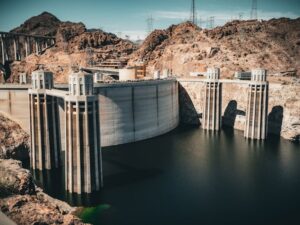
Where is The Hoover Dam, one of America's most famous dams located?

Colorado River

Mississippi River

Rio Grande

Columbia River

Points won
0
Correct score
0%

More Questions

More Articles

Did You Know? 12 Amazing Desert Facts

Did You Know? 12 Amazing Desert Facts

⏱️ 7 min read

Deserts cover approximately one-third of Earth's land surface, yet they remain among the most misunderstood and fascinating ecosystems on our planet. These arid landscapes are far more than barren wastelands—they're dynamic environments teeming with unique adaptations, surprising climate patterns, and geological wonders. From the world's largest hot desert to frozen expanses that receive almost no precipitation, deserts challenge our conventional understanding of life and survival. The following remarkable facts reveal the extraordinary nature of these seemingly inhospitable regions.

Fascinating Desert Characteristics and Records

Antarctica Qualifies as the World's Largest Desert

When most people think of deserts, they imagine scorching sand dunes and blazing sun. However, the world's largest desert is actually Antarctica, spanning approximately 5.5 million square miles. Deserts are technically defined by their lack of precipitation rather than temperature, and Antarctica receives less than two inches of precipitation annually in its interior regions. This frozen desert experiences extreme aridity due to its cold temperatures, which prevent moisture from remaining in the atmosphere. The classification of Antarctica as a desert demonstrates that these ecosystems exist across a far broader range of climates than commonly assumed.

The Sahara Desert Wasn't Always Arid

The Sahara Desert, spanning 3.6 million square miles across North Africa, underwent dramatic transformations throughout history. Between 11,000 and 5,000 years ago, this region was significantly greener, supporting diverse wildlife including hippos, giraffes, and crocodiles. This period, known as the African Humid Period or "Green Sahara," featured extensive vegetation, lakes, and rivers. The transformation from lush savanna to arid desert occurred due to gradual shifts in Earth's orbital patterns, which altered the African monsoon system. Rock art and archaeological evidence throughout the Sahara still depicts this bygone era of abundance.

Desert Temperatures Can Fluctuate Dramatically Within 24 Hours

Desert environments experience some of the most extreme temperature variations on Earth. A single location can reach 100°F (38°C) during the day and plummet to near freezing at night. This dramatic fluctuation occurs because deserts lack moisture and cloud cover, which normally regulate temperature by trapping heat. The dry air and sparse vegetation mean that solar radiation heats the ground intensely during daylight hours, while the absence of insulating humidity allows heat to escape rapidly after sunset. These extreme swings present significant challenges for desert-dwelling organisms.

Only 20 Percent of Deserts Are Covered in Sand

Contrary to popular imagery, vast sand dunes comprise only about 20 percent of the world's desert landscapes. The remaining 80 percent consists of mountains, rocky plateaus, gravel plains, dry valleys, and salt flats. These varied terrains, known collectively as "reg" (stony desert) or "hamada" (rocky plateau), are often more common than sandy regions called "ergs." The misconception about endless sand dunes largely stems from media representations and the iconic status of deserts like the Arabian Desert and portions of the Sahara where sand seas are prominent.

Desert Life and Adaptations

Cacti Store Enough Water to Survive for Years

The iconic saguaro cactus of the Sonoran Desert can absorb and store up to 200 gallons of water during rare rainfall events. These remarkable plants feature accordion-like pleats that expand to accommodate water storage, with their internal tissue acting as a reservoir. The stored water allows cacti to survive extended drought periods lasting multiple years. Additionally, their thick, waxy coating minimizes water loss through evaporation, while their spines provide shade, reduce air flow around the plant's surface, and deter thirsty animals from tapping into their precious water supplies.

The Atacama Desert Has Locations with No Recorded Rainfall

Chile's Atacama Desert holds the distinction of being the driest non-polar desert on Earth, with some weather stations never having recorded rainfall. The average annual precipitation in the driest areas is approximately 0.04 inches, though some regions have gone decades without measurable rain. This extreme aridity results from the desert's position between the Andes Mountains and the Chilean Coast Range, which block moisture from both the Amazon Basin and the Pacific Ocean. Despite these harsh conditions, specialized microorganisms thrive in the soil, and certain plant species have adapted to survive on coastal fog alone.

Desert Animals Have Extraordinary Water Conservation Methods

Desert fauna have evolved remarkable physiological adaptations to minimize water loss and maximize efficiency. The kangaroo rat, native to North American deserts, never needs to drink water throughout its entire life, obtaining all necessary moisture from metabolizing seeds. Camels can drink up to 30 gallons of water in just 13 minutes and store fat (not water) in their humps, which provides energy and metabolic water during long periods without food or drink. Desert tortoises can store up to 40 percent of their body weight in water within their bladder and reabsorb it during drought, while their ability to concentrate urine minimizes water loss.

Deserts Support Surprising Biodiversity

Despite harsh conditions, deserts harbor unexpected biological diversity. The Sonoran Desert alone supports more than 2,000 plant species, 550 vertebrate species, and countless invertebrates. Desert ecosystems have become evolutionary laboratories where species develop unique survival strategies. Many desert animals are crepuscular or nocturnal, avoiding daytime heat entirely. Plants employ various strategies including deep root systems that tap underground water sources, shallow widespread roots that quickly absorb surface moisture, and dormancy periods that allow them to "wait out" unfavorable conditions while remaining alive.

Desert Geography and Climate Patterns

Deserts Exist on Every Continent

Every continent on Earth contains desert regions, including Australia's vast interior deserts covering 70 percent of the continent, Asia's Gobi Desert spanning Mongolia and China, and North America's Great Basin Desert. Even Europe contains semi-arid regions in Spain, though they're smaller and less extreme than deserts on other continents. This global distribution results from various factors including subtropical high-pressure systems, rain shadows created by mountain ranges, cold ocean currents that limit moisture availability, and continental interiors far from oceanic moisture sources. The diversity of desert-forming mechanisms creates dramatically different desert types worldwide.

Desert Soil Can Remain Undisturbed for Millennia

Many desert surfaces feature "desert pavement"—a natural mosaic of closely packed stones that forms over thousands of years. Once established, these surfaces can remain remarkably stable for millennia due to minimal erosion and vegetation growth. Biological soil crusts, composed of cyanobacteria, lichens, mosses, and fungi, colonize desert surfaces and play crucial roles in preventing erosion, fixing nitrogen, and facilitating water infiltration. These fragile crusts can take decades to centuries to develop but can be destroyed by a single footstep or vehicle track, making desert ecosystems particularly vulnerable to human disturbance despite their ancient stability.

Some Deserts Are Expanding While Others Fluctuate

Desertification—the process by which fertile land becomes desert—currently affects vast regions worldwide, with the Sahara Desert expanding southward into the Sahel region at concerning rates. Climate change, overgrazing, deforestation, and poor agricultural practices accelerate this expansion, threatening food security and displacing populations. However, desert boundaries naturally fluctuate over geological timescales due to orbital variations and climate cycles. Understanding both natural variability and human-induced changes is essential for managing vulnerable drylands and supporting communities in transitional zones between deserts and more productive ecosystems.

Desert Varnish Creates Ancient Natural Art

Desert rocks often display mysterious dark coatings called desert varnish or rock varnish, which forms over thousands of years through complex processes involving manganese and iron oxides. Microorganisms, dust, and chemical weathering all contribute to these thin layers that can be only microns thick yet remarkably durable. Ancient peoples recognized desert varnish's stability and created petroglyphs by removing the dark coating to reveal lighter rock beneath, producing artworks that have survived for thousands of years. Scientists also use varnish layers to date rock surfaces and understand climate history, as the varnish accumulation rate varies with environmental conditions.

Conclusion

These twelve remarkable facts barely scratch the surface of desert complexity and wonder. From Antarctica's frozen expanses to the Atacama's extreme aridity, from the Sahara's verdant past to the sophisticated adaptations of desert life, these environments continually challenge our assumptions and reveal nature's extraordinary resilience and creativity. Deserts are not lifeless wastelands but dynamic ecosystems that have shaped human cultures, influenced global climate patterns, and preserved geological and archaeological records spanning millions of years. Understanding and protecting these vulnerable landscapes becomes increasingly important as climate change and human activities alter desert boundaries and threaten the remarkable biodiversity that has evolved to thrive in Earth's most challenging terrestrial environments.

Did You Know? 12 Hidden Facts About the Great Depression

Did You Know? 12 Hidden Facts About the Great Depression

⏱️ 6 min read

The Great Depression stands as one of the most transformative periods in modern history, reshaping economies, societies, and governments across the globe. While most people know about the stock market crash of 1929 and the widespread unemployment that followed, the era holds many lesser-known stories and surprising facts that reveal the full complexity of this tumultuous decade. These hidden details illuminate the human experience, economic oddities, and unexpected developments that defined the 1930s.

Surprising Realities From America's Darkest Economic Hour

1. The Soviet Union Was Actively Recruiting American Workers

While Americans stood in breadlines, the Soviet Union launched an ambitious campaign to recruit skilled American workers to help build their industrial infrastructure. During the early 1930s, approximately 100,000 Americans actually applied to work in the USSR. The Soviets were offering something America couldn't at the time: guaranteed employment. Though only a fraction actually made the journey, this mass interest in relocating to a communist nation reveals the depth of desperation many Americans felt during the Depression's worst years.

2. Monopoly Was Born From Economic Hardship

The iconic board game Monopoly was created and gained massive popularity during the Great Depression. Charles Darrow, an unemployed salesman, developed the game in 1933 and sold handmade versions before Parker Brothers purchased the rights in 1935. Ironically, as real Americans lost their properties and savings, the game allowed them to experience virtual wealth and property ownership, providing an escape from their harsh reality. It became the best-selling game in America by 1936.

3. Birth Rates Plummeted to Historic Lows

The economic crisis had a profound impact on American family planning. Birth rates dropped dramatically during the Depression, with the fertility rate falling to a record low of 18.4 births per 1,000 people in 1933. Many couples delayed marriage or decided against having children due to financial uncertainty. This demographic shift wouldn't be reversed until after World War II, and the low birth rates of the 1930s still represent some of the lowest in recorded American history.

4. The Era Sparked a Massive Return to Rural Living

Contrary to typical migration patterns, the Great Depression reversed urbanization trends. Approximately 33% of urban dwellers moved back to rural areas, often returning to family farms or attempting to become self-sufficient through subsistence farming. This "back to the land" movement represented a desperate attempt to survive by growing one's own food. Cities that had boomed during the 1920s actually saw their populations shrink throughout the 1930s.

5. Miniature Golf Became a National Obsession

During the Depression's darkest days, miniature golf courses sprouted across America like wildflowers. By 1930, there were approximately 25,000 miniature golf courses nationwide. The appeal was simple: it was cheap entertainment, costing only 25 cents per game. The craze was so intense that some estimates suggest 4 million Americans played miniature golf daily at its peak. The boom was short-lived, however, with most courses closing by 1931 as the economic situation worsened.

6. Corporate Profits Recovered Long Before Employment Did

A little-known fact about the Depression's recovery is the stark disparity between corporate profits and employment levels. By 1936-1937, corporate profits had recovered to nearly 1929 levels, yet unemployment remained above 14%. This disconnect revealed that economic recovery didn't automatically translate to job creation, a lesson that would influence labor relations and economic policy for decades to come. Companies had learned to operate with fewer workers, fundamentally changing the employer-employee relationship.

7. Thousands of Schools Closed Across the Country

The educational system suffered devastating blows during the Depression. More than 2,000 schools closed completely, and countless others shortened their academic year or operated on limited schedules. By 1933, over 200,000 teachers had not received their salaries. Some schools in rural areas operated for only three or four months per year. Teachers sometimes worked for food, housing, or simply the promise of eventual payment, demonstrating extraordinary dedication despite impossible circumstances.

8. The Depression Triggered a Major Health Crisis

While starvation was less common than popular memory suggests, malnutrition-related diseases skyrocketed. Cases of pellagra, a disease caused by niacin deficiency, increased by 300% in some states. Rickets, caused by vitamin D deficiency, also became more prevalent. Ironically, some health statistics actually improved during the Depression, including declining mortality rates in certain demographics, partly attributed to decreased alcohol consumption during Prohibition and reduced workplace accidents due to lower industrial activity.

9. Barter Economies Emerged in Hundreds of Communities

As currency became scarce, organized barter systems developed across America. At least 30 major cities established formal barter exchanges where people could trade goods and services without money. In some communities, local scrip or alternative currencies were created. Doctors accepted chickens as payment, teachers were paid in produce, and neighbors traded skills and labor. These parallel economies demonstrated American ingenuity and community resilience in the face of monetary system failure.

10. The Federal Government Became the Nation's Largest Employer

Through New Deal programs like the Civilian Conservation Corps (CCC), Works Progress Administration (WPA), and others, the federal government employed more people than any private entity in American history up to that point. By 1936, approximately one in five American households had at least one member working for a federal relief program. This unprecedented expansion of government employment fundamentally altered Americans' relationship with federal authority and set precedents for government intervention in economic crises.

11. Dust Bowl Refugees Faced Discrimination in California

When approximately 2.5 million people fled the Dust Bowl states, particularly Oklahoma, Arkansas, and Texas, they encountered unexpected hostility in their destination states. California actually established border patrols in 1936 to turn back indigent migrants, an action later ruled unconstitutional. "Okies," as they were derogatorily called, faced discrimination in housing, employment, and even education. Some California communities banned Dust Bowl refugees from their towns entirely, revealing a dark side of the migration crisis.

12. Library Usage Soared to Unprecedented Levels

As Americans sought free entertainment and self-education, public libraries experienced dramatic increases in patronage. Circulation rates increased by over 40% in many cities between 1929 and 1933. People read to escape their circumstances, to learn new skills for potential employment, or simply because it was free. Some libraries actually had to limit the number of books patrons could borrow because demand exceeded supply. This trend demonstrated that intellectual and cultural pursuits remained important even amid severe economic hardship.

Understanding the Depression's Complex Legacy

These hidden facts reveal that the Great Depression was far more than an economic catastrophe defined by unemployment statistics and soup kitchens. It was a period that reshaped American society in fundamental ways, from family planning decisions to entertainment choices, from migration patterns to the role of government. The era sparked both the worst and best of human behavior—desperation and discrimination alongside ingenuity and community solidarity. Understanding these lesser-known aspects provides crucial context for comprehending how the Depression transformed America and why its lessons continue to influence economic policy, social programs, and cultural memory nearly a century later. The decade's impact extended far beyond financial markets, touching every aspect of American life in ways both obvious and subtle.