








⏱️ 7 min read
Ancient Greece stands as one of history's most influential civilizations, laying the groundwork for Western philosophy, democracy, science, and culture. While many people know about famous figures like Socrates and Alexander the Great, the depth and complexity of Greek civilization extends far beyond common knowledge. From surprising social customs to revolutionary inventions, the ancient Greeks developed practices and ideas that continue to astound modern scholars and historians.
Remarkable Discoveries About Ancient Greek Civilization
1. Democracy Was More Direct Than Modern Systems
Ancient Athenian democracy functioned in a radically different way from contemporary democratic systems. Rather than electing representatives, citizens participated directly in governmental decisions. The Assembly, or Ekklesia, met approximately 40 times per year, and any male citizen could attend, speak, and vote on legislation. Additionally, most public officials were selected by lottery rather than election, as the Greeks believed random selection prevented corruption and ensured equal opportunity for participation in governance.
2. The Olympic Games Included Unusual Events
While modern Olympics feature familiar sports, ancient Greek games contained events that would seem bizarre today. The pankration combined elements of boxing and wrestling with almost no rules—only biting and eye-gouging were prohibited. Another event, the hoplitodromos, required athletes to run wearing full military armor weighing up to 50 pounds. Athletes competed completely naked, and married women were forbidden from attending under penalty of death.
3. Greek Fire Was an Ancient Superweapon
The Byzantine Greeks developed an incendiary weapon so effective and secretive that its exact composition remains unknown today. Greek fire could burn on water, making it devastating in naval warfare. The substance was sprayed through siphons mounted on ships, creating walls of flame that terrorized enemies. The formula was such a closely guarded state secret that it was eventually lost to history entirely.
4. Ancient Greeks Invented the First Computer
The Antikythera mechanism, discovered in a shipwreck in 1901, dates to approximately 100 BCE and represents an ancient analog computer of stunning sophistication. This bronze device contained at least 30 meshing gears and could predict astronomical positions, eclipses, and the timing of the Olympic Games years in advance. Its technological complexity wouldn't be matched for over a thousand years, and scientists continue studying it to understand its full capabilities.
5. Sparta's Military Training Began at Birth
The Spartan agoge system represented one of history's most extreme military training programs. Newborn boys were inspected by elders, and those deemed weak were abandoned on mountaintops. At age seven, accepted boys were removed from their families to begin brutal military education. Training included deliberate undernourishment to encourage stealing, barefoot marching, minimal clothing in all weather, and ritualized combat. This system created history's most feared warriors but at tremendous human cost.
6. Women Had More Rights in Sparta Than Athens
While Athenian women lived under strict patriarchal control with limited rights and freedoms, Spartan women enjoyed remarkable autonomy. They could own and inherit property, received physical education, and managed estates while men served in the military. Spartan women were literate, could speak freely in public, and exercised considerably more influence over family and social decisions than their Athenian counterparts.
7. The Greeks Practiced Ostracism as Political Policy
Ancient Athens employed a unique democratic mechanism called ostracism to prevent tyranny. Once yearly, citizens could vote to exile any person for ten years without trial or confiscation of property. Voters scratched names onto pottery shards called ostraka, and if any individual received 6,000 votes, they had ten days to leave Athens. This system removed potentially dangerous political figures while avoiding the violence of execution or permanent banishment.
8. Ancient Greeks Had Sophisticated Plumbing Systems
The Palace of Knossos in Crete featured remarkably advanced plumbing installed around 1700 BCE. The complex included flush toilets, running water, bathtubs, and an intricate sewage system with terra-cotta pipes. Hot and cold water systems existed in wealthy homes, and aqueducts transported water across vast distances. Some Greek cities had better sanitation infrastructure than many European cities would possess two thousand years later.
9. Theater Performances Were Religious Obligations
Greek theater emerged from religious festivals honoring Dionysus, the god of wine and ecstasy. Attending dramatic performances wasn't merely entertainment but a civic and religious duty. The state provided financial assistance so even poor citizens could attend. These massive productions featured elaborate masks, mechanical devices for special effects, and could accommodate audiences of up to 15,000 people in enormous open-air amphitheaters with acoustics so precise that whispers on stage could be heard in the back rows.
10. Greeks Calculated Earth's Circumference with Remarkable Accuracy
Around 240 BCE, the mathematician Eratosthenes calculated Earth's circumference using only shadows, geometry, and brilliant reasoning. By measuring shadow angles in two Egyptian cities at noon on the summer solstice and knowing the distance between them, he calculated the planet's circumference at approximately 250,000 stadia—within 2-15% of the actual measurement depending on which stadium length he used. This achievement came 1,700 years before European scholars accepted that Earth was round.
11. Ancient Greek Medicine Was Surprisingly Advanced
Greek physicians like Hippocrates revolutionized medicine by rejecting supernatural explanations for disease and seeking natural causes instead. Greek doctors performed successful cataract surgeries, used antiseptics, understood the importance of diet and exercise, and documented detailed case studies. The Hippocratic Oath's ethical principles still guide medical practice today. Greek anatomical knowledge, gained partly through Alexandria's controversial human dissections, wouldn't be surpassed until the Renaissance.
12. Philosophers Were Celebrity Athletes
Several famous Greek philosophers were accomplished athletes who competed at major games. Plato's actual name was Aristocles—"Plato" was a nickname meaning "broad," possibly referring to his wrestler's physique or broad forehead. He allegedly competed at the Isthmian Games. Pythagoras won boxing competitions at the Olympic Games, combining physical prowess with mathematical genius in a way that exemplified Greek ideals of balanced excellence.
13. Greek Warships Revolutionized Naval Warfare
The trireme warship represented ancient Greece's aircraft carrier—a technological marvel that dominated Mediterranean warfare for centuries. These vessels featured three rows of oars manned by 170 rowers who could propel the ship at speeds up to 9 knots. The bronze-sheathed ram at the prow could puncture enemy hulls below the waterline. Trireme crews trained extensively to execute complex maneuvers, and Athens maintained a fleet of over 300 such vessels at its peak.
14. Ancient Greeks Pioneered Modern Philosophy
Greek philosophers established foundational questions and methodologies that define Western philosophy today. Socrates developed the Socratic method of questioning to expose contradictions and stimulate critical thinking. Plato explored ethics, politics, and metaphysics through his Theory of Forms. Aristotle created formal logic, studied natural sciences systematically, and established principles of dramatic structure. Their works remain required reading in philosophy departments worldwide, demonstrating ideas' timeless relevance conceived over two millennia ago.
15. Greek Mathematics Laid Modern Foundations
Ancient Greek mathematicians made discoveries that underpin modern science and technology. Euclid's "Elements" systematized geometry in a way still taught today. Pythagoras established mathematical relationships in music and geometry. Archimedes calculated pi, invented calculus concepts, and discovered principles of buoyancy and leverage. Greek mathematical rigor—proving theorems through logical deduction rather than empirical observation—established standards for mathematical proof that remain unchanged.
16. Food and Dining Had Strict Social Rules
Greek dining customs, particularly the symposium, followed elaborate protocols. These male-only drinking parties featured intellectual discussions, poetry, music, and philosophical debate. Wine was always diluted with water—drinking it straight marked someone as barbaric. Guests reclined on couches, and social hierarchy determined positioning. The symposium served as an important venue for political networking, artistic performance, and the transmission of cultural values among the elite.
17. Greek Colonies Spread Across Three Continents
Ancient Greeks established colonies throughout the Mediterranean and Black Sea regions, from Spain to the Crimea, from North Africa to southern France. These weren't imperial conquests but independent city-states maintaining cultural and trade connections with their mother cities. Greek colonies spread Hellenic culture, language, and customs across vast territories. Major cities like Marseille, Naples, and Byzantium (Istanbul) began as Greek colonies, demonstrating the civilization's extraordinary geographic and cultural reach.
The Enduring Legacy of Ancient Greece
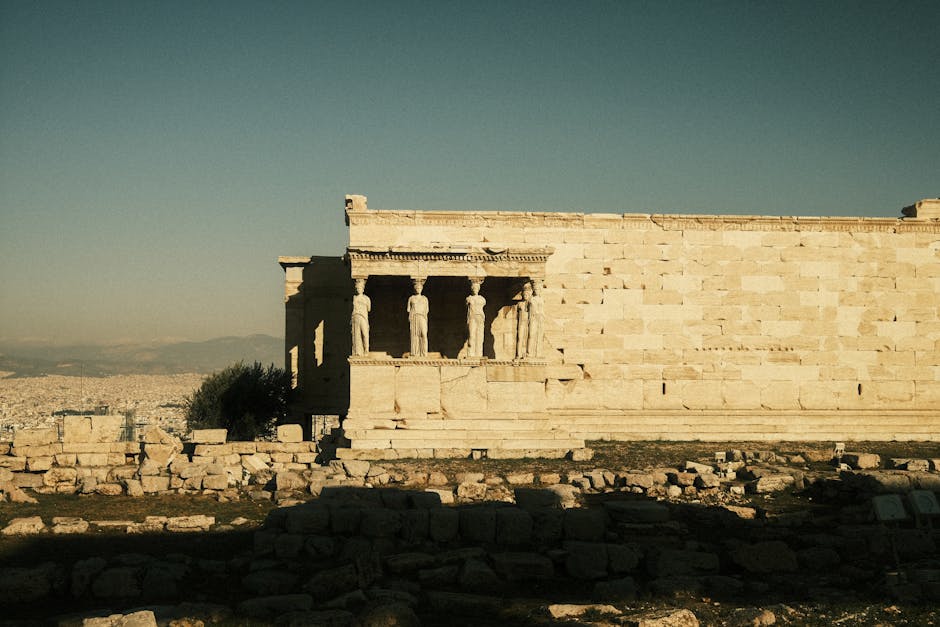
These seventeen remarkable facts merely scratch the surface of ancient Greek civilization's complexity and innovation. From governmental systems to scientific discoveries, from military tactics to philosophical inquiry, the Greeks pioneered developments that shaped human history. Their achievements in democracy, mathematics, medicine, engineering, and the arts established foundations upon which later civilizations built. The ancient Greeks proved that human creativity, reason, and ambition could transform the world—a lesson that resonates just as powerfully today as it did thousands of years ago in the shadow of the Acropolis.