






⏱️ 7 min read
Throughout human history, brave individuals have ventured into the unknown, mapping uncharted territories, connecting distant civilizations, and expanding our understanding of the world. These remarkable explorers risked their lives to push the boundaries of human knowledge, enduring harsh conditions, hostile environments, and countless dangers. Their discoveries changed the course of history, reshaped global trade routes, and fundamentally altered how humanity viewed the planet. From ancient voyagers who crossed vast oceans to modern adventurers who conquered the poles, these ten explorers left an indelible mark on civilization.
The Pioneering Spirits Who Changed Our World
1. Marco Polo: The Venetian Who Opened the East
Marco Polo's epic 24-year journey through Asia in the 13th century remains one of the most influential expeditions in history. Traveling along the Silk Road with his father and uncle, Polo reached the court of Kublai Khan in China, where he spent 17 years serving the Mongol emperor. His detailed accounts of Asian culture, technology, and geography in "The Travels of Marco Polo" introduced Europeans to the wonders of the East, including paper money, coal, and advanced postal systems. Though some historians debate the accuracy of certain claims, his writings inspired generations of explorers, including Christopher Columbus, and helped establish crucial trade connections between Europe and Asia.
2. Christopher Columbus: The Navigator Who Connected Two Worlds
In 1492, Christopher Columbus embarked on a voyage that would forever alter world history. Sailing under the Spanish flag, he sought a western route to Asia but instead encountered the Americas. Though Norse explorer Leif Erikson had reached North America centuries earlier, Columbus's four voyages across the Atlantic Ocean initiated widespread European exploration and colonization of the Americas. His expeditions established permanent transatlantic connections, leading to the Columbian Exchange—a massive transfer of plants, animals, culture, human populations, and diseases between the Eastern and Western Hemispheres. While his legacy is controversial due to the devastating impact on indigenous populations, his voyages undeniably marked a turning point in global history.
3. Ferdinand Magellan: First to Circumnavigate the Globe
Ferdinand Magellan commanded the first expedition to successfully circumnavigate the Earth, proving definitively that the planet was round and much larger than previously estimated. Setting sail from Spain in 1519 with five ships, Magellan navigated through the treacherous strait at South America's southern tip—now bearing his name—and crossed the vast Pacific Ocean. Though Magellan himself died in the Philippines in 1521, his expedition continued under Juan Sebastián Elcano's leadership, with one ship and 18 survivors completing the journey in 1522. This three-year voyage revolutionized geographical understanding and demonstrated the interconnectedness of Earth's oceans.
4. Zheng He: China's Great Admiral of the Treasure Fleet
Between 1405 and 1433, Chinese Admiral Zheng He led seven massive naval expeditions throughout the Indian Ocean, commanding fleets that dwarfed anything Europe would produce for centuries. His enormous "treasure ships" visited Southeast Asia, India, the Persian Gulf, and East Africa, establishing diplomatic relations and trade networks that extended Chinese influence across the maritime world. Some vessels in his fleet measured over 400 feet long—far larger than Columbus's ships decades later. Zheng He's voyages demonstrated China's advanced nautical technology and organizational capabilities, though his explorations were largely forgotten after China turned inward following his death.
5. James Cook: Master Cartographer of the Pacific
Captain James Cook's three voyages in the 18th century revolutionized European knowledge of the Pacific Ocean and produced remarkably accurate maps that remained standard for generations. Cook was the first European to extensively map Newfoundland, New Zealand, and Australia's eastern coastline. He also made the first recorded European contact with Hawaii and successfully prevented scurvy among his crews through dietary innovations. Cook's meticulous scientific approach, including collaboration with botanists and astronomers, set new standards for exploration. His detailed charts and observations of indigenous cultures provided invaluable geographical and anthropological knowledge, though his expeditions also facilitated European colonization of the Pacific.
6. David Livingstone: Explorer of Africa's Interior
Scottish missionary and explorer David Livingstone spent over three decades exploring the African continent during the 19th century. He became the first European to cross the width of southern Africa and documented the Zambezi River and Victoria Falls. Livingstone's extensive travels through previously unmapped regions provided Europeans with detailed knowledge of African geography, peoples, and resources. While he opposed the slave trade and advocated for African welfare, his explorations inadvertently facilitated European colonization of Africa. His famous encounter with journalist Henry Morton Stanley, who found the long-missing explorer with the words "Dr. Livingstone, I presume?" became one of history's most iconic moments.
7. Roald Amundsen: Conqueror of Both Poles
Norwegian explorer Roald Amundsen achieved what many considered impossible by becoming the first person to reach both the South Pole and, arguably, the North Pole regions. In 1911, Amundsen's carefully planned expedition beat British explorer Robert Falcon Scott to the South Pole by over a month. Amundsen's success stemmed from his willingness to learn from indigenous Arctic peoples, his use of sled dogs rather than ponies, and meticulous preparation. He also completed the first navigation of the Northwest Passage, a sea route through the Arctic that explorers had sought for centuries. Amundsen's polar achievements represented the culmination of the Heroic Age of Antarctic Exploration.
8. Ibn Battuta: Medieval Islam's Greatest Traveler
Moroccan scholar Ibn Battuta traveled approximately 75,000 miles throughout the Islamic world and beyond during the 14th century—a distance exceeding Marco Polo's journeys. Over nearly three decades, he visited North Africa, the Middle East, India, Southeast Asia, and China, documenting the customs, politics, and geography of the medieval Islamic world. His detailed account, the "Rihla," provides invaluable insights into medieval societies and trade networks. Ibn Battuta served as a judge in Delhi, survived shipwrecks and bandits, and even visited the Maldives and West Africa. His travels demonstrated the vast interconnectedness of medieval Islamic civilization.
9. Lewis and Clark: Mapping America's Western Frontier
Meriwether Lewis and William Clark led the Corps of Discovery Expedition from 1804 to 1806, traversing the newly acquired Louisiana Territory to reach the Pacific Ocean. Commissioned by President Thomas Jefferson, their journey covered approximately 8,000 miles, documenting hundreds of previously unknown plant and animal species, mapping the terrain, and establishing relations with Native American tribes. The expedition's success depended heavily on Sacagawea, a Shoshone woman whose guidance, translation skills, and presence facilitated peaceful encounters. The detailed journals and maps produced by the expedition opened the American West to further exploration and settlement, fundamentally shaping the nation's westward expansion.
10. Ernest Shackleton: Antarctic Survival Legend
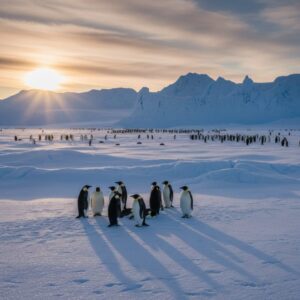
Sir Ernest Shackleton's failed 1914-1916 Imperial Trans-Antarctic Expedition became history's greatest survival story. When his ship, Endurance, became trapped and crushed by Antarctic ice, Shackleton led his 27-man crew through an 800-mile journey across ice floes and treacherous seas in lifeboats. He then crossed South Georgia Island's mountainous interior to reach a whaling station and organize rescue operations. Remarkably, every crew member survived. Though Shackleton never achieved his goal of crossing Antarctica, his leadership, determination, and refusal to abandon his men made him an enduring symbol of courage and resilience in the face of impossible odds.
The Enduring Legacy of Exploration
These ten explorers represent humanity's relentless drive to discover, understand, and map our world. Their journeys expanded geographical knowledge, facilitated cultural exchanges, and inspired countless others to push beyond known boundaries. While modern technology has mapped nearly every corner of Earth, the spirit these explorers embodied continues in today's scientists exploring ocean depths, space, and the microscopic world. Their stories remind us that human curiosity and courage can overcome seemingly insurmountable obstacles, forever changing our understanding of the world and our place within it.