







⏱️ 5 min read
While the samurai warrior class is often depicted as an exclusively male domain in popular culture, historical records reveal a fascinating truth: women not only participated in samurai warfare but held respected positions as skilled warriors in feudal Japan. These female warriors, known as onna-bugeisha, trained in combat techniques, defended their homes and honor, and left an indelible mark on Japanese military history that has only recently begun to receive broader recognition.
The Onna-Bugeisha: Japan's Female Warriors
The onna-bugeisha were members of the Japanese nobility who received martial training and participated in combat alongside their male counterparts. Unlike the popular misconception that samurai culture excluded women entirely, these warriors were an integral part of feudal Japanese society from as early as the 12th century through the end of the samurai era in the 19th century.
The term "onna-bugeisha" translates literally to "female martial artist," and these women were expected to protect their households, family honor, and territory when necessary. They weren't merely symbolic figures or rare exceptions—DNA analysis of remains from ancient battle sites has revealed that approximately 30% of the bodies excavated showed female skeletal structures, suggesting that women's participation in warfare was far more common than previously believed.
Weapons and Training of Female Samurai
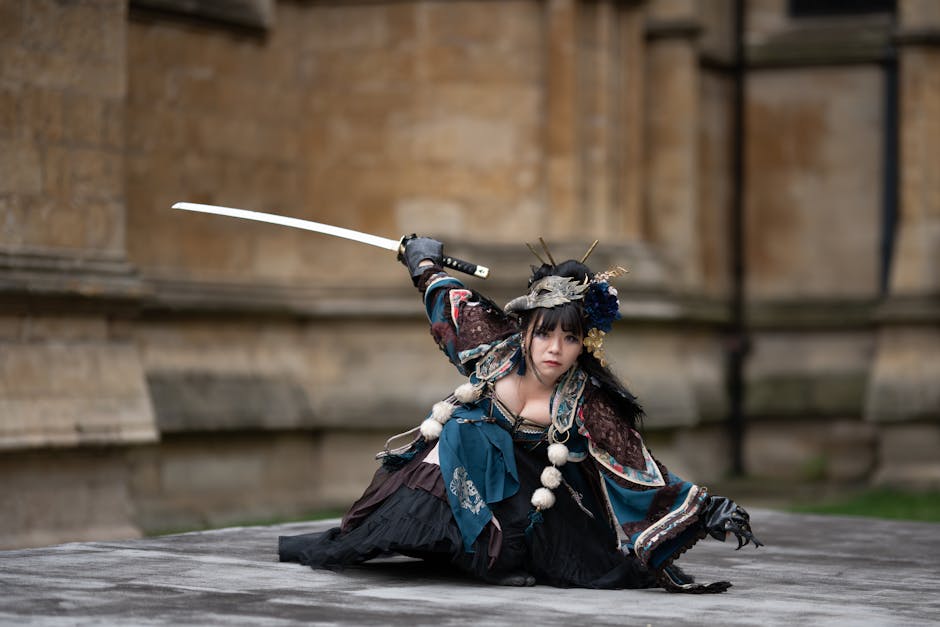
Female warriors typically specialized in the naginata, a pole weapon with a curved blade at the end, which became closely associated with women of the samurai class. The naginata's design offered several advantages: its length provided reach and leverage, compensating for potential differences in physical strength, while its sweeping motions were highly effective against multiple opponents or mounted warriors.
However, onna-bugeisha were not limited to just one weapon. Their training included:
- Tantojutsu: the art of knife fighting, using a small blade that could be concealed
- Kyujutsu: archery, which required precision and discipline
- Tessenjutsu: combat with war fans, which could be used both defensively and offensively
- Various hand-to-hand combat techniques adapted for self-defense
Training began in childhood for daughters of samurai families, just as it did for sons. They learned not only physical combat skills but also strategy, tactics, and the philosophical underpinnings of bushido—the samurai code of honor.
Legendary Female Samurai Warriors
Tomoe Gozen
Perhaps the most celebrated female warrior in Japanese history, Tomoe Gozen served during the Genpei War (1180-1185). Historical texts describe her as "exceptionally beautiful, a fearsome archer, and a swordswoman worth a thousand warriors." She fought in the Battle of Awazu in 1184, where accounts describe her beheading an enemy warrior after capturing him. Her legendary status has been preserved in "The Tale of the Heike," one of Japan's most important historical epics.
Nakano Takeko
Leading an army of female warriors during the Boshin War in 1868, Nakano Takeko demonstrated exceptional courage during the Battle of Aizu. She commanded a unit of approximately 20 women, fighting with the naginata against imperial Japanese forces equipped with modern weaponry. Despite being mortally wounded by a gunshot, her legacy lived on, and she became a symbol of female warrior spirit. Today, her memory is honored annually at the Aizu Autumn Festival.
Hangaku Gozen
Renowned for her defensive leadership during the Kennin Uprising in 1201, Hangaku Gozen commanded 3,000 warriors at Torisakayama Castle. She was celebrated for her archery skills and defensive strategies, holding off government forces for over a month before being captured. Her martial prowess earned her respect even from her captors.
The Social Role and Expectations
Female samurai occupied a unique position in Japanese society. While they were trained warriors, they also managed household affairs and were responsible for protecting the home during their husbands' absences. This dual role required both martial prowess and administrative capability.
During the peaceful Edo period (1603-1868), when actual combat became less frequent, the role of onna-bugeisha evolved. Martial training remained important for daughters of samurai families, but the emphasis shifted toward preparation for defending the home rather than battlefield service. Nevertheless, the tradition of training noble women in martial arts continued, preserving these skills through generations.
Why Their History Was Overlooked
Several factors contributed to the historical obscurity of female samurai warriors. The gradual consolidation of male-dominated power structures during the Edo period increasingly restricted women's roles. As Japan modernized during the Meiji Restoration, Western influences brought Victorian-era gender expectations that further marginalized historical accounts of female warriors.
Additionally, much of samurai history was recorded and preserved by male chroniclers who may have minimized or omitted women's contributions. The romanticization of the samurai in later periods often focused exclusively on male warriors, creating the persistent stereotype that continues today.
Modern Recognition and Legacy
Contemporary historians and archaeologists have worked to restore the onna-bugeisha to their rightful place in Japanese history. Archaeological evidence, including the DNA analysis mentioned earlier, has provided concrete proof of women's participation in battles. Academic research has also uncovered numerous historical documents, diaries, and records that reference female warriors and their accomplishments.
Today, the legacy of female samurai serves as an inspiration and a reminder that women have always been warriors, defenders, and leaders throughout history. Their story challenges modern assumptions about historical gender roles and enriches our understanding of feudal Japanese society. The onna-bugeisha demonstrate that courage, honor, and martial skill transcend gender, offering a more complete and accurate picture of Japan's fascinating warrior culture.