







1 / 10 Questions
0 Points

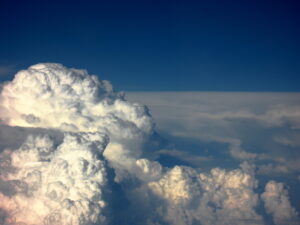
What are clouds made of?

Water droplets or ice crystals

Air only

Cotton

Smoke

Points won
0
Correct score
0%

More Questions

More Articles

Top 10 Weirdest Art Installations in the World

Top 10 Weirdest Art Installations in the World

⏱️ 6 min read

Contemporary art has always pushed boundaries, challenged perceptions, and occasionally left viewers scratching their heads in bewilderment. Around the globe, artists have created installations that defy conventional understanding, provoke intense reactions, and blur the lines between genius and absurdity. These remarkable works demonstrate that art isn't always meant to be beautiful or easily understood—sometimes it's meant to disturb, perplex, and force us to question our assumptions about what art can be.

Extraordinary Installations That Challenge Convention

1. Maurizio Cattelan's Golden Toilet at the Guggenheim

Italian artist Maurizio Cattelan created one of the most talked-about installations in recent memory with "America," a fully functional toilet cast in 18-karat gold. Installed at New York's Guggenheim Museum in 2016, this lavish restroom fixture was available for public use, with visitors waiting in line for up to two hours to experience it. The piece served as a pointed commentary on wealth inequality, excess, and the American dream. The artwork made headlines again in 2019 when it was stolen from Blenheim Palace in England, where it had been installed as part of an exhibition. The audacious theft only added to the installation's legendary status in the contemporary art world.

2. The Museum of Old and New Art's Digestive System Machine

Belgian artist Wim Delvoye created "Cloaca Professional," a room-sized installation that literally replicates the human digestive system. Housed at Tasmania's Museum of Old and New Art, this complex machine is fed food twice daily and processes it through a series of glass containers filled with enzymes and bacteria, ultimately producing fecal matter. The installation meticulously mimics every stage of human digestion, complete with the associated smells. While many visitors find the concept repulsive, Delvoye's work raises profound questions about bodily functions, the nature of consumption, and what we consider acceptable to display in artistic contexts.

3. Gregor Schneider's Die Familie Schneider

German artist Gregor Schneider's "Die Familie Schneider" presents visitors with an unsettling experience inside a seemingly ordinary house. The installation features a family of naked individuals—men, women, and children—standing motionless in domestic spaces. Visitors walk through the home encountering these silent, nude figures in bathrooms, bedrooms, and living areas. The piece explores themes of voyeurism, privacy, and the uncomfortable boundaries between public and private life. The installation's disturbing nature has sparked considerable controversy and debate about artistic boundaries and the viewer's role in potentially exploitative art.

4. Paul McCarthy's Inflatable Sculptures

American artist Paul McCarthy's giant inflatable sculptures have caused public uproar in multiple cities. His controversial work "Tree," a massive green inflatable structure installed in Paris's Place Vendôme in 2014, was vandalized and deflated after many observers noted its resemblance to an adult toy rather than a Christmas tree. McCarthy has created numerous such provocative inflatables, including oversized representations of cartoon characters in compromising positions. His work deliberately confronts viewers with uncomfortable imagery, challenging the sanitized presentation of popular culture and forcing conversations about censorship and artistic freedom.

5. The Canceled Damien Hirst Childbirth Installation

Damien Hirst's proposed installation featuring a woman giving birth in a gallery setting represents one of the most controversial art concepts ever conceived, though it was ultimately never realized. The British artist intended to have an actual woman give birth in front of an audience as a live art piece. The proposal sparked intense ethical debates about consent, exploitation, and the limits of performance art. While the installation never materialized, the concept itself became a landmark moment in discussions about what constitutes art and where ethical boundaries should exist in the pursuit of artistic expression.

6. Hermann Nitsch's Orgien Mysterien Theater

Austrian artist Hermann Nitsch's "Orgien Mysterien Theater" performances involve ritualistic displays using animal blood, carcasses, and crucifixion imagery. These multi-day events feature performers covered in blood, handling animal organs, and engaging in ceremonial activities that many find deeply disturbing. Nitsch describes his work as a form of spiritual purification and catharsis, drawing on ancient religious rituals and attempting to access primal human experiences. The installations have been condemned by animal rights activists and religious groups while being defended by others as legitimate explorations of mortality, suffering, and transcendence.

7. Yayoi Kusama's Infinity Mirror Rooms

Japanese artist Yayoi Kusama's "Infinity Mirror Rooms" create disorienting experiences through endless reflections of lights and patterns. Visitors enter small, mirrored chambers filled with LED lights, polka dots, or pumpkin sculptures that appear to extend infinitely in all directions. The effect is simultaneously beautiful and psychologically overwhelming, inducing feelings of endlessness and existential contemplation. Kusama, who has lived voluntarily in a psychiatric institution for decades, channels her hallucinations and mental health experiences into these immersive environments. The rooms have become Instagram sensations, though their popularity somewhat contradicts their original intention to express isolation and mental anguish.

8. Anselm Kiefer's Lead Book Libraries

German artist Anselm Kiefer's massive installations featuring libraries of lead books create haunting environments filled with unreadable, deteriorating knowledge. These monumental sculptures consist of shelves holding hundreds of handmade books cast in lead, a toxic material associated with decay and historical darkness. The installations reference the destruction of libraries throughout history, the weight of collective memory, and the fragility of human knowledge. The sheer physical mass and oppressive presence of these lead volumes creates an atmosphere of melancholy and lost wisdom, forcing viewers to confront humanity's relationship with its own history.

9. Carsten Höller's Slide Installations

Belgian artist Carsten Höller transforms museums and galleries into playgrounds with his massive tubular slides that transport visitors between floors. These functional sculptures challenge the traditional behavioral expectations of gallery spaces, encouraging adults to engage in childlike play within serious cultural institutions. The installations explore themes of risk, trust, and altered states of consciousness, as the disorienting experience of sliding through darkness creates a temporary loss of control. While less obviously "weird" than other entries on this list, the slides fundamentally disrupt the relationship between viewer and artwork by making the audience active participants rather than passive observers.

10. Piero Manzoni's Canned Artist Excrement

Italian conceptual artist Piero Manzoni created one of art history's most infamous works in 1961 with "Merda d'artista" (Artist's Shit), consisting of 90 tin cans allegedly containing his own excrement. Each can was labeled, numbered, and sold for the equivalent weight in gold. The work serves as a scathing critique of the art market, suggesting that collectors will buy anything bearing an artist's name, regardless of actual content or value. Decades later, the cans have sold for many times their weight in gold, proving Manzoni's point about art world absurdity. Some cans have been opened for analysis, with disputed results about their actual contents, adding another layer of uncertainty to this provocative piece.

The Purpose Behind Perplexing Art

These ten installations demonstrate that contemporary art's purpose extends far beyond aesthetic pleasure. By confronting viewers with uncomfortable, confusing, or outright bizarre experiences, artists challenge us to examine our assumptions about value, beauty, propriety, and meaning. Whether through bodily functions, controversial materials, or disorienting experiences, these works prove that art's power lies not in making us comfortable but in forcing us to think, feel, and question. The weirdest art installations remind us that creativity knows no boundaries and that sometimes the most memorable artistic experiences are those that leave us most perplexed.
15 Fascinating Facts About World War II

15 Fascinating Facts About World War II

⏱️ 7 min read

World War II remains one of the most significant and transformative conflicts in human history, spanning from 1939 to 1945 and affecting virtually every corner of the globe. While many people are familiar with the basic timeline and major battles, the war contains countless lesser-known stories, surprising statistics, and remarkable events that reveal the true scope and complexity of this global conflict. These intriguing aspects of the war shed light on the innovation, courage, and sometimes bizarre circumstances that emerged during this tumultuous period.

Remarkable Facts from the Second World War

1. The Youngest Serviceman Was Only 12 Years Old

Calvin Graham enlisted in the U.S. Navy in 1942 at just 12 years old, making him the youngest known American serviceman in World War II. He lied about his age to join and served aboard the USS South Dakota, where he was wounded during the Naval Battle of Guadalcanal. His true age was eventually discovered, leading to his discharge, but his story exemplifies the desperate desire many felt to serve their country during the war.

2. The Soviet Union Suffered Staggering Casualties

The Soviet Union bore the heaviest burden of World War II casualties, losing an estimated 27 million people, including both military personnel and civilians. This represented roughly 14% of the Soviet Union's pre-war population. By comparison, the United States lost approximately 420,000 people. The Eastern Front was by far the deadliest theater of the war, with battles like Stalingrad and the Siege of Leningrad resulting in millions of deaths.

3. Hitler's Nephew Fought for the United States

William Patrick Hitler, Adolf Hitler's half-nephew, actually joined the U.S. Navy and fought against Nazi Germany. Born in Liverpool to Adolf's half-brother Alois, William initially tried to benefit from his uncle's position but eventually fled to America in 1939. After some initial reluctance from American authorities, he was allowed to enlist in 1944 and served as a pharmacist's mate, even receiving a Purple Heart.

4. The Ghost Army Deceived Enemy Forces

The 23rd Headquarters Special Troops, better known as the "Ghost Army," was a tactical deception unit that used inflatable tanks, sound effects, fake radio transmissions, and theatrical techniques to mislead German forces about Allied positions and strength. This creative unit of artists, designers, and sound engineers conducted over 20 battlefield deceptions between 1944 and 1945, potentially saving thousands of lives by drawing enemy attention away from actual Allied operations.

5. Carrots and British Night Fighter Propaganda

The British government promoted the idea that carrots improved night vision to explain why their pilots were so successful at shooting down German bombers in the dark. In reality, they were concealing the existence of their new airborne radar technology. This propaganda campaign was so effective that the carrot myth persists in popular culture today, and Germans never discovered the real reason for British pilots' nocturnal success.

6. Japan's Balloon Bomb Campaign Reached America

Between November 1944 and April 1945, Japan launched approximately 9,000 hydrogen balloon bombs carrying explosives toward North America, relying on the jet stream to carry them across the Pacific Ocean. About 1,000 reached the continent, with the only casualties occurring in Oregon when a pregnant woman and five children were killed after discovering one. The U.S. government maintained strict media censorship about the balloons to avoid causing panic and deny Japan intelligence about their effectiveness.

7. Wojtek the Soldier Bear Served in the Polish Army

The Polish II Corps officially enlisted a Syrian brown bear named Wojtek, who was found as a cub in Iran. Wojtek became famous for carrying ammunition crates during the Battle of Monte Cassino in Italy, working alongside soldiers and never dropping a single crate. He was eventually promoted to the rank of corporal and became the official emblem of the 22nd Artillery Supply Company.

8. The First Computer Was Built to Break Codes

Colossus, considered by many to be the world's first programmable electronic digital computer, was built by British codebreakers at Bletchley Park to help decrypt German military communications. The existence of Colossus remained classified until the 1970s due to its importance to signals intelligence. This groundbreaking machine processed information far faster than human analysts could and played a crucial role in Allied intelligence operations.

9. Switzerland Shot Down Both Allied and Axis Aircraft

Despite maintaining neutrality, Switzerland's air force engaged in combat throughout the war, shooting down both German and Allied aircraft that violated Swiss airspace. Between 1940 and 1945, Swiss fighters downed at least 11 Luftwaffe aircraft. However, after Hitler threatened invasion, Switzerland reduced interceptions of German planes while continuing to engage Allied aircraft. By war's end, dozens of aircraft from both sides had been downed over neutral Swiss territory.

10. The Manhattan Project Cost Nearly $2 Billion

The Manhattan Project, America's secret atomic bomb program, cost approximately $2 billion in 1940s dollars—equivalent to roughly $28 billion today. This massive expenditure made it one of the most expensive scientific projects ever undertaken at the time. The project employed over 130,000 people across multiple secret sites, yet remained remarkably classified until the atomic bombs were dropped on Hiroshima and Nagasaki in August 1945.

11. Blood Plasma Transportation Revolutionized Medical Care

Dr. Charles Drew developed revolutionary techniques for processing and storing blood plasma, which could be preserved longer than whole blood and didn't require refrigeration or typing and cross-matching. His work establishing blood banks and organizing blood plasma programs saved countless Allied lives. Tragically, despite his contributions, Drew faced racial discrimination and was excluded from donating to the segregated blood banks he helped create.

12. More Than 12 Million Care Packages Were Sent

American civilians sent over 12 million CARE packages to war-torn Europe after the conflict ended, providing crucial food, clothing, and supplies to devastated populations. These packages, which cost $10 each, contained items like canned meat, chocolate, sugar, and other scarce commodities. The organization that facilitated this humanitarian effort eventually became the international aid organization CARE, which continues operations worldwide today.

13. The Largest Naval Battle Involved 200,000 Personnel

The Battle of Leyte Gulf, fought in October 1944 in the Philippines, was the largest naval battle in history, involving approximately 200,000 naval personnel and nearly 300 ships. The Japanese Navy deployed kamikaze pilots for the first time during this engagement. The Allied victory effectively destroyed the Japanese Navy as an offensive force and opened the way for the liberation of the Philippines.

14. Germany's Enigma Machine Had 159 Quintillion Settings

The German Enigma encryption machine could be configured in approximately 159 quintillion different ways, making messages seemingly impossible to crack without knowing the daily settings. However, Polish mathematicians first broke the code before the war, and British cryptanalysts at Bletchley Park, led by Alan Turing, developed methods to decrypt messages regularly. Intelligence gained from breaking Enigma, codenamed "Ultra," is estimated to have shortened the war by two to four years.

15. Five Sullivan Brothers Died on the Same Ship

The five Sullivan brothers from Iowa all enlisted in the U.S. Navy together with the condition they serve on the same ship. They were assigned to the USS Juneau, which was sunk during the Naval Battle of Guadalcanal in November 1942, killing all five brothers. This tragedy led to the "Sole Survivor Policy," which protects service members from combat duty if they have already lost family members in military service, ensuring that entire families wouldn't be wiped out in single incidents.

The Lasting Impact of These Historical Moments

These fifteen facts illuminate the extraordinary circumstances, innovations, and human stories that emerged during World War II. From technological breakthroughs that shaped the modern world to acts of individual courage and sacrifice, these lesser-known aspects of the conflict demonstrate the war's complexity and its far-reaching effects on society, technology, and international relations. Understanding these diverse elements helps provide a more complete picture of how World War II transformed the twentieth century and continues to influence our world today. The war's legacy extends far beyond military strategy and political outcomes, touching virtually every aspect of modern life from computing technology to medical advances to international humanitarian efforts.