
⏱️ 6 min read
The Olympic Games have provided some of the most dramatic, inspiring, and unforgettable moments in sports history. From record-breaking performances to displays of extraordinary sportsmanship, these events transcend mere competition and become defining cultural moments. The following collection showcases ten remarkable Olympic moments that have captivated audiences worldwide and left an indelible mark on the legacy of the Games.
Legendary Moments That Defined Olympic History
1. Jesse Owens Dominates the 1936 Berlin Olympics
African American track and field athlete Jesse Owens delivered one of the most politically significant performances in Olympic history at the 1936 Berlin Games. Competing in Nazi Germany, where Adolf Hitler promoted theories of Aryan racial superiority, Owens won four gold medals in the 100 meters, 200 meters, long jump, and 4×100 meter relay. His achievement powerfully refuted the racist ideology of the host nation and demonstrated that athletic excellence transcends race and ethnicity. Owens’ performance remains a symbol of triumph over prejudice and one of the most courageous statements ever made through sport.
2. The Miracle on Ice at Lake Placid 1980
The United States men’s ice hockey team’s victory over the Soviet Union at the 1980 Winter Olympics in Lake Placid represents one of the greatest upsets in sports history. The amateur American team, composed primarily of college players, faced the heavily favored Soviet squad that had won nearly every international tournament for two decades. Against all odds, Team USA defeated the Soviets 4-3 in the medal round before going on to win the gold medal. The victory came during the Cold War era, transforming the game into a powerful symbol of American resilience and providing a much-needed morale boost to the nation.
3. Nadia Comăneci’s Perfect 10 in Montreal 1976
Romanian gymnast Nadia Comăneci made history at the 1976 Montreal Olympics by becoming the first gymnast ever to score a perfect 10.0 in an Olympic gymnastics event. At just 14 years old, Comăneci achieved this feat on the uneven bars, and the scoreboard initially displayed “1.00” because it had not been programmed to show a perfect score. She went on to earn six more perfect scores during the competition and won three gold medals. Her performance revolutionized gymnastics and set new standards for excellence in the sport.
4. Derek Redmond’s Father Helps Him Finish at Barcelona 1992
British runner Derek Redmond’s determination at the 1992 Barcelona Olympics exemplified the Olympic spirit beyond winning. During the 400-meter semi-final, Redmond tore his hamstring halfway through the race. Despite excruciating pain, he continued hobbling toward the finish line. His father, Jim Redmond, broke through security to reach his son and helped support him as they completed the race together. The emotional scene reminded viewers worldwide that Olympic glory isn’t solely measured in medals but also in courage, perseverance, and the unbreakable bonds of family.
5. Usain Bolt’s Triple-Triple Achievement
Jamaican sprinter Usain Bolt cemented his status as the greatest sprinter of all time by winning gold medals in the 100 meters, 200 meters, and 4×100 meter relay at three consecutive Olympic Games (2008, 2012, and 2016). This unprecedented “triple-triple” achievement, combined with his world record performances and charismatic personality, made Bolt a global icon. His dominance redefined what was thought possible in sprinting, and his showmanship brought unprecedented attention to track and field events.
6. The Black Power Salute at Mexico City 1968
American sprinters Tommie Smith and John Carlos created one of the most iconic and controversial moments in Olympic history during the medal ceremony for the 200 meters at the 1968 Mexico City Games. Smith and Carlos, who won gold and bronze respectively, raised their fists in a Black Power salute during the national anthem to protest racial discrimination in the United States. Both athletes wore black gloves and no shoes to represent African American poverty. While the gesture led to their expulsion from the Olympic Village, their silent protest became an enduring symbol of the civil rights movement.
7. Michael Phelps Becomes the Most Decorated Olympian
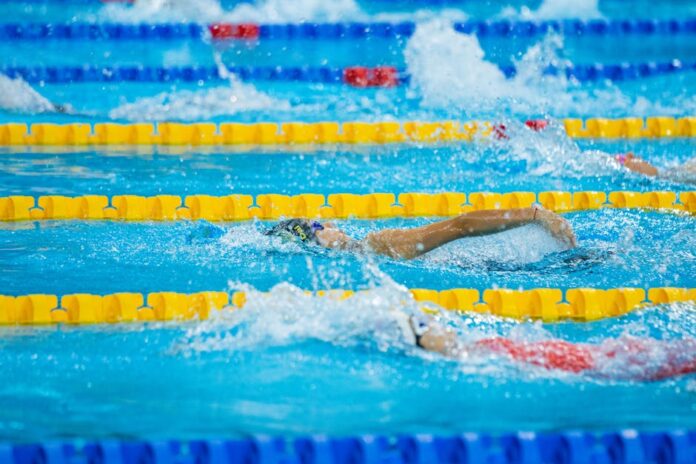
American swimmer Michael Phelps achieved an unparalleled feat by becoming the most decorated Olympian of all time, with a total of 28 medals (23 gold, 3 silver, 2 bronze) across five Olympic Games from 2000 to 2016. His single-Games record of eight gold medals at the 2008 Beijing Olympics surpassed Mark Spitz’s previous record of seven. Phelps’ combination of versatility, consistency, and longevity at the highest level of competition redefined excellence in Olympic swimming and set a standard that may never be matched.
8. Kerri Strug’s Courageous Vault in Atlanta 1996
American gymnast Kerri Strug delivered one of the most dramatic performances in Olympic history during the team competition at the 1996 Atlanta Games. After injuring her ankle on her first vault attempt, Strug needed to land her second vault to secure the gold medal for Team USA. Despite the injury, she successfully completed the vault, landing on one foot before collapsing in pain. Her coach carried her to the podium for the medal ceremony, and the image of her courage became one of the defining moments of those Olympics.
9. Cathy Freeman Lights the Cauldron and Wins Gold at Sydney 2000
Australian sprinter Cathy Freeman, an Indigenous Australian, had the honor of lighting the Olympic cauldron at the 2000 Sydney Games opening ceremony, symbolizing reconciliation between Indigenous and non-Indigenous Australians. Under enormous pressure competing on home soil, Freeman went on to win the gold medal in the 400 meters, wrapping herself in both the Australian and Aboriginal flags during her victory lap. Her triumph represented a watershed moment in Australian history and highlighted the Games’ power to unite nations and heal historical wounds.
10. The Dream Team Dominates Basketball at Barcelona 1992
The 1992 United States men’s basketball team, known as “The Dream Team,” revolutionized Olympic basketball and international sports marketing. Featuring NBA legends including Michael Jordan, Magic Johnson, Larry Bird, and Charles Barkley, this was the first U.S. Olympic team to include professional players. They dominated the competition, winning by an average margin of 44 points and capturing gold without serious challenge. The Dream Team’s global popularity helped accelerate basketball’s growth as an international sport and demonstrated the entertainment value of bringing together the world’s best professional athletes.
Conclusion
These ten moments represent the essence of what makes the Olympic Games special—they combine athletic excellence with powerful human stories that resonate far beyond the sports arena. From Jesse Owens’ defiance of Nazi ideology to Derek Redmond’s display of parental love and determination, these instances remind us that the Olympics are about more than just winning medals. They showcase courage, perseverance, unity, and the ability of sport to break down barriers and inspire millions. As future Olympic Games unfold, new memorable moments will undoubtedly emerge, but these ten will forever remain etched in the collective memory of sports fans worldwide, continuing to inspire generations of athletes and spectators alike.