



1 / 10 Questions
0 Points

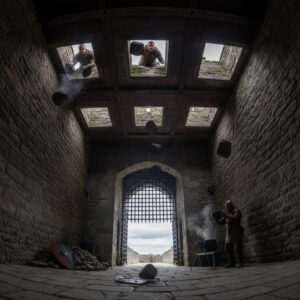
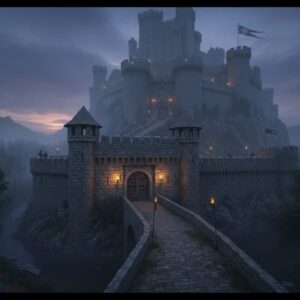
What deadly trap awaited attackers who breached a castle's gatehouse?

Dragon pits

Flame channels

Murder holes

Thunder gates

Points won
0
Correct score
0%

More Questions

More Articles

Did You Know? 10 Fascinating Facts About Castles

Did You Know? 10 Fascinating Facts About Castles

⏱️ 7 min read

Castles have captivated human imagination for centuries, standing as enduring symbols of power, warfare, and architectural ingenuity. These magnificent fortifications shaped medieval society and continue to dominate landscapes across Europe and beyond. While most people recognize castles as defensive structures from the Middle Ages, the reality of castle life and construction contains numerous surprising elements that challenge common assumptions. From ingenious defensive mechanisms to unexpected daily realities, these remarkable structures hold secrets that reveal much about medieval innovation, social hierarchy, and the evolution of military architecture.

Extraordinary Castle Revelations

1. Spiral Staircases Were Designed as Death Traps

The spiral staircases found in castle towers weren't simply space-saving designs—they were carefully engineered defensive weapons. Nearly all castle staircases spiral clockwise as you ascend, a deliberate choice that gave defenders a significant tactical advantage. Since most people are right-handed, an attacker climbing upward would have their sword arm restricted by the central column, while defenders descending could swing freely. This clever architectural feature could mean the difference between life and death during a siege, transforming a simple staircase into a deadly chokepoint where a single skilled defender could hold off multiple attackers.

2. Castle Toilets Emptied Directly Down the Walls

Medieval castles featured surprisingly sophisticated plumbing systems called garderobes—essentially toilets built into the castle walls. These facilities consisted of stone seats with holes that led to vertical shafts running down through the castle walls, emptying waste into the moat or a cesspit below. While this system seems crude by modern standards, it was remarkably advanced for its time. Some garderobes even included multiple seats for communal use, as privacy wasn't a major concern in medieval society. The unpleasant odor from these facilities also had an unexpected benefit: it helped protect stored clothing and tapestries from moths and other pests, which is why they were often called "wardrobes."

3. Murder Holes Were Multi-Purpose Defensive Features

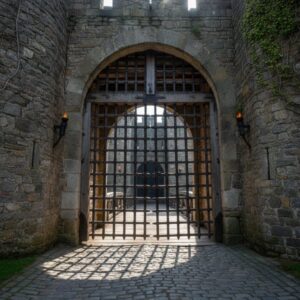
The infamous murder holes—openings in the ceiling of castle gateways—are often associated with pouring boiling oil on attackers, but this Hollywood image is largely mythical. Boiling oil was extremely expensive and rarely used. Instead, defenders typically dropped stones, boiling water, quicklime, or even heated sand through these openings. More importantly, murder holes served a practical defensive purpose beyond attacking invaders: they allowed defenders to extinguish fires started by attackers attempting to burn through the wooden gates below. Water or sand could be quickly poured through these openings to save the gate from destruction.

4. Castles Were Originally Wooden Structures

The earliest castles weren't the imposing stone fortresses we imagine today—they were constructed primarily from wood. The motte-and-bailey design, which dominated castle construction in the 10th and 11th centuries, featured a wooden tower built atop an earthen mound (motte) with an enclosed courtyard (bailey) below. These wooden castles could be erected in as little as two weeks, making them ideal for rapidly establishing control over conquered territory. The transition to stone construction came later, driven by the vulnerability of wood to fire and the desire for more permanent, prestigious structures. Many famous stone castles actually began as wooden fortifications that were gradually rebuilt in stone over decades.

5. Castle Walls Were Intentionally Painted White

Medieval castles didn't always appear as the grey stone structures we see today. Many castles were covered with limewash or plaster and painted brilliant white, creating a dazzling appearance that could be seen for miles. This wasn't merely decorative—the white coating served multiple practical purposes. It protected the stonework from weather damage, made the interior spaces brighter, and demonstrated the owner's wealth and power. Some castles featured elaborate painted designs, murals, and even fake stonework patterns. The bare stone appearance we associate with castles today is largely the result of centuries of weathering that stripped away these protective and decorative layers.

6. Arrow Slits Were More Complex Than They Appear

The narrow vertical openings in castle walls, known as arrow slits or loopholes, incorporated sophisticated design principles that made them highly effective defensive features. While they appear as simple slits from the outside, they typically widened considerably on the interior, giving archers a broad field of vision and firing angle while presenting minimal target area to attackers. Later designs included cross-slits that allowed for horizontal as well as vertical aiming, and some featured circular openings at the base to accommodate early firearms. The precise angles and dimensions of these openings were carefully calculated to maximize defensive capability while maintaining structural integrity of the walls.

7. Concentric Castles Created Layered Fortification Systems

The most advanced medieval castles employed a concentric design featuring multiple rings of defensive walls, each higher than the one before it. This innovation, perfected during the Crusades and brought back to Europe, created a nightmare scenario for attackers. Even if invaders breached the outer wall, they found themselves trapped in a kill zone between walls, vulnerable to attack from defenders on the higher inner walls. The inner walls were typically thicker and taller than the outer ones, meaning that defenders always had the advantage of height and protection. This design philosophy represented the pinnacle of medieval military architecture and required enormous resources to construct.

8. Castle Construction Could Span Generations

Building a major stone castle was an extraordinary undertaking that often required decades to complete, with some projects spanning multiple generations. The construction of Dover Castle's keep took nine years and consumed the equivalent of millions of dollars in modern currency. Larger castle complexes might be continuously expanded and modified over centuries, with each generation adding new towers, walls, or facilities. This long construction timeline meant that architectural styles often changed mid-project, and the original builders might never see their work completed. The massive labor force required included skilled stonemasons, carpenters, blacksmiths, and countless laborers, making castle construction one of the largest economic activities of the medieval period.

9. Moats Were Not Always Filled With Water

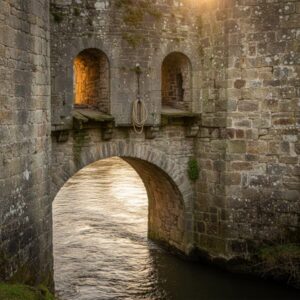
While water-filled moats are the classic image of castle defenses, many moats were actually dry ditches. Dry moats served important defensive purposes: they prevented siege engines from approaching walls, created obstacles for attackers, and could be patrolled by defenders. In some regions, water-filled moats were impractical due to geography or water availability. When moats did contain water, they were rarely clean—they often became repositories for sewage, garbage, and other waste, creating not only a physical barrier but also a genuinely unpleasant obstacle. Some castle moats were even stocked with fish, serving as both a defensive feature and a food source during sieges.

10. Many Castles Were Never Attacked

Despite being designed as military fortifications, the majority of castles never experienced actual sieges or battles. The primary purpose of many castles was deterrence—their imposing presence and formidable defenses were often sufficient to discourage attacks entirely. Castles served as administrative centers, symbols of authority, and residences for nobility, with their military function being somewhat secondary in peaceful times. The enormous expense of laying siege to a well-defended castle, combined with the low probability of success, meant that many conflicts were resolved through negotiation rather than assault. This reality meant that some castles maintained purely ceremonial military features while focusing more on comfort and display of wealth.

The Enduring Legacy of Medieval Engineering

These ten fascinating aspects of castle construction and life reveal the sophisticated thinking behind medieval fortifications. From the psychological warfare of towering white walls to the practical engineering of spiral staircases and arrow slits, castles represented the cutting edge of military technology and architectural achievement. The myths surrounding boiling oil and constant warfare often overshadow the reality of castles as complex administrative centers and homes where generations lived, worked, and ruled. Understanding these structures requires appreciating both their military innovations and their role in shaping medieval society. Today, these magnificent buildings continue to inspire wonder, standing as testaments to human ingenuity and the enduring appeal of architectural grandeur that successfully balanced beauty with brutal defensive efficiency.

Did You Know? 10 Artworks That Were Lost Forever

Did You Know? 10 Artworks That Were Lost Forever

⏱️ 7 min read

Throughout history, countless masterpieces have vanished from existence, leaving behind only descriptions, reproductions, or haunting memories. Whether destroyed by war, natural disasters, theft, or deliberate acts of vandalism, these lost artworks represent irreplaceable gaps in our cultural heritage. The stories behind these disappeared treasures offer fascinating glimpses into the fragility of art and the circumstances that led to their permanent loss.

Masterpieces That Vanished From History

1. Michelangelo's "Leda and the Swan"

Michelangelo created this provocative painting around 1530, depicting the mythological encounter between Leda and Zeus in the form of a swan. The original work was commissioned by the Duke of Ferrara but was later acquired by the French royal collection. During the 17th century, a minister under King Louis XIII deemed the painting too scandalous and ordered its destruction. While several copies by Michelangelo's students survive, including one at the National Gallery in London, the master's original brushwork was lost forever. The painting's disappearance represents not only the loss of a significant Renaissance work but also serves as a reminder of how moral censorship has impacted art preservation throughout history.

2. Vincent van Gogh's "The Painter on the Road to Tarascon"

This 1888 self-portrait showed Van Gogh as a wandering artist, carrying his painting equipment under the blazing Provençal sun. The work was housed in the Kaiser Friedrich Museum in Magdeburg, Germany, until World War II. During the Allied bombing campaigns in 1945, the museum was severely damaged, and the painting was destroyed by fire. Art historians consider this loss particularly devastating because it offered unique insight into Van Gogh's self-perception as an itinerant painter. Today, only photographs and reproductions exist to document this important work from the artist's most productive period in Arles, France.

3. Gustav Klimt's "Philosophy," "Medicine," and "Jurisprudence"

These three monumental ceiling paintings were commissioned for the Great Hall of the University of Vienna between 1900 and 1907. The allegorical works sparked controversy for their unconventional and provocative interpretations of their subjects. As World War II drew to a close in May 1945, retreating SS forces set fire to Immendorf Castle in Austria, where the paintings had been stored for safekeeping. All three Faculty Paintings, as they were known, were completely destroyed. The loss of these works eliminated crucial examples of Klimt's transition from his earlier academic style to his more famous golden period, leaving a significant gap in understanding his artistic evolution.

4. Caravaggio's "Nativity with St. Francis and St. Lawrence"

This 1609 masterpiece once hung above the altar of the Oratory of San Lorenzo in Palermo, Sicily. In October 1969, thieves cut the massive painting from its frame and stole it, leaving only fragments of the canvas behind. Despite being listed as one of the FBI's Top Ten Art Crimes, the painting has never been recovered. Various theories suggest it was stolen by the Sicilian Mafia, either for a private collector or as collateral in illegal dealings. Some reports claim the painting was damaged during the theft and later destroyed, while others suggest it may have been lost in the 1980 Irpinia earthquake. The theft of this Caravaggio represents one of the most significant unsolved art crimes in history.

5. Frida Kahlo's Early Works Destroyed in Fire

Before Frida Kahlo became internationally renowned, a significant portion of her early work was destroyed in a fire. In the 1940s, several of her paintings were lost when a storage facility caught fire in Mexico City. These works included pieces from her formative years that documented her development as an artist. While Kahlo's later masterpieces survived and secured her legacy, the lost paintings would have provided valuable insight into her artistic evolution and personal struggles during her youth. The exact number and specific subjects of these destroyed works remain partially undocumented, adding to the tragedy of their loss.

6. Francisco Goya's Façade Frescoes at Godoy Palace

In 1800, Francisco Goya created elaborate frescoes for the façade of Manuel Godoy's palace in Madrid. These outdoor murals depicted allegorical scenes and demonstrated Goya's versatility beyond his famous paintings and etchings. Unfortunately, exposure to weather and environmental conditions caused rapid deterioration. By the mid-19th century, the frescoes had deteriorated beyond recognition and were eventually destroyed during building renovations. No detailed reproductions or photographs exist from when the works were in good condition, making this loss particularly frustrating for art historians. The frescoes represented a rare example of Goya's work in public monumental art.

7. Leonardo da Vinci's "Battle of Anghiari"

This mural was commissioned in 1505 for the Hall of the Five Hundred in Florence's Palazzo Vecchio, intended to face Michelangelo's "Battle of Cascina" on the opposite wall. Leonardo never completed the work, and what he did paint began deteriorating due to his experimental techniques. By 1563, when Giorgio Vasari remodeled the hall, the damaged mural was either painted over or destroyed. Some researchers believe Vasari may have preserved Leonardo's work behind a false wall, but investigations using modern technology have yielded inconclusive results. Only Leonardo's preparatory sketches and copies by other artists, including a famous drawing by Peter Paul Rubens, provide evidence of this lost masterpiece.

8. The Amber Room of Catherine Palace

Often called the "Eighth Wonder of the World," this extraordinary chamber featured wall panels decorated with amber, gold leaf, and mirrors. Originally constructed in Prussia in 1701, it was given to Peter the Great and eventually installed in Catherine Palace near St. Petersburg. Nazi forces looted the Amber Room in 1941 during World War II, disassembling and transporting it to Königsberg Castle in East Prussia. The room disappeared in 1945 as Allied forces approached, likely destroyed during the bombing of Königsberg or deliberately hidden. Despite numerous searches and theories about its location, the original Amber Room has never been found. A painstaking reconstruction was completed in 2003, but the original artistic and historical panels remain lost.

9. John Singer Sargent's "Venetian Interior"

This painting from the 1880s depicted a mysterious interior scene in Venice, characteristic of Sargent's moody, atmospheric works from his time in Italy. The painting was privately owned and displayed in various exhibitions during the early 20th century. During World War II, the work was in a private collection in London when a German bombing raid destroyed the building where it was housed. The loss was compounded by the fact that only black-and-white photographs of the painting survived, preventing full appreciation of Sargent's renowned coloristic abilities. This painting represented an important example of the artist's Venetian period before he became primarily known as a society portraitist.

10. The Buddhas of Bamiyan

While technically sculptures rather than paintings, these massive 6th-century statues in Afghanistan represented extraordinary examples of Gandharan Buddhist art. Standing 115 and 174 feet tall, the Buddhas were carved directly into sandstone cliffs and originally decorated with colorful pigments and gold. In March 2001, the Taliban systematically destroyed these ancient monuments with explosives and artillery, despite international protests and their designation as UNESCO World Heritage sites. The destruction eliminated not only the sculptures themselves but also centuries-old wall paintings within the niches surrounding the statues. While efforts have been made to preserve the remaining fragments and debate continues about possible reconstruction, the original artistic and spiritual power of these monuments was lost forever.

The Lasting Impact of Lost Art

These ten lost artworks represent only a fraction of the countless masterpieces that have disappeared throughout history. Each loss serves as a poignant reminder of art's vulnerability and the importance of preservation efforts. Whether destroyed by war, theft, natural disasters, or human prejudice, these vanished works leave holes in our cultural narrative that can never be completely filled. Their stories underscore the responsibility of each generation to protect and preserve artistic heritage for the future, ensuring that the masterpieces that remain today will still inspire viewers centuries from now. While modern technology offers new methods of documentation and protection, the irreplaceable nature of original artworks makes their preservation an ongoing challenge that demands constant vigilance and commitment.