





1 / 10 Questions
0 Points

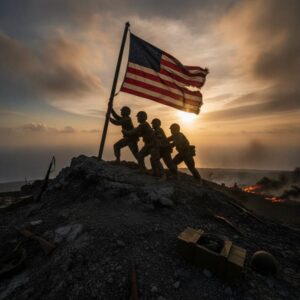
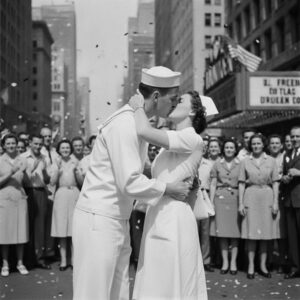
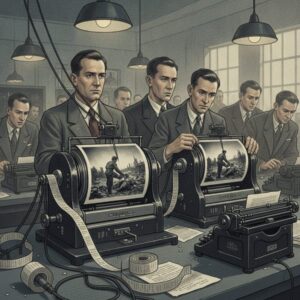
Which iconic WWII photo was actually the second flag-raising?

V-J Day in Times Square

Liberation of Paris

D-Day Landing

Raising the Flag on Iwo Jima

Points won
0
Correct score
0%

More Questions

More Articles

Top 10 Actors Who Refused Iconic Movie Roles

Top 10 Actors Who Refused Iconic Movie Roles

⏱️ 6 min read

Hollywood history is filled with fascinating "what if" moments where major stars turned down roles that would later become legendary. These decisions often changed the trajectory of both the films and the actors' careers. Sometimes scheduling conflicts, creative differences, or simply poor judgment led to these declined opportunities. Here are ten remarkable instances where actors said no to roles that would ultimately define cinema history.

The Roles That Got Away

1. Will Smith Passes on Neo in The Matrix

Will Smith was the Wachowskis' first choice to play Neo in The Matrix, but the superstar turned it down to make Wild Wild West instead. Smith has openly admitted this was a mistake, explaining that he didn't fully understand the directors' vision during their pitch meeting. The role went to Keanu Reeves, who became synonymous with the character and helped create one of the most influential science fiction franchises in cinema history. While Wild Wild West flopped both critically and commercially, The Matrix revolutionized action filmmaking and became a cultural phenomenon.

2. Sean Connery Declines Gandalf in The Lord of the Rings

The legendary Sean Connery was offered the role of Gandalf in Peter Jackson's Lord of the Rings trilogy, along with a percentage of the box office that would have earned him approximately $450 million. However, Connery admitted he never understood the script or the project's scope and declined. The role went to Ian McKellen, whose portrayal became iconic and earned him an Academy Award nomination. Connery later expressed regret about the decision, which would have been one of the most lucrative in film history.

3. Tom Selleck Loses Indiana Jones Due to Magnum P.I.

Tom Selleck was actually cast as Indiana Jones in Raiders of the Lost Ark, but CBS refused to release him from his television contract for Magnum P.I. George Lucas and Steven Spielberg had to move forward with their second choice: Harrison Ford. While Selleck found great success with Magnum P.I., Ford's portrayal of Indiana Jones became one of the most beloved characters in adventure film history, launching a massive franchise. Selleck has graciously acknowledged that everything worked out for the best for both actors.

4. Michelle Pfeiffer Says No to Clarice Starling in The Silence of the Lambs

Michelle Pfeiffer was offered the role of FBI trainee Clarice Starling in The Silence of the Lambs but found the material too dark and disturbing. The role went to Jodie Foster, who delivered a career-defining performance that earned her the Academy Award for Best Actress. The film became one of only three movies to win the "Big Five" Oscars and is considered one of the greatest thrillers ever made. Pfeiffer has since called it one of her biggest career regrets.

5. John Travolta Turns Down Forrest Gump

John Travolta was the first choice to play the title character in Forrest Gump but declined to star in Pulp Fiction instead. While Pulp Fiction revitalized Travolta's career spectacularly, Tom Hanks' portrayal of Forrest Gump earned him his second consecutive Academy Award and the film became a cultural touchstone that grossed nearly $700 million worldwide. Travolta has stated he has no regrets since Pulp Fiction was such an important film for him, but he's acknowledged that Hanks was "perfect" in the role.

6. Leonardo DiCaprio Rejects Patrick Bateman in American Psycho

Leonardo DiCaprio was attached to play Patrick Bateman in American Psycho, with director Mary Harron even being temporarily replaced to accommodate him. However, DiCaprio ultimately withdrew to make The Beach instead, and Christian Bale took over the role. Bale's chilling performance became a cult classic and is now considered one of his signature roles, while The Beach received mixed reviews. The decision worked out well for Bale's career, helping establish him as a serious leading man.

7. Al Pacino Declines Han Solo in Star Wars

Al Pacino was offered the role of Han Solo in Star Wars but turned it down because he didn't understand the script or George Lucas's vision. The actor, fresh off his success in The Godfather films, simply couldn't connect with the space opera material. Harrison Ford ultimately landed the role, which became one of the most iconic characters in cinema history and made Ford a global superstar. Pacino has joked about the decision in interviews, admitting he didn't comprehend what Lucas was trying to create.

8. Gwyneth Paltrow Passes on Rose in Titanic

Gwyneth Paltrow turned down the female lead in Titanic, a decision she's called one of her worst career moves. The role went to Kate Winslet, whose performance as Rose DeWitt Bukater earned her an Academy Award nomination and helped make Titanic the highest-grossing film of its time. The movie won eleven Oscars and became a cultural phenomenon. Paltrow has acknowledged that Winslet was "perfect" for the role and expressed admiration for her colleague's work in the film.

9. Matthew Broderick Declines Walter White in Breaking Bad

While technically a television role, Matthew Broderick was creator Vince Gilligan's first choice to play chemistry teacher turned drug lord Walter White in Breaking Bad. Broderick turned it down, and the role went to Bryan Cranston, who transformed the character into one of the greatest performances in television history. Cranston won four Emmy Awards for the role, and Breaking Bad is now considered one of the best television series ever made. The casting proved perfect, as few can imagine anyone but Cranston in the role.

10. Emily Blunt Loses Black Widow Due to Schedule Conflicts

Emily Blunt was cast as Natasha Romanoff/Black Widow in Iron Man 2, but scheduling conflicts with Gulliver's Travels forced her to drop out. Scarlett Johansson replaced her and has since played the character in nine Marvel Cinematic Universe films, becoming one of the franchise's most popular heroes. While Blunt has found tremendous success in other projects, she missed out on being part of the highest-grossing film franchise in history. The actress has expressed that she was "heartbroken" to leave the role.

Conclusion

These ten examples demonstrate how unpredictable the film industry can be and how a single decision can alter careers and cinema history. While some actors have expressed regret over their choices, others found different paths to success. What remains certain is that the actors who ultimately took these roles delivered performances that became inseparable from the characters themselves. These stories remind us that timing, instinct, and sometimes pure luck play crucial roles in creating movie magic. They also show that for every actor who says no, another opportunity opens for someone else to create something legendary.
Did You Know? 12 Crazy Behind-the-Scenes Stories from Film Sets

Did You Know? 12 Crazy Behind-the-Scenes Stories from Film Sets

⏱️ 8 min read

The magic of cinema often hides some of the most bizarre, dangerous, and downright unbelievable stories that occur during production. While audiences see polished final products on screen, the journey to get there is frequently filled with near-disasters, creative solutions, and moments that seem stranger than fiction. These fascinating tales from Hollywood sets reveal the chaos, creativity, and occasional madness that goes into making movie history.

Legendary Tales from Behind the Camera

1. The Wizard of Oz's Toxic Snow and Fiery Injuries

The 1939 classic "The Wizard of Oz" harbored several dangerous secrets. The "snow" that fell on Dorothy and her companions in the poppy field scene was actually industrial-grade asbestos, a known carcinogen. Even more horrifying, actress Margaret Hamilton, who played the Wicked Witch, suffered severe burns during the filming of her fiery exit from Munchkinland. The copper-based green makeup covering her face and hands became toxic when exposed to flames, causing second and third-degree burns that took months to heal. Her stunt double, Betty Danko, was also seriously injured when the broomstick she was riding during a different fire scene exploded beneath her.

2. Jaws and the Malfunctioning Mechanical Shark

Steven Spielberg's mechanical shark, nicknamed "Bruce," became one of cinema's most expensive malfunctions. The 25-foot mechanical monster constantly broke down in the salt water off Martha's Vineyard, forcing Spielberg to shoot around it. The shark sank to the ocean floor on its first test run, and throughout production, hydraulic issues plagued the three different shark models. This disaster inadvertently created the film's suspenseful approach of showing less of the creature, which Spielberg later credited with making the movie far more terrifying than originally planned. The production went from 55 scheduled shooting days to 159, ballooning the budget from $3.5 million to $9 million.

3. The Exorcist's Real Injuries and Supernatural Incidents

The production of "The Exorcist" was plagued by so many strange occurrences that a priest was brought to the set to perform a blessing. Nine people connected to the production died during or shortly after filming, including actors Jack MacGowran and Vasiliki Maliaros. Ellen Burstyn suffered a permanent spinal injury when she was yanked too hard by cables during a possession scene. The set mysteriously caught fire one night, destroying everything except the room where Regan's exorcism took place. Cast and crew members reported unexplained feelings of dread, equipment malfunctions, and strange sounds throughout the production.

4. Apocalypse Now's Heart Attack and Hurricane Devastation

Francis Ford Coppola's Vietnam War epic became its own war zone. Star Martin Sheen suffered a near-fatal heart attack at age 36 during production in the Philippines, crawling a quarter-mile for help. Meanwhile, a massive typhoon destroyed millions of dollars' worth of sets, forcing a shutdown. Lead actor Harvey Keitel was fired and replaced by Sheen after several weeks of filming. The production stretched from the planned 14 weeks to 238 days, with Coppola financing the film with his own money and reportedly threatening suicide multiple times. He famously said, "We were in the jungle, there were too many of us, we had access to too much money, too much equipment, and little by little we went insane."

5. The Shining's Record-Breaking Scene Takes

Stanley Kubrick's perfectionism reached legendary levels during "The Shining." The scene where Wendy swings a baseball bat at Jack required a record-breaking 127 takes, earning a place in the Guinness Book of World Records. Actress Shelley Duvall was so emotionally exhausted from the demanding director that her hair began falling out from stress. Kubrick deliberately isolated and antagonized Duvall to capture genuine terror and emotional breakdown in her performance. The infamous "Here's Johnny!" door scene required 60 doors because Jack Nicholson, a former volunteer fire marshal, demolished them too quickly with the axe.

6. Mad Max: Fury Road's Decade-Long Desert Production

George Miller's action masterpiece spent over a decade in development hell before filming in the Namibian desert. The production employed 150 vehicles and required 13 special effects supervisors. Actress Charlize Theron and Tom Hardy reportedly clashed so intensely that Theron requested protection on set. The shoot was so physically demanding in the 120-degree heat that Hardy required hypnotherapy to recover from the experience. Miller shot approximately 470 hours of footage, and the film's intense practical stunts included real motorcycle crashes, with stunt performers genuinely risking their lives. The production moved from the Australian outback to Namibia after unexpected rainfall turned the desert green.

7. Poltergeist's Real Human Skeletons

In one of Hollywood's most disturbing cost-cutting measures, the skeletons used in "Poltergeist" were actual human skeletons purchased from medical supply companies. Actress JoBeth Williams was horrified to learn after filming the swimming pool scene that she had been swimming with real human remains, not props. At the time, it was cheaper to purchase real skeletons from medical suppliers than to manufacture realistic-looking fake ones. This revelation, combined with the tragic deaths of two young actresses from the franchise (Dominique Dunne and Heather O'Rourke), fueled persistent rumors of a curse surrounding the film series.

8. Blade Runner's Dangerous Rooftop Scene in the Rain

The climactic rooftop confrontation in Ridley Scott's sci-fi noir nearly ended in tragedy. Rutger Hauer's iconic "Tears in Rain" monologue was partially improvised by the actor himself, who rewrote his final speech the night before filming. However, the dangerous scene involved genuine risks as both Hauer and Harrison Ford performed stunts on an actual high-rise building set during manufactured rain, which made surfaces extremely slippery. Ford injured his hand during filming, requiring eight stitches, when he accidentally put his fist through a glass panel instead of the breakaway sugar glass that was supposed to be used.

9. The Revenant's Natural Light and Raw Bison Liver

Director Alejandro González Iñárritu insisted on filming "The Revenant" using only natural light, forcing the crew to work during specific hours and in remote wilderness locations. Leonardo DiCaprio, committed to authenticity, slept in animal carcasses, ate raw bison liver despite being vegetarian, and endured freezing temperatures in icy rivers. The production moved from Canada to Argentina to find snow as weather patterns failed to cooperate. The infamous bear attack scene required extensive CGI, but DiCaprio performed many dangerous stunts himself. The shoot lasted nine months instead of the planned six, with crew members quitting due to the extreme conditions and Iñárritu's demanding directorial approach.

10. Fitzcarraldo's Real Ship Dragged Over a Mountain

Werner Herzog's obsessive vision for "Fitzcarraldo" required pulling a 320-ton steamship over a mountain in the Peruvian rainforest without special effects. The production faced indigenous attacks, with crew members hit by arrows, and a plane crash that severely injured five people. Leading actor Jason Robards fell ill with dysentery and left the production, forcing Herzog to recast with Klaus Kinski, who himself threatened to leave multiple times. The local Machiguenga tribe offered to kill Kinski for Herzog due to the actor's violent outbursts. One crew member died, another was bitten by a deadly snake and cut off his own foot to save his life, and Herzog's own camp was destroyed by fire.

11. The Abyss's Near-Drowning Incidents

James Cameron's underwater thriller pushed cast and crew to their physical and psychological limits. Ed Harris nearly drowned when his breathing regulator malfunctioned during a deep-water scene, and the safety diver got tangled up trying to reach him. Harris reportedly punched Cameron after the incident and cried upon reaching the surface. Mary Elizabeth Mastrantonio had a breakdown during a particularly difficult drowning scene when she wasn't given oxygen quickly enough upon completing the take. The cast spent 11 to 12 hours per day in water, resulting in numerous ear and sinus infections. The film's abandoned nuclear power plant location required heating 7.5 million gallons of water, and cinematographer Mikael Salomon broke a rib during filming.

12. Roar's Unprecedented Animal Attacks

Tippi Hedren and Noel Marshall's 1981 film "Roar" holds the record for most dangerous production in Hollywood history. Over 70 cast and crew members were injured by the 150 untrained big cats used in the film. Hedren received a fractured leg when an elephant bucked her off its back. Cinematographer Jan de Bont was scalped by a lion, requiring 220 stitches. Melanie Griffith, Hedren's daughter, was mauled by a lioness and required facial reconstructive surgery. Marshall himself was wounded so severely during production that he developed gangrene. A flood destroyed many of the sets and forced a three-year production delay. The film took 11 years to complete and resulted in the family's bankruptcy, though it did lead to the founding of the Shambala Preserve, a sanctuary for exotic animals.

The Human Cost of Movie Magic

These incredible stories demonstrate that filmmaking often requires extraordinary dedication, occasional recklessness, and sometimes sheer survival instincts. From directors obsessed with authenticity to actors risking permanent injury for their craft, these behind-the-scenes tales reveal the fine line between artistic vision and dangerous obsession. While modern safety regulations have made film sets considerably safer, these legendary productions remind us that the movies we treasure often came at significant human cost. They stand as testaments to the passion, perseverance, and occasional insanity that drives filmmakers to capture something truly remarkable on screen, regardless of the personal toll.