
⏱️ 5 min read
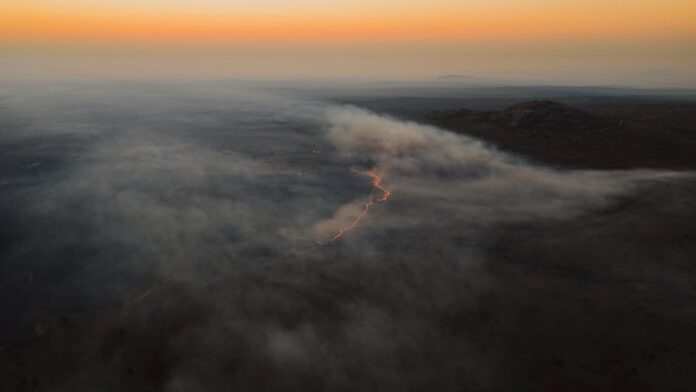
The African continent is undergoing a remarkable geological transformation that will fundamentally reshape Earth’s geography over millions of years. Scientists have confirmed that Africa is slowly splitting apart along the East African Rift System, a massive crack in the Earth’s crust that stretches thousands of miles. This extraordinary process will eventually create two separate continental landmasses, dramatically altering the world map as we know it.
Understanding the East African Rift System
The East African Rift System is a continental rift zone that extends approximately 3,000 kilometers from the Gulf of Aden in the north to Zimbabwe in the south. This geological feature represents an active divergent tectonic boundary where the African continent is being pulled apart by powerful forces beneath the Earth’s surface. The rift system consists of two main branches: the Eastern Rift Valley and the Western Rift Valley, both of which are characterized by volcanic activity, earthquakes, and dramatic topographical features.
The Eastern Rift runs through Ethiopia, Kenya, and Tanzania, hosting some of Africa’s most iconic landmarks including Mount Kilimanjaro and Mount Kenya. The Western Rift extends along the western edge of the rift system, passing through Uganda, Rwanda, Burundi, and the Democratic Republic of Congo, and contains some of the world’s deepest lakes, including Lake Tanganyika.
The Science Behind Continental Rifting
Continental rifting occurs when tectonic forces pull a continental plate apart, creating a zone of weakness in the lithosphere. In East Africa, this process is driven by the movement of three tectonic plates: the Nubian Plate (western Africa), the Somali Plate (eastern Africa), and the Arabian Plate. These plates are moving away from each other at varying rates, with the Somali Plate drifting eastward while the Nubian Plate remains relatively stable.
The splitting process begins deep within the Earth’s mantle, where superheated rock called magma rises toward the surface through convection currents. This upwelling creates tremendous pressure that pushes the continental crust apart from below. As the plates separate, the crust thins and eventually fractures, creating the characteristic rift valleys visible at the surface. Volcanic activity accompanies this process as magma finds pathways to the surface through the weakened crust.
Evidence of the Continental Split
Multiple lines of evidence confirm that Africa is actively splitting apart. In 2018, a dramatic crack suddenly appeared in southwestern Kenya following heavy rainfall and seismic activity. This fissure, measuring several kilometers long and up to 15 meters deep in some places, provided visible proof of the ongoing rifting process. While the rainfall triggered the surface collapse, the underlying cause was the tectonic forces pulling the continent apart.
Additional evidence includes:
- Frequent seismic activity along the rift valley, with hundreds of small earthquakes recorded annually
- Active volcanic systems, including Mount Nyiragongo in the Democratic Republic of Congo
- GPS measurements showing plate movement of several millimeters per year
- Geological surveys revealing thinning of the continental crust in the rift zone
- Formation of new ocean floor material in the Afar Depression of Ethiopia
Timeline of the Continental Separation
Geological processes operate on timescales that dwarf human civilization. The East African Rift System began forming approximately 25 million years ago, but the splitting process has accelerated in recent geological periods. Scientists estimate that Africa will completely split into two continents in approximately 5 to 10 million years, though some models suggest it could take up to 50 million years depending on various factors.
The separation rate varies across different sections of the rift system. In some areas, the plates are moving apart at rates of 6 to 7 millimeters per year, while other sections show slower movement. The Afar Depression in Ethiopia represents the most advanced stage of rifting, where the continental crust has already been replaced by oceanic crust in some locations.
The Birth of a New Ocean
As the African continent continues to split, the rift valley will gradually widen and deepen. Eventually, the depression will drop below sea level, allowing ocean water to flood in from the Red Sea and Gulf of Aden. This process will create a new ocean basin separating eastern Africa from the rest of the continent. The Somali Plate, carrying countries such as Somalia, Kenya, Tanzania, and portions of Ethiopia and Mozambique, will become a separate island continent, similar to how Madagascar separated from Africa millions of years ago.
Geological and Environmental Implications
The splitting of Africa carries significant geological implications beyond the continental separation itself. The rift system has created unique ecosystems and influenced climate patterns across eastern Africa. The formation of the rift valleys has affected rainfall distribution, created distinct habitats, and contributed to the remarkable biodiversity found in the region. The rift valleys also played a crucial role in human evolution, with many important hominin fossils discovered in the sedimentary deposits of the East African Rift.
Volcanic activity associated with the rifting process poses both risks and benefits for local populations. While volcanic eruptions can be devastating, the volcanic soils are exceptionally fertile and support dense agricultural populations. The geothermal energy potential of the rift system also offers opportunities for sustainable energy development in countries like Kenya and Ethiopia.
Monitoring and Research
Scientists continue to monitor the East African Rift System using advanced technologies including satellite imagery, GPS networks, seismometers, and geological surveys. This research not only helps us understand the continental splitting process but also contributes to broader knowledge of plate tectonics and continental drift. Understanding these processes is essential for assessing geological hazards, protecting vulnerable populations, and predicting future changes to Earth’s geography.
The splitting of Africa reminds us that our planet remains geologically active and constantly evolving, reshaping continents and oceans over vast timescales that challenge human comprehension.