
⏱️ 7 min read
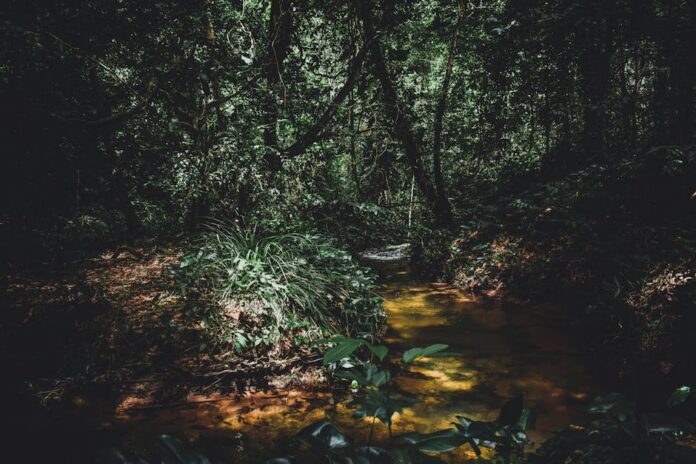
The Amazon Rainforest stands as one of Earth’s most extraordinary natural wonders, harboring secrets and phenomena that continue to astound scientists and nature enthusiasts alike. Spanning across nine South American countries, this magnificent ecosystem holds countless mysteries within its verdant canopy. From its incredible biodiversity to its crucial role in regulating our planet’s climate, the Amazon offers remarkable facts that reveal why it’s often called the “lungs of the Earth.” Let’s explore fifteen fascinating aspects of this irreplaceable treasure.
Unveiling the Amazon’s Remarkable Secrets
1. The Largest Tropical Rainforest on Earth
The Amazon Rainforest covers approximately 5.5 million square kilometers, making it the world’s largest tropical rainforest. This vast expanse is roughly equivalent to the size of the entire United States west of the Mississippi River. The forest stretches across Brazil, Peru, Colombia, Venezuela, Ecuador, Bolivia, Guyana, Suriname, and French Guiana, with Brazil containing about 60% of this magnificent ecosystem. Its sheer size creates diverse microclimates and habitats that support an unparalleled variety of life forms.
2. Home to One in Ten Known Species
Scientists estimate that the Amazon houses approximately 10% of all species on Earth. This translates to roughly 390 billion individual trees representing about 16,000 different species, alongside an estimated 2.5 million insect species, 40,000 plant species, 2,200 fish species, 1,300 bird species, 430 mammal species, and 430 amphibian species. Many of these species exist nowhere else on the planet, making the Amazon an irreplaceable reservoir of biodiversity.
3. The River That Flows Through Paradise
The Amazon River, the lifeblood of the rainforest, is the world’s largest river by discharge volume and the second longest river globally. It releases approximately 209,000 cubic meters of water into the Atlantic Ocean every second, which is more than the next seven largest rivers combined. During the wet season, parts of the river can expand to over 190 kilometers wide, creating a freshwater sea within the forest.
4. An Oxygen Production Powerhouse
While often called the “lungs of the Earth,” the Amazon produces approximately 20% of the world’s oxygen through photosynthesis. However, the rainforest also consumes nearly all of this oxygen through decomposition and respiration, resulting in a relatively neutral net oxygen contribution. Nevertheless, its role in carbon dioxide absorption remains absolutely critical for global climate regulation, storing an estimated 150-200 billion tons of carbon.
5. Indigenous Peoples’ Ancient Home
The Amazon has been home to indigenous communities for at least 11,000 years. Today, approximately 400-500 indigenous tribes live within the rainforest, with about 50 of these groups having had no contact with the outside world. These communities possess invaluable knowledge about medicinal plants, sustainable forest management, and survival techniques that have been passed down through countless generations.
6. A Living Pharmacy
Over 80% of the world’s diet originated from plants found in tropical rainforests, and approximately 25% of modern pharmaceutical drugs are derived from rainforest plants. Yet scientists have tested less than 1% of Amazon plant species for their medicinal properties. The rainforest contains potential cures for numerous diseases, with indigenous peoples using over 1,300 plant species for medicinal purposes.
7. The Tree Canopy Highway
The Amazon’s canopy layer, reaching heights of 30-45 meters, is so dense that when it rains, it can take up to ten minutes for water to reach the forest floor. This multi-layered structure creates distinct ecosystems at different heights, with some species spending their entire lives in the canopy without ever touching the ground. The canopy is so thick that only about 1% of sunlight reaches the forest floor.
8. Self-Watering System
The Amazon Rainforest creates approximately 50% of its own rainfall through a process called transpiration. Trees release water vapor through their leaves, which forms clouds that produce rain, creating a self-sustaining water cycle. This phenomenon means that the forest essentially waters itself, demonstrating the delicate balance of this ecosystem. The forest releases approximately 20 billion tons of water into the atmosphere daily.
9. Pink River Dolphins
The Amazon River hosts the world’s only freshwater dolphin species, the pink river dolphin, also known as the boto. These remarkable creatures can turn their heads 90 degrees thanks to unfused neck vertebrae, helping them navigate through flooded forests. Their distinctive pink coloration becomes more pronounced with age and activity level, and they can grow up to 2.5 meters in length.
10. Nutrient Transfer from the Sahara
In a stunning example of global interconnection, approximately 27 million tons of dust from the Sahara Desert in Africa are transported across the Atlantic Ocean to the Amazon each year. This dust, particularly from the Bodélé Depression in Chad, contains phosphorus and other nutrients essential for the Amazon’s fertility, effectively fertilizing the rainforest from thousands of kilometers away.
11. Electric Eel Shocking Power
The Amazon’s waters are home to the electric eel, which can generate electrical discharges up to 860 volts. These remarkable fish use electricity for navigation, communication, and hunting. Despite their name, electric eels are actually a type of knifefish, not true eels. They must surface for air every ten minutes because they breathe using lung-like organs rather than gills.
12. Rapid Deforestation Crisis
Approximately 17% of the Amazon Rainforest has been lost over the past 50 years, primarily due to cattle ranching, agriculture, logging, and mining. Scientists warn that if deforestation reaches 20-25% of the original forest, the Amazon could reach a tipping point where it can no longer sustain its own rainfall cycle, potentially transforming into a savanna ecosystem. Currently, an area equivalent to one football field is lost every single minute.
13. The World’s Largest Snake
The green anaconda, the world’s heaviest and one of the longest snakes, calls the Amazon home. These massive constrictors can reach lengths of over 9 meters and weigh more than 250 kilograms. They spend most of their time in shallow water, using their stealth and size to ambush prey. Despite their fearsome reputation, anacondas rarely pose threats to humans and play crucial roles in controlling prey populations.
14. Ancient Terra Preta Soil
Indigenous Amazonians created a unique type of fertile soil called terra preta, or “black earth,” through a combination of charcoal, bone, and organic matter. This human-made soil remains incredibly fertile even today, thousands of years after its creation, and contains up to three times more organic matter than surrounding soils. Scientists are studying terra preta to develop sustainable agricultural practices that could benefit modern farming.
15. Undiscovered Species Abundance
Scientists discover an average of one new species in the Amazon every two days. Between 1999 and 2015, more than 2,000 new species of plants and vertebrates were identified in the Amazon basin. Researchers estimate that millions of species, particularly insects and microorganisms, remain undiscovered and undocumented. This ongoing discovery process highlights how much we have yet to learn about this incredible ecosystem.
Protecting an Irreplaceable Treasure
These fifteen remarkable facts only scratch the surface of the Amazon Rainforest’s wonders and importance to our planet. From its role in climate regulation and oxygen production to its incredible biodiversity and cultural significance, the Amazon represents an irreplaceable natural treasure. As deforestation and climate change threaten this vital ecosystem, understanding and appreciating these facts becomes more crucial than ever. The Amazon’s survival is intrinsically linked to the health of our entire planet, making its conservation not just an environmental priority but a global necessity. Every species discovered, every indigenous tradition preserved, and every hectare protected contributes to maintaining the delicate balance that makes the Amazon Rainforest one of Earth’s most essential and awe-inspiring natural wonders.