
⏱️ 7 min read
Quantum physics represents one of the most fascinating and counterintuitive fields of science, describing the behavior of matter and energy at the smallest scales imaginable. While it may seem abstract and complex, quantum mechanics reveals a universe far stranger than our everyday experience suggests. From particles that exist in multiple places simultaneously to the fundamental uncertainty built into reality itself, the quantum world challenges our basic assumptions about how nature operates. Here are ten remarkable facts that illuminate the peculiar and wonderful realm of quantum physics.
Exploring the Quantum Realm
1. Particles Behave Like Waves and Waves Behave Like Particles
One of the most fundamental discoveries in quantum physics is wave-particle duality. Electrons, photons, and other quantum entities exhibit properties of both particles and waves depending on how they’re observed. When not being measured, they propagate as waves, creating interference patterns. However, when detected, they appear as discrete particles with specific locations. This dual nature fundamentally changed our understanding of matter and energy, revealing that the classical distinctions between waves and particles break down at quantum scales. The famous double-slit experiment demonstrates this beautifully: individual particles fired through two slits create an interference pattern characteristic of waves, but each particle registers as a single point when detected.
2. Quantum Superposition Allows Multiple States Simultaneously
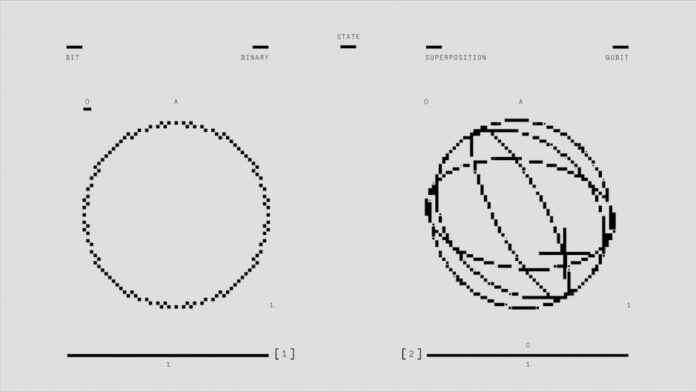
Unlike everyday objects that exist in definite states, quantum particles can exist in multiple states at once until measured. This principle, known as superposition, means an electron can be in multiple locations simultaneously, or a particle can spin in multiple directions at the same time. The act of measurement forces the system to “choose” one of the possible states, collapsing the superposition. This isn’t simply a lack of knowledge about which state the particle is in; the particle genuinely exists in all possible states until observed. This concept forms the basis for quantum computing, where quantum bits or “qubits” can process multiple calculations simultaneously by existing in superposition.
3. Quantum Entanglement Creates Instantaneous Connections
Perhaps the strangest quantum phenomenon, entanglement occurs when particles become correlated in such a way that the state of one instantly influences the state of another, regardless of the distance separating them. Einstein famously called this “spooky action at a distance” because it seemed to violate the principle that nothing travels faster than light. When two particles are entangled, measuring a property of one particle immediately determines the corresponding property of the other, even if they’re on opposite sides of the universe. This isn’t due to hidden communication between the particles but rather a fundamental quantum correlation that defies classical explanation.
4. The Heisenberg Uncertainty Principle Sets Fundamental Limits
Werner Heisenberg discovered that certain pairs of properties cannot be simultaneously known with perfect precision. The most famous example involves position and momentum: the more precisely you measure a particle’s position, the less precisely you can know its momentum, and vice versa. This isn’t a limitation of measurement technology but a fundamental feature of reality itself. The uncertainty principle has profound implications, preventing electrons from spiraling into atomic nuclei and ensuring that even empty space contains fluctuating energy fields. This fundamental uncertainty is woven into the fabric of quantum mechanics.
5. Quantum Tunneling Lets Particles Pass Through Barriers
In the quantum world, particles can pass through barriers that would be impossible to cross according to classical physics. This phenomenon, called quantum tunneling, occurs because particles are described by probability waves that can extend beyond classical barriers. While unlikely, there’s a non-zero probability of finding a particle on the other side of an obstacle, even without sufficient energy to overcome it. Quantum tunneling is essential for nuclear fusion in stars, including our sun, and is utilized in modern technologies like scanning tunneling microscopes and flash memory drives.
6. Quantum Vacuum Is Far From Empty
What we think of as empty space is actually a seething foam of virtual particles constantly popping into and out of existence. These quantum fluctuations arise from the uncertainty principle, which allows energy to be “borrowed” from the vacuum for incredibly brief moments. These virtual particles have real, measurable effects, such as the Casimir effect, where two metal plates placed extremely close together experience an attractive force due to virtual particles in the space between them. The quantum vacuum represents the lowest energy state of a system, yet it’s far from nothing.
7. Quantum Decoherence Explains Why We Don’t See Quantum Effects Daily
Given that quantum mechanics governs all matter, why don’t we observe superposition and entanglement in everyday objects? The answer lies in quantum decoherence. When quantum systems interact with their environment—which larger objects constantly do—the delicate quantum states rapidly deteriorate into classical behavior. The more particles involved and the more interactions with the environment, the faster decoherence occurs. This is why quantum computers must be isolated at near absolute zero temperatures: to minimize environmental interactions that would destroy quantum states. Decoherence effectively explains the boundary between the quantum and classical worlds.
8. Quantum Mechanics Enables Absolute Security in Communication
Quantum key distribution offers theoretically unbreakable encryption based on fundamental quantum principles. When quantum states are used to encode information, any attempt to intercept or measure the transmission inevitably disturbs the quantum states, alerting the legitimate parties to the presence of an eavesdropper. This is because measurement in quantum mechanics fundamentally changes the state being measured. Several countries and organizations have already implemented quantum communication networks, representing a practical application of quantum mechanics to cybersecurity that exploits the laws of physics rather than mathematical complexity.
9. Quantum Spin Has No Classical Equivalent
Despite its name, quantum spin isn’t literally about particles rotating. It’s an intrinsic form of angular momentum that quantum particles possess, with no true classical analog. Electrons, protons, and neutrons have spin-1/2, meaning they must rotate through 720 degrees (not 360) to return to their original state. This bizarre property leads to the Pauli exclusion principle, which states that no two fermions can occupy the same quantum state simultaneously. This principle explains why matter has structure and volume, why chemistry works the way it does, and ultimately why you don’t fall through your chair.
10. Quantum Mechanics Underpins Modern Technology
Far from being purely theoretical, quantum mechanics forms the foundation of numerous technologies we use daily. Semiconductors and transistors—the building blocks of all modern electronics—function based on quantum mechanical principles. Lasers operate through stimulated emission of quantum states. MRI machines exploit quantum spin properties of atoms. Solar panels convert light to electricity through quantum processes. GPS systems account for quantum effects to maintain accuracy. Even the stability of atoms and molecules, essential for all chemistry and biology, results from quantum mechanics. Understanding quantum physics has been crucial to virtually every technological advance of the past century.
The Quantum Universe
These ten facts merely scratch the surface of quantum physics, a field that continues to challenge our intuitions while revealing the true nature of reality. From the dual nature of particles to the strange correlations of entanglement, from fundamental uncertainty to practical applications in technology, quantum mechanics represents one of humanity’s greatest intellectual achievements. While the quantum world operates according to rules that seem bizarre compared to our everyday experience, these principles have been verified through countless experiments and have enabled transformative technologies. As research continues in quantum computing, quantum communication, and our fundamental understanding of nature, quantum physics promises to remain at the forefront of scientific discovery, continuing to reshape our understanding of the universe and our place within it.