








1 / 10 Questions
0 Points

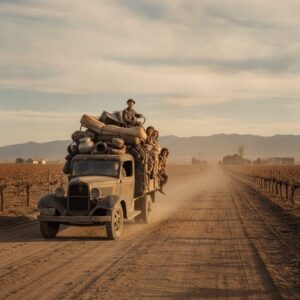
What John Steinbeck novel depicting migrant farm workers was banned in Kern County, California—the very region where the story takes place and the Joad family settles?

East of Eden

Cannery Row

The Grapes of Wrath

Of Mice and Men

Points won
0
Correct score
0%

More Questions

More Articles

Top 10 Fun Facts About the American Civil War

Top 10 Fun Facts About the American Civil War

⏱️ 7 min read

The American Civil War, fought between 1861 and 1865, remains one of the most transformative periods in United States history. While most people know the basic outline of this conflict between the Union and Confederate states, the war holds numerous surprising and lesser-known details that reveal the human side of this monumental struggle. From unusual military tactics to unexpected innovations, these fascinating facts illuminate the complexity and peculiarity of America's bloodiest war.

Surprising Discoveries From America's Bloodiest Conflict

1. The Youngest Soldier Was Only Nine Years Old

John Clem, known as "Johnny Shiloh," became the youngest enlisted soldier in Civil War history when he joined the Union Army at just nine years old. After being initially turned away by several regiments, he tagged along with the 22nd Michigan Infantry as a drummer boy. By age twelve, he had been promoted to sergeant after shooting a Confederate officer who demanded his surrender at the Battle of Chickamauga. Clem survived the war and went on to serve in the U.S. Army until 1915, retiring as a major general. His story exemplifies the shocking reality that thousands of underage soldiers, some as young as ten, fought in the Civil War on both sides.

2. Civil War Soldiers Invented Baseball Traditions

The Civil War played a crucial role in spreading baseball across America. Union soldiers from New York, where baseball was already popular, taught the game to fellow soldiers from other regions during downtime between battles. Prison camps became unlikely baseball hubs, where captured soldiers organized games to combat boredom. By the war's end, soldiers returning home had carried baseball to virtually every corner of the nation, transforming it from a regional pastime into America's national sport. The war essentially served as baseball's first major promotional campaign.

3. A Submarine Successfully Sank a Warship for the First Time

The Confederate submarine H.L. Hunley made naval history on February 17, 1864, when it became the first combat submarine to successfully sink an enemy warship. The hand-cranked vessel attacked and destroyed the USS Housatonic in Charleston Harbor using a torpedo attached to a long spar. Unfortunately, the Hunley and its eight-man crew never returned from the mission, sinking mysteriously after the attack. The submarine wasn't discovered until 1995, and when raised in 2000, it provided invaluable insights into early submarine warfare and the men who risked everything for this experimental technology.

4. Approximately 750,000 Soldiers Died—More Than All Other U.S. Wars Combined

Recent historical research has revised the Civil War death toll upward to approximately 750,000 soldiers, significantly higher than the traditional estimate of 620,000. This staggering number exceeds American military deaths in World War I, World War II, the Korean War, the Vietnam War, and all conflicts in Iraq and Afghanistan combined. Disease killed twice as many soldiers as combat, with dysentery, typhoid, and pneumonia ravaging military camps where sanitation was poor and medical knowledge limited. The war left hardly any American family untouched by loss, creating a generation marked by grief and trauma.

5. Generals on Both Sides Were Often Related or Former Colleagues

The Civil War truly was a conflict that tore families and friendships apart. Confederate General James Longstreet served as best man at the wedding of Union General Ulysses S. Grant. Union General George McClellan and Confederate General A.P. Hill had courted the same woman before the war. Kentucky Senator John Crittenden had two sons who became generals—one for the Union and one for the Confederacy—and they fought against each other at the Battle of Perryville. Many officers on opposing sides had graduated from West Point together, served side-by-side in the Mexican-American War, and maintained friendships before political allegiances divided them.

6. Battlefield Medicine Advanced Rapidly Despite Horrific Conditions

While Civil War medicine is often remembered for its primitive and gruesome nature, the conflict actually spurred significant medical innovations. Dr. Jonathan Letterman revolutionized battlefield medicine by creating the first organized ambulance corps and a triage system still used today. The war saw the first widespread use of anesthesia in military surgery, primarily chloroform and ether. Doctors also made advances in treating traumatic injuries and infections, though amputation remained disturbingly common. The establishment of pavilion-style hospitals with improved ventilation reduced mortality rates from hospital-acquired infections. These wartime innovations laid the groundwork for modern emergency medicine and military medical care.

7. Photography Brought War's Reality Home for the First Time

The Civil War was the first American conflict extensively documented through photography, fundamentally changing how the public perceived warfare. Pioneering photographers like Mathew Brady and Alexander Gardner transported heavy equipment to battlefields, capturing haunting images of dead soldiers, destroyed landscapes, and weary veterans. Their photographs, displayed in galleries and published in newspapers, shocked civilians who had romanticized war. For the first time, Americans could see the true carnage of combat, making the abstract horror of war devastatingly concrete. This visual documentation created a historical record of unprecedented detail and established photojournalism's role in shaping public opinion about military conflicts.

8. The Confederacy Nearly Gained British Recognition

Great Britain came remarkably close to officially recognizing the Confederate States of America as an independent nation, which could have changed the war's outcome. British textile mills depended heavily on Southern cotton, creating economic pressure to support the Confederacy. In September 1862, British Prime Minister Lord Palmerston seriously considered intervention after Confederate victories. However, the Union victory at Antietam and Abraham Lincoln's subsequent Emancipation Proclamation transformed the war into a fight against slavery, making British support politically impossible given Britain's strong abolitionist sentiment. The Confederacy's failure to secure European recognition proved to be one of its most significant strategic defeats.

9. Civil War Innovations Included Income Tax and Paper Currency

The massive cost of warfare forced both governments to revolutionize American finance. In 1861, the Union introduced the first federal income tax to fund military operations, setting a precedent that would become permanent in 1913. The Union also created a standardized paper currency system, issuing "greenbacks" that replaced the confusing array of state and private bank notes. The Confederacy attempted similar measures but suffered from rampant inflation, with Confederate currency eventually becoming worthless. These financial innovations, born of wartime necessity, fundamentally transformed the American economy and established the federal government's expanded role in economic matters.

10. Approximately 25% of Confederate Soldiers Never Owned Slaves

Despite slavery being the war's central cause, only about 25% of Southern white families owned slaves, and the percentage among Confederate soldiers was even lower. Most Confederate soldiers were poor farmers who didn't own human property, yet fought for various reasons including state loyalty, defense of homeland, social pressure, and the Southern culture that made slavery's economic system integral to regional identity. This complexity doesn't diminish slavery's central role in causing the war—Confederate leaders explicitly cited slavery's preservation in their secession documents—but it illustrates the complicated motivations of individual soldiers and the social dynamics that enabled the slaveholding elite to mobilize masses of non-slaveholders to fight on their behalf.

The War's Enduring Legacy

These ten facts reveal the American Civil War's complexity beyond the simplified narratives often taught in schools. From technological innovations like submarines and widespread photography to the personal tragedies of families divided and children fighting as soldiers, the conflict reshaped every aspect of American society. Understanding these lesser-known details helps us appreciate the war's profound impact on modern America, from our national pastime to our financial system, from medical practices to how we document and perceive warfare. The Civil War's legacy continues to influence contemporary American life, making these historical insights not merely interesting trivia but essential context for understanding the nation we've become.

Did You Know The World’s Hottest Chili Can Kill You?

Did You Know The World’s Hottest Chili Can Kill You?

⏱️ 4 min read

The fiery world of chili peppers has captivated food enthusiasts and daredevils alike for centuries, but recent developments in pepper cultivation have pushed the boundaries of heat to potentially lethal levels. While most people enjoy a moderate kick from jalapeños or even habaneros, a new generation of super-hot peppers has emerged that can pose serious health risks and, in extreme cases, could theoretically prove fatal.

Understanding the Scoville Scale and Extreme Heat

The Scoville Heat Unit (SHU) scale measures the concentration of capsaicin, the chemical compound responsible for a pepper's spiciness. To put things in perspective, a bell pepper registers zero SHU, while a jalapeño ranges from 2,500 to 8,000 SHU. However, the world's hottest peppers have crossed the threshold of 2 million SHU, with some varieties reaching over 3 million SHU—surpassing even police-grade pepper spray, which typically measures around 2 million SHU.

Pepper X, currently recognized as the world's hottest chili pepper, measures an astounding 2.69 million SHU. This pepper, developed by Ed Currie of the PuckerButt Pepper Company, dethroned the Carolina Reaper, which held the Guinness World Record for nearly a decade with an average of 1.64 million SHU.

The Physiological Impact of Extreme Capsaicin Consumption

When consumed, capsaicin binds to pain receptors in the mouth and throughout the digestive system, creating an intense burning sensation. While this reaction is not actually causing tissue damage in most cases, the body responds as if it were being burned. With extremely hot peppers, this response can trigger a cascade of physiological reactions that extend far beyond simple discomfort.

Immediate Physical Reactions

Consuming ultra-hot peppers can lead to several immediate and severe symptoms:

  • Intense pain and burning sensation in the mouth, throat, and esophagus
  • Excessive salivation and sweating
  • Difficulty breathing or shortness of breath
  • Rapid heart rate and elevated blood pressure
  • Severe stomach cramps and nausea
  • Vomiting and diarrhea
  • Dizziness and headaches

Documented Cases of Severe Medical Emergencies

Medical literature has documented several cases where consumption of extremely hot peppers led to serious health complications requiring emergency medical intervention. In 2018, a 34-year-old man participated in a hot pepper eating contest and subsequently developed thunderclap headaches—severe, sudden headaches that can indicate serious underlying conditions. Doctors diagnosed him with reversible cerebral vasoconstriction syndrome (RCVS), a condition where blood vessels in the brain temporarily narrow.

Another documented case involved a 47-year-old man who experienced a spontaneous esophageal rupture after eating a ghost pepper burger. This condition, known as Boerhaave syndrome, required emergency surgery and is potentially life-threatening if not treated promptly.

Can a Chili Pepper Actually Kill You?

While extremely rare, death from eating hot peppers is theoretically possible, though it would require exceptional circumstances. The lethal dose of capsaicin has been estimated at approximately 13 grams per kilogram of body weight for a 150-pound person. This would require consuming an impossibly large quantity of even the hottest peppers—far more than anyone could physically eat in a sitting.

High-Risk Scenarios

The real danger lies not in direct capsaicin toxicity but in secondary complications:

  • Severe allergic reactions (anaphylaxis) in susceptible individuals
  • Heart attacks or strokes triggered by extreme stress responses in people with pre-existing cardiovascular conditions
  • Choking or aspiration during the body's violent reaction to extreme heat
  • Complications from persistent vomiting leading to dehydration or electrolyte imbalances
  • Injuries resulting from impaired judgment or loss of consciousness

Who Should Avoid Super-Hot Peppers

Certain populations face elevated risks when consuming extremely hot peppers. Individuals with pre-existing heart conditions, high blood pressure, or digestive disorders should exercise extreme caution or avoid these peppers entirely. Children, elderly individuals, and pregnant women should also steer clear of super-hot varieties due to their heightened sensitivity and potential complications.

People with respiratory conditions like asthma may experience dangerous breathing difficulties when exposed to the fumes or capsaicin particles from extremely hot peppers. Even individuals without known health conditions should approach these peppers with respect and caution.

Safe Practices for Spicy Food Enthusiasts

For those interested in exploring hot peppers while minimizing risks, several precautions can help ensure a safer experience. Always start with milder varieties and gradually build tolerance over time. Never consume super-hot peppers on an empty stomach, and have dairy products like milk or ice cream readily available, as they contain casein, which helps neutralize capsaicin.

Wearing gloves when handling these peppers is essential, as capsaicin can cause severe irritation to skin, eyes, and other sensitive areas. Never participate in eating contests involving extremely hot peppers, as the competitive atmosphere may encourage dangerous behavior and overconsumption.

The Bottom Line

While the world's hottest peppers are unlikely to kill a healthy adult through direct toxicity alone, they can certainly cause serious medical emergencies and potentially fatal complications under the right circumstances. These super-hot varieties should be treated with the same respect and caution as any substance capable of causing significant physiological stress. The pursuit of extreme heat in food should never come at the expense of personal safety and health.